

Concrete
Roller press:Efficient grinding solutions


KHD has been world?? one of the leading cement machinery suppliers. It has been offering solutions to cement plants to enhance capacities in the exiting set up by adding roller press and suitable modifications further in the line. ICR brings one such real life case of Unique Cement in Bangladesh.
Currently the cement industry worldwide is confronted with distinct but mutually exclusive goals. KHD is now providing the solutions to the industry, which are not only directed towards the best optimised energy efficient plants, but also having special considerations for environment requirements and implementation at each step. Focusing on main technology today, it is globally known that roller presses are the best solution for grinding circuits with lowest electrical energy in cement production process. Comflex grinding system from KHD consumes less energy compared to other similar process circuits and is a proven fact for raw material, slag grinding and composite cement grinding.
The ambition to save energy during the production leads to the deeper investigation to grinding cement in finish mode with roller presses also.
Tests were conducted in several plants with different cement compositions and the cement properties were evaluated. The same cement composition was also produced with roller press-ball mill circuits. The results show similar cement properties for both grinding procedures, which proves the capability of the roller press to grind cement in finish mode and to save energy with having good cement properties.
With the introduction of COMFLEX? a process optimised roller press circuit is available on the market which enables the most energy efficient grinding in finish mode for raw material, slag and cement. It is furthermore very good suited as an upgrade possibility for existing grinding units.
Project module and technology selection
For over 80 years, the additive materials as granulated blast furnace slag (GBFS), fly ash and limestone has been used as a replacement of clinker in the cement manufacturing process. Most popular cements in South Asian countries are PCC (Portland Composite Cement), PLC (Portland Limestone Cement) PPC (Portland Pozzolanic Cement) and PSC (Portland Slag Cement).
Unique Cement is a division of Meghna Group of Industries, a leading group in Bangladesh in PCC cement production. Since the beginning, the group has been continuously investing in the latest technology and continuously upgrading the existing manufacturing facilities to keep pace with the changing competitive environment, which makes them stand out of the crowd of the cement manufacturers in Bangladesh.
As the capacity enhancement requirement, the group entrusted Humboldt Wedag India (HWI) as the leading partner for design, engineering, supply, installation and commissioning of the ball mill upgrade with roller press and a completely new roller press and ball mill circuit.
System design
The existing ball mill was 3.8m diameter x 12.14 m length and was upgraded by RP16-170/180 to give a guaranteed production of 235 tph PCC at 5 per cent R on 45 micron from an initial production of 75 tph. The system consists a high pressure grinding roller press with tungsten carbide stud rolls, V-separator and dynamic SKS separator in COMFLEX? orientation, similarly a ball mill with its dedicated dynamic separator is connected with this system in such a manner that at any time any circuit can be operated individually as per market requirement. Ball mill is with two chamber and it can be operated with flexibility either with connected with roller press or standalone mode.

Fig 1 gives the conceptual flowsheet for the offered system
The offered system COMFLEX? consists of a static V-separator which is connected with a dynamic SKS separator of the latest stage of development. The material transport is aligned to the material properties and energy wise optimised split into pneumatically and mechanical convey. The optimised arrangement allows lowest energy consumption paired with known product properties.
The offered roller press is characterised by the stud surfaces which are the characteristics of KHD roller presses and offer low wear and nil maintenance. On any grinding surface, lowest wear rates are achieved, if the ground material itself provides the wear protection. This is reached by profiling the surface in a way that it is partly covered with ground material. KHD?? patented STUD-lining, consists of extremely wear resistant carbide cylinders inserted in the roller surface. More than 70 per cent of the roller surface is covered with ground material, acting as autogenous wear protection. Wear rate of rollers/table in VRM is higher than roller press and this can be well attributed to the stud surfaces as offered by KHD.
Also the roller press is capable to operate with stand-alone mode as well as with ball mill. Operating roller press in finish [standalone] mode requires some measures to be taken, prior to select this for composite cement grinding these are well take during conceptualisation as under:
-
Feed width of rollers to be accurately parallel to roller axis to avoid material segregation
-
Removal of iron metal imbedded inside the slag by using magnetic separators and metal concentrator
-
Improved separator sealing to get fine product fineness (below 5 per cent residue on 45 mic)
-
Optimisation of V-separator to get pre-separation of material before entering to dynamic separator and proper mixing of fresh feed, dynamic separator coarse return material and V-separator coarse rejects before entering into roller press as feed.
-
Feed box area reduced in pre-mix box to allow the coarse and fine material mixing before entering in to the roller press pre-bin
Some of arrangement of V-separator, roller press pre-bin and roller surface (stud-surface) are shown in figures below.

Figure 2: Pre-Mixing Box inside the RP bin.
Figure 3: Pre-mix box real photograph
Figure 4: Roller press with STUD lining.
Figure 5: Distribution within V-separator.
The figures shows the material feed axis of Roller press and pre-mixing of fines with coarse are important in stabilisation in roller press operation (Fig 2 & Fig 3).
Operation results
The system has been commissioned and is clear with the performance guarantee test. Table 1 gives the consolidated results of the performance guarantee test.

Table 1: Performance Guarantee Results
Though the system guarantees have been carried out as roller press in semi finish mode with ball mill interesting are the results achieved in roller press standalone mode are given in Table-2.

Table 2: Operation results
BM_RM
Evaluation
After technical evaluation following are the merits of the circuit are envisage;
Stability in operation: Feeding material like fly ash, GGBS are fine in nature and they show a fineness below 3 mm hence where other grinding systems like vertical roller mills required water spray to form a grinding bed but in roller press when a pre-mixing of fines with coarse material is made properly it can efficiently grind up to higher fineness [below 5 per cent on 45 mic/3,900-4,000 Blaine] without using water spray in grinding bed reflects a big savings in heat and water requirement.
Lifetime of grinding parts: Usage of highly wear resist material in grinding parts is essential when abrasive material like slag and fly ash is used as mixture. The stud type wear resistant surface over grinding rolls features highly wear resistant Wolfram-carbide studs inserted into the roller surface, which allows the formation of a protective autogenous wear layer. Material like clinker, slag etc. is pressed between the studs, covering and protecting more than 70 per cent of the surface. With STUD lining continuous operation of 20,000 hours and total roller lifetime of more than 40,000 hours is possible.
Product quality: Roller press circuit alone generates more fines due to compression grinding forces in comparison to any other grinding system and due to optimum separator specific loading the particle size distribution found balanced in terms of steepness where as in ball mill the fly ash particles get activated and grounded material gets a round shape this develops higher strength. Non usage of water spray avoids partial hydration of cement during comminution, which makes this circuit different than other grinding systems where the water is spraying about 1 per cent to 2 per cent of total feed required to form grinding bed.
Freedom to select the mode of operation: As circuit is conceptualised to have a freedom to operate in standalone ball mill, roller press or combined RP+BM circuit hence if demand is less than economic mode RP alone can be selected, if roller press circuit is under maintenance the ball mill will be in operation and in case of high market demand, both together can be in operation, as grinding balls are selected in a way that circuit switch over can be made within two to three hours from ball mill alone to RP+BM circuit.
Economical operation: RP alone mode operates with 2kWh/t unit lesser in specific power consumption and heat requirement is about half than the other grinding system (except ball mill).
Conclusion
The circuit at Unique Cement represents the benchmark of modern KHD roller press grinding technology by with its focus on efficiency, innovation and easiness in operation. The COMFLEX? system is not only benefits in different products but also gives flexibility comfort to the end user during the operation
Roller press circuit in finish mode operation for Pozzolanic and composite cement is an emerging system which has a high potential for energy saving and ease of operation hence further possibilities to explore this circuit in grinding of mix aggregate or composite cement lead to a systematic approach towards eco-friendly efficient circuit.
Thus it can be concluded that best operating practices, efficient and reliable equipment and plant availability are the parameters, which define the efficiency of a cement plant which in turn directly affects the energy conservation aspect. Successful, cost-effective solutions in energy efficiency and green technologies and practices often include additional benefits such as increasing the overall productivity. KHD is contributing by integrating the best technology and point approach to supply an efficient plant in long run.
ABOUT THE AUTHORS:
AK Dembla, Deepti Varshney and Prakash Patil are from KHD Humboldt Wedag India.
AK Singh is from Unique Cement, Bangladesh.

Concrete
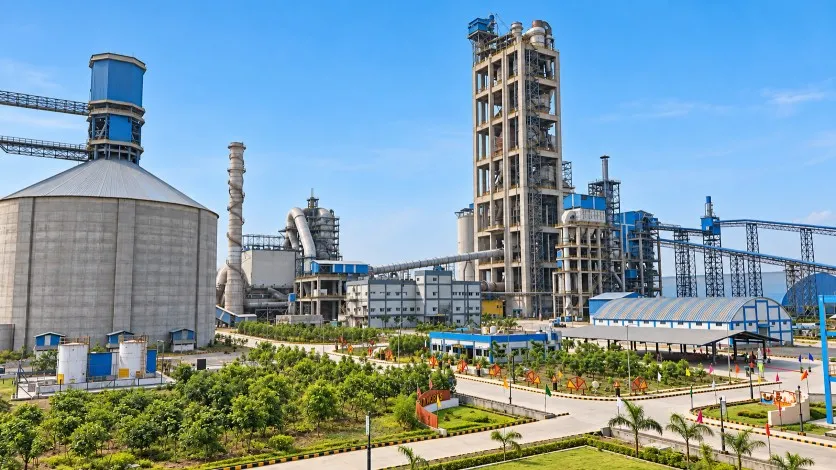
UltraTech’s Kukurdih unit runs fully on green energy
The Chhattisgarh plant has met 100 per cent of its electricity needs through green energy since April 2026.
Concrete
Cement Prices Rise Rs. 7 per Bag in September; October Hikes Expected
Cement prices rose in September as companies weighed further increases.
Concrete
Andhra Pradesh Clears Rs. 30 bn My Home Cement Plant
Project receives incentives of up to Rs. 11.29 bn from state


UltraTech’s Kukurdih unit runs fully on green energy

Cement Prices Rise Rs. 7 per Bag in September; October Hikes Expected

Andhra Pradesh Clears Rs. 30 bn My Home Cement Plant

Nuvoco Vistas, CleanMax Partner for Wind-Solar Hybrid Project in Rajasthan

UltraTech Unit Runs Entirely on Green Energy
UltraTech’s Kukurdih unit runs fully on green energy
Cement Prices Rise Rs. 7 per Bag in September; October Hikes Expected
Andhra Pradesh Clears Rs. 30 bn My Home Cement Plant
Nuvoco Vistas, CleanMax Partner for Wind-Solar Hybrid Project in Rajasthan
UltraTech Unit Runs Entirely on Green Energy
-
 Concrete1 month ago
UltraTech to Deploy 600+ Electric Trucks by Dec 2026
-
 Concrete1 month ago
UltraTech Cement expands green logistics with 600+ electric truck fleet
-
 Concrete4 weeks ago
Kirby India Breaks Ground on Fourth PEB Plant in Tamil Nadu
-
 Concrete3 weeks ago
Aditya Birla Group Launches Ultravolt Wires And Cables Business