

Concrete
Always Escalate, so as not to Escalate


Languages are such wonderful medium of human expression, because words can have such myriad meanings. There are many words which mean quite different things, taken in context. Unfortunately, here we are not talking about languages, but about project management. ??lways escalate, so as not to escalate??may sound, at first glance, like a meaningless play with words, but it is really not so, in our context. Check out these meanings: Escalate ??To increase in intensity or extent, or Escalate ??To become more serious, or be amplified.
Here, in this column, I mean to say that one must always escalate issues and problems to higher levels at the earliest opportunity, so as to avoid escalation of project cost and time. From my exposure to Project successes and failures, this is a very core issue in project management. Project cost escalation (time and cost are inextricably connected) is a very dreaded word in project management parlance. Not only dreaded, but also hated! But as long as there will be projects, there will remain the possibility of time/cost escalations. Unforeseen things happen, unprecedented situations develop, circumstances spin out of control, and these tend to delay projects and increase costs.
But in almost all cases, there are ways to manage and reduce the impact of these unforeseen things, provided we decide on a solution and act quickly to implement the solution. This is where we fail, because we do not highlight these events, rather we tend to push these below the proverbial carpet, as if they will vanish on their own. Why does this happen? There are two very interesting reasons, one hierarchical, and the other behavioural, and both act in tandem.
No organisation is absolutely flat, and there are levels. This is true for project teams also. In all cases, there will at least be three levels. There are operating people in the field, there is a manager who is responsible for leading and guiding the team, and then there will be so called ??op management?? which could be a CEO, or a Board, or a similar body assigned for review and/or oversight. Now, nascent problems in a project, such as insipient causes for delay, are likely to be known first to the operating level, who have their ??ars glued to the ground??
Think of it, who is most likely to get early signals of possible delays in designing of a building, or manufacturing of a critical component, or construction of a crucial structure, or a key regulatory approval ? who will know first, about a strike in a supplier?? factory, about an agitation at construction site, or about resignation of a key member of sub-contractors??team ? First to know will be the ??oot soldiers??of a project team. Now, this is very powerful information, with far-reaching consequences. However, sadly, officials at this level are not empowered to analyse the impact of such delays, leave alone evolve a solution. The knowledge to do so, and the authority to do so, lies one or two hierarchical levels higher up. And, more often than not, the information is not escalated upwards. Why not? That brings us to the second interesting reason.

This has to do more with psychology than project management per se. We all have an instinctive tendency to hush up bad news because we feel if we pass on these information, it will be taken as our failure. We try to resolve the problem at our level, and in the process waste precious time for intervention. What we do not realise, is that small adversities, when suppressed, may well become huge irreversible setbacks for a project, and that in these matters, speed of escalation and transparency always pay.
The sooner the bad news is known, the better it is, because the corrective actions can be taken immediately. But such rational thinking is often layered by the fear of immediate and short term outcomes of so-called failures. This is a cultural issue, this has to do more with our minds, than with our sense of logic. In larger project organisations, this phenomenon may also be driven by some nuances of internal politics. In any case, the project suffers. To get round this well-known issue, sometimes top management deploys informal and alternative channels to ensure flow of such information directly from field to boardroom. This is a crude workaround, because this kind of strategies undermine the formal organisation structures and dilutes accountability.
– SUMIT BANERJEE












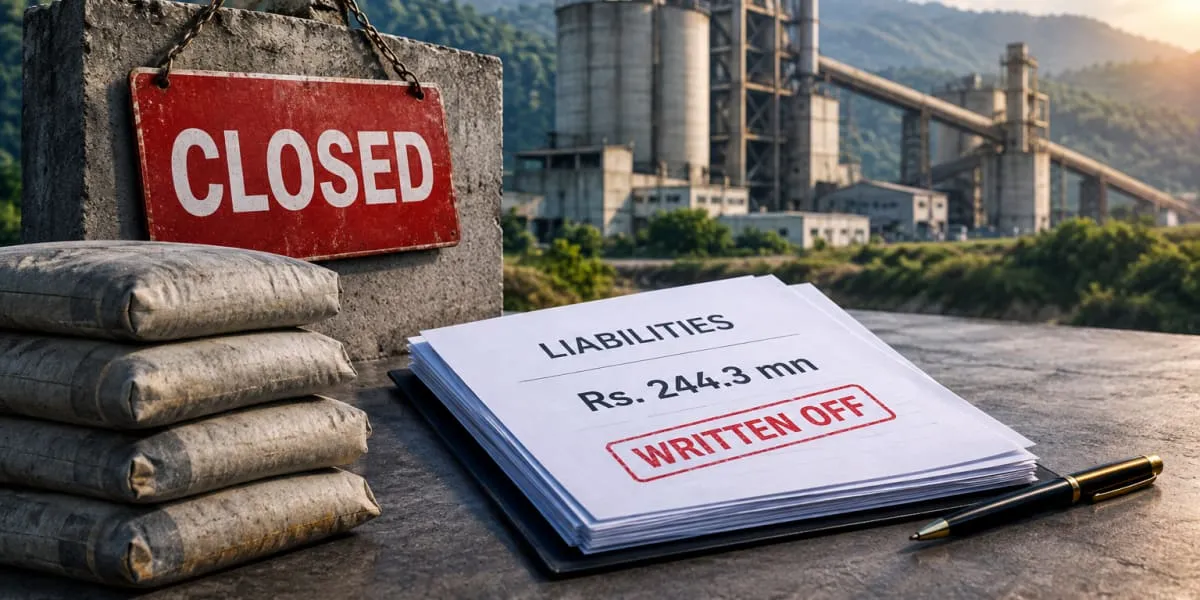




Meghalaya Cabinet Approves MCCL Closure, Writes Off Rs. 244.3 mn

Fornnax Wins AIRIA’s Special Export Award for Rubber Machinery in 2025-26

Cement Prices Likely to Rise Rs. 10-15 per Bag from Mid-October

Nuvoco Marks 10 Years, Targets 35 MMTPA Capacity by FY28

J&K Government Notifies City Gas Distribution Policy
Meghalaya Cabinet Approves MCCL Closure, Writes Off Rs. 244.3 mn
Fornnax Wins AIRIA’s Special Export Award for Rubber Machinery in 2025-26
Cement Prices Likely to Rise Rs. 10-15 per Bag from Mid-October
Nuvoco Marks 10 Years, Targets 35 MMTPA Capacity by FY28
J&K Government Notifies City Gas Distribution Policy
-

 Concrete3 weeks ago
JSW Cement Receives Rs. 2.3 bn GST Demand Notice
-

 Concrete3 weeks ago
Andhra Pradesh Clears Rs. 30 bn My Home Cement Plant
-

 Concrete4 weeks ago
Jammu Division Begins First Cement Rail Traffic to Anantnag
-

 Concrete3 weeks ago
Montra Electric, Wonder Cement Deploy 250-Vehicle EV Fleet