Connect with us

Concrete

India’s Steel Sector Ends 2025 Subdued, Eyes Gradual Revival

Demand pressures ease outlook, recovery expected to build in 2026.

Published

on

Shares
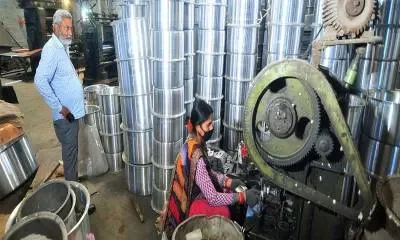
India’s steel sector closed 2025 on a muted note, weighed down by slowing demand, margin pressure and weak export performance through much of the year. Flat steel producers faced the sharpest impact as softer demand from the automobile and consumer appliance segments, coupled with rising imports from Southeast Asia, limited any meaningful price recovery. In contrast, long steel products performed relatively better, supported by sustained government spending on infrastructure, although new capacity additions prevented prices from firming significantly.
Raw material markets remained volatile during the year, though domestic iron ore prices stayed relatively firm on the back of steady consumption. Met coke and scrap markets largely traded within a narrow range despite rising global coking coal prices. Across the value chain, capacity additions continued at both integrated and secondary steel mills, intensifying competition and further pressuring margins. Exports remained subdued for most of 2025 amid global price weakness and continued uncertainty around Carbon Border Adjustment Mechanism (CBAM) compliance.
Looking ahead, industry sentiment points to a gradual recovery in 2026, particularly after the first quarter. Policy clarity, continued infrastructure investment and stabilisation in housing and automobile demand are expected to support consumption, with overall steel demand projected to grow between 7 and 9 per cent. However, margins may remain under pressure in the early part of the year due to heightened competition and fluctuating raw material costs. Export prospects could improve modestly as international spreads strengthen, though CBAM-related compliance will remain a key determinant of long-term competitiveness.
Amid rising overcapacity concerns and an increasing focus on sustainability, steel producers are expected to step up investments in energy efficiency, scrap processing and green steel technologies. While 2025 ends cautiously for the sector, a more constructive outlook is emerging for 2026, driven by policy support, demand recovery and strategic shifts across the steel value chain.
Meanwhile, the coal sector is also preparing for structural change, with the proposed coal exchange likely to be launched in early 2026 following the release of draft regulations and the appointment of the Coal Controller Organisation as the regulator.

Concrete

NBCC Wins Rs 550m IOB Office Project In Raipur

PMC Contract Covers Design, Execution And Handover

Published

on

By

Shares

State-owned construction major NBCC India Ltd has secured a new domestic work order worth around Rs 550.2 million from Indian Overseas Bank (IOB) in the normal course of business, according to a regulatory filing.

The project involves planning, designing, execution and handover of IOB’s new Regional Office building at Raipur. The contract has been awarded under NBCC’s project management consultancy (PMC) operations and excludes GST.

NBCC said the order further strengthens its construction and infrastructure portfolio. The company clarified that the contract is not a related party transaction and that neither its promoter nor promoter group has any interest in the awarding entity.

The development has been duly disclosed to the stock exchanges as part of NBCC’s standard compliance requirements.

Continue Reading

Concrete

Nuvoco Q3 EBITDA Jumps As Cement Sales Hit Record

Premium products and cost control lift profitability

Published

on

By

Shares

Nuvoco Vistas Corp. Ltd reported a strong financial performance for the quarter ended 31 December 2025 (Q3 FY26), driven by record cement sales, higher premium product volumes and improved operational efficiencies.

The company achieved its highest-ever third-quarter consolidated cement sales volume of 5 million tonnes, registering growth of 7 per cent year-on-year. Consolidated revenue from operations rose 12 per cent to Rs 27.01 billion during the quarter. EBITDA increased sharply by 50 per cent YoY to Rs 3.86 billion, supported by improved pricing and cost management.

Premium products continued to be a key growth driver, sustaining a historic high contribution of 44 per cent for the second consecutive quarter. The strong momentum reflects rising brand traction for the Nuvoco Concreto and Nuvoco Duraguard ranges, which are increasingly recognised as trusted choices in building materials.

In the ready-mix concrete segment, Nuvoco witnessed healthy demand traction across its Concreto product portfolio. The company launched Concreto Tri Shield, a specialised offering delivering three-layer durability and a 50 per cent increase in structural lifespan. In the modern building materials category, the firm introduced Nuvoco Zero M Unnati App, a digital loyalty platform aimed at improving influencer engagement, transparency and channel growth.

Despite heavy rainfall affecting parts of the quarter, the company maintained improved performance supported by strong premiumisation and operational discipline. Capacity expansion projects in the East, along with ongoing execution at the Vadraj Cement facilities, remain on track. The operationalisation of the clinker unit and grinding capacity, planned in phases starting Q3 FY27, is expected to lift total cement capacity to around 35 million tonnes per annum, reinforcing Nuvoco’s position as India’s fifth-largest cement group.

Commenting on the results, Managing Director Mr Jayakumar Krishnaswamy said Q3 marked strong recovery and momentum despite economic challenges. He highlighted double-digit volume growth, premium-led expansion and a 50 per cent rise in EBITDA. The company also recorded its lowest blended fuel cost in 17 quarters at Rs 1.41 per Mcal. Refurbishment and project execution at the Vadraj Cement Plant are progressing steadily, which, along with strategic capacity additions and cost efficiencies, is expected to strengthen Nuvoco’s long-term competitive advantage.

Continue Reading

Concrete

Cement Industry Backs Co-Processing to Tackle Global Waste

Industry bodies recently urged policy support for cement co-processing as waste solution

Published

on

By

Shares
Leading industry bodies, including the Global Cement and Concrete Association (GCCA), European Composites Industry Association, International Solid Waste Association – Africa, Mission Possible Partnership and the Global Waste-to-Energy Research and Technology Council, have issued a joint statement highlighting the cement industry’s potential role in addressing the growing global challenge of non-recyclable and non-reusable waste. The organisations have called for stronger policy support to unlock the full potential of cement industry co-processing as a safe, effective and sustainable waste management solution.
Co-processing enables both energy recovery and material recycling by using suitable waste to replace fossil fuels in cement kilns, while simultaneously recycling residual ash into the cement itself. This integrated approach delivers a zero-waste solution, reduces landfill dependence and complements conventional recycling by addressing waste streams that cannot be recycled or are contaminated.
Already recognised across regions including Europe, India, Latin America and North America, co-processing operates under strict regulatory and technical frameworks to ensure high standards of safety, emissions control and transparency.
Commenting on the initiative, Thomas Guillot, Chief Executive of the GCCA, said co-processing offers a circular, community-friendly waste solution but requires effective regulatory frameworks and supportive public policy to scale further. He noted that while some cement kilns already substitute over 90 per cent of their fuel with waste, many regions still lack established practices.
The joint statement urges governments and institutions to formally recognise co-processing within waste policy frameworks, support waste collection and pre-treatment, streamline permitting, count recycled material towards national recycling targets, and provide fiscal incentives that reflect environmental benefits. It also calls for stronger public–private partnerships and international knowledge sharing.
With global waste generation estimated at over 11 billion tonnes annually and uncontrolled municipal waste projected to rise sharply by 2050, the signatories believe co-processing represents a practical and scalable response. With appropriate policy backing, it can help divert waste from landfills, reduce fossil fuel use in cement manufacturing and transform waste into a valuable societal resource.    

Continue Reading

Trending News

SUBSCRIBE TO THE NEWSLETTER


Don't miss out on valuable insights and opportunities to connect with like minded professionals.


    This will close in 0 seconds