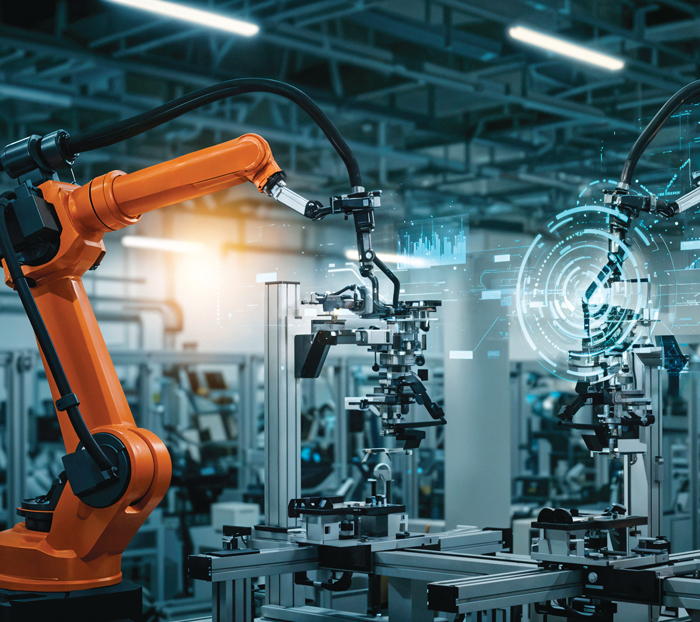
Automation is the propellent behind the transformation of the cement sector. From robotic arms to smart sensors, advanced technology is redefining how cement is manufactured, stored and distributed. ICR delves into the innovations that are taking cement manufacturing towards a Net Zero future.
The cement industry, long perceived as conservative and process-heavy, is undergoing a significant transformation. As the world builds more while aiming to emit less, automation has emerged as the backbone of modern cement manufacturing. The Indian cement industry is at the forefront of the green initiatives, with precision, speed and sustainable practices combined into a driving force. Today automation isn’t just a matter of convenience; it’s a competitive imperative.
Cement production is notoriously energy-intensive, responsible for about 8 per cent of global CO2 emissions. With net-zero goals looming and ESG expectations rising, manufacturers are under immense pressure to reduce their carbon footprint. Here, automation plays a crucial role. From optimising kiln operations using artificial intelligence (AI)-powered control systems to deploying digital twins that simulate and improve plant performance, there are a plethora of innovations that are proving instrumental for this sector. Companies such as Holcim and UltraTech have started using predictive maintenance systems that cut downtime by up to 30 per cent and reduce emissions by optimising fuel use, as per a report by McKinsey.
According to ICRA, India’s cement industry is expected to reach 480–485 million tonnes per annum (MTPA) capacity by 2026, with a projected growth of 6-7 per cent year-on-year. Manual interventions can no longer support this scale. Real-time data analytics, automated quality checks and autonomous vehicle systems for material handling are becoming standard practice in next-gen plants.
As per a report by PricewaterhouseCoopers (PwC) titled ‘Decoding the Fifth Industrial Revolution: Marching towards a resilient, sustainable and human-centric future (2024),’ executives from the cement sector believe that their industry would see the most significant gains from the adoption of Industry 5.0, with potential revenue expansion exceeding 7 per cent. More than 95 per cent of respondents in the cement and industrial goods sectors are prioritising investments in real-time inventory tracking to optimise inventory levels, reduce stockouts, and minimise excess inventory this year and next
From smart sensors in rotary kilns to robotic arms in bagging units, automation is redefining cement’s industrial DNA. But are Indian players ready to scale up digitally? How can automation integrate with alternative fuels and low-clinker cements? These are questions worth exploring as the cement sector prepares for its most intelligent decade yet.
Key areas of automation
Automation in cement manufacturing spans a broad spectrum of functions—from raw material handling to final despatch. The most widely adopted systems include Distributed Control Systems (DCS), Programmable Logic Controllers (PLCs) and SCADA systems that control key equipment like kilns, mills and conveyors.
Modern plants now deploy autonomous vehicles for internal logistics, automated bagging lines for despatch and smart weighing systems that eliminate manual errors. Automated quality control labs have also become mainstream, ensuring that product specifications are met with precision and consistency.
Speaking about innovations in automation, Uma Suryam, SVP and Head Manufacturing – Northern Region, Nuvoco Vistas, says, “At Nuvoco, we are strengthening our automation capabilities by adopting advanced technologies and digital solutions that optimise processes, boost operational efficiency and elevate customer experience. Our approach integrates structured innovation, robust quality management and a comprehensive digital transformation framework—enabling us to stay agile, competitive and sustainable in a dynamic marketplace.”
Adding his dynamic view about the latest development in automation, Dijam Panigrahi, Co-founder and COO, GridRaster, states, “One of the most significant advantages of integrating collaborative robots (cobots) in cement manufacturing is their ability to offload repetitive, dangerous or physically demanding tasks from human workers, such as bagging cement, loading trucks, or operating in dusty environments. This frees up the human workforce to concentrate on higher-value activities that demand critical thinking, problem-solving and creativity – uniquely human attributes that machines cannot replicate.”
“This integrated approach not only drives remarkable gains in productivity, flexibility and safety but also cultivates a truly synergistic relationship between cutting-edge technology and a skilled, adaptable human workforce,” he adds.
Juan Ortega, Cement Operational and Productive Optimisation Specialist and Team Leader, Independent Cement Consultants (ICC), comments, “The cement industry, historically cautious in adopting new technologies, now finds itself at a turning point. Automation is no longer a competitive advantage—it is a necessity. As global production scales up to meet urbanisation and infrastructure demands, operational efficiency, cost control and emissions reduction have become non-negotiable goals. We are witnessing a shift from basic SCADA and DCS systems toward advanced digital ecosystems: predictive maintenance powered by AI, real-time process optimisation using machine learning and Industrial Internet of Things (IIoT) networks that collect and analyse data across the entire plant.”
He further explains, “In cement kilns, advanced process control (APC) systems now autonomously adjust parameters like fuel feed, airflow and kiln speed based on real-time analytics. This improves heat rate, reduces thermal losses and stabilises clinker quality. In finish mills, AI-based models are optimising Blaine fineness and power draw, saving up to 5 kWh/tonne cement (see: ECRA Technical Report TR-128, 2023, Section 4.2.1).
India, the world’s second-largest cement producer with an installed capacity exceeding 600 MTPA, is at a crossroads. While many greenfield plants have begun integrating automation, the vast majority of existing facilities remain semi-automated or manually optimised. Bridging this digital divide is critical.”
These foundational technologies are now converging with advanced digital tools, making way for intelligent automation. This leads us to a deeper exploration of how AI, machine learning (ML) and digital twins are shaping this evolution.
AI, ML and Digital Twins
Powerful insights from plant data that were previously underutilised are now being put to good use. Predictive algorithms are used to forecast maintenance needs, identify energy inefficiencies and even fine-tune process parameters in real time. For example, ML-based kiln optimisation can reduce specific energy consumption and emissions while improving throughput.
Digital twin technology is gaining momentum, allowing operators to simulate plant processes before implementing them physically. These virtual replicas help forecast outcomes, reduce downtime and test scenarios without interrupting operations.
“The combination of AI, digital twins and cobots today represents a fundamental modernisation of the cement manufacturing landscape. AI provides the intelligence, digital twins offer the foresight and cobots provide the physical execution, all while workforce enablement technologies ensure that humans remain at the centre of innovation and decision-making in cement plants. This integrated approach promises a future where operations are more efficient, resilient and adaptive, ultimately leading to unprecedented levels of productivity and a more fulfilling work environment for all in the cement industry,” explains Panigrahi.
Tushar Kulkarni, Business Division Head – Solutions, Cement, Mining Minerals, Test Applications and Hydrogen, Innomotics India, elaborates, “The current advancement in electrical and automation technologies has enabled the system to achieve its peak performance for day-to-day activities far smoother than it was earlier. Also, Industry 4.0 has enabled automation systems to provide efficient and consistent data.
“With this advancement, AI-based systems have started receiving continuous meaningful data to perform many activities, which has allowed AI / ML models to predict outcomes accurately, thereby helping customers achieve their sustainability goals,” he adds.
“At RIPIK AI, we’re redefining automation in cement manufacturing through advanced computer vision and AI. Unlike traditional systems that rely on delayed manual interventions, our proprietary Vision AI platform delivers real-time monitoring and decision-making by capturing up to 6 frames per second from critical plant areas. This enables plant operators to take immediate, data-driven actions, drastically improving operational efficiency and safety,” shares Abhijit Kumar, Director – India Business, Ripik.AI.
“We’re also transforming raw material assessment. With Vision AI, we monitor the size, volume and quality of incoming materials—helping plants better manage deteriorating raw material sources and maintain consistent throughput and product quality. This granular visibility was never possible with legacy systems,” he adds.
Together, AI, ML and digital twins are not only making cement plants smarter but also more responsive to change. But the power of these tools depends entirely on the quality, accessibility and integration of data—bringing us to the next crucial layer in cement automation.
Data integration
Cement plants generate terabytes of data daily—from temperature sensors, pressure gauges and vibration monitors to ERP systems and market inputs. Without integration, this data remains fragmented and underutilised. The shift towards Industry 5.0 calls for interconnected data networks that seamlessly link shop floor machines with enterprise-level platforms.
“Effective automation relies on a strong and secure data infrastructure that enables seamless, real-time connectivity across the plant. Smart sensors and PLCs integrated into key machinery—such as kilns, crushers, and packing units—collect live performance and process data, which is then analysed through a centralised control room or cloud-based platform to enable timely, data-driven decision-making. Equally important are strong cybersecurity
protocols that safeguard operational systems and sensitive production data from disruptions or breaches, ensuring plant safety and uninterrupted performance,” states Suryam.
Commenting about enterprise-wide data lake to enable Industry 4.0 / 5.0 use cases, Himanshu Ghawri, Partner, PwC India, states, “Analysing the massive quantities and types of data generated in an industrial setting can enable effective predictive maintenance, improved demand forecasting, device fleet management and visibility into production challenges at all levels, and so much more. However, data silos make it difficult to capitalise on advanced, real-time and predictive analytics or to use AI/ML to determine the best actions to take to improve production and implement Industry 4.0 use cases. Using data lakes to store structured and unstructured data can help cement organisations address these issues.”
Integrated data architecture enables real-time decision-making, streamlines operations, and supports advanced analytics. Cloud-based dashboards and centralised control rooms are becoming essential, providing stakeholders with visibility into every stage of production and logistics.
Sustainability through automation
Reducing environmental impact is now central to cement industry strategy—and automation is proving to be the driving force. Automated energy management systems monitor usage patterns and optimise load distribution. Waste heat recovery systems, guided by AI, are improving energy efficiency in pyroprocessing. Emission monitoring tools automatically calibrate pollution control equipment to meet compliance norms, reducing particulate matter and NOx emissions.
Moreover, automation facilitates the use of alternative fuels and raw materials (AFR), ensuring consistent feed ratios and combustion efficiency.
Suryam highlights, “Automation is a key enabler of building safer, smarter and sustainable energy management systems at Nuvoco. A major milestone in this journey was the commissioning of our Grid Integration Project, which connected three of our geographically isolated cement plants through a common transmission line, creating a unified power network and setting a new benchmark for energy optimisation in the industry.”
Ghawri expounds, “At PwC India, we conducted our research between May and July 2024, covering 180 senior manufacturing executives from six industries – automotive, cement, chemicals, industrial goods, metals, clothing and textiles and our key findings – a whopping 93 per cent of senior executives across six industries would like to be known for their sustainability initiatives, and yet achieve 2x to 3x profitable growth over the next three to five years. Most senior executives agree that their readiness pertaining to Industry 5.0 capabilities would
help enhance their revenues over the next one to two years.”
Sustainability also intersects with how productively and safely the workforce operates in such high-risk industrial environments, making workforce productivity the next area of focus.
Workforce productivity
In terms of workforce, use of automation and advanced technology helps in predictive safety measures as well as upskilling.
Ganesh W Jirkuntwar, Senior Executive Director and National Manufacturing Head, Dalmia Cement (Bharat), says, “Technology is helping us see, think and act faster to prevent incidents before they happen. The company is making targeted investments in digital and AI-powered solutions to enhance safety outcomes. For instance, the KAVACH app provides employees and contractors a platform to report hazards, submit near-miss data and access standard operating procedures (SOPs) on the go.”
“AI-enabled cameras now support behaviour recognition, enabling predictive analysis of unsafe conditions even before a violation occurs. Devices that track worker fatigue and proximity to moving equipment are currently under pilot. Combined, these systems create a proactive safety environment that acts as a second line of defence alongside trained personnel,” he adds.
Ortega lists out recommendations for successful digital transformation:
1. Digital upskilling: A 2023 ECRA survey found that ‘only 32 per cent of cement plant engineers in Asia had formal training in digital tools or data analytics’ (ECRA Digital Skills Gap Report, 2023, pg7).
2. Interoperability: Ensuring legacy PLCs and
field devices communicate with modern platforms is essential.
3. Cybersecurity: According to ABB Cement Solutions (2023), ‘cyber incidents in the cement sector are rising, with most vulnerabilities linked to unsegmented networks’ (ABB White Paper, Securing the Digital Plant, pg3).
4. Phased integration: Begin with critical areas like fans, kilns or VRMs—then scale based on ROI tracking.
Highlighting the correlation between automated processes, workforce efficiency and manual errors, Frank Ormeloh, Business Unit Manager for Cement, HAVER & BOECKER, states, “A fully automated packing line allows for more flexible line layouts and negates the inefficiencies caused by human error or manual limitations. Automation also allows skilled labour to focus on higher-value tasks, improving overall workforce utilisation. Manual processes, such as bag placement, leave room for lost productivity and errors from tired or distracted workers.”
He adds, “The integration of equipment monitoring technology across all machines is an excellent way to achieve easier equipment optimisation and preventative maintenance tailored to the needs of the plant.”
Challenges in automation
Despite the progress, the path to full automation is not without obstacles. High capital costs, integration issues with legacy equipment and cybersecurity risks are top concerns. There is also a significant digital skills gap, especially in tier II and III cities.
Speaking about the challenges that operators face in adopting AI based control, Kulkarni affirms, “Majorly, we have experienced three challenges operators face in adopting AI-based control.
1. Operators are already used to the UI of existing automation systems like SCADA or DCS.
And adding a new screen with different UI makes it difficult for operators to monitor / operate separate systems.
2. Initial hesitation towards AI systems operating applications with changing plant conditions
like material quality, machine failure and
cement quality variation, which requires operators to make changes in control parameters on a continuous basis.
3. Often operators are also concerned about achieving target KPIs like production, power consumption, quality using AI based control system.”
These challenges make it imperative for cement manufacturers to develop a strategic roadmap to balance innovation with operational feasibility.
Conclusion
Ortega says, “To automate is not to relinquish control. It is to master it—with precision, foresight and responsibility. In the cement industry, the real question is no longer ‘if’ but ‘how’ fast we are willing to move.”
As the Indian cement industry stands on the cusp of a technological leap, it is important for manufacturers to regard automation as both a catalyst and a compass. Success depends on adopting a holistic view, which involves integrating advanced technologies with real-time data, upskilling the workforce and addressing the structural challenges along the way.
As India ramps up infrastructure and green goals, automation will not just support scaling up but define it. While industry experts are confident that the future belongs to cement plants that think, adapt and respond in real time, it is worth noting that this automated future is already here.
– Kanishka Ramchandani