Economy & Market
We believe in the critical role of people in production
Published
1 year agoon
By
admin
Andrey Korablin, Founder, SmartScrap, and Olli Hänninen, Owner and Co-founder, Moviator Oy, in a joint interview with Kanika Mathur, discuss how their collaboration is revolutionising the use of metallurgical slag in cement production.
The cement industry is undergoing a transformative shift towards sustainability, driven by the need to reduce carbon emissions and optimise raw material usage. One of the most promising advancements in this space is the use of metallurgical slag as an alternative raw material, a practice that not only reduces reliance on virgin resources but also contributes to significant environmental benefits. In this exclusive interview, Andrey Korablin of SmartScrap and Olli Hänninen of Moviator Oy share insights into their strategic partnership, the advantages of slag utilisation
and the future of alternative raw materials in
cement manufacturing.
Tell us about Moviator Oy’s collaboration with SmartScrap.
Hänninen: I believe innovation thrives through strong partnerships. That’s why I am excited to collaborate with Smartscrap, a leader in sourcing high-quality recyclable materials. Meeting Andrey from Smartscrap has been inspiring—his expertise aligns perfectly with our mission to provide the best solutions such as crushers, pre-grinders and fine grinding mills for efficient material processing.
Together, we are unlocking new opportunities in the slag and cement industry. By combining Smartscrap’s material access with Moviator’s technology, we’re driving sustainability and maximising raw material value!
How does SmartScrap contribute to the use of metallurgical slag as an alternative raw material in cement production?
Korablin: We are actively searching for old slag piles and negotiating their acquisition. In some cases, discussions are already underway. Our goal is to process these slag piles and produce materials that meet the specific requirements of our customers.
Before starting production, we engage in discussions with cement plants in neighbouring regions, sharing best practices for slag utilisation. One of our key contributions is identifying top experts and best practices in using slag for cement production and promoting their adoption across the industry.
How does Moviator contribute to the use of metallurgical slag as an alternative raw material in cement production?
Hänninen: Moviator processes metallurgical slag using advanced crushing and grinding technology, refining the mineral portion into a high-quality raw material for cement production.
What are the key advantages of using slag over traditional raw materials in cement manufacturing?
Korablin: The key advantage of using slag today is its ability to reduce CO2 emissions. Cement production relies on four key oxides: calcium oxide, silicon oxide, aluminum oxide and iron oxide—all of which are present in slag. Since slag has already undergone thermal treatment, its use in cement manufacturing requires less energy. As a result, producing cement with slag generates lower CO2 emissions.
For example, one cement plant we work with incorporates 30 per cent of slag into its production, consuming 700,000 tonnes of slag annually. This is a significant volume for a single plant.
By replacing 30 per cent of their raw materials with slag, they have reduced their CO2 emissions by 20 per cent compared to alternative materials.
Hänninen: Slag improves durability, strength and sulphate resistance while reducing CO2 emissions and reliance on virgin materials.
How do you ensure the quality and consistency of slag used in the cement industry?
Korablin: It is crucial to choose a supplier that prioritises product quality and long-term partnerships.
Let’s take an example: In the first scenario, slag from a single furnace is mixed with slag produced in other furnaces. However, these slags are usually quite uniform. This is because metallurgical plants typically produce the same type of product using consistent raw materials over many years, resulting in homogeneous slag.
In the second scenario, if slag is mixed from different sources, the situation changes. However, even in this case, it is still possible to assess and map the distribution of slag from various furnaces.
Regardless of the source, both the supplier and the cement plant must implement quality control measures. Slag is a bulk material, and after production, it remains relatively uniform. Sampling and testing processes can be organised effectively, making quality management a fully solvable task.
Hänninen: Moviator employs precision processing, magnetic separation, and strict quality controls to ensure consistent chemical composition and fineness.
What challenges do you face in sourcing, processing, and supplying slag for cement production?
Korablin: One of the biggest challenges is the human factor. Unfortunately, in many industrial enterprises, people are resistant to change. This is not only because mid-level employees are reluctant to adapt but also due to a lack of proper motivation for using alternative raw materials. In many cases, alternative materials can initially lead to lower productivity or increased energy consumption.
These factors directly impact key performance indicators (KPIs) for employees. If using alternative raw materials negatively affects these KPIs, it can also reduce their salaries. Additionally, there is little incentive for employees to seek alternative solutions—if their initiative proves successful, they may receive no financial reward. However, if they make a mistake, they could be demotivated or even risk losing
their jobs.
This is why, at the top management level, it is crucial to create a system of motivation and a company culture that encourages change and innovation.
I’ll share an example from a cement plant I recently visited. During our discussion, they stated that cement plants can work with a wide variety of slags. Depending on the slag’s quality and chemical composition, different proportions can be used in the mix. However, their company’s strategy is to prioritise alternative raw materials as long as they are as cost-effective as natural ones and meet safety requirements. Their reasoning is that it supports sustainability and expands their sourcing options.
This kind of approach is rare rather than common. Once again, the biggest challenge remains the lack of motivation among many companies to adopt alternative raw materials.
Hänninen: Challenges include chemical variability, volume instability and environmental compliance, requiring careful selection and processing.
How does using slag in cement impact sustainability and carbon emissions reduction?
Korablin: I’ve already addressed this question earlier, but to reiterate—using the example of a cement plant that incorporates 700,000 tonnes of slag annually (30 per cent of the raw material mix), the CO2 emissions reduction amounts to 20 per cent.
Hänninen: Slag replaces clinker, significantly reducing CO2 emissions, energy consumption and industrial waste.
Can you share insights into global trends in metallurgical waste recycling for cement applications?
Korablin: This involves using alternative raw materials that contain the necessary oxides—calcium oxide, silicon oxide, aluminum oxide and iron oxide. These can include fly ash from thermal power plants, aluminum production waste as a source of aluminum oxide, foundry sand as a source of silicon, and slag, which contains all four oxides.
Another key trend is the additional processing of raw materials before they reach the cement plant. Suppliers are expected to take on more responsibility in preparing materials, potentially including pre-grinding. This helps reduce the reliance on energy-intensive ball mills at cement plants. When suppliers are more involved in the cement production process, the supply chain becomes stronger and more efficient.
Hänninen: The industry is increasingly adopting blast furnace and steel slags as supplementary cementitious materials (SCMs) to enhance sustainability. The trend is clearly shifting towards finer particle sizes, such as 600 Blaine, to enhance the strength and durability of concrete.
What role does SmartScrap play in educating and supporting cement manufacturers in adopting alternative raw materials?
Korablin: This is about spreading best practices. We have been working with alternative raw materials since 2011, starting with metallurgy as the main driver for slag recycling. Over the years, we’ve gained deep expertise and connected with specialists who help steel plants integrate alternative raw materials. Now, we’re applying the same approach to the cement industry.
We identify the best solutions—from raw material preparation, including crushing and grinding, to material selection for cement plants and quality control throughout the process.
Our role is to introduce cement producers to industry-leading practices. To achieve this, we host webinars featuring top experts who share their knowledge and experience. Additionally, we develop online courses on slag recycling and building a sustainable business around it.
What role does Moviator play in educating and supporting cement manufacturers in adopting alternative raw materials?
Hänninen: Moviator provides technical expertise, testing, and innovative grinding solutions to help cement manufacturers integrate alternative materials efficiently.
What innovations do you foresee in the future of alternative raw materials for the cement industry?
Korablin: It feels like we live in an era of innovation, yet we struggle to keep up with it. So many advancements have been made, but we often fail to fully utilise them. Take a smartphone, for example—we probably use only five per cent of its capabilities. The same applies here.
Even in the age of artificial intelligence, we believe in the critical role of people in production—their ability to implement changes, find new solutions and adopt alternative raw materials. The real innovation, in my view, lies in building a corporate culture that can quickly adapt to today’s fast-changing environment. Large enterprises, in particular, need flexible and agile teams.
Perhaps this isn’t the most conventional answer, but I see the most significant innovations happening in change management. And to me, that’s absolutely crucial.
Hänninen: Future innovations include clinker-free cements, ultra-fine grinding technologies and optimised SCM blends for lower carbon and high-performance materials.
The future of India’s roads took centrestage at RAHSTA Expo 2026, where policymakers, contractors and industry leaders came together under one roof. The event blended thought leadership, technology showcase and industry recognition into a single powerful platform.
India’s roads and highways community gathered in full strength at the Jio World Convention Centre, Mumbai, for the 16th edition of the RAHSTA Expo (Roads and Highways Sustainable Technologies & Advancement). Over two action-packed days, the event brought together policymakers, contractors, consultants, developers, equipment manufacturers, material suppliers, technology providers and investors to deliberate on the future of India’s ,infrastructure while showcasing the latest innovations driving the sector.
The event culminated in the prestigious RAHSTA Awards, where Shri. Ajay Tamta, Union Minister of State for Road Transport & Highways, felicitated organisations and professionals for their outstanding contributions to road construction, engineering, safety, sustainability and technology. With leading contractors, senior government officials, industry veterans and technology providers under one roof, the event reaffirmed RAHSTA’s position as one of India’s most influential platforms for the roads, highways, bridges and tunnels ecosystem.
Organised by FIRST Construction Council in association with ASAPP Info Global Group, RAHSTA has steadily evolved beyond an exhibition into a platform where policy, technology, engineering and business converge to address the opportunities and challenges shaping India’s next generation of transport infrastructure.
Beyond expansion, towards value
The conference opened with a thought-provoking address by Pratap Padode, Founder and Editor-in-Chief, Construction World, who observed that India’s highways sector has reached an important inflection point. Introducing this year’s theme – ‘From Expansion to Value: The Next Phase of India’s Highways’ – he noted that while the country has successfully expanded its road network over the past two decades, the industry’s priorities are now shifting towards building infrastructure that delivers greater lifecycle value, durability, safety and operational efficiency. With funding pressures, asset monetisation and evolving project models changing the sector’s dynamics, he said the focus must now move beyond kilometres constructed to the quality and long-term performance of every asset.
Dr Brijesh Dixit, Managing Director, Maharashtra State Infrastructure Development Corporation (MSIDC), reminded delegates that successful infrastructure delivery is ultimately a collective effort. Emphasising on collaboration between government, industry and engineering professionals, he remarked, “There is no loser in a winning team, and there is no winner in a losing team,” urging stakeholders to work together to deliver projects with quality, financial sustainability and technological excellence.
Delivering the keynote address, Bidur Kant Jha, Director, New Technologies for Highway Development, Ministry of Road Transport & Highways (MoRTH), outlined the Government’s long-term vision for India’s highway network. Highlighting the country’s 6.26 million km roads network, he spoke about the growing adoption of digital planning tools such as BIM and GIS, bridge health monitoring systems and Integrated Smart Transport Corridors under the Vision 2047 roadmap. He emphasised that while India remains open to global innovations, every new technology must be adapted to Indian conditions before large-scale deployment.
Addressing the gathering during the awards ceremony, Tamta underlined the increasing role of specialised equipment and modern construction technologies in executing complex infrastructure projects across diverse terrains. Referring to challenging tunnel projects in Uttarakhand, he noted how advanced machinery has transformed execution capabilities, while also acknowledging the rapid evolution of Indian contractors into globally competitive infrastructure companies. Recognising excellence through industry awards, he said, motivates organisations to continually raise performance standards and embrace innovation.
Meanwhile, Dr Sanjay Mukherjee, IAS, Metropolitan Commissioner, MMRDA, highlighted that infrastructure development must increasingly focus on integrated urban mobility. Reflecting on Mumbai’s engineering journey – from its historic underground utility network to the Coastal Road and other transformative projects – he underlined that future infrastructure planning must seamlessly integrate roads, metro systems and public transport to create efficient, multimodal cities.
Uttar Pradesh takes centrestage
One of the highlights of the second day was Uttar Pradesh’s comprehensive presentation on its infrastructure-led industrial transformation.
Srihari Pratap Shahi, IAS, Additional CEO, Uttar Pradesh Expressways Industrial Development Authority (UPEIDA), demonstrated how the state’s expanding expressway network is evolving into a catalyst for industrial development through integrated manufacturing and logistics clusters. Expressways, he noted, are no longer merely transport corridors but engines of economic competitiveness.
Building on this narrative, Deeksha Jain, IAS, Additional Chief Executive Officer, Uttar Pradesh State Industrial Development Authority (UPSIDA), showcased the state’s rapidly expanding industrial ecosystem supported by extensive expressway connectivity, dedicated freight corridors, airports, industrial townships and investor-friendly policies. She highlighted Uttar Pradesh’s strong manufacturing growth, expanding industrial land bank, plug-and-play infrastructure and increasing use of digital governance to facilitate investments.
Further underlining the significance of the platform, Deepak Kumar, IAS, Infrastructure & Industrial Development Commissioner, Government of Uttar Pradesh, remarked, “RAHSTA provides an excellent platform for states to showcase our infrastructure progress and investment ecosystem. Uttar Pradesh has transformed significantly over the past decade, backed by more than 34 investor-friendly industrial policies, and platforms like RAHSTA help communicate these developments to industry stakeholders from across the country.”
Ideas that shaped the industry conversation
The two-day conference featured seven panel discussions, each examining a critical dimension of India’s evolving roads and highways sector.
The opening discussion on ‘Financing Roads & Highways in a Capital-Constrained Era’ brought together experts from Cube Highways, NIIF, SBI Capital Markets, Centrum Capital and Bandhan Infra Fund, who examined how the financing landscape is changing. Discussions revolved around asset monetisation, InvITs, institutional investments and new funding structures, with panellists agreeing that better project preparation, transparent governance and predictable returns will be crucial for attracting long-term capital into infrastructure.
Attention then shifted to execution realities during the panel on ‘Contractors’ Perspective: Execution Realities, Risks & the Quality Imperative.’ Representatives from GHV Infra Projects, PNC Infratech, NCC and Maccaferri candidly discussed the challenges of delivering projects amid contractual complexities, land acquisition delays, rising costs and tight timelines. While execution pressures remain significant, the discussion reinforced that better collaboration across the project value chain is essential for achieving both speed and quality.
Day 2 opened with a technically rich discussion on ‘Designing Roads for Sustainability, Durability & Climate Resilience’. Experts from CSIR-CRRI, IIT Bombay, IIT Madras, Zydex Group and SRMB Steel explored advanced pavement technologies, recycled materials, climate-resilient designs and scientific construction practices that can significantly improve durability while lowering lifecycle costs. Sustainability, they agreed, must become an integral part of road design rather than an afterthought.
The subsequent session on ‘Bridges & Tunnels: Complex Engineering, Safety & Future Readiness’ highlighted the growing complexity of India’s infrastructure projects. Panellists discussed advances in structural engineering, digital monitoring, risk management and safety practices that are enabling the successful delivery of increasingly ambitious bridge and tunnel projects across the country.
Technology remained a recurring theme during the discussion on ‘Technology as a Risk-Mitigation Tool for Developers & Investors’. Experts explained how AI, BIM, drones, predictive analytics, digital twins and intelligent monitoring systems are helping improve project planning, minimise execution risks, strengthen quality assurance and enhance asset management throughout the infrastructure lifecycle.
The construction equipment panel brought together leading industry experts to examine how technology, sustainability and digitalisation are redefining construction equipment in an era of rising cost pressures. Discussions centred on enhancing productivity, reducing lifecycle costs and preparing the industry for India’s infrastructure ambitions leading up to 2047.
The conference concluded with an engaging CXO Forum on ‘Rebuilding Confidence in India’s Roads & Highways Sector’, where senior industry leaders emphasised that stronger governance, better project preparation, digitalisation, transparent contracting and closer public-private collaboration will be essential to sustain India’s infrastructure growth over the coming decades.
Technology and recognition under one roof
Beyond the conference halls, RAHSTA Expo reflected the technological transformation underway across India’s road infrastructure ecosystem. Leading equipment manufacturers, technology companies and material suppliers showcased advanced construction equipment, intelligent digital platforms, pavement technologies, structural materials and productivity-enhancing solutions designed to improve project efficiency and asset performance. The exhibition created valuable opportunities for contractors, consultants, government agencies and project developers to evaluate new technologies while interacting directly with solution providers.
The event also served as a celebration of excellence through the RAHSTA Awards 2026, which recognised outstanding achievements across road construction, contracting, materials, equipment, technology, safety, sustainability and infrastructure development. Presented by Minister Tamta, the awards honoured organisations that are setting new benchmarks for quality, innovation and execution across India’s roads sector.
RAHSTA Expo 2026 also received extensive support from across the infrastructure ecosystem. Alongside leading corporate sponsors, the event was backed by industry bodies including the Builders Association of India (BAI), Construction Equipment Rental Association (CERA), Consulting Engineers Association of India (CEAI), International Road Federation (IRF), CSIR-CRRI, CILT India, All India Transporters Welfare Association, Hydraulic Trailer Owners Association (HTOA), Gujarat Contractors Association, Bitumen Forum, Fluid Power Society of India, Indian Institute of Material Management, Ministry of Ports, Shipping and Waterways, Gati Shakti Vishwavidyalaya and Mumbai First, reflecting the industry’s collective commitment to advancing India’s road infrastructure.
As the curtains came down on the two-day event, one message resonated throughout the conference: India’s highways story is entering a new chapter. While expansion will continue, the future will increasingly be defined by smarter planning, stronger partnerships, digital transformation, sustainable engineering and long-term value creation. By bringing together the entire infrastructure value chain on a single platform, RAHSTA Expo 2026 once again demonstrated why it has become one of the country’s most influential forums for shaping the future of roads, highways, bridges and tunnels.
Economy & Market
Fornnax Names Lukas Baur as Authorised Service Partner to Bolster EU Operations
Published
3 weeks agoon
July 23, 2026By
admin
Strapline: Fornnax Technology has appointed NOBA Maschinenservice’s Lukas Baur as its authorised service partner for the European Union, strengthening its commitment to delivering fast, reliable, and localised after-sales support across the region.
Fornnax Technology, a leading manufacturer of industrial shredding solutions, has announced the appointment of Mr. Lukas Baur of NOBA Maschinenservice as its authorised service partner for the European Union. The partnership, formalised under the authorisation of Fornnax CEO Mr. Jignesh Kundaria, reinforces the company’s commitment to providing dependable, localised service support to its expanding customer base across Europe.
Strengthening Service Through Proven Expertise
With over two decades of experience in servicing, maintaining, and overhauling industrial shredders, Mr. Baur brings extensive technical expertise to the partnership. His capabilities span welding, hardfacing, shaft and knife rebuilding, complex assembly, hydraulics, and complete electrical engineering services, delivered in collaboration with a trusted partner company based in Halle/Saale.
Operating from Worbis, Germany, Mr. Baur is strategically positioned to provide emergency support across the European Union within 24 hours, covering an operational radius of approximately 1,000 kilometres.
Supporting this capability is a well-equipped service infrastructure comprising 12 Mercedes Sprinter service vans, a team of 24 skilled technicians, specialised bearing-change tools, a fully equipped hydraulic workshop, and a 1,000-square-metre facility with a five-ton crane track. Together, these resources position his team to manage the complete spectrum of Fornnax’s European service requirements efficiently and reliably.
Partnership Driven by Industry Insight
Having spent years servicing Eldan, Lindner, and Vecoplan shredders across the European recycling industry, Mr. Baur’s decision to collaborate with Fornnax is rooted in his understanding of market needs and customer expectations. His experience has provided valuable insight into what recycling plant operators require—not only from their machinery but also from the service teams supporting them.
According to Mr. Baur, Fornnax’s reputation for robust machine construction, superior wear protection, and maintenance-friendly design made the partnership a natural fit.
The collaboration comes at a time when Europe’s tyre recycling industry is facing mounting challenges, including rising cost pressures, shrinking margins, delayed investments, and a shortage of skilled labour. Mr. Baur believes these conditions reinforce the need for technically strong service partners capable of delivering rapid, dependable support.
Commenting on the partnership, he said, “Fornnax, with its exceptional price-performance ratio and superior quality, has the potential to become a market leader in Europe. We would like to be their service partner in this journey.”
Comprehensive Support Across the Equipment Lifecycle
As Fornnax’s authorised service partner, Mr. Baur will oversee the complete lifecycle support of the company’s equipment throughout the European Union. His responsibilities will include installation, commissioning, preventive maintenance, emergency repairs, and spare parts support across mechanical, hydraulic, and electrical systems.
Looking ahead, he also plans to develop a centralised spare parts distribution hub for European customers, particularly if Fornnax establishes a warehouse facility in Worbis to facilitate faster deliveries. To further strengthen service coverage, Mr. Baur intends to expand operations by adding two to three additional service teams and vehicles each year, progressively increasing capacity across the continent.
A Shared Commitment to Customer Excellence
Highlighting the strategic importance of the partnership, Mr. Jignesh Kundaria, Director and CEO of Fornnax, said:
“We strongly believe that by continuously improving our service quality and customer satisfaction index, we can build long-term relationships with our customers. Higher customer satisfaction leads to greater trust, which significantly increases repeat orders and ultimately drives sustained growth in our sales revenue.”
This customer-first philosophy underpins Fornnax’s strategy of building a dedicated European service partner network instead of relying solely on remote support. With Mr. Baur joining this network, customers across the European Union will benefit from faster response times, expert technical assistance, and dedicated on-ground support from a partner with extensive experience in high-throughput shredding operations.
Mr. Baur’s appointment also reflects Fornnax’s broader ambition to establish itself as the preferred shredding solutions provider for the European recycling industry, marking another important milestone in the company’s international growth strategy.
Concrete
Nuvoco Vistas launches Limla cement plant, expands Gujarat footprint
Published
1 month agoon
July 13, 2026By
admin
Nuvoco Vistas opens a 2 MMTPA grinding unit at Limla, entering Gujarat and advancing its target of 35 MMTPA capacity by FY 2028.
Surat (Gujarat)
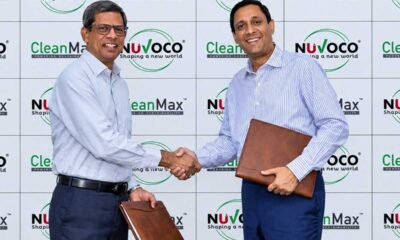
Nuvoco Vistas Corporation Ltd, a part of Nirma Group and one of India’s leading building materials company, has inaugurated the Limla Cement Plant in Surat (Gujarat), one of Vadraj Cement Limited’s (VCL) principal manufacturing facilities. The commissioning represents a key milestone in Nuvoco’s acquisition and restoration of VCL, while supporting the company’s expansion across the Western Indian cement market.
Vadraj Cement Limited is a subsidiary of Nuvoco Vistas Corporation Limited and has installed cement capacity of 6 MMTPA across its assets. The Limla inauguration therefore represents the first operational step in the acquired platform’s wider revival, while the Kutch facilities provide clinker supply, mineral security and coastal logistics support for the western business.
Nuvoco completed its acquisition of Vadraj Cement Limited, then under the Corporate Insolvency Resolution Process, after paying a consideration of Rs 1,800 crore in June 2025. VCL’s asset portfolio comprises a clinker unit at Kutch and a grinding unit at Limla in Surat. It also includes high-quality captive limestone reserves and a captive jetty at Kutch, supporting more efficient logistics. Following the takeover, Nuvoco began an extensive programme of restoration, refurbishment and expansion at both locations, leading to the commissioning of the Limla plant.
The Limla Cement Plant is expected to support a phased increase in sales volumes across Gujarat. It will also help Nuvoco supply neighbouring markets in Western Maharashtra and release cement capacity from its northern plants, which can consequently be redirected towards markets in North India. The plant will manufacture a full portfolio comprising Ordinary Portland Cement, Portland Slag Cement, Portland Pozzolana Cement and Portland Composite Cement. It will additionally produce the complete Nuvoco Duraguard range, including the premium Nuvoco Duraguard Microfibre product. The acquisition is also expected to generate operational synergies with Nuvoco’s existing plants at Nimbol and Chittorgarh in Rajasthan, improving logistics optimisation and market reach across important regional markets.
The grinding unit at the Limla Cement Plant was completed ahead of schedule, with 2 MMTPA of capacity now inaugurated to expand Nuvoco’s operating scale and customer reach. After Vadraj Cement’s assets become fully operational, plants in North and West India are expected to account for nearly 40 per cent of Nuvoco’s total cement capacity. This will broaden the company’s manufacturing network, strengthen access to high-growth markets and support its plan to increase consolidated cement capacity to 35 MMTPA by FY 2028, reinforcing its longer-term growth strategy.
Commenting on the development, Jayakumar Krishnaswamy, Managing Director, Nuvoco Vistas Corp Ltd, said: “The inauguration of the Limla Grinding Unit in Surat is an important milestone in Nuvoco’s growth journey and demonstrates our commitment to disciplined, value-accretive expansion. Gujarat is strategically significant for Nuvoco, with substantial opportunities arising from infrastructure investment, industrial growth, rapid urbanisation and continuing demand from the housing and construction sectors. The facility strengthens our regional footprint, improves operational flexibility and increases our ability to serve customers across northern and western markets with greater reliability and efficiency.”
He added: “Through the Vadraj acquisition, we have refurbished and restarted a strategically important asset, returning it to operations in record time through strong execution and collaboration between teams. The achievement demonstrates our ability to create value from acquired assets, fulfil our commitments and retain the confidence of stakeholders. It also highlights the strength of our project delivery capabilities and our continued focus on building sustainable, profitable growth over the long term.”
Nuvoco Vistas Corporation Limited is a building materials company whose vision is to build a safer, smarter and more sustainable world. It is among the leading players in East India and has a significant presence across North and West India. Nuvoco began operations in 2014 with a greenfield cement plant at Nimbol, Rajasthan. It later acquired Lafarge India Limited, which had entered India in 1999, followed by Emami Cement Limited in 2020 and Vadraj Cement Limited in April 2025. The company has also announced an expansion in eastern India through a new grinding mill at the Arasmeta Cement Plant, supported by several debottlenecking programmes involving equipment upgrades, process improvements and internal capacity initiatives. These developments place Nuvoco on track to achieve total cement capacity of approximately 35 MMTPA. The company reported total income of Rs 11,362 crore in FY 2025-26, reflecting its continuing growth trajectory.
Nuvoco operates a diversified portfolio across three segments: Cement, Ready-Mix Concrete and Modern Building Materials. Its cement portfolio includes Concreto, Duraguard, Double Bull, PSC, Nirmax and Infracem, covering Ordinary Portland Cement, Portland Slag Cement, Portland Pozzolana Cement and Portland Composite Cement. Its pan-India RMX business provides value-added products under Concreto for performance concrete, Artiste for decorative concrete, InstaMix for ready-to-use bagged concrete, X-Con covering M20 to M60 grades, and Ecodure for specialised green concrete. Nuvoco has supplied materials to projects including the Mumbai-Ahmedabad Bullet Train, Birsa Munda Hockey Stadium in Rourkela, Aquatic Gallery at Science City in Ahmedabad, and metro railway projects in Delhi, Jaipur, Noida and Mumbai.
The Road Ahead Begins Here
Cement Makers’ Margins To Fall Rs 50-75 Per Tonne Amid West Asia Conflict
UltraTech Board Approves Rs 50 bn Fundraise Via NCDs
Fornnax Names Lukas Baur as Authorised Service Partner to Bolster EU Operations
Lokesh Lays Stone For Rs 31 Billion Cement Unit In Kadapa
The Road Ahead Begins Here
Cement Makers’ Margins To Fall Rs 50-75 Per Tonne Amid West Asia Conflict
UltraTech Board Approves Rs 50 bn Fundraise Via NCDs
Fornnax Names Lukas Baur as Authorised Service Partner to Bolster EU Operations