Connect with us

Concrete

Cement manufacturers report margin decline in September quarter amid lower prices

The all-India average cement price saw a year-on-year decline of 11%

Published

on

Shares

Cement manufacturers have reported a decline in margins during the September quarter, primarily due to lower prices, which led to reduced sales realization. Smaller companies such as Nuvoco Vistas Corp, JK Cement, Birla Corporation, and Heidelberg Cement experienced a drop in both topline and sales volume. However, leading players like UltraTech Cement, Ambuja Cement, and Dalmia Bharat performed better, primarily due to several recent acquisitions that have bolstered their market position.

The industry faced challenges, including an extended monsoon, floods, and slow government demand, all of which contributed to weak market conditions. Despite these challenges, power, fuel, and other operational costs remained stable.

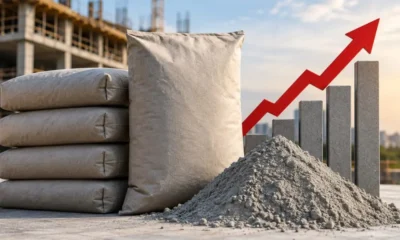
In terms of pricing, the all-India average cement price saw a year-on-year decline of 11% from ₹348 per 50 kg bag in June 2024 to ₹330 per bag in September, although it rose by 2% month-on-month. In FY25, the average cement price saw a 10% year-on-year reduction, down from ₹365 per bag in FY24.

UltraTech Cement reported a 68% capacity utilization and a 3% growth in sales volume, despite an 8.4% year-on-year decline in sales realization for grey cement. Similarly, Ambuja Cements saw a 9% increase in sales volume, reaching 14.2 million tonnes, but its EBITDA was 15% lower year-on-year at ₹1,074 crore due to lower price realizations.

Concrete

Henkel India Opens Skill Development Centre in Pune CII Calls for Greater Alternative Fuel Use in Cement Industry

Industry leaders highlight RDF supply challenges and the need to accelerate cement decarbonisation.
Published

on

By

Shares
The Confederation of Indian Industry (CII), through its Green Business Centre and Energy Efficiency Council, inaugurated the 16th Conference on Alternative Fuel and Raw Material Usage (AFR) in Goa on 27 October 2026. The two-day conference brought together more than 350 industry leaders, policymakers, waste management experts and technology providers to explore strategies for accelerating alternative fuel adoption in India’s cement industry.
Held under the theme ‘Preparation for Net-Zero: Alternative Fuels & Raw Material in Cement Manufacturing’, the conference focused on reducing dependence on conventional fuels, improving waste utilisation and strengthening circular economy practices across cement manufacturing operations.
E R Raj Narayanan, Chairman, AFR Conference 2026, and Business Head and Chief Manufacturing Officer, UltraTech Cement, highlighted the industry’s progress in alternative fuel adoption. He emphasised the need to scale implementation, strengthen supply chains and extend circularity beyond fuel substitution to alternative raw materials through technological innovation and industry collaboration.
Harish Adconkar, Managing Director, Goa Waste Management Corporation, highlighted Goa’s progress in scientific waste management and refuse-derived fuel (RDF) production. He stated that approximately 765,000 tonnes of RDF had been supplied to cement plants, contributing to an estimated displacement of 320,000–560,000 tonnes of coal. He emphasised the importance of consistent RDF offtake and stronger coordination between urban local bodies, waste management agencies and cement manufacturers.
Dr L P Singh, Director General, National Council for Cement and Building Materials, identified AFR as an important opportunity for decarbonisation and resource efficiency. Drawing parallels with the industry’s successful utilisation of fly ash, he stressed the need to address quality, technological and economic challenges to expand alternative fuel adoption.
Dr Sharad P Kale, Special Advisor to the Chief Minister of Goa and former Head of Technology Transfer and Collaboration at BARC, emphasised treating waste as a resource. He highlighted decentralised biodegradable waste processing, reduced food waste and improved resource recovery as essential measures for minimising landfill dependence.
Kiran Ananth, Executive Director, Energy Efficiency, Renewable Energy and Green Entrepreneurship, CII-Green Business Centre, noted that India’s cement production reached approximately 491 million tonnes in FY2025-26, while the industry’s thermal substitution rate (TSR) stood at 7.5 per cent, with around 7 million tonnes of alternative fuels utilised annually.
He added that the industry had invested over Rs 12 billion in co-processing infrastructure during the past six years. Improving RDF supply reliability and quality assurance would be crucial to maximising the utilisation of existing infrastructure and accelerating industrial decarbonisation.
The conference also featured discussions on advanced AFR co-processing technologies, waste pre-processing solutions and industrial best practices for improving fuel substitution and resource recovery.
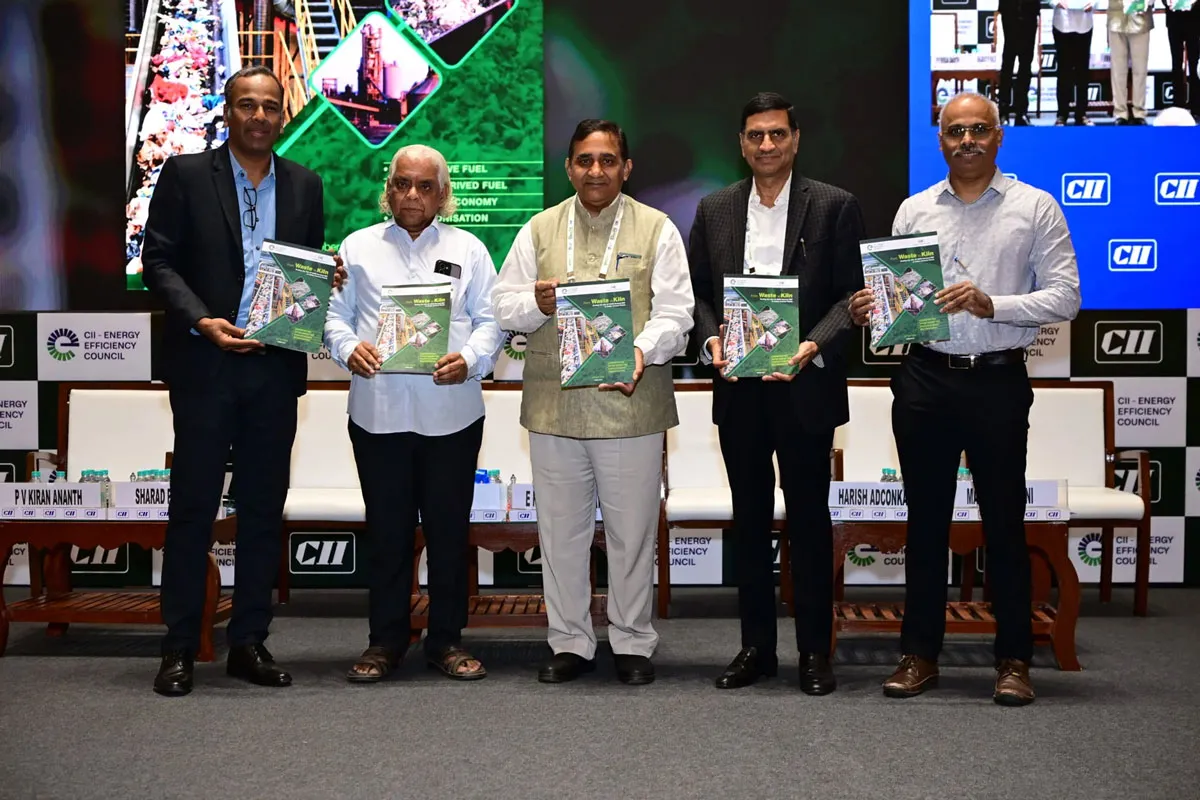
A publication titled ‘From Waste to Kiln: Scaling the Use of MSW-Derived RDF in Indian Cement Plants’ was launched during the inaugural session. The report identified inconsistent RDF supply and quality as major barriers to achieving higher thermal substitution rates.
According to the publication, many cement kilns already possess the technical capability to achieve higher alternative fuel substitution. However, variations in RDF availability, moisture content, particle size and calorific value continue to limit utilisation. The report emphasised the need to strengthen waste segregation, pre-processing and aggregation systems to establish reliable RDF supply chains.
The conference’s second-day agenda includes discussions on innovative domestic and industrial waste management solutions, alternative raw materials for low-carbon cement and strategies to increase alternative fuel utilisation across India’s cement manufacturing sector.

Continue Reading

Concrete

Sameera Group Enters Industrial and Logistics Real Estate

Rs. 1.5 bn project to support manufacturing and supply-chain firms

Published

on

By

Shares

Sameera Group has entered the industrial and logistics real estate segment with a 450,000 sq ft development in Sriperumbudur, Chennai. The group will invest Rs. 1.5 bn in the project, expanding beyond residential plotted developments into business-to-business real estate.

The proposed park will serve light manufacturing, e-commerce, third-party logistics and other supply-chain businesses. Building plan approvals have been secured, with construction expected to begin shortly. The development is scheduled to become operational within 12 to 15 months.

Sameera Group Managing Director and Chief Executive Officer Jayakumar Murugesan said the project marked the next stage of the company’s growth after nearly four decades in land acquisition and real estate development. He attributed the choice of Sriperumbudur to its industrial activity and growth prospects.

The Grade A development will include internal movement routes and shared infrastructure for modern manufacturing and logistics operations. The group is pursuing Indian Green Building Council (IGBC) Platinum certification and plans to provide rooftop solar readiness, rainwater harvesting, wastewater recycling, energy and water monitoring, and electric vehicle charging facilities.

The project is being developed amid increased demand for industrial and warehousing space in Chennai. Knight Frank’s India Warehousing Market Report 2026 recorded 8.3 mn sq ft of warehousing transactions in the city during 2025, up 42 per cent from the previous year, with manufacturing accounting for 59 per cent of demand. The Sriperumbudur-Oragadam cluster contributed 77 per cent of transactions.

Sameera Group plans to develop 5 to 6 mn sq ft across a larger industrial and logistics portfolio over the next five years, involving an estimated investment of Rs. 18 bn. Land has been acquired for projects in Chennai, Hosur and Bengaluru. Established in 1982, the group has developed more than 900 acres, sold over 13,700 residential plots, and currently has 35 projects under development and 28 in its pipeline.

Continue Reading

Concrete

UltraTech Cement Expands in Andhra Pradesh with Rs. 26.5 bn

Petnikota plant adds 3.6 MTPA cement dispatch capacity
Published

on

By

Shares

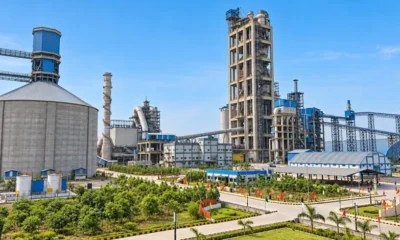
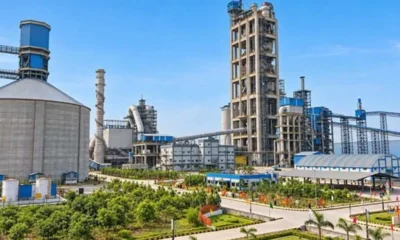
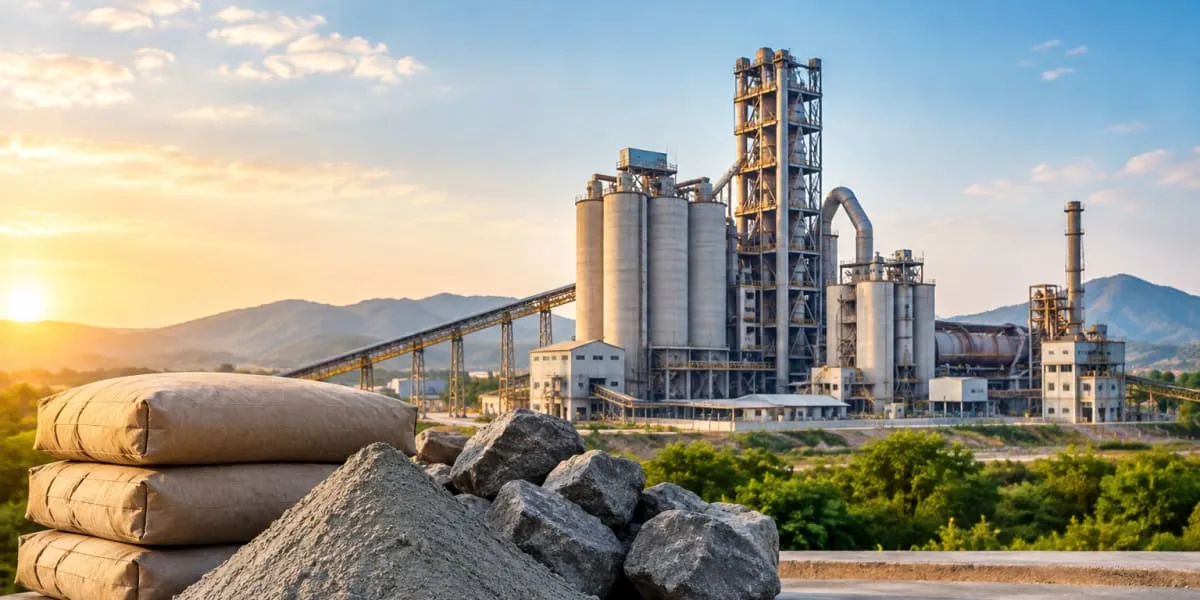
UltraTech Cement has expanded its manufacturing footprint in Andhra Pradesh with the commissioning of Petnikota Cement Works, an integrated cement plant built with an investment of around Rs. 26.5 bn. The facility is located in Petnikota village in Kolimigundla mandal of Nandyal district, in the Rayalaseema region.

Construction of the plant began in May 2025. The facility has a clinkerisation capacity of 3.3 MTPA and a cement dispatch capacity of 3.6 MTPA, strengthening the company’s production and distribution presence in the State.

The plant is expected to provide direct employment to 650 people and indirect employment to another 2,000. It has been designed to operate entirely on green energy and does not have a captive thermal power plant. The project also uses no groundwater, according to information released by the Andhra Pradesh Government.

Nara Lokesh, Andhra Pradesh Minister for Information Technology, said in the release that the facility was taken from groundbreaking to commissioning in 14 months. He described the project as a state-of-the-art addition to the company’s operations in the State and said it would create 2,650 direct and indirect employment opportunities.

Petnikota Cement Works adds to UltraTech Cement’s manufacturing capacity in Andhra Pradesh while supporting industrial activity in Nandyal district. The plant’s energy design and stated groundwater-use policy are also intended to reduce the environmental impact of its operations. The company has identified the facility as part of its continuing capacity expansion in the Indian cement market.

Continue Reading

Video Thumbnail
â–

    SIGN-UP FOR OUR GENERAL NEWSLETTER

    Trending News

    SUBSCRIBE TO THE NEWSLETTER


    Don't miss out on valuable insights and opportunities to connect with like minded professionals.


      This will close in 0 seconds