Connect with us

Concrete

Malaysia Launches Anti-Dumping Probe

Investigation targets iron and steel imports.

Published

on

Shares

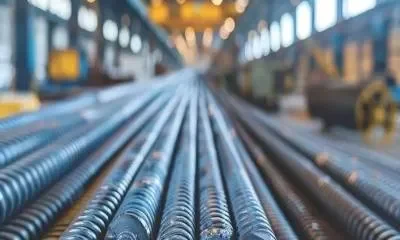
Malaysia has initiated an anti-dumping investigation into the import of iron and steel products from India, China, South Korea, and Taiwan. This probe is in response to complaints from local manufacturers about unfair pricing practices by exporters from these countries, which could potentially harm Malaysia’s domestic steel industry.

Key details of the anti-dumping investigation include:

Products Under Investigation: The probe focuses on specific iron and steel products, including hot-rolled coils and plates, which are widely used in various industries such as construction, automotive, and manufacturing. These products are crucial to Malaysia?s infrastructure and industrial sectors.

Allegations of Unfair Pricing: Local steel manufacturers in Malaysia have alleged that exporters from India, China, South Korea, and Taiwan are selling their products at prices lower than the market value, a practice known as dumping. This is believed to undercut local producers, leading to potential financial losses and market disruptions.

Impact on Indian Exporters: India, being one of the countries under investigation, may face significant implications if found guilty of dumping. Indian steel exporters could be subject to additional tariffs, which would make their products less competitive in the Malaysian market.

Probe Process: The investigation will involve collecting data from exporters, importers, and domestic producers to determine whether dumping has occurred and the extent of the damage to the local industry. The probe will assess factors such as production costs, market prices, and the economic impact on domestic manufacturers.

Possible Outcomes: If the investigation concludes that dumping has taken place, Malaysia could impose anti-dumping duties on the affected products. These duties are designed to protect local industries by increasing the cost of imported goods, thereby leveling the playing field for domestic producers.

Response from Exporting Countries: The countries under investigation, including India, are expected to cooperate with Malaysian authorities during the probe. They may also present their case to prove that their pricing practices are fair and in line with international trade laws.

Trade Relations: The outcome of this investigation could affect trade relations between Malaysia and the countries involved. It may lead to increased tensions or negotiations to resolve the issue and prevent the imposition of duties.

Global Steel Market: This investigation is part of a broader trend of increasing protectionism in the global steel market, as countries seek to shield their domestic industries from the impact of cheap imports. Similar probes have been launched by other nations in recent years, reflecting the competitive and often contentious nature of the global steel trade.

The launch of this anti-dumping probe by Malaysia highlights the challenges faced by global steel exporters, including those from India. The outcome could have significant implications for international trade dynamics, particularly in the iron and steel sectors.

Concrete

Ambuja Cements Delivers Strong Q2 FY26 Performance Driven by R&D and Efficiency

Company raises FY28 capacity target to 155 MTPA with focus on cost optimisation and AI integration

Published

on

By

Shares
Ambuja Cements, part of the diversified Adani Portfolio and the world’s ninth-largest building materials solutions company, has reported a robust performance for Q2 FY26. The company’s strong results were driven by market share gains, R&D-led premium cement products, and continued efficiency improvements.
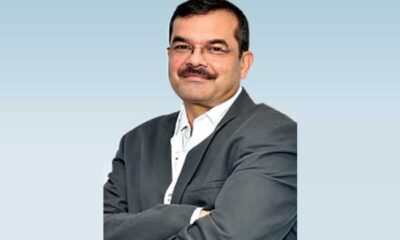
Vinod Bahety, Whole-Time Director and CEO, Ambuja Cements, said, “This quarter has been noteworthy for the cement industry. Despite headwinds from prolonged monsoons, the sector stands to benefit from several favourable developments, including GST 2.0 reforms, the Carbon Credit Trading Scheme (CCTS), and the withdrawal of coal cess. Our capacity expansion is well timed to capitalise on this positive momentum.”
Ambuja has increased its FY28 capacity target by 15 MTPA — from 140 MTPA to 155 MTPA — through debottlenecking initiatives that will come at a lower capital expenditure of USD 48 per metric tonne. The company also plans to enhance utilisation of its existing 107 MTPA capacity by 3 per cent through logistics infrastructure improvements.
To strengthen its product mix, Ambuja will install 13 blenders across its plants over the next 12 months to optimise production and increase the share of premium cement, improving realisations. These operational enhancements have already contributed to a 5 per cent reduction in cost of sales year-on-year, resulting in an EBITDA of Rs 1,060 per metric tonne and a PMT EBITDA of approximately Rs 1,189.
Looking ahead, the company remains optimistic about achieving double-digit revenue growth and maintaining four-digit PMT EBITDA through FY26. Ambuja aims to reduce total cost to Rs 4,000 per metric tonne by the end of FY26 and further by 5 per cent annually to reach Rs 3,650 per metric tonne by FY28.
Bahety added, “Our Cement Intelligent Network Operations Centre (CiNOC) will bring a paradigm shift to our business operations. Artificial Intelligence will run deep within our enterprise, driving efficiency, productivity, and enhanced stakeholder engagement across the value chain.”

Continue Reading

Concrete

JSW Paints to Raise Rs 33 Billion for Akzo Nobel India Deal

Funds to part-finance Rs 129.15 billion acquisition of 74.76 per cent stake.

Published

on

By

Shares

JSW Paints Limited (JSWPL) plans to raise Rs 33 billion through non-convertible debentures (NCDs) to partly fund the Rs 129.15 billion acquisition of a 74.76 per cent stake in Akzo Nobel India Ltd, according to an exchange filing. The deal, which will trigger an open offer for the remaining shares, forms part of the JSW Group’s Rs 65 billion capital infusion plan.

The bonds, to be issued on Friday, are rated ‘AA– (Stable)’ by ICRA, which noted that the NCDs will carry a five-year bullet repayment, with a call/put option after three years. Only a portion of the coupon will be paid annually, with the balance payable upon redemption.

ICRA said JSW Paints’ debt servicing obligations can be comfortably met through operating profits and dividends expected from Akzo Nobel India until maturity. However, it cautioned that the company’s leverage will remain elevated at over four times in the medium term.

JSW Paints, part of the JSW Group promoted by Sajjan Jindal and led by Managing Director Parth Jindal, plays a strategic role in supplying industrial coatings to JSW Steel. To date, JSW Steel has infused Rs 7.5 billion, while South West Mining Ltd has contributed Rs 1.5 billion towards capital expenditure, debt repayment, and working capital needs.

ICRA expects continued promoter support for the acquisition, which will be financed through a mix of borrowings and equity infusion at the JSW Paints level.

Post-acquisition, JSW Paints’ business profile is expected to strengthen significantly, benefiting from operational synergies, an expanded dealer network, and access to advanced coating technologies. The merger will position the combined entity — JSW Paints and Akzo Nobel India — as India’s fourth-largest decorative paint company and second-largest in the industrial segment. The acquisition will also give JSW access to premium brands like Dulux and new segments such as vehicle refinishes and marine coatings.

In FY25, JSW Paints recorded revenues of Rs 21.55 billion. The company expects a sharp rise in FY26 and beyond, supported by synergies in manufacturing, logistics, and marketing. ICRA projects healthy double-digit operating margins by FY27, marking a strong turnaround from operating losses in FY25.

The acquisition, initially announced in June 2025, valued the 74.76 per cent stake at Rs 94 billion and received Competition Commission of India (CCI) approval on 16 September 2025. The deal is expected to close within the current financial year.

Following the transaction, the Dutch parent company of Akzo Nobel India will retain the powder coatings business and R&D centre, while JSW Paints will integrate the rest of the operations.

Continue Reading

Concrete

SAIL Bokaro Develops New Electrical Steel Grade

BSL produces 1,100 tonnes of energy-efficient special steel.

Published

on

By

Shares

Steel Authority of India Limited (SAIL) has announced that its Bokaro Steel Plant (BSL) has developed a special grade of electrical steel for the first time, marking a significant milestone in the company’s efforts to expand its portfolio of high-value and advanced steel products.

The newly developed steel is designed for use in electric motors, generators, small power transformers, electrical appliances, and rotors for hybrid and electric vehicles, contributing to enhanced energy efficiency and supporting India’s growing green mobility and energy infrastructure sectors.

In a statement, SAIL said, “The Bokaro Steel Plant has achieved a major milestone in product development by successfully producing about 1,100 tonnes of 0.5 mm thick IS 18316 LS Grade Non-Grain Oriented (NGO) Electrical Steel for the first time.”

The innovation is expected to position SAIL as a key domestic supplier of specialised electrical steel, reducing dependence on imports for critical industrial applications. It also aligns with the company’s broader strategy to move up the value chain and contribute to India’s self-reliance in advanced materials manufacturing.

The Bokaro Steel Plant’s success in developing this new grade of steel underscores SAIL’s focus on technology-driven production, quality enhancement, and sustainable industrial growth.

Continue Reading

Trending News

SUBSCRIBE TO THE NEWSLETTER


Don't miss out on valuable insights and opportunities to connect with like minded professionals.


    This will close in 0 seconds