Connect with us

Economy & Market

Digital marketing helps brands connect

Published

on

Shares

Muskaan Jain, Founder and CEO, The Social Culture, discusses how companies can leverage digital marketing to enhance visibility and market reach.

How critical is branding in the highly competitive cement industry, and what unique challenges does it present?
Creating a strong brand identity in the cement industry, or any industry for that matter, is indeed a complex task that requires a deep understanding of both the product and the target audience. As a branding and packaging designer, you are right to focus on the emotional connection and practical sense that your branding should convey. Here are some strategies to ensure your branding is original, resonates with your audience, and stands out in the competitive market:

  • Understand your audience: Know who your customers are, what they value, and how they perceive your industry. This will help you tailor your branding to their needs and preferences.
  • Differentiate your brand: In a commoditised industry like cement, it›s crucial to find what makes your product or service unique. This could be your production process, sustainability efforts, customer service or any other aspect that sets you apart from competitors.
  • Consistent visual identity: Your brand›s visual elements, including logo, color scheme, typography, and imagery, should be consistent across all platforms. This consistency helps in building recognition and trust.
  • Storytelling: Use storytelling to convey your brand›s values, ethos and unique selling proposition. A compelling narrative can help create an emotional connection with your audience.
  • Ethical and practical messaging: Highlight the practical benefits of your product, such as durability, strength, and environmental friendliness. Combine this with ethical messaging that reflects your company›s commitment to sustainability, community and transparency.
  • Engage with your audience: Use social media, content marketing, and other channels to engage with your audience. Share behind-the-scenes content, customer testimonials and educational materials that showcase your expertise and build trust.
  • Innovative packaging: As a packaging designer, you can differentiate your brand through innovative packaging that is both functional and aesthetically pleasing. Consider eco-friendly materials and designs that align with your brand›s values and appeal to your target market.
  • Humanise your brand: People connect with other people, so make sure your brand has a human touch. Share the story of your founders, team, and the people behind the scenes. Use a tone of voice in your communications that is approachable and relatable.
  • Crisp and professional communication: Ensure that all your communications are clear, concise, and professional. Avoid jargon and complex language that might alienate your audience.
  • Emotional connection: As you mentioned, emotions are key. Create campaigns and content that evoke feelings such as trust, reliability, and pride. Show how your product contributes to building not just structures, but communities and memories.

By focusing on these aspects, you can create a brand identity for your cement company that is both original and resonates with your audience, helping you to stand out in a crowded market. Remember, branding is an ongoing process and it›s important to stay attuned to the evolving needs and preferences of your customers.

What branding strategies do you recommend to differentiate oneself from competitors?
Cement industry is seen as a very not so glamorous field compared to architecture or interiors.
Branding has four key pillars – colour, logo, key problem and tagline.
I suggest that when cement manufacturers are looking to create a place, they should stick to the roots and wear the label proudly on how they are fixing the problem. Do you have different key components that make your cement stronger or do you have a cooling element that keeps the home more comfortable during summers. This key differentiator will help you understand what and how›s in order to grow the brand. When it comes to designing, as per your personal preference you can choose between keeping it simple or creating an abstract logo and adding your company name below. Both ways are efficient. Post this the most key thing is to choose your brand colour. Do a deep dive study on colour theory and its meaning as this will help you get your pillars for your branding. After which comes your tagline that gives you a chance to address who you are targeting, your motives and how you can help. All this makes a strong house for your brand. Basically, cement for the walls to keep your house long lasting.
Digital marketing helps brands connect. Don’t simply sell your product, but connect with your audience by addressing their pain points. Encourage them to book consultation calls, no strings attached.

How can cement brands effectively communicate their value proposition to both B2B and B2C segments?
It›s not one solution that fits all. While you pitch B2B you have to serve their pros right in front of them. At the end of the day, it’s also about business and profits. Make a compelling case how you are a better partner for them and why you are not the same from Brand A. Get into core details. While on other hands B2C you need to be honest, transparent and also suggest to them what all properties your cement has. Education is a must in the B2C category. When a customer is acknowledged with quashing myths and educating them with facts, they feel empowered. They feel they know it all and that›s how they will turn back to you because you are
the source.

How have successful branding initiatives helped cement companies?
The most popular branding campaigns are Ambuja Cement, Ultratech and JK Cement. These names are known to every person from rural to urban India. They capitalised on human emotions, relatable humour ads, subtly putting cement in the humour and getting it to become a household name. This led to word-of-mouth and with the distributors pushing it across offline channels, it created a recipe for success.
Using brand colours and fonts consistently to create a subconscious image is the key. Taglines that are catchy and almost used as everyday lines can really help you become a household name. Subtly hinting brand integrations along with typography, wordplay or even logo can make space in the memory of one’s mind.

Which metrics or key performance indicators (KPIs) are most indicative of success?
This is quite subjective. If your brand taglines or colours are adopted by the audience through humour more than just your product is successful. Obviously, you can also count them as the number of your community grows. The KPI here would be to get as many people to speak about your brand
as possible.

– Kanika Mathur

Concrete

Wonder Cement appoints Mahesh Singh as VP Corporate Brand Communication 

Published

on

By

Shares

Singh brings 20+ years of brand and marketing experience, and will lead integrated corporate brand communication initiatives at Wonder Cement 

New Delhi

Wonder Cement, a leading cement manufacturer, has appointed Mahesh Singh as Vice President – Corporate Brand Communication. In his new role, he will oversee corporate brand strategy and communication, including digital and performance marketing, public relations, trade, events, exhibitions, sports and experiential marketing. 

Singh brings over two decades of experience across marketing and communications, with roles spanning the automotive industry, agencies and entrepreneurship. He spent more than a decade with Honda Motorcycle & Scooter India, working across integrated communication, media, digital, retail and consumer engagement. His stint also included helping build the company’s digital marketing capabilities. 

He moved to dentsu X India as Vice President – Strategy & Planning, working across categories such as automotive, auto components, electric vehicles, FMCG, consumer electronics, BFSI, apparel and brand consulting. His responsibilities included media and marketing strategy, product launches, content, performance marketing and consumer activations. 

Singh subsequently took an entrepreneurial route with Radiant Brands before joining Shriram Ltd (SPR Autotech) as Head – Marketing & Communications. There, his remit included brand and corporate strategy, communications, PR and ORM, retail identity, loyalty programmes and events. 

At Wonder Cement, Singh will be responsible for bringing together the company’s corporate brand communication initiatives across digital, performance marketing, PR, trade, sports and experiential platforms. The role will focus on creating an integrated approach to communication across consumers, trade partners and other key stakeholders. 

The appointment brings to Wonder Cement a marketer whose career has spanned the brand, agency and entrepreneurial sides of the communications ecosystem. 

Wonder Cement, part of the RK Group, is a cement manufacturer with roots in Rajasthan and a focus on quality, trust and transparency. The company has grown to six manufacturing plants, and a cement capacity of 21.5 MTPA. With more than 2,000 employees and a network of over 5,000 dealers, its operations span manufacturing, distribution and customer engagement, with a focus on consistent product quality and efficient execution. 

Continue Reading

Concrete

JSW Cement commissions additional 1 MTPA grinding unit at Nagaur

Published

on

By

Shares

With this commissioning, JSW Cement’s total cement grinding capacity has increased to 25.10 MTPA, 
Mumbai

JSW Cement, one of India’s leading green cement producers and part of the diversified JSW Group, today announced the successful commissioning of an additional 1.00 MTPA cement grinding unit at Nagaur, Rajasthan. The commissioning marks another significant milestone in the Company’s growth strategy.

With this commissioning, JSW Cement’s total cement grinding capacity has increased to 25.10 MTPA, while its total clinker manufacturing capacity, including clinker capacity at its joint venture, JSW Cement FZC, stands at 9.74 MTPA.

JSW Cement had commenced operations in North India in March 2026 with the Nagaur Integrated Plant, comprising a 3.30 MTPA clinkerisation unit and 2.50 MTPA cement grinding unit. With the commissioning of the additional 1.00 MTPA cement grinding unit, the plant’s total cement grinding capacity has increased to 3.50 MTPA, enhancing the company’s ability to cater to the growing cement demand across Rajasthan, Haryana, Punjab and the National Capital Region (NCR). The expansion has been funded through a strategic mix of equity and long-term debt.

During the quarter ended 30th September 2026, JSW Cement has also commissioned the Alternate Fuel Handling System and the Waste Heat Recovery system (WHRS) at the Nagaur Integrated Plant.

Nilesh Narwekar, CEO, JSW Cement, said: “The commissioning of additional 1.00 MTPA grinding capacity at Nagaur is a key strategic priority for us and will accelerate JSW Cement’s expansion into North India. We look forward to servicing the growing needs of the region and contributing to the economic growth of Rajasthan, Haryana, Punjab and the NCR area. I am delighted to share that the company has commissioned this grinding unit within the expected timeline, showcasing our project execution capabilities. Further, the Alternate Fuel Handling System and the Waste Heat Recovery system (WHRS) are expected to substantially reduce our production costs going forward.”

Continue Reading

Concrete

UltraTech becomes first Indian cement firm to cross 2 GW green energy

Published

on

By

Shares

UltraTech Cement has crossed 2 GW of captive green energy capacity, with renewables and waste heat recovery meeting 48 per cent of its power needs.

Mumbai

UltraTech Cement Limited has surpassed 2 GW of installed green energy capacity for captive use, becoming the first cement company in India to achieve the milestone. The Aditya Birla Group company commissioned 116.55 MW of wind capacity at its Inter-State Transmission System-connected wind-solar hybrid project in Barmer, Rajasthan, along with 10 MW of Waste Heat Recovery System capacity at Sarlanagar Cement Works in Karnataka.

With these additions, UltraTech’s cumulative installed green energy capacity has reached 2,024 MW. This includes 1,580 MW of renewable energy capacity and 444 MW of waste heat recovery capacity, together meeting around 48 per cent of the company’s current power requirements.

The company said the milestone reflects the progress of its long-term energy transition strategy. In FY27 so far, nearly one-third of UltraTech’s 76 manufacturing units in India have maintained green energy utilisation above 50 per cent of their electricity requirements, while five units have crossed 95 per cent.

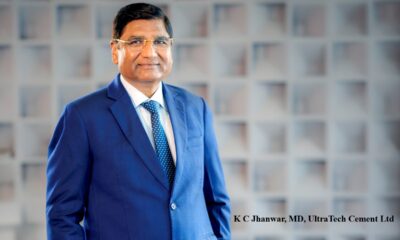
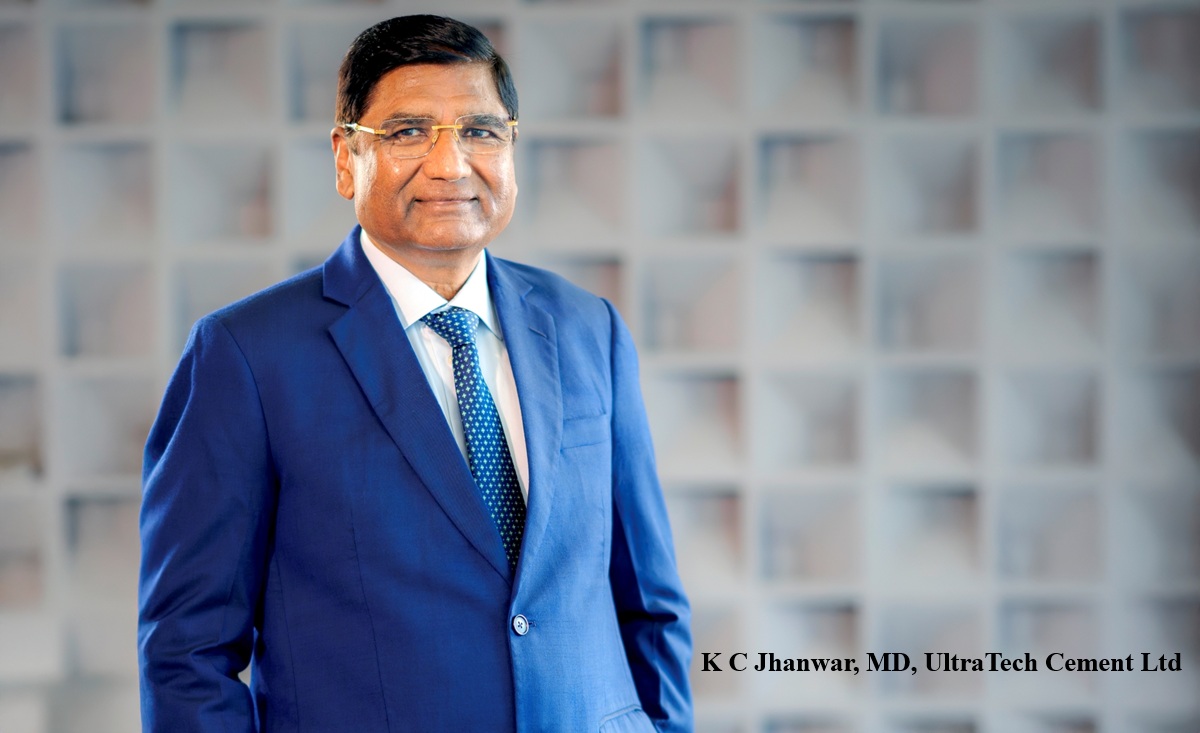
K C Jhanwar, Managing Director, UltraTech Cement Limited, said, “Crossing the 2 GW green energy milestone is the result of a strategy we have pursued consistently over the past decade. Cement is an energy-intensive, hard-to-abate sector, and showing that reliability and growth can go hand in hand with a rapid shift to green energy sets a benchmark for the industry. With nearly half of our power needs now met through green energy, we are significantly less exposed to fossil fuel supply constraints and power price volatility. As we scale up renewables, waste heat recovery and battery storage across our operations, we are building an energy foundation for stable, long-term growth.”

UltraTech commissioned 430 MW of green energy capacity in FY26 and continues to expand its renewable energy and waste heat recovery portfolio.

The company is also progressively integrating Battery Energy Storage Systems across its operations to improve renewable energy utilisation and supply reliability.

In 2025, UltraTech operationalised what it described as India’s first on-site hybrid round-the-clock renewable energy project at Sewagram Cement Works in Gujarat. The project combines solar, wind and battery storage.

As part of its decarbonisation strategy, UltraTech said it has not invested in new captive thermal power capacity for either greenfield projects or brownfield expansions at its integrated units for more than a decade.

The company said its expanding green energy portfolio is helping reduce dependence on conventional grid electricity and fossil fuel-based power, while lowering exposure to fluctuations in coal and electricity prices.

UltraTech aims to increase green energy’s share in its total power mix to 85 per cent by 2030. As a member of RE100, it has also committed to meeting 100 per cent of its electricity requirement through renewable sources by 2050.

UltraTech Cement, the cement flagship of the Aditya Birla Group, has a total grey cement capacity of 210.1 MTPA and white cement and putty capacity of 3.5 MTPA. The company is also a signatory to the GCCA Climate Ambition 2050 and has committed to the GCCA Net Zero Concrete roadmap.

Continue Reading

Video Thumbnail
▶

    SIGN-UP FOR OUR GENERAL NEWSLETTER

    Trending News

    SUBSCRIBE TO THE NEWSLETTER


    Don't miss out on valuable insights and opportunities to connect with like minded professionals.


      This will close in 0 seconds