Concrete
Supporting Technology with Regulation


Sridhar S Sundaram, Vice President, Head of Global Product Line – Grinding and Gears, FLSmidth explains the role of technology in enhancing cement manufacturing processes to enable bigger and faster strides towards net zero targets.
Productivity growth through automation in the cement industry has grown from use of technology in the old physiological days to Artificial Intelligence (AI) powered softwares today. Cement plants operate in an automated way but there are still manual interventions that happen in an operating plant. These variations are also controlled now with AI powered softwares. This is helping customers have minimum manual intervention in the operation of the cement plants and increase production up to 5 per cent. However, when productivity increases, the energy consumption also decreases since the systems are automated to use only the optimum amount of energy. FLSmidth has an optimisation software called Process Expert Controller (PXC), which does the trick for cement manufactures and helps them enhance their production and productivity levels.
Data is meant to enable better decision making. There is a control system, optimisation software and apart from these systems, there is also an application called Site Connect. Data from the control system is available at the head office in a monitor, tablet and mobile phone that enables better decision making and managerial interventions, which in due course of time better production and profits. This kind of digitalisation is at a nascent stage. The aim is to get as many plants connected as possible. Data from this software goes to the cloud, then back to the stakeholders i.e., FLSmidth headquarters, customer headquarters, and to all those who need the data to make better decisions.
Work is also in progress on the backend algorithms for data collection. Based on these algorithms, there can be alarms, flags etc., enabling predictive interventions of plant maintenance.

No Alternative to Safety
There are quite a few experts who have spoken about how to reduce CO2. OxyRich fuel and Green Hydrogen are the next generation topics as we exhaust the existing alternative fuel options. When we go from the present 15 per cent use of alternative fuels to 50 to 60 per cent use of alternative fuels, that itself will take care of the sustainability aspect of the cement industry. Beyond this, when CO2 capture is thought of then OxyRich and Green Hydrogen come into play. This technology is evolving and will eventually benefit all industries that have a high emission rate.
The industry must use alternative fuels. Agriculture wastes can contribute up to 10 per cent of alternative fuels. Now, the industry is targeting 30 to 50 per cent use of alternative fuels, which comes out as waste derived fuels. Feedback that has come from the cement plants states that the odour and other problems associated with these fuels could be hazardous to the health. While it is encouraged for cement plants to use alternative fuels, the challenge is to safeguard every employee at the plant and surroundings with the other harmful effects of the waste derived fuels. The approach towards the use of waste derived fuels should be in a manner that all aspects of its use and safety should be taken care of before its implementation.
Technology at its best
The industry has an intention to reduce its carbon footprint and make cement production friendly for the environment. However, without governance and regulation, the implementation will be a challenge and there will be no standard practice. If you go back 30 years when stacks in cement plants had a lot of dust, it was the government that made the norms and kept making them stricter, which has led to a highly reduced dust emission from cement plants. Similarly, usage of technology for reduction of carbon footprint will require intervention and regulation for cement players.
In Europe, there is a penalty known as carbon tax while the talk of Indian industry is Sustainability Incentive. Either way, there needs to be an intervention to bring down emission levels in any industry.
Future Collaborations
FLSmidth is always with its customers. And the company has a mission zero roadmap, too. The strategy and aim are to design a plant with zero emission by 2030. There are steps involved to this.
The first step is to modernise old plants, which will have a huge impact on reducing carbon emission and energy consumption. Second step would be to collaborate with new technologies and make them available in the market in an accelerated manner. For this, a deal has been signed with Dalmia Cement that both companies will collaborate in pushing the sustainability agenda at a much larger scale than before. With Dalmia Cement as a partner, FLSmidth can immediately test its new technologies. Once that is successful, it can be taken to the market faster than before.
The company is looking at partnerships with leading players to help bring better technology to the industry. Their role, too, is key in bringing a change and FLSmidth is looking forward to collaborating with all players of the Indian cement industry.
ABOUT THE AUTHOR:
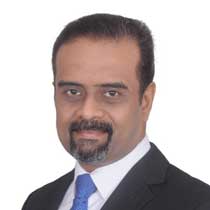
Sridhar S Sundaram, VP & Head of Global Product Lines – Grinding and Gears, holds managerial expertise with varied and international experience in Technical, Sales and O&M functions.











Concrete
NDMC Rolls Out Intensive Sanitation Drive Across Lutyens Delhi
Municipal body intensifies cleaning and monitoring across the capital

Concrete
UltraTech Appoints Jayant Dua As MD-Designate For 2027
Executive named to succeed current managing director in 2027

Concrete
Merlin Prime Spaces Acquires 13,185 Sq M Land Parcel In Pune
Rs 273 crore purchase broadens the developer’s Pune presence



NDMC Rolls Out Intensive Sanitation Drive Across Lutyens Delhi

UltraTech Appoints Jayant Dua As MD-Designate For 2027

Merlin Prime Spaces Acquires 13,185 Sq M Land Parcel In Pune

Adani Cement and Naredco Partner to Promote Sustainable Construction

Operational Excellence Redefined!
NDMC Rolls Out Intensive Sanitation Drive Across Lutyens Delhi
UltraTech Appoints Jayant Dua As MD-Designate For 2027
Merlin Prime Spaces Acquires 13,185 Sq M Land Parcel In Pune
Adani Cement and Naredco Partner to Promote Sustainable Construction