Connect with us

Concrete

Holcim Russia becomes Cementum

Published

on

Shares

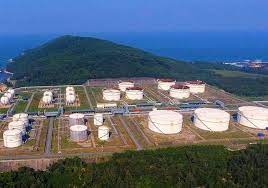
Holcim’s divested Russian business has been rebranded as Cementum. Local management concluded a deal to buy the company from Switzerland-based Holcim in December 2022. The new ownership agreed to change the name upon completion of the transaction. Holcim Russia had been operating as a deconsolidated subsidiary of Holcim since March 2022, following Russia’s invasion of Ukraine.

Images Source: Google Images

Concrete

Cement Prices Likely To Rise As Petcoke Costs Increase

Nuvama warns input costs may lift prices by early April 2026

Published

on

By

Shares


A report by Nuvama Wealth Management said cement prices in India could rise by the end of March or early April 2026 as producers face higher input costs linked to crude oil. The report identified rising petroleum coke and packaging material costs as principal drivers of upward pressure on production expenses. Petroleum coke, a fuel used in cement manufacturing, rose by about 13 per tonne (t) in US dollar terms in February 2026, a change that could be passed on to buyers. Producers may adjust prices later in the quarter to protect margins.

Cement demand remained stable during February and March 2026, supported by ongoing construction and infrastructure activity, and earlier price increases on non-trade sales were largely reversed by the end of February. Retail prices remained broadly steady through March in most regions. The persistence of demand may allow firms to manage price adjustments rather than apply uniform increases. Market responses will vary by region and logistical cost pressures.

Nuvama said that stock performance of cement companies will likely be influenced by the path of cement prices and petroleum coke costs in the coming weeks. Rising input costs including crude linked fuels and packaging may squeeze profit margins and prompt firms to monitor pricing and demand closely. The balance between input inflation and end demand will determine whether companies absorb costs or transfer them to customers. Analysts will watch forthcoming quarterly results for evidence of margin pressure or successful cost pass through.

Government capital expenditure showed moderation, with overall capex declining 24 per cent year-on-year to around Rs 2 trillion (Rs 2 tn) in January 2026 and cumulative capex from April 2025 to January 2026 at about Rs 20 trillion (Rs 20 tn), up eight per cent year-on-year. The report noted that real estate launches fell 44 per cent year-on-year in January 2026, and overall healthy demand could still be offset by rising crude linked input costs that may push cement prices higher by late March or early April 2026.

Continue Reading

Concrete

IIT Guwahati Develops Radiation-Resistant Cement Mortar

Modified mortar offers structural strength and radiation shielding

Published

on

By

Shares


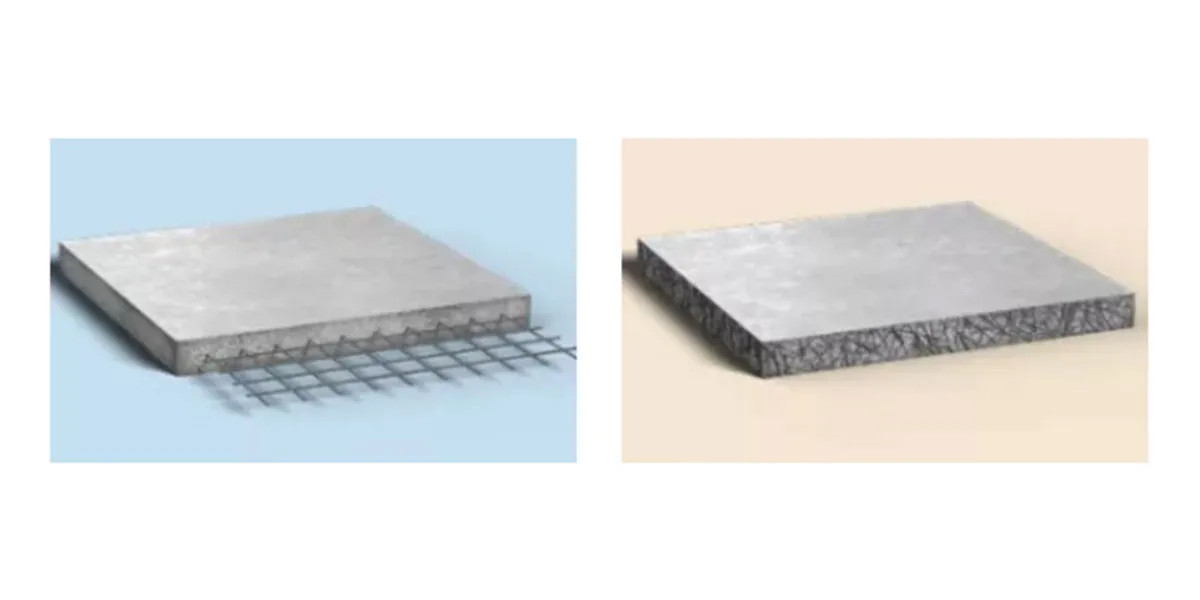
Researchers at the Indian Institute of Technology Guwahati (IIT Guwahati) have developed a cement mortar that is stronger, more durable and more effective at blocking harmful radiation for nuclear facilities. The modified mortar is designed to act as both a structural component and a radiation shielding barrier by increasing density and durability to limit radiation penetration. Concrete made with the enhanced mortar is expected to reduce the risk of radiation leakage and to support protective structures over extended periods.

To achieve this, the team incorporated four types of microparticles into the cement mortar: boron oxide, lead oxide, bismuth oxide and tungsten oxide. These microparticles were added in small quantities to assess their impact on compressive strength after 28 days and on the material’s ability to shield mixed radiation fields comprising gamma rays and neutrons. The study reported distinct effects for each microparticle, indicating trade-offs between mechanical strength, workability and radiation attenuation.

Professor Hrishikesh Sharma of the Department of Civil Engineering at IIT Guwahati said the safety of nuclear infrastructure depends on the performance of containment materials under extreme mechanical and radiation environments and that the study showed microparticle modifications can improve structural integrity and shielding. The research offers a framework for developing cement-based materials for nuclear power plants, small modular reactors and medical radiation facilities by enhancing resistance to heat, structural loads and radiation. The study was published in Materials and Structures and was co-authored by Professor Sharma, research scholar Sanchit Saxena and Dr Suman Kumar of CSIR-Central Building Research Institute, Roorkee.

Future work will scale up the developed mortar to a full concrete mix design, conduct structural-level testing of reinforced concrete elements and optimise microparticle dosage to balance mechanical strength, workability, durability and shielding performance. The team is seeking collaborations with nuclear energy agencies, material manufacturers and infrastructure firms for real-world testing and pilot applications. These steps aim to validate performance under simulated field conditions and support safer, more resilient nuclear infrastructure.

Continue Reading

Concrete

Cement Excellence Redefined!

Operational excellence in cement is no longer about producing more – it is about producing smarter, cleaner and more reliably, where cost per tonne meets carbon per tonne.

Published

on

By

Shares


Operational excellence in cement is no longer about producing more – it is about producing smarter, cleaner and more reliably, where cost per tonne meets carbon per tonne.

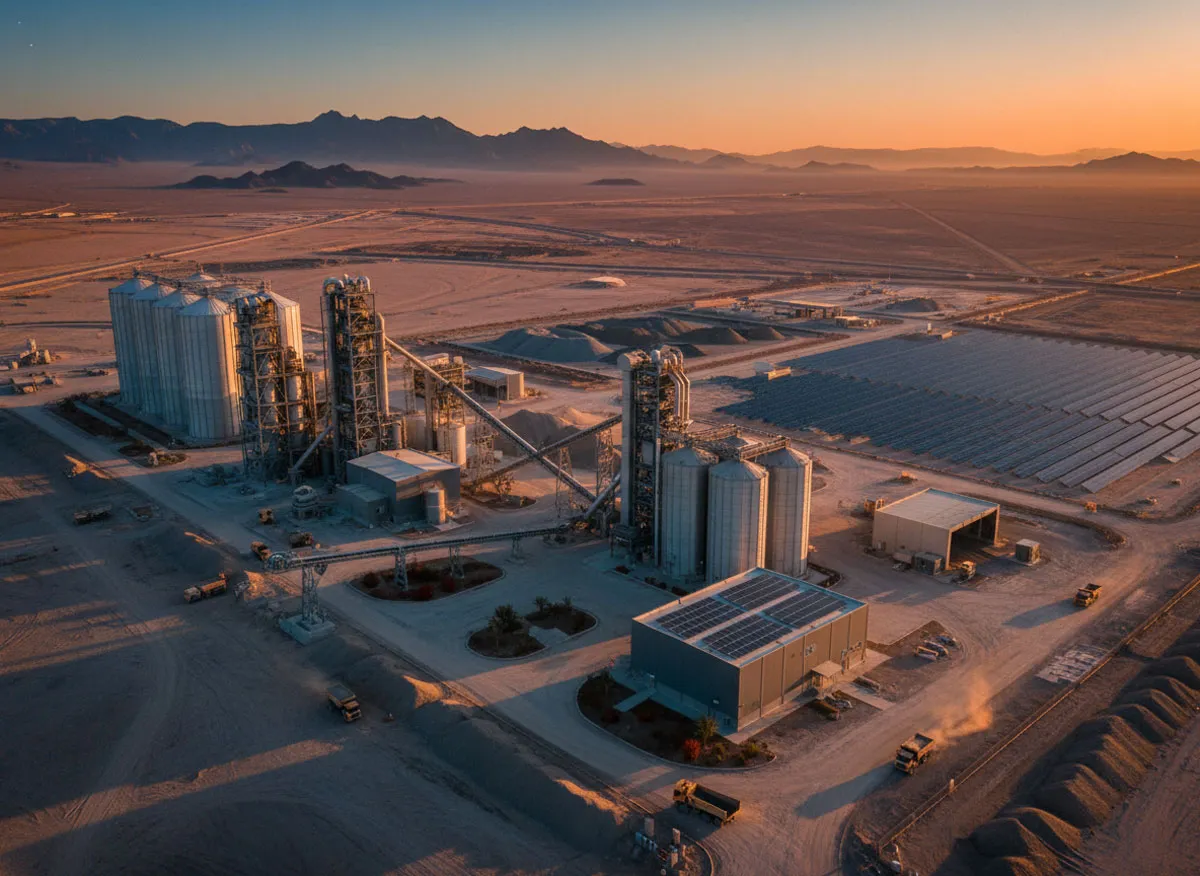
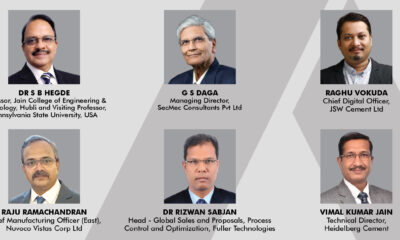
Operational excellence in cement has moved far beyond the old pursuit of ‘more tonne’. The new benchmark is smarter, cleaner, more reliable production, delivered with discipline across process, people and data. In an industry where energy can account for nearly 30 per cent of manufacturing cost, even marginal gains translate into meaningful value. As Dr SB Hegde, Professor, Jain College of Engineering & Technology, Hubli, and Visiting Professor, Pennsylvania State University, USA, puts it, “Operational excellence is no longer about producing more. It is about producing smarter, cleaner, more reliably, and more sustainably.”

To read the full article Click Here

Continue Reading

Trending News

SUBSCRIBE TO THE NEWSLETTER


Don't miss out on valuable insights and opportunities to connect with like minded professionals.


    This will close in 0 seconds