

Technology
Impactful Branding

As the marketing scenario rapidly shifts to accommodate trends and customer preferences, cement companies need to reinvent their branding strategies. With the onslaught of digital marketing, especially social media, the branding exercise has taken on a new avatar. We unravel the nuances of branding, advertising and marketing communications for cement companies as each one vies for their share of the customer’s attention, and get experts to share their winning strategies with us.
How does one create loyalty for the product they have on offer? How do they communicate about what their product is all about? How do they stand apart from the clutter in the market? The answer to all these questions is branding.
A branding strategy by definition is a long-term plan to achieve a series of long-term plans to achieve a series of goals that ultimately result in the identification and preference of the brand by consumers. This strategy encompasses the brand’s mission, its promises to its customers, and how these are communicated to send the right message to the right audience.
Any product or commodity needs a branding strategy because branding promotes recognition. A good branding strategy helps build a loyal customer base, sets your product offering apart from competition and allows you to build a standard communication across all channels with a vision and mission in mind and connect emotionally with your customers.
“Although going against the tide of producing easily marketable cement, JSW Cement has chosen the less travelled path by producing cement, which is least harmful to the environment, hence, this makes us the leading producer of green /sustainable cement in India. This feat is achieved by using raw materials like slag and having efficient processes, which reduces carbon emissions by one-third of world industry average,” says Gurminder Singh, Head – Branding, JSW Cement.
“Promoting sustainable living coupled with the unmatched physical strengths of slag cement forms the basis of our branding strategy. We promote this through – TVC, giving sustainable gifts, using eco-friendly raw materials etc.,” he adds.
Changing the marketing game
Cement is a commodity widely used across the globe and there are many cement players in India as well. Branding allows them to stand apart from the competition and get a hold on the market share with its various efforts, like production, distribution, marketing etc. According to Statista reports in FY2020, Ultratech Cement held the highest market share in India with 31 per cent of the total market. Followed by Ambuja Cement with 21 per cent market share, ACC Limited with 12 per cent market share and so on.
Agnes Rozario, Manager – Brand and Customer Excellence, AKB Group says, “Building a brand in the cement industry is multidimensional but not bewildering. The Indian subcontinent has seen some very well-known brands crafting remarkable campaigns to make a mark in customers’ minds and all of them indulged in the product, service innovation and customer excellence. As we focus on the current scenario, householders account for almost a larger part of cement consumers, very evidently pointing out that this industry in India has become a brand-conscious segment with a constant need to brand the cement. Brands like JK Cement, UltraTech Cement and ACC deployed 360-degree consumer benefit-based positioning strategies for but not limited to OOH, print media, electronic ads, etc. We witnessed brands using humour (The Great Khali ad of Ambuja Cement), onboard celebrities like Amitabh Bachchan and Sourav Ganguly to amplify their personal brand in building awareness for the company’s USPs.”

“With a plethora of multi-channel brand activities taking place, we feel that players in the Indian Cement industry are breaking the ceiling of traditional brand marketing and adapting new viewpoints. To cement brand value in the market, consistency and the ability to vary has been the key for any successful player today,” she adds.

A November 2021 report by EPRA International Journal of Research and Development (IJRD), states that the cement industry is required to operate in a social and environment that needs to handle a market of continuous changing customers’ product preferences. The production and marketing development becomes a major activity for the cement industry of these companies. The marketing environment in the industry is competitive and dynamic and slowly all the companies are adopting new age, digital based and unique marketing strategies to be in competition in the Indian cement market not only for survival
but also for growth and development in the cement industry.
Customer-centric approach
A study conducted by Dr Pawan Kumar Dubey, Dr Umesh Kumar and Dr Arivend concludes that cement companies are well aware of the importance of focusing customers. Cement companies are willing to cater new customer segments. It shows the level of competition among the existing cement companies in the market. Any company offers a product or service in the market immediately introduced by its competitors in the market. It can be inferred that the cement industry is highly competitive.

The results also show that technology plays an important role in the growth of the cement industry. Companies have to be ready for the change in the technology to utilise this opportunity. It is required for cement companies to keep the same pace in the change in the technology within the company to contribute to the industry as a whole. They must also check about the benefits they are getting from this contribution and act accordingly.
Cement organisations are moving digital, especially in the post pandemic era. They are launching campaigns to connect with consumers of the younger age group too. Companies are touching upon issues that matter to the environment and other important issues through their digital campaigns. In January 2022, Ambuja Cement and ACC limited launched their first corporate campaign #ChangeTheStory that highlights the plastic removal efforts of the cement majors in the country. The #ChangeTheStory campaign expects to elevate the narrative around sustainability challenges with a sense of urgency by showcasing technology-backed solutions that offer effective and measurable outcomes. This campaign aims to rewrite the problems of the present and create solutions that will benefit the future of society.
Another top cement brand JK Cement launched its digital-first campaign, WallMax, to reiterate its position as the No.1 Wall Putty brand in India. The brand has adopted a 360-degree route to amplify the message, commencing with a series of quirky and intent-driven films on social media. The campaign conveys the message that attaining the No.1 position gives a proud feeling but it comes with the responsibility to create a difference in the lives of the customers.
Socially inclined
“Social media and digital marketing have picked up a lot in recent times. We are a young brand and right from the beginning we have been active on social media platforms and digital channels. We are working hard on these mediums and have been doing a lot of campaigns like People of Wonder, Stories of Wonder etc. where we engage our network, architects, contractors, masons and everyone involved with the brand,” says Siddharth Singhvi, Associate Vice President – Business Excellence, Wonder Cement.
“One of the biggest activation campaigns we did was in 2015. We thought of doing a customer activation through cricket and named it ‘Saath Saath Cricket Mahotsav’. At that time, we involved more than two lakh people on the ground directly and they played with us. Multiply that with their family members coming to see the matches, so all in all we touched about 2.5 to 3 crore people across Rajasthan, Gujarat and Madhya Pradesh. This was a path breaking campaign, one of a kind campaign done by a cement player,” he added.

Branding has always been a vital part of business, but it may be more important now than ever before. With social media, consumers get exposed to new brands every day. This can be great for consumers who have plenty of options and are able to do research to find the best one, but it makes it harder for businesses.
Branding helps the company build trust with its customers by communicating its mission and creating a promise of delivery quality. It helps create advertising for your product and build a connection with your customers and gain their loyalty. Branding is giving your product and organisation a personality, a voice, identity and positioning in the market.
–Kanika Mathur





Jignesh Kundaria, Director and CEO, Fornnax Technology
India is simultaneously grappling with two crises: a mounting waste emergency and an urgent need to decarbonise its most carbon-intensive industries. The cement sector, the second-largest in the world and the backbone of the nation’s infrastructure ambitions, sits at the centre of both. It consumes enormous quantities of fossil fuel, and it has the technical capacity to consume something else entirely: the waste our cities cannot get rid of.
According to CPCB and NITI Aayog projections, India generates approximately 62.4 million tonnes of municipal solid waste annually, with that figure expected to reach 165 million tonnes by 2030. Much of this waste is energy-rich and non-recyclable. At the same time, cement kilns operate at material temperatures of approximately 1,450 degrees Celsius, with gas temperatures reaching 2,000 degrees. This high-temperature environment is ideal for co-processing, ensuring the complete thermal destruction of organic compounds without generating toxic residues. The physics are in our favour. The infrastructure is not.
Pre-processing is not the support act for co-processing. It is the main event. Get the particle size wrong, get the moisture wrong, get the calorific value wrong and your kiln thermal stability will suffer the consequences.
The Regulatory Push Is Real
The Solid Waste Management (SWM) Rules 2026 mandate that cement plants progressively replace solid fossil fuels with Refuse-Derived Fuel (RDF), starting at a 5 per cent baseline and scaling to 15 per cent within six years. NITI Aayog’s 2026 Roadmap for Cement Sector Decarbonisation targets 20 to 25 per cent Thermal Substitution Rate (TSR) by 2030. Beyond compliance, every tonne of coal replaced by RDF generates measurable carbon reductions which is monetisable under India’s emerging Carbon Credit Trading Scheme (CCTS). TSR is no longer a sustainability metric. It is a financial lever.
Yet our own field assessments across multiple Indian cement plants reveal a sobering reality: the primary barrier to scaling AFR adoption is not waste availability. It is the fragmented and under-engineered pre-processing ecosystem that sits between the waste and the kiln.
Why Indian Waste Is a Different Engineering Problem
Indian municipal solid waste is not the material that imported shredding equipment was designed for. Our waste streams frequently exceed 40 per cent to 50 per cent moisture content, particularly during monsoon cycles, saturated with abrasive inerts including sand, glass, and stone. Plants relying on imported OEM equipment face months of downtime awaiting proprietary spare parts. Machines built for segregated, low-moisture waste fail quickly and disrupt the entire pre-processing operation in Indian conditions.
The two most common failures we observe are what I call the biting teeth problem and the chewing teeth problem. Plants relying solely on a primary shredder reduce bulk waste to large fractions, but the output remains too coarse for stable kiln combustion. Others attempt to use a secondary shredder as a standalone unit without a primary stage to pre-size the feed, leading to catastrophic mechanical failure. When both stages are present but mismatched in throughput capacity, the system becomes a bottleneck. Achieving the 40 to 70 tonnes per hour required for meaningful coal displacement demands a precisely coordinated two-stage process.
Engineering a Made-in-India Answer
At Fornnax, our response to these challenges is grounded in one principle: Indian waste demands Indian engineering. Our systems are built around feedstock homogeneity, the holy grail of kiln stability. Consistent particle size and predictable calorific value are the foundation of stable kiln combustion. Without them, no TSR target is achievable at scale.
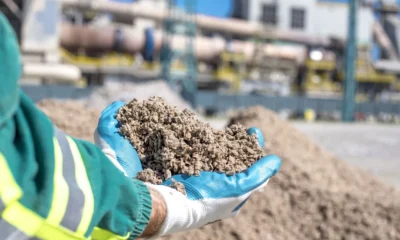
Our SR-MAX2500 Dual Shaft Primary Shredder (Hydraulic Drive) processes raw, baled, or loosely mixed MSW, C&I waste, bulky waste, and plastics, reducing them to approximately 150 mm fractions at throughputs of up to 40 tonnes per hour. The R-MAX 3300 Single Shaft Secondary Shredder (Hydraulic Drive), introduced in 2025, takes that primary output and produces RDF fractions in the 30 to 80 mm range at up to 30 tonnes per hour, specifically optimised for consistent kiln feeding. We have also introduced electric drive configurations under the SR-100 HD series, with capacities between 5 and 40 tonnes per hour, already operational at a leading Indian waste-processing facility.
Looking ahead, Fornnax is expanding its portfolio with the upcoming SR-MAX3600 Hydraulic Drive primary shredder at up to 70 tonnes per hour and the R-MAX2100 Hydraulic drive secondary shredder at up to 20 tonnes per hour, designed specifically for the large-scale throughput that higher TSR ambitions require.
The Investment Case Is Now
The 2070 Net-Zero target is not a distant goal for India’s cement sector. It starts today, with decisions being made on the plant floor.
The SWM Rules 2026 are already in effect, requiring cement plants to replace coal with RDF. Carbon credit markets are opening up, and coal prices are not going to get cheaper. Every tonne of coal a cement plant replaces with waste-derived fuel saves money on one side and generates carbon credit revenue on the other. Pre-processing infrastructure is no longer just a compliance requirement. It is a business investment with a measurable return.
The good news is that nothing is missing. The technology works. The waste is available in every Indian city. The government has provided the policy direction. The only thing standing between where the industry is today and where it needs to be is the commitment to build the right infrastructure.
The cement companies that move now will not just meet the regulations. They will be ahead of every competitor that waits.
About The Author
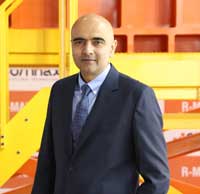
Jignesh Kundaria is the Director and CEO of Fornnax Technology. Over an experience spanning more than two decades in the recycling industry, he has established himself as one of India’s foremost voices on waste-to-fuel technology and alternative fuel infrastructure.


Cement Prices Likely to Rise Rs. 10-15 per Bag from Mid-October

Nuvoco Marks 10 Years, Targets 35 MMTPA Capacity by FY28

J&K Government Notifies City Gas Distribution Policy

JSW Cement Commissions 1 MTPA Grinding Unit at Nagaur

JSW Cement Commissions 1 MTPA Unit in Rajasthan
Cement Prices Likely to Rise Rs. 10-15 per Bag from Mid-October
Nuvoco Marks 10 Years, Targets 35 MMTPA Capacity by FY28
J&K Government Notifies City Gas Distribution Policy
JSW Cement Commissions 1 MTPA Grinding Unit at Nagaur
JSW Cement Commissions 1 MTPA Unit in Rajasthan
-

 Concrete3 weeks ago
JSW Cement Receives Rs. 2.3 bn GST Demand Notice
-

 Concrete3 weeks ago
Andhra Pradesh Clears Rs. 30 bn My Home Cement Plant
-
 Concrete4 weeks ago
Jammu Division Begins First Cement Rail Traffic to Anantnag
-
 Concrete3 weeks ago
Montra Electric, Wonder Cement Deploy 250-Vehicle EV Fleet