Connect with us

Concrete

Is there a Real Need for Alternate Cements – A Review

Published

on

Shares

The possibility of alternative cements reducing carbon emission

Most economic growth in this century is projected to be in developing countries and statistics already show that these are the same places that are now consuming 93% of the cement produced globally. Consequently, global demand for cement is presently growing at a rate of about 4 % per annum. It is in these places of high growth and need for new infrastructure where aggressive changes in construction practices may also initiate fundamental change in the chemistry of infrastructure cement.

While the composition of OPC has remained largely the same since last century, and the mechanisms of OPC hydration and structure of C-S-H remain difficult to interpret. However, major advances in the use and performance of cement have come from three fundamental areas: (1) construction technology; (2) the science and engineering of composite materials; and (3) admixture chemistry, both organic and inorganic.

Alternative cements could be defined as inorganic cementitious materials that can be used for construction, but whose properties and composition are not yet specified by existing standards, codal practices and regulations.

The evolution of new cement types will need to overcome both technical and non-technical barriers. Requirements for mechanical performance and long-term durability are critical, but standards and specifications, whether prescriptive or performance-based, will also require robust evolution. In addition, confidence in new materials must be acquired by the end user (e.g., contractors) in the field-based application of new cements. In each case, some application flexibility will be needed, because new cements may need to be processed and placed in a manner somewhat different from OPC-based concrete.

Substantial progress should be made scientifically, before these cements can be manufactured at industrial scales. On the other hand, Calcium Sulpho Aluminate cements (CSA) appear to be emerging as a leading alternative cement over the next decade. Indeed, in near future commercial production of CSA cements appears to be implemented in the Western world.

In broader terms, the stimulus and time scale to innovation and evolution of alternative cements depends on public policy. Scientific developments and technology can inform debates, but if the cement industry is to remain competitive in the face of possible policy-driven mandates, it needs to present realistic, viable and impactful alternatives to traditional OPC.

A shift away from OPC will tend to compromise the calcium buffer, and hence the extent of passivity afforded, but simultaneous changes in reinforcing materials away from ferrous metals (e.g. fiber-reinforced polymers) may reduce the need for corrosion resistance. Nevertheless, because of the driving force to reduce CO2 emissions, some alternative cements that may emerge in the next 100 years appear promising.

Click here to read more

Concrete

Lokesh Lays Stone For Rs 31 Billion Cement Unit In Kadapa

Line-2 expansion to make Kadapa a major cement hub

Published

on

By

Shares


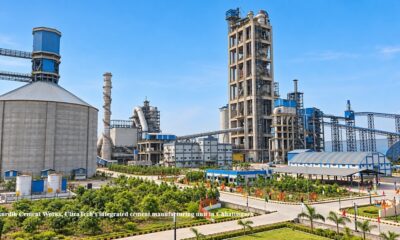
Andhra Pradesh Education and IT Minister Nara Lokesh on Wednesday laid the foundation stone for the Line-2 expansion of Dalmia Bharat Cement at Chinnakomerla village in Mylavaram Mandal in Kadapa district. The project carries an investment of Rs 31 billion (bn) and is slated for completion by the third quarter of the financial year 2028. The expansion is intended to boost industrial growth and employment generation across the Rayalaseema region.

Once commissioned, the Kadapa facility will become Dalmia Bharat’s largest integrated cement manufacturing ecosystem in southern India, creating over 1,000 direct and indirect jobs and opening new business avenues for regional micro, small and medium enterprises and transport operators. Lokesh said the expansion signalled growing corporate confidence in the state and reflected the practical ease of doing business that secured repeat investment.

He placed the project within the government’s wider economic targets and recalled the Yuvagalam padayatra commitment to generate two million (mn) jobs within five years, noting that the state would cultivate talent while industry created opportunities. Lokesh highlighted Andhra Pradesh’s competitive pursuit of major manufacturing accounts, mentioning past successes and a personal initiative to engage global investors when persuading them to anchor expansion in the state.

The plant will leverage Kadapa’s abundant limestone reserves to scale production and sustainability. Clinker capacity is planned to rise from two point five million tonnes per annum (mn tpa) to six point one mn tpa, while overall cement output will increase from three point six mn tpa to nine point six mn tpa. The unit is designed to operate on over eighty per cent renewable energy and deploy waste heat recovery, zero liquid discharge, water recycling and advanced AI systems to optimise efficiency. Industries Minister TG Bharat, BC Welfare Minister S. Savitha and Jammalamadugu MLA C. Adinarayana Reddy attended the ceremony.

Continue Reading

Concrete

Cement Prices to Stay Flat in Q2 FY27 as Costs Squeeze Margins

HDFC Securities warns monsoon slowdown and higher fuel costs

Published

on

By

Shares


HDFC Securities has said the cement industry is unlikely to register a sequential increase in prices in Q2 FY27 as monsoon-related demand moderation coincides with rising fuel and packaging costs that will squeeze margins. The brokerage observed that price gains remained modest, with increases of two to three per cent quarter-on-quarter across regions, and noted subdued offtake in May with improvement in June as a delayed monsoon supported construction activity. The brokerage added that modest pricing gains so far have been insufficient to offset the input cost escalation.

The report stated that input cost pressures intensified in Q1 FY27 owing to the West Asia conflict, which pushed up coal and pet coke prices and is expected to keep fuel costs elevated, with a likely peak in Q2 FY27. It assessed that total variable costs, including packing, could rise by around Rs 150 per t quarter-on-quarter and that lower offtake and seasonal operating deleverage could further raise operating expenditure by about Rs 50 per t quarter-on-quarter.

Overall, cement prices were estimated to remain flat in Q2 FY27 as monsoon-led demand weakness offsets limited upside in realisation, and rising fuel costs alongside seasonal deleverage were expected to compress industry margins by over Rs 100 per t quarter-on-quarter to below Rs 880 per t. The brokerage indicated that the combined impact of energy inflation and higher packing expenditure would be the principal drivers of margin contraction in the near term. HDFC Securities projected a recovery in margins in H2 FY27 should the West Asia turmoil subside and energy and packing costs cool off.

The brokerage expressed optimism on long-term demand fundamentals and said improving realisation together with an anticipated cost cool-off should support a margin rebound from H2 FY27 onward, underpinning favourable industry prospects over the medium term. Its outlook rests on monsoon normalisation and a decline in imported fuel prices in the second half of the fiscal year.

Continue Reading

Concrete

Dalmia Bharat Begins Rs 31 Bn Green Cement Unit in Kadapa

New Andhra Pradesh plant to add 9.6 MTPA cement capacity by FY28

Published

on

By

Shares


Dalmia Bharat Limited recently laid the foundation stone for its second manufacturing unit at Kadapa in Andhra Pradesh. The company will invest Rs 31 billion in developing the next-generation integrated cement manufacturing facility.
The foundation-laying ceremony was attended by Nara Lokesh, Andhra Pradesh Minister for Information Technology, Electronics and Communications, Real-Time Governance and Human Resources Development, along with Puneet Dalmia, Managing Director and Chief Executive Officer, Dalmia Bharat, senior government officials and company representatives.
Scheduled to be commissioned by the third quarter of FY28, the Kadapa unit will become Dalmia Bharat’s largest integrated manufacturing facility in southern India. It will have a clinker production capacity of 6.1 million tonnes per annum and a cement manufacturing capacity of 9.6 million tonnes per annum.
The facility is designed to produce what the company describes as one of the world’s greenest cements. It is also expected to generate approximately 1,000 direct and indirect employment opportunities while supporting local MSMEs, transporters, contractors and service providers.
Lokesh said the investment reflected Dalmia Bharat’s confidence in Andhra Pradesh and aligned with the state’s objective of promoting sustainable industrialisation, job creation and technology-led economic growth.
Puneet Dalmia said the project represented the company’s long-term vision of developing low-carbon cement manufacturing assets. He added that the facility would establish new benchmarks in operational efficiency and sustainability while supporting India’s infrastructure and environmental goals.
Dalmia Bharat will also expand its regional community development programmes in education, healthcare, skill development and welfare through its DIKSHa and Gram Parivartan initiatives.
The company currently has an installed cement manufacturing capacity of 54.7 million tonnes across 19 manufacturing units in 12 states. It is also the first cement company globally to commit to the RE100, EP100 and EV100 initiatives.

Continue Reading

Video Thumbnail

    SIGN-UP FOR OUR GENERAL NEWSLETTER


    Trending News

    SUBSCRIBE TO THE NEWSLETTER


    Don't miss out on valuable insights and opportunities to connect with like minded professionals.


      This will close in 0 seconds