Connect with us

Concrete

Growing and Diversifying

Published

on

Shares

Dalmia Bharat Limited, one of the leading cement manufacturing companies, has reported its consolidated financial results for the quarter ending December 31, 2021.

Highlights for the quarter 

(Figures in Rs. Cr.)
Particulars (Rs. Cr)Q3FY22Q3FY219MFY229MFY21
Sales Volume (MnT)5.75.815.614.3
Income from Operations2,7312,7377,8956,951
EBITDA4096811,7431,994
Profit Before Tax93311786977
Profit After Tax73179575601
PAT Margin (%)2.7%6.5%7.3%8.6%
EPS* (Rs.)5.19.728.132.2
Net Debt to EBITDA (x)(0.64)0.56(0.64)0.56

            *Includes both continuing and discontinued operations

Commenting on the results, Puneet Dalmia, Managing Director – Dalmia Bharat, said, “The industry witnessed a difficult quarter with unprecedented cost escalations coupled with a weak demand scenario. However, we believe that the peak of costs is behind us and both the demand and prices are showing some strength.” 

He further added, “With recent economic data suggesting recovery in macro indicators, I am excited about the tremendous opportunity ahead. We are pursuing our growth ambitions conscientiously and are making investments to deliver sustainable and profitable growth while ensuring consistency and predictability of our earnings.”

Mahendra Singhi, Managing Director and CEO – Dalmia Cement (Bharat), said, “In spite of a tough quarter, we have delivered sales volume in line with the industry. The margins, during the quarter, were impacted due to a significant inflation in the energy prices and market weakness in core regions of our operation. However, beginning mid-December, things have started to look good. To mitigate impact of external exigencies, we are working to further strengthen our operational efficiencies and explore avenues of cost rationalisations.” 

  1. In line with Capital Allocation Framework, the company has completed Sale of Hippo Stores (the retail venture) on 31st December, 2021 by way of slump sale to Hippostores Technology Pvt. Ltd., a promoter group company for a consideration of Rs. 155 cr. 
  1. To spearhead its journey towards the goal of becoming Carbon Negative by 2040, the Company has appointed Dr. Arvind Madhukar Bodhankar as ESG Head and Chief Risk Officer 
  1. In line with the vision to build a pan India company, it has commercialised its 2.9Mnt Murli Plant in Maharashtra, which marks the beginning of its manufacturing presence in western India.

Key recognitions 

  • First company in cement sector to receive accreditations by two prominent green rating systems – ‘GRIHA’ and CII –IGBC.
  • First cement company in India to receive a green accreditation from the Green Product Rating for Integrated Habitat Assessment (GRIHA) council.
  • Awarded the prestigious GreenPro Ecolabelling Certificate by the Indian Green Building Council (IGBC), a part of the Confederation of Indian Industries (CII).  
  • Dalmia Cement won following Multiple Apex Green Leaf Awards
  • In corporate category for Sustainability in Cement Sector 
  • For Environment Excellence bagged by Company’s Rajgangpur unit
  • Ministry of Mines (GOI) awarded the Belgaum mines with 5 Star Award in Sustainability 
  • Dragons of Asia Awards 2021(Bronze) to Dalmia Delight, company’s dealer loyalty programme

Concrete

Star Cement Named Preferred Bidder For Boro Lakhindong Block

Preferred bidder for limestone mining lease in Assam

Published

on

By

Shares


Star Cement has been declared the preferred bidder for the mining lease for Boro Lakhindong West Block following e-auctions conducted by the Government of Assam. The block is located in Boro Lakhindong Village, Umrangso Tehsil, Dima Hasao District, Assam, and extends over an area of 123 hectares. The estimated limestone resource is 207.822 million (mn) tonnes (t), a quantity that will supply raw material for cement production and support the company’s manufacturing operations in the region.

The company is engaged in the manufacturing and selling of cement clinker and cement and distributes products across the north-eastern and eastern states of India. Star Cement operates plants and logistics networks that procure and process limestone to produce clinker for cement, and the addition of Boro Lakhindong is presented as a strategic enhancement of feedstock availability. The preferred bidder status secures rights to the specified lease area under the terms of the auction process.

Financial results for the company in the fourth quarter of fiscal year 2026 showed a consolidated net profit rise of 20.24 per cent to Rs 1,481.0 mn on an 11.54 per cent increase in revenue to Rs 11,735.5 mn compared with the corresponding quarter of the previous year. Those results reflected higher sales volumes and revenue growth in the company’s primary markets and are cited in company disclosures accompanying the lease announcement. The reported performance provides context to the company’s ability to pursue and finance new mining lease opportunities.

Market reaction to the declaration was modest, with the scrip rising zero point thirty six per cent to trade at Rs 212 on the BSE. The award of the Boro Lakhindong lease concludes the e-auction process for the west block and assigns operational rights to Star Cement as the preferred bidder, subject to completion of statutory and contractual formalities.

Continue Reading

Concrete

KERC Proposal To Cut Rooftop Solar Export Tariff Raises Concern

Consumers and advocates urge regulator to reconsider change

Published

on

By

Shares


The Karnataka Electricity Regulatory Commission (KERC) has proposed a reduction in the tariff paid for surplus electricity that rooftop solar installations export to the grid, prompting concern among consumers, renewable energy advocates and industry specialists. The proposal arrives while the Central government and state governments are promoting clean energy adoption and offering subsidy schemes to encourage rooftop solar deployment. Thousands of households in Karnataka, particularly in Bengaluru, have invested substantial sums in rooftop systems to reduce reliance on conventional power and support state renewable targets.

Stakeholders have raised questions about the implications of a lower export tariff for the financial attractiveness of rooftop solar investments and the pace of the state transition to renewables. Industry analysts warned that a reduction in compensation for excess generation could discourage new installations and extend payback periods for existing systems. Current messaging from authorities, which simultaneously promotes adoption while proposing lower export rates, has been described by user groups as creating contradictory signals for consumers.

Experts argued that policy measures should focus on grid modernisation rather than reducing consumer benefits, with investments in transmission and distribution networks needed to manage higher volumes of distributed solar generation. Consumer groups and renewable advocates are preparing written submissions to the regulator and are urging retention of incentives that support household adoption of rooftop systems. KERC has invited public objections and suggestions as part of a consultation process that will determine the final tariff framework.

The outcome of the consultation is expected to influence the future growth of rooftop solar across the state and shape investor confidence in small-scale renewable projects. Residents who have already installed rooftop panels are monitoring developments closely because changes to compensation mechanisms may affect household finances and the speed of return on investment. Observers noted that coherent policy, aligned incentives and grid upgrades would be essential to sustain momentum in the rooftop solar sector.

Continue Reading

Concrete

Indian Railways Plans Green Fly Ash Transport Network

Published

on

By

Shares

Specialised rail logistics will move fly ash from power plants to infrastructure industries.

New Delhi

Indian Railways is planning a large-scale green logistics initiative to transport fly ash from thermal power plants to industries where it can be reused in infrastructure and construction activities.

The initiative was discussed during a review meeting chaired by Union Minister for Railways Ashwini Vaishnaw. Union Ministers of State for Railways V Somanna and Ravneet Singh Bittu were also present.

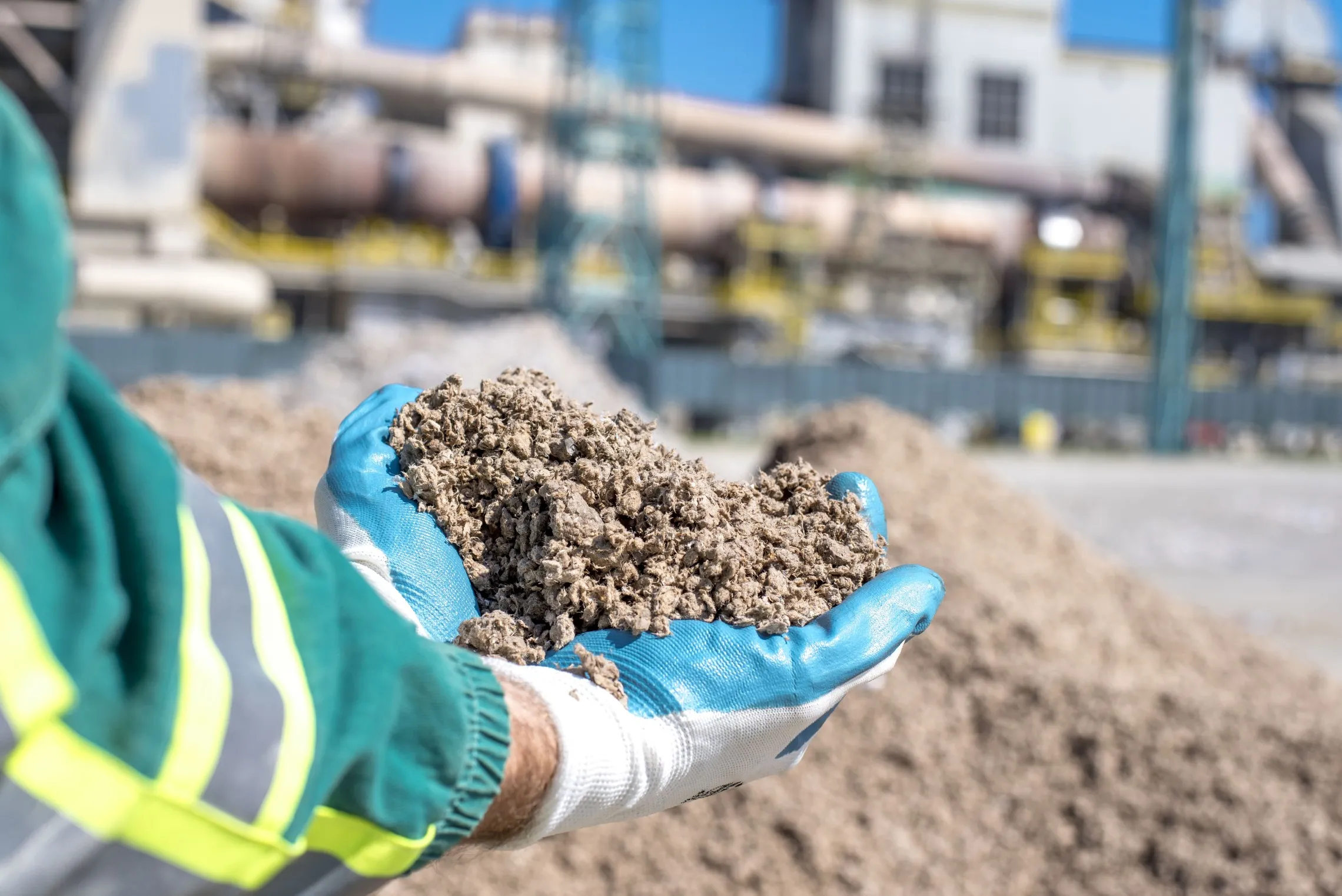
India generates nearly 340 million tonnes of fly ash every year from thermal power plants. The proposed initiative aims to create an efficient rail-based transport system using specialised containers and dedicated logistics arrangements to move fly ash safely from power plants to end-use industries.

Fly ash is widely used in road construction, cement manufacturing, brick production, concrete, blocks and boards. By improving its movement through the railway network, the initiative is expected to support better utilisation of this industrial by-product while reducing environmental concerns linked to storage and disposal.

The move also aligns with India’s circular economy goals by converting waste from thermal power generation into a useful raw material for the construction and infrastructure sectors. Wider availability of fly ash can help reduce material costs in areas such as bricks and cement, supporting more affordable infrastructure and housing development.

Through this initiative, Indian Railways aims to provide a cleaner, safer and more organised transport solution for fly ash, turning an environmental challenge into an infrastructure resource.

Continue Reading

Video Thumbnail

    SIGN-UP FOR OUR GENERAL NEWSLETTER


    Trending News