Economy & Market
The realtors experience will be limited to their markets.
Published
4 years agoon
By
admin
Location, location, location. Is it all that matters in realty? Ram Raheja, Director & Head-Architecture at S Raheja Realty, knows that every area and every project is different and calls for a customised strategy. In the so-called sluggish realty market, S Raheja Realty delivers projects on time, with a range that has something for everyone. Ram Raheja shares his enthusiasm about his projects and his positive outlook with ICR. Excerpts from the interview.
Tell us a bit about S Raheja Realty.
S Raheja Realty is a part of the same Raheja group. My grandfather and his three brothers launched Raheja Brothers in the 1950s. Eventually in the 1970s, the company first split; now there are about seven to eight Raheja companies in the market. Raheja Realty started with my grandfather Girdharidas Raheja, then it was handled by his son Shyam Raheja and now, I run it. We are a third generation real estate group.
We have four very distinct sectors in our group, one being redevelopment in different parts of Mumbai. We have recently launched two sites, while another one was launched at the beginning of the year.
Then we have the other sector, which is corporate development. In corporate development, one example is the Hinduja Health Care in Khar; that was done completely by us, including land procurement, liasoning for approvals, construction, f architecture, interiors, finishing, up to giving the clients the complete finished product in the stipulated time period. Another example is in Mahim, where we have a 22-storey tower under construction.
Our third sector is mid-income housing. We call it luxury mid- income housing as we are building it in the most prime locations of cities, for example Palghar, Varanasi, etc.
In Palghar, we have just finished the Raheja Pride, Phase-I, which we launched last year. We finished it in about one ûand- a- half years, again a completely luxurious standard compared to anything you can get in the city. For this project, we have from imported tiles, modular kitchens, landscaped gardens and more.
The fourth sector of our group is building second homes, luxury second homes outside Mumbai. For example, we have finished a project in the Pune region. We also have a project under construction right now, Raheja Cascades in Lonavala.
We hear realtors speaking about the slow down in the market. Do you feel that the demand for real estate is subsiding?
It totally differs from area to area, project to project. There are areas which have a good demand and good supply. For example in Mumbai itself, you cannot take Mumbai as an entire one single real estate market. Mumbai has different areas which actually run their own market and where it has its own real estate sector, its demands, its own supply dynamics, its own economics. Lower Parel is a market on its own and so is Lokhandwala or Kalina. So, every area is unique in its own context because of the segregation of our city and the experience of realtors will be limited to their markets. The price ranges vary widely from one area to the other,sometimes within a ten-minute drive between each area. I would say the market is slow in areas where the supply is in excess and the demand is limited.
So choosing a location becomes all the more important today.
Yes, we are very careful in choosing the location, making sure that there is a need for housing with limited supply.
Tell us about the new projects that you will be launching soon.
We have another other 400 units in Palghar, which we will be launching soon. We have a large- scale project coming up in Lonavala next to our Raheja Cascades. Raheja Cascades was launched about a month ago and now we are launching Natraj and Gurukripa both in Kalina. We have a few more redevelopment projects that we will be launching next year. Then again, we do not launch until all our approvals and everything else is in place.
In general, what are the challenges faced by the realty sector in India?
The input costs for everything has gone up. Also, the markets have become very uncertain now. There is uncertainty in the stock market, uncertainty about the political scenario. This increases the cost of our products. It is difficult for buyers to make a decision in such a volatile environment.
What are your expectations from the government?
Speed and clarity in the approval and regulatory process.
A lot of realtors are trying to attract buyers by launching green buildings. What are green buildings?
It can mean a lot of things, that is why today you have certifications. It can mean that the materials used in the construction are green. One has to choose and decide on what aspect of the building could be made sustainable. Internationally you get cycle parking locations in a green building. Now in projects like these in India, rarely do people ride a cycle. So you know it just depends on what is actually viable in terms of making it a green building. You can have modern sustainable bricks, to traditional methods of cross-ventilation which is the most traditional form of saving energy, or you can create an architecture with better natural lighting. I would go back to the original form of architecture like that seen in the Hawa Mahal which creates cross-ventilation.
In a city like Mumbai, you can go into things like sustainable material, rainwater harvesting, solar panel, etc.
Growth of sustainable architecture/ Green buildings
- The current penetration of green building in the country is 5% (1,909 buildings). However, it is gaining momentum and could account for 20% of all constructions by 2030. Today, Maharashtra tops the national figure with the highest number of green buildings, followed by the National Capital Region. Tamil Nadu holds third position.
- The cost implications involved in developing green building properties are higher by 10-15 per cent than regular construction costs. However, they involve major long- term benefits
The demand-supply scenario - 16,053 houses have been put on draw to 11.25 lakh applicants. This only shows that the city is facing an acute shortage of affordable housing and it has become imperative for builders to explore ways to stock mid-cap houses. Builders are now looking at developing the Charkop, Kandivli, Malvani, Palghar areas.
Ram Raheja is responsible for architecture and design departments within the organisation. He has over eight years of comprehensive experience in all phases of architectural services and design in India and abroad.
S Raheja Realty is an integral part of Indias real estate landscape. The promoters are three generations into real estate with a focus on luxury residential and commercial development in Mumbai. In the recent decade, they have ventured into affordable housing in mini metros and second tier cities, delivering quality lifestyles at affordable prices. Today, S Raheja continues to revolutionise the real estate industry with an intuitive vision to incorporate evolved architectural practices and develop projects that are sustainable and secure.
Project highlights: Cascade- luxury villa project;
Palghar Prime- affordable housing project, S2 Mahim & Hinduja Healthcare; Khar- corporate development; several re-development projects in Khar, Kalina & Bandra, Tier- II projects in Pune and Varanasi.
You may like
-
Double Tap to Go Green
-
15th Cement EXPO to be held in March 2025 in Hyderabad
-
14th Cement EXPO
-
Vinita Singhania receives Lifetime Achievement Award at the 7th Indian Cement Review Awards
-
Increasing Use of Supplementary Cementitious Materials
-
Indian Cement Review Touts Decarbonisation Mantra & Awards Growth
Economy & Market
RAHSTA Roundtable Sets Agenda for Smarter, Safer Highways
Published
6 hours agoon
March 16, 2026By
admin
Roundtable discussions focus on innovation for safer highways.
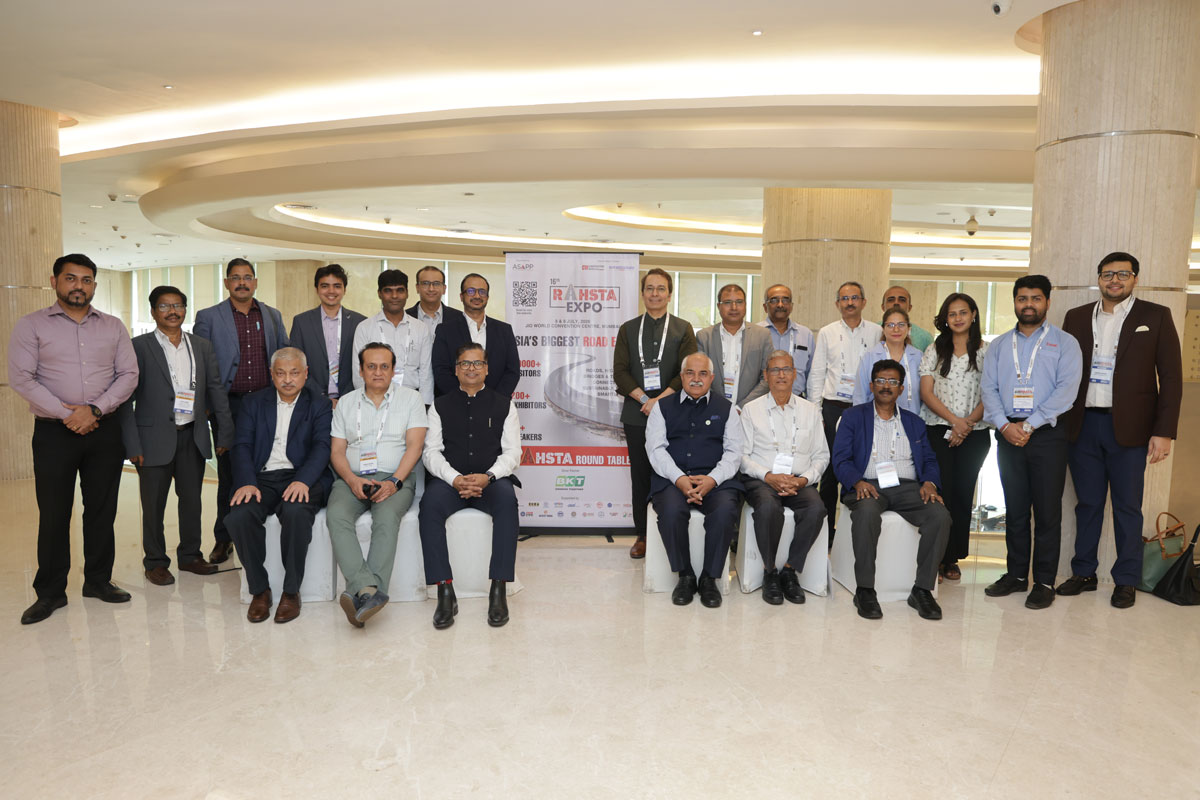
Held on 12 March 2026 at Courtyard by Marriott, Mumbai, alongside the Infrastructure Today Airport Conclave, the RAHSTA Roundtable brought together stakeholders from across the highways and infrastructure ecosystem to shape the agenda for the 16th RAHSTA 2026, scheduled for 8–9 July 2026 at the Jio Convention Centre, Mumbai. The session focused on key industry themes including road construction, technology, safety and long-term sustainability.
Opening the discussion, Pratap Padode, Founder, FIRST Construction Council, said the roundtable marked the beginning of a broader consultative process leading up to the July event. The aim, he noted, is to bring together industry stakeholders to refine the agenda for discussions on the future of roads, bridges, tunnels and allied infrastructure.
Padode noted that while central road project awards have slowed in recent years, states are increasingly driving the next phase of infrastructure growth. Maharashtra, with its long-term road development plans and agencies such as MSRDC and MSIDC, is expected to play a significant role in this expansion.
RAHSTA Expo 2026 as a specialised platform dedicated to road infrastructure, covering highways, tunnels, bridges and flyovers along with construction technologies, safety systems and maintenance solutions. He also highlighted the growing importance of rural connectivity and said the organisers are engaging with government bodies to highlight rural road development initiatives.
Tanveer Padode, CIO, ASAPP Info Group, presented insights from IMPACCT, the group’s infrastructure intelligence platform. He pointed to a strong project pipeline despite slower highway awards earlier in the year, noting that states such as Maharashtra, Odisha and Arunachal Pradesh are emerging as key drivers of new projects. The data also revealed that only a small group of contractors participates in large-value infrastructure bids.
Lt Gen Rajeev Chaudhary, former Director General, Border Roads Organisation and Chairman of the RAHSTA Expo Committee, emphasised the need for stronger collaboration across the ecosystem, including policymakers, contractors, technology providers and financiers. He also called for addressing systemic issues within the sector and encouraged greater participation of women in infrastructure leadership.
The discussion also explored the evolving economics of road development. Phani Prasad Mandalaparthy, Associate Director, CRISIL Intelligence, noted that the slowdown in project awards reflects a shift towards higher-value logistics corridors rather than simple road widening projects. However, private participation through BOT and TOT models remains limited.
From the contractors’ perspective, Sudhir Hoshing, Whole-Time Director, Ceigall, said companies are becoming more selective in bidding, favouring projects with clearer payment mechanisms and efficient processes. While NHAI continues to offer greater operational clarity, states such as Uttar Pradesh and Bihar were cited as relatively supportive environments for project execution.
Durability and sustainability also emerged as key themes. Himanshu Agarwal, COO – Road & Infrastructure, Zydex Group India, highlighted the need to prioritise lifecycle performance and resilient pavements, while participants discussed the potential of alternative materials such as plastic waste, steel slag and industrial by-products in road construction.
Dr LR Manjunatha, Vice President, JSW Cement, emphasised that India has abundant fly ash, slag and other industrial materials that can improve durability and sustainability if integrated into specifications and policy frameworks.
Technology and equipment challenges were also discussed. Dr Lakshmana Rao Mantri, Dy General Manager, Afcons Infrastructure, highlighted the shortage of tunnel boring machines (TBMs), which is delaying several underground infrastructure projects. Participants agreed that developing domestic TBM manufacturing capabilities will be critical for future infrastructure expansion.
The future of concrete pavements was another area of discussion. Dr V Ramachandra, President, Indian Concrete Institute, stressed that the debate should focus on lifecycle performance rather than material choice alone, noting that evolving design standards are improving the feasibility of concrete roads.
Prof Dharamveer Singh of IIT Bombay added that while India has made significant progress in infrastructure development, stronger capacity building and better execution practices are essential to ensure consistent road quality.
The discussion also touched upon technology adoption in the sector. Rushabh Mamania, Partner & CBO, Roadvision, highlighted the growing role of AI in road infrastructure, noting that AI-driven monitoring systems are already being deployed across large stretches of national highways.
Overall, the roundtable underscored that the future of highway infrastructure will depend not only on the pace of construction but also on durability, safety, technology integration and sustainable materials. The discussions offered valuable insights that will help shape the agenda for RAHSTA 2026 and guide future collaboration within the industry.
Economy & Market
CTS Roundtable Charts Tech-Led Roadmap for Construction
Published
6 hours agoon
March 16, 2026By
admin
CTS Roundtable Maps Technology Roadmap for Construction
Ahead of the Construction Technology Show (Con Tech Show) 2026, industry leaders, technology innovators and academia came together in Mumbai to deliberate on how digitalisation, automation and industrialised construction can reshape the sector. The discussion made one thing clear: construction can no longer afford to treat technology as optional.
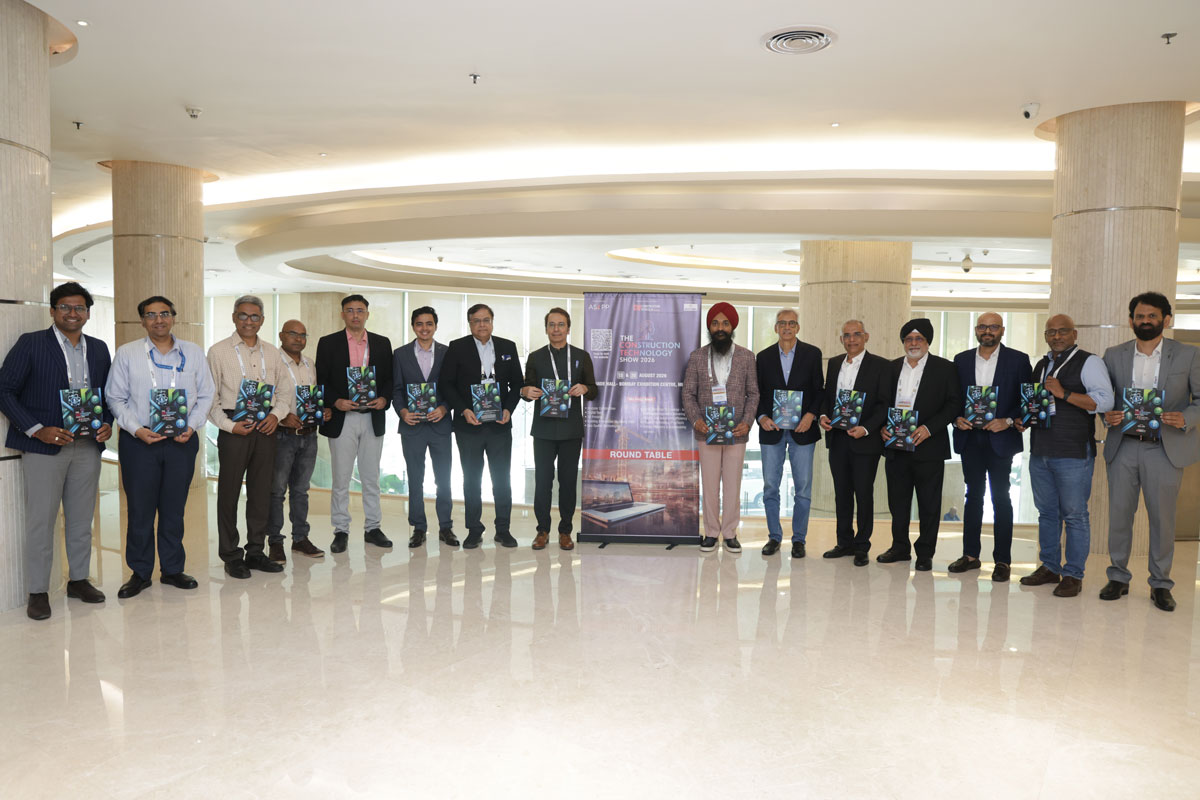
Held on 12 March 2026 at Courtyard by Marriott, Mumbai, alongside the Infrastructure Today Airport Conclave, the CTS Roundtable served as a precursor to the Construction Technology Show 2026, scheduled for 19–20 August 2026 at NESCO, Mumbai.
A platform to move from discussion to deployment
Opening the session, Pratap Padode, Founder and Editor-in-Chief, ASAPP Info Global Group, said construction technology has long remained close to his heart, especially given the sector’s traditionally slow pace of technology adoption. He noted that over the years, the Construction Technology Summit had steadily built interest, and the next step was now to expand it into a larger, more meaningful platform that could bring together technology providers, users, startups and innovators under one roof.
Padode said the vision for CTS is not limited to software alone. The platform aims to embrace all forms of technology that can improve construction efficiency, quality and execution—from digital tools and project management systems to lean construction, off-site fabrication and startup-led innovation. He also highlighted plans to deepen startup participation and create space for young companies to showcase emerging construction solutions.
Industry at a turning point
Moderating the roundtable, Naushad Panjwani, Chairman, Mandarus Partners, set the context by pointing out that the global construction industry, despite being a multi-trillion-dollar sector, continues to lag in productivity. He noted that while manufacturing has consistently improved efficiency, construction has remained slow to modernise.
Referring to both global and Indian trends, Panjwani underlined that the industry is now at a decisive moment. India, he said, is entering a major build cycle, and delivering the next phase of infrastructure and real estate growth through traditional methods alone is no longer viable. The goal of the roundtable, therefore, was not to debate technology in isolation, but to identify the most critical conversations that would bridge the gap between innovation and implementation.
His central message was clear: CTS 2026 must be shaped around themes that make CEOs, CIOs and CTOs feel they cannot afford to miss the event.
From BIM to AI, data to governance
A major theme that emerged through the discussion was the need for better data, better visibility and better decision-making. Dr Venkata Santosh Kumar of IIT Bombay echoed this, saying that the underlying data infrastructure itself needs attention. Construction projects, particularly remote ones, often face issues around connectivity, data collection and data use. Without this foundation, more advanced technologies cannot deliver their full value.
Chandra Vasireddy, CEO & Co-founder, Inncircles, expanded the discussion to governance, arguing that technology must help connect the many moving parts of a construction business. For him, the real value of digital transformation lies in creating better governance, clearer visibility and stronger business outcomes.
Tejas Vara of Inncircles stressed the importance of timely site data for leadership teams, especially in large and remote projects where decisions on materials, machinery and manpower often get delayed because information does not reach headquarters in time.
The role of AI also featured prominently. Rushabh Mamania, Partner and CBO, Roadvision said that while AI and machine learning are now common terms, vision intelligence and language intelligence have still not deeply penetrated the construction sector. He emphasised that startups in India are building relevant AI-led solutions and are already attracting international interest, showing that innovation need not be imported—it can be built locally and scaled globally.
Industrialised construction gains ground
The roundtable also placed strong emphasis on industrialised construction methods. Kalyan Vaidyanathan, CTO – Construction & R&D, Tvasta, called for greater focus on off-site fabrication and the broader industrialisation of construction. Bhargav Jog, General Manager, Dextra, highlighted precast technology and alternative sustainable materials as areas with immediate relevance.
Several participants agreed that modular, precast and pre-engineered approaches are no longer niche ideas. They are increasingly becoming practical responses to the sector’s challenges around labour shortage, timelines, quality control and predictability.
Anup Mathew, Sr VP & Business Head, Godrej, argued that the industry needs a fully integrated approach—from design and procurement to execution and asset management. Unless these are connected, technology adoption will remain fragmented and sub-optimal. He pointed to pre-engineered and modular systems as examples of how industrial thinking can compress timelines, improve quality and reduce dependence on difficult on-site conditions.
Adoption remains the biggest hurdle
While there was broad agreement on the promise of technology, the discussion repeatedly returned to one fundamental challenge: adoption.
Abhishek Kumar, COO, LivSYT, observed that the market is crowded with solutions, but many buyers still struggle to evaluate which technology suits which use case. According to him, the industry needs clearer frameworks to help users select, compare and adopt solutions, rather than expecting a single platform to solve every problem.
Dr Tenepalli JaiSai, Associate Professor, School of Construction(SoC), NICMAR University, noted that isolated technologies will not solve the productivity problem by themselves. What is required is an integrated Construction 4.0 approach, where digital, physical and cyber-physical systems work together rather than in silos.
That concern around silos was reinforced by Subodh Dixit, former Director, Shapoorji Pallonji, who said the issue is not just that technologies are disconnected, but that stakeholders are as well. Clients, consultants, contractors and partners often operate with different priorities. Unless these silos are broken, technology will struggle to percolate across the full project value chain.
Harleen Oberoi, Project Management, Tata Realty shared a practical perspective from the client side, saying that successful BIM implementation requires investment across the ecosystem, not just within one organisation. Trade partners, vendors and other stakeholders must also be trained and aligned if the technology is to deliver its intended results.
Beyond buzzwords
A notable takeaway from the session was that the industry is moving past the phase of treating technology as a buzzword. Participants repeatedly stressed that the real question is not whether technology should be used, but where it creates measurable value and how that value can be scaled.
The conversation also expanded beyond mainstream themes to include repairs and rehabilitation, construction and demolition waste, sustainability, circular economy, green sourcing, carbon measurement, design interoperability, generative design, robotics, and the role of horticulture and greener built environments.
Setting the agenda for CTS 2026
By the close of the session, the roundtable had surfaced a strong set of themes for the upcoming show: BIM and digital twins, AI and data platforms, industrialised construction, startup innovation, governance-led technology adoption, robotics, sustainable materials, and integrated project delivery.
More importantly, the session established CTS 2026 as more than an exhibition. It is shaping up to be a serious industry platform where users, technology providers, researchers and policymakers can collectively define the future of construction.
As Padode noted in his closing remarks, the conversation will continue through further consultations and possibly webinars in the run-up to the show. If the roundtable is any indication, CTS 2026 will aim not merely to showcase technology, but to push the industry towards meaningful adoption at scale.
SEEPEX introduces BN pumps with Smart Joint Access (SJA) to improve efficiency, reliability, and inspection speed in demanding rock blasting operations.
Designed for abrasive and chemical media, the solution supports precise dosing, reduced downtime, and enhanced operational safety.
SEEPEX has introduced BN pumps with Smart Joint Access (SJA), engineered for the reliable and precise transfer of abrasive, corrosive, and chemical media in mining and construction. Designed for rock blasting, the pump features a large inspection opening for quick joint checks, a compact footprint for mobile or skid-mounted installations, and flexible drive and material options for consistent performance and uptime.
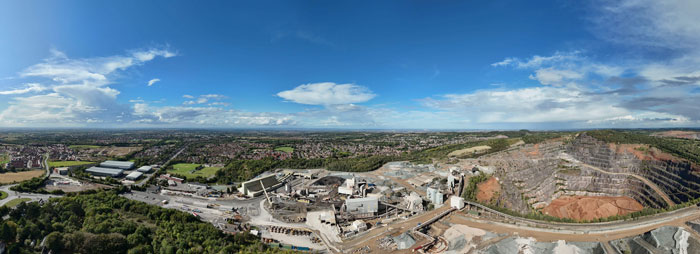
“Operators can inspect joints quickly and rely on precise pumping of shear-sensitive and abrasive emulsions,” said Magalie Levray, Global Business Development Manager Mining at SEEPEX. “This is particularly critical in rock blasting, where every borehole counts for productivity.” Industry Context
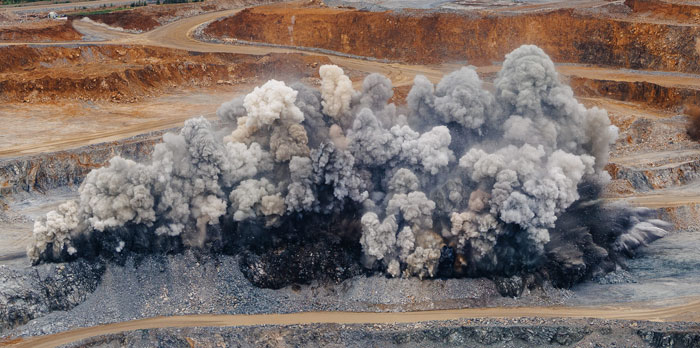
Rock blasting is essential for extracting hard rock and shaping safe excavation profiles in mining and construction. Accurate and consistent loading of explosive emulsions ensures controlled fragmentation, protects personnel, and maximizes productivity. Even minor deviations in pumping can cause delays or reduce product quality. BN pumps with SJA support routine maintenance and pre-operation checks by allowing fast verification of joint integrity, enabling more efficient operations.
Always Inspection Ready
Smart Joint Access is designed for inspection-friendly operations. The large inspection opening in the suction housing provides direct access to both joints, enabling rapid pre-operation checks while maintaining high operational reliability. Technicians can assess joint condition quickly, supporting continuous, reliable operation.
Key Features
- Compact Footprint: Fits truck-mounted mobile units, skid-mounted systems, and factory installations.
- Flexible Drive Options: Compact hydraulic drive or electric drive configurations.
- Hydraulic Efficiency: Low-displacement design reduces oil requirements and supports low total cost of ownership.
- Equal Wall Stator Design: Ensures high-pressure performance in a compact footprint.
- Material Flexibility: Stainless steel or steel housings, chrome-plated rotors, and stators in NBR, EPDM, or FKM.
Operators benefit from shorter inspection cycles, reliable dosing, seamless integration, and fast delivery through framework agreements, helping to maintain uptime in critical rock blasting processes.
Applications – Optimized for Rock Blasting
BN pumps with SJA are designed for mining, tunneling, quarrying, civil works, dam construction, and other sectors requiring precise handling of abrasive or chemical media. They provide robust performance while enabling fast, reliable inspection and maintenance.With SJA, operators can quickly access both joints without disassembly, ensuring emulsions are transferred accurately and consistently. This reduces downtime, preserves product integrity, and supports uniform dosing across multiple bore holes.
With the Smart Joint Access inspection opening, operators can quickly access and assess the condition of both joints without disassembly, enabling immediate verification of pump readiness prior to blast hole loading. This allows operators to confirm that emulsions are transferred accurately and consistently, protecting personnel, minimizing product degradation, and maintaining uniform dosing across multiple bore holes.
The combination of equal wall stator design, compact integration, flexible drives, and progressive cavity pump technology ensures continuous, reliable operation even in space-limited, high-pressure environments.
From Inspection to Operation
A leading explosives provider implemented BN pumps with SJA in open pit and underground operations. By replacing legacy pumps, inspection cycles were significantly shortened, allowing crews to complete pre-operation checks and return mobile units to productive work faster. Direct joint access through SJA enabled immediate verification, consistent emulsion dosing, and reduced downtime caused by joint-related deviations.
“The inspection opening gives immediate confidence that each joint is secure before proceeding to bore holes,” said a site technician. “It allows us to act quickly, keeping blasting schedules on track.”
Framework agreements ensured rapid pump supply and minimal downtime, supporting multi-site operations across continents
RAHSTA Roundtable Sets Agenda for Smarter, Safer Highways
CTS Roundtable Charts Tech-Led Roadmap for Construction
NDMC Rolls Out Intensive Sanitation Drive Across Lutyens Delhi
UltraTech Appoints Jayant Dua As MD-Designate For 2027
Merlin Prime Spaces Acquires 13,185 Sq M Land Parcel In Pune
RAHSTA Roundtable Sets Agenda for Smarter, Safer Highways
CTS Roundtable Charts Tech-Led Roadmap for Construction
NDMC Rolls Out Intensive Sanitation Drive Across Lutyens Delhi
UltraTech Appoints Jayant Dua As MD-Designate For 2027