Connect with us

Economy & Market

Indian rural economy in focus: Will it be the great Atlas

Published

on

Shares

The Greek God Atlas held the World on its shoulders; the rural economy of India, it seems, is holding the economy of India on its shoulders, unscathed by the impact of pandemic. As the surge of COVID-19 cases impacted the urban economy, the village economy of India actually did better than last year for a number of reasons and we will see whether this will be enough to act as a wedge against the drop that ensues in all other sections of the economy outside of agricultural and rural spend or consumption.

First of all the reasons why agriculture and the rural economy did far better than last year YTD September has to be seen in the backdrop of following things:

l Exceptional harvest: The harvests for the last four seasonal crops (rabi 2019, kharif 2019, rabi 2020 and kharif 2020) have been exceptionally good. This is really a great result boosting the entire rural economy with direct and indirect benefits. In the first two months of the monsoon, 83 per cent of the area (88.21 million hectares) for sowing was covered already, which corroborates to the ebbing demand for work for National Rural Employment Guarantee Act (MNREGA) as is seen in the shrinking data of demand for work (records of registration done) from the peaks of June to July.

l Demand for rural work in MNREGA data: The registrations for MNREGA zoomed from April 2020 to June and tapered off in July. But just to compare this lower number for July against 2019, it was higher by a whopping 70 per cent, largely due to displacements from urban areas combined with job losses. About 31.5 million people registered in July 20 which was 28 per cent lower than June 2020.

l MNREGA allocation increased to Rs 1,015 billion for FY21 from the initial allocation of Rs 615. This was also followed with actual disbursements done speedily, 50 per cent of the allocation is already spent as per MNREGA website.

But the sequential decline for the demand for rural jobs continued from July into September, July: 31.5 million, August: 20.5 million and September: 20.0 million. This would mean two things, that other sources of employment, than what is on offer at Rs 170 per day work wage, has been made available by the rural economy (kharif demand for labour is gone by August) or the migrant worker overload had subsided with reverse migration. Evidence of both these factors must be sought for testing this hypothesis. Pradhan Mantri Kisan Samman Nidhi (PMKSN), a programme that got front loaded with advancement of spend is this area, perhaps has some of the answers.

Let us now look at the entire contribution of the agricultural economy on the overall economy of India. This as we know is measured as percentage of the gross value added and this has been projected at 17.3 per cent of India?? GDP for FY21 (this was 14.3 per cent in FY20), with the better prospects of agricultural growth over 2019. Furthermore, the contribution of agriculture to gene set variation analysis (GSVA) growth is expected to increase to 14.4 per cent in FY21 (FY20: 8.6 per cent), despite the COVID-19 induced contraction in the industrial and services sectors, as per the latest report by India Ratings. The contribution of rural economy into the overall scheme of things would remain low with these outcomes.

However, there are great regional and state wise disparities. There are five States??ndhra Pradesh, Madhya Pradesh, Rajasthan, Uttar Pradesh, Punjab and West Bengal??hose GSVA numbers are significantly higher, and their contribution in FY20 real GSVA was 32.7 per cent.

So while many states have shown rather lower trajectories of growth, these five states have shown exceptional growth rates by virtue of a mix of things from harvest, faster deployment of funds against the demand for work and quicker implementation in the PMKSN scheme.

Now we will see the actual kharif output increase as projected for FY2021. It is going to be 144.52 million tonne as against 143.38 million tonne in FY2020 and the increase in the minimum support prices is slated to be only Rs 52 per quintal on the major kharif crop paddy. Thus in value terms the kharif crop will not add significantly to the GSVA. The last bit is to see the daily wage increase in rural economy, which shows a very modest increase of 0.4 per cent for FY2021 as per National Statistical Office and CEIC report.

In sum, the rural economy benefitted enormously from a good monsoon and harvest and its direct and indirect impact will have positive spillover effects. MNREGA and PMKSN have also contributed to the uptick in the GSVA of several States with the disparities. The overall agricultural output in tonnage and value terms, coupled with the wage increase do not show a significant contribution that the rural economy can command in terms of influencing the overall GSVA for the entire economy.

ABOUT THE AUTHOR:

Procyon Mukherjee is an ex-Chief Procurement Officer at LafargeHolcim India. The ideas presented are his personal and have no connection to the beliefs of the company where he works.

Continue Reading
Click to comment

Leave a Reply

Your email address will not be published. Required fields are marked *

Economy & Market

Leonard Unveils Dual-Head Robotic Arm for Hazardous Industrial Demolition

Published

on

By

Shares

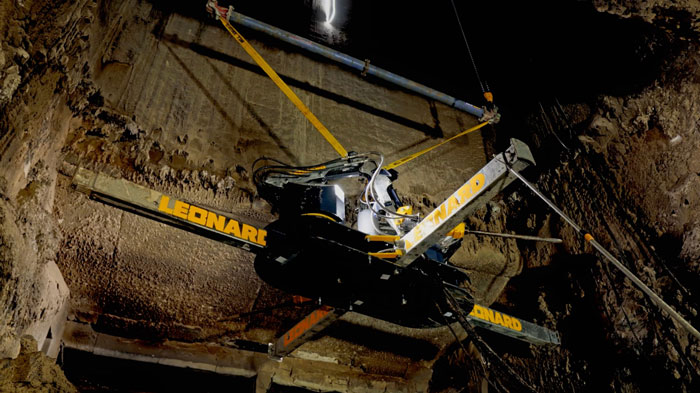
 Leonard unveils Descender Duo, a dual-head robotic demolition arm designed to improve industrial safety and reduce shutdown time by up to 50 per cent.

Industrial robotics and refractory services specialist Leonard has launched Descender Duo, a dual-head robotic demolition arm designed to improve safety, accelerate maintenance and reduce shutdown times in hazardous industrial environments. The system made its debut at Lisahally Power Station in Northern Ireland, removing 25 tonnes of slag material within hours.

Developed for the cement, metals, waste-to-energy and petrochemical industries, Descender Duo enables remote-controlled refractory demolition, anchor cutting and welding, and refractory spraying inside boilers, calciners and silos. Its vertical-access design eliminates the need for personnel to enter confined, high-risk spaces during these operations.

Weighing less than two tonnes, the pre-assembled system requires an access opening of just 1.2 m². Supported by an external overhead hoist, it uses electrically operated hydraulic stabilising legs to secure itself inside vessels. The robotic arm offers 360-degree rotation and is suited to vessels approximately 9 m in diameter, with its operating reach extendable through strategically positioned access points.

Equipped with two independently controlled robotic heads, Descender Duo can perform identical or different tasks simultaneously, including refractory demolition, anchor cutting and spraying. Its remote-control system incorporates live camera feeds, allowing operators to monitor operations without entering hazardous environments.

According to Leonard, the technology can deliver time savings of up to 50 per cent compared with manual methods. Its ability to operate at temperatures exceeding 100°C allows maintenance to begin as early as 24 hours after burner shutdown. An all-electric power supply further supports cleaner and more cost-efficient operations.

First Deployment Demonstrates Shutdown Efficiency

The system was first deployed at Burmeister & Wain Scandinavian Contractor’s (BWSC) Lisahally Power Station in Londonderry, Northern Ireland. The facility generates electricity from grade C waste wood, supplying approximately 40,000 homes and businesses.

Leonard and BWSC collaborated to develop a customised solution for the plant’s 26-metre furnace, where extensive external pipework created significant access challenges.

Mark Leonard, Managing Director, Leonard, said, “It required new thinking and rather than step away from the problem we were committed to solving it for the customer, with the customer. We’re relentless in our approach to tackling complex challenges, head-on. We took our years of cement plant experience, coupled with our working knowledge of the BWSC plant, and designed, engineered and tested a completely new vertical solution within just seven weeks from that initial conversation with the customer. That solution was the Descender Duo as we know it today.”

Traditionally, the furnace required a cooling period of up to 36 hours before preparatory work could begin, followed by manual slag removal using rope-access personnel. With Descender Duo, work commenced just 24 hours after shutdown, reducing downtime by up to one day.

The deployment removed 25 tonnes of slag within hours, eliminated the need for at least six workers to enter the hazardous furnace interior and saved 26 hours in the shutdown programme.

“The effectiveness exceeded expectation,” said Martin Doran, Plant Manager at Lisahally Power Station.

“When the Descender Duo concept was first discussed, we had to spend some time with the team from Leonard looking at how it was going to be moved into the furnace. Every site is different and that presented its own challenges, but nothing that the team couldn’t overcome. Once it was installed we were hugely impressed by its efficiency.”

Expanding Industrial Robotics Applications

Descender Duo joins Leonard’s existing portfolio of robotic maintenance solutions, including the Axis horizontal-access arm, Nano confined-space access arm, Charger cement mill media recharging system and Calibre cement mill media grading system.

Headquartered in Northern Ireland, Leonard provides robotic refractory demolition, installation, inspection and industrial maintenance services across the cement, metals, energy, biomass, glass and civil engineering sectors.

Formerly known as G Leonard, the company has more than 35 years of industry experience and operates across Europe, North America, the Middle East, Africa and Asia-Pacific.

The latest innovation reinforces Leonard’s focus on replacing hazardous manual processes with robotic systems that improve workforce safety, enhance operational efficiency and minimise industrial downtime.


Continue Reading

Concrete

Martin Engineering Appoints Ashwini Khunte as India General Manager

Published

on

By

Shares

Martin Engineering names Ashwini Khunte India General Manager to strengthen operations and drive growth across key bulk material handling sectors.

Pune

Martin Engineering, a global provider of bulk material handling solutions, has appointed Ashwini Khunte as General Manager of its India business, strengthening its leadership as the company expands its presence across the country’s cement, mining, steel, power and infrastructure sectors.

Khunte brings more than a decade of experience with Martin Engineering, having joined its Indian operations in 2013 as a Design Engineer, shortly after the company established its presence in the country in 2012.

A mechanical engineer by qualification, she spent her initial five years developing bulk material handling solutions in collaboration with the company’s operations team. During this period, she gained extensive experience addressing operational challenges in the steel, cement and coal industries. She subsequently moved into project engineering, managing major engineering, procurement and construction (EPC) and original equipment manufacturer (OEM) projects from initial enquiry to commissioning. Her responsibilities later expanded to overseeing Martin Engineering’s conveyor product portfolio in India, involving customer engagement, technical presentations and site visits across heavy industries.

In 2024, Khunte was promoted to Head of Sales & Marketing for the company’s Europe, Middle East, Africa and India (EMEAI) region. The position broadened her international market exposure and strengthened her strategic and commercial leadership capabilities.

Commenting on her appointment, Ashwini Khunte, General Manager, Martin Engineering India, said: “India represents a tremendous opportunity for Martin Engineering. The country’s continued investment in cement, mining, steel, power and infrastructure is creating increasing demand for safer, cleaner and more productive bulk material handling, and that’s exactly what we do. My priority will be to build on the strong foundations already established in India, while continuing to develop our people, strengthen customer relationships and bring practical solutions to the challenges faced by our industry.”

Robert Whetstone, Area Vice President – EMEAI, Martin Engineering, highlighted Khunte’s technical expertise, market understanding and leadership experience.

“Ashwini brings an exceptional combination of technical understanding, customer knowledge and commercial leadership. She has grown as Martin Engineering has grown, and has consistently demonstrated outstanding capability to transform her expertise into practical solutions. Her knowledge of the Indian market, together with her international experience, makes her ideally suited to lead our India business through its next stage of growth for years to come.”

Since establishing its Indian business in 2012, Martin Engineering has expanded its local workforce, manufacturing capabilities and dealership network. The company supplies conveyor products, transfer point solutions, material flow aids, training and technical support to bulk material handling industries. Khunte’s appointment positions the company to further strengthen customer relationships and expand its solutions portfolio in India’s growing industrial and infrastructure markets.

Continue Reading

Concrete

Fornnax Wins AIRIA’s Special Export Award for Rubber Machinery in 2025-26

Published

on

By

Shares

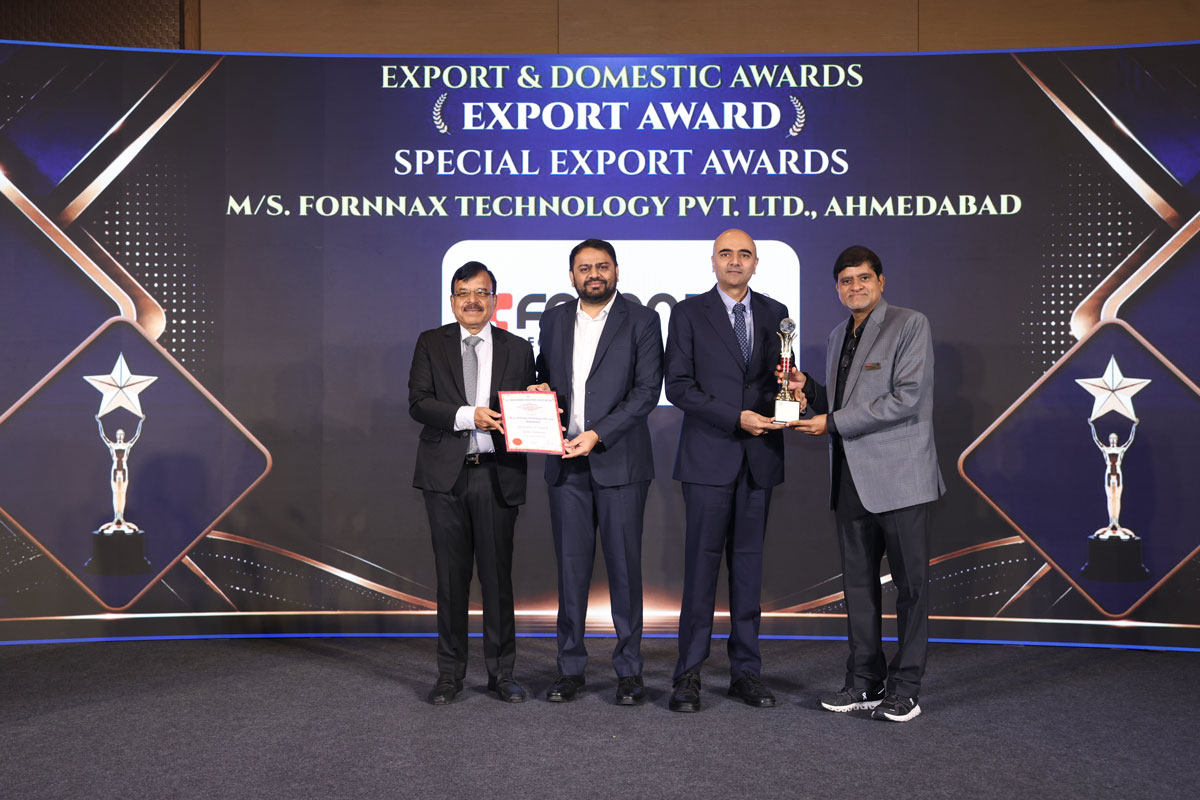
Fornnax Technology Pvt. Ltd. has been honoured with the Special Export Award – Rubber Machinery for 2025–26 by the All-India Rubber Industries Association (AIRIA), in recognition of its highest exports of tyre recycling plants to the European region.

With more than a decade of experience in India’s tyre recycling industry, Fornnax has contributed to the development of advanced recycling technologies and infrastructure. The company currently holds a 90% market share in India’s domestic tyre recycling sector, while exports account for 30% of its business, spanning markets such as Europe, Australia and the GCC.

The award marks another milestone for Fornnax, whose tyre recycling lines and advanced shredding technologies are supporting the growth of the circular economy in India and international markets.

Commenting on the recognition, Mr. Jignesh Kundaria, Founder and Director of Fornnax, said:

“This honour from AIRIA is a reflection of an incredible journey we have undertaken over the years. When we started Fornnax, there was no established recycling industry in India to follow. We chose to build for the future instead. Today, when you see India’s tyre recycling sector, it has already transformed into a dynamic, high-growth industry and we are extremely proud to have played our part in building it.”

Unlike standalone equipment suppliers, Fornnax focuses on developing complete, high-capacity recycling infrastructure. Its integrated systems combine multiple stages of shredding and size reduction to enable efficient, continuous operations. This system-level engineering approach helps recycling operators improve throughput, equipment reliability and operational consistency.

The recognition reinforces Fornnax’s commitment to developing engineering technologies that contribute to a more efficient and circular recycling ecosystem.

Looking ahead, the company aims to expand its international presence while continuing to develop advanced shredding and recycling solutions to address the growing volumes and evolving requirements of the global recycling industry.

For more information, visit: www.fornnax.com

Continue Reading

Video Thumbnail
▶

    SIGN-UP FOR OUR GENERAL NEWSLETTER

    Trending News

    SUBSCRIBE TO THE NEWSLETTER


    Don't miss out on valuable insights and opportunities to connect with like minded professionals.


      This will close in 0 seconds