Most supply chain professionals are still in the reactive phase of how to deal with this pandemic. That includes combating fear and uncertainty around shortages and gauging the overall impact the coronavirus will have on supply chain and logistics operations.
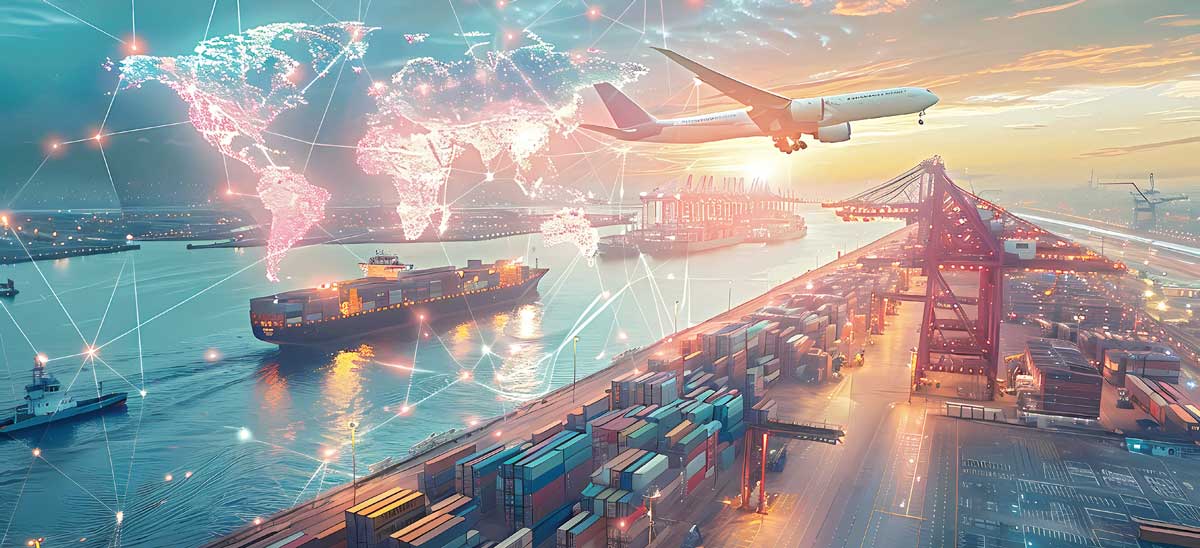
Logistics management is the backbone of any country’s economy. Logistics is unique, It never stops?.! Logistics is happening around the globe, 24×7. Logistics is concerned with getting products and services where they are needed when they are desired. It is very difficult to visualise any marketing or manufacturing without logistics support. Logistics has been performed since the beginning of civilisation. It’s hardly new.
Logistics involves the integration of information, transportation, inventory, warehousing, material handling and packaging. In any individual firms, logistics expenditure typically ranges from 5 to 35 per cent of sales depending on the type of business, geographical area of the operation and volume ratio of product and materials. Logistics typically accounts for one of the highest costs of doing business, second only to materials in manufacturing or cost of goods sold in wholesaling or retailing.
Logistics is the art and science of managing and controlling the flow of goods, energy, information and other resources like products, services and people from the source of production to the market. It involves the integration of information, transportation, inventory, warehousing, material handling and packaging.
The main objectives of logistics is to achieve "7 Rs" – "The right product, in right quantity, in right condition, at the right time and Right place for the right customer, at the right cost."
The global logistics market size is estimated to be $2,734 billion in 2020 and projected to reach $3,215 billion by 2021, at a YoY growth of 17.6 per cent. In our cement industry, the logistics cost is approximately Rs 39,000 crore (23 to 25 per cent of total cement sales). Logistics mode mix of road (71 per cent), rail (27 per cent) and coastal (2 per cent). Bagged cement with 80 per cent and bulk cement with 20 per cent.
Covid-19 and Indian logistics industry
Asia Pacific is expected to have the largest logistics market size as the region has taken stringent and quite early measures to contain the Coronavirus outspread. China has started to recover from the COVID-19 pandemic faster than any other country.
The World Health Organization (WHO) has appreciated India’s control over the spread of the pandemic. This has allowed the logistics and supply chain companies to meet consumer demands during the pandemic situation. During the lockdown, only essential people and commodities are permitted by the authorities. The list of essential people and commodities must be continuously revised to minimise the adverse impact on people’s lives and the spread of the pandemic. Thus, the Asia-Pacific region is expected to show positive signs soon as the supply chain industry recovers gradually.
About 50 per cent of the 12.5 million heavy, medium, and small commercial vehicles have shut their engines because of coronavirus. There are no drivers, no loaders, and no unloaders to support the $200 billion logistics industry. Fifty per cent of India’s organised trucking fleet is now without drivers, who have gone home.
The entire supply chain is being impacted. From raw materials and packaging material supply to manpower at manufacturing plants (to load/unload/operate) to logistics, and transport to retail. the entire value chain in logistics right from transportation to warehousing would be adversely impacted, entities with asset-heavy business model will see a greater impact owing to high fixed costs.
There has been a significant drop in volumes at all facilities. As the volumes fall, it will take several months before they get back to normalcy – ports are highly capital-intensive in nature. The standing cost of assets is very high, running into millions of rupees.
As per research on behavioural science, it takes more than two months before a new behaviour becomes a habit or culture. We are in a lockdown of 68 days, it is a significant time period to impact consumer behaviour. We can also expect that post lockdown.
The Covid-19 pandemic is challenging businesses to think in unique and different ways. The disruptions caused by the virus outbreak have left deep impacts on consumer behaviour and preferences. Customers are now increasingly exercising caution on what, where, and how they buy.
The cumulative loss estimate is as high as Rs 50,000 crore with the highest loss coming from the aviation sector, followed by the Roadways, in terms of lost toll taxes, goods wasted on the road due to a sudden lockdown and halt numbers of fully loaded trucks.
Most supply chain professionals are still in the reactive phase of how to deal with this pandemic. That includes combating fear and uncertainty around shortages and gauging the overall impact the coronavirus will have on supply chain and logistics operations.
Logistics management in post coronavirus era
Role of logistics management: The major role of the logistics management function as given below:
- Demand planning and forecasting along with production function
- Sourcing and procurement of raw materials/goods and services required to run the manufacturing operation and its customers’ needs
- Managing the inflow and outflow of the inventory – be it the raw material required or making the product or pushing them to market along with sales and marketing functions
- Putting agreements in place to ensure safety for the organisations
- Managing supplier relationships by driving SLAs and KPIs in supplies
Impact of Covid-19 on logistics management function: When the factories/offices/markets are shut, the factories producing essentials are the only ones allowed to operate, the customer base of the organisation is working from home, the impact is on both sides – demand and supply. With reduced demand, the suppliers who were looking for new buyers for their products were impacted. On the other hand, buyers who were getting supplies from their supplier/vendor base got impacted because of no supplies from them.
Covid-19’s safety and compliance guidelines were put into place for the organisations as well as the individuals. From social distancing to be followed in the factories and workplace to ensure employees and workers are equipped with PPE kits, things have changed in recent times.
Scarcity of raw materials supplies, indirect material supplies and the higher lead time is another problem that happened to result in higher prices, limited availability and increased logistics cost to the companies.
The buyers and suppliers lost chance to meet each other face to face and negotiate on table. Almost everyone was working virtually and some of the buyers/suppliers who were not familiar with collaboration tools faced difficulties in executing negotiations effectively. In short, virtual meetings were done for decision making.
While a lot of changes have happened at organisation level in various functions in last few months, the Supply management function has changed too. The pressures being placed on supply chain professionals around the world by Covid-19 are leading to a reassessment of how supply chains function. They are also likely to accelerate the process of digital transformation as a means of overcoming weaknesses and vulnerabilities. There are several ways in which businesses can go about creating resilient supply chains in a post-Covid world.
There is an urgent need to reduce dependency on physical labour in areas such as transportation, logistics and warehousing. This can be achieved through the introduction of automation/technologies such as the Internet of Things (IoT) and artificial intelligence (AI) and machine learning.
The factories which can modularise production and adapt lines in line with demand changes will become the norm. They will be backed by supply networks capable of communicating intelligently with one another, thereby increasing their effectiveness and agility.
It is the time when instead of having dependency on one supplier or a couple of suppliers, organisation need to have a base of supplier who are ready to serve it when needed. To keep the relationship going, it is advised to keep procuring small quantities from time to time from additional suppliers.
Covid-19 has taught many things to almost everyone, so the sourcing and procurement function should remain ready for surprises going forward too. Plan for short term and long term is not enough. There is a need to start planning for near ? short term too, which can be in the next 24 hours. There is enough data points organisations sit on. The need is to utilise the data science tools to predict daily than monthly, quarterly or annual plans.
The supply chain technologies are emerging that dramatically improve visibility across the end-to-end supply chain, and support companies’ ability to resist such shocks. The traditional linear supply chain model is transforming into digital supply networks (DSNs), where functional silos are broken down and organisations become connected to their complete supply network to enable end-to-end visibility, collaboration, agility and optimisation.
Leveraging advanced technologies such as the IoT, AI, robotics, and 5G, DSNs are designed to anticipate and meet future challenges.
The key elements that will emerge in the logistics management of a post-Covid world include:
- Intelligent procurement to help organisations understand where and when to source using advanced machine learning algorithms based on factors such as past purchases and commodity pricing
- Data management with intelligent automation and analytics that will deliver end-to-end information management and provide supply chain partners with insights around diagnostics, market intelligence and risk management
- Supplier risk management to help organisations model cost structures and keep abreast of any supply disruptions and secure capacity
- Supply chain simulation involving modelling new strategies based on changes to business or operating models which helps to validate and identify the most cost-efficient supply chain design
Covid-19 warns that rare events may disrupt the logistics management. Greater agility, adoption to changing contexts and ability to redesign the supply chain in the situations of rare events will help organisations to prevent damages caused by pandemics in general particularly Covid-19.
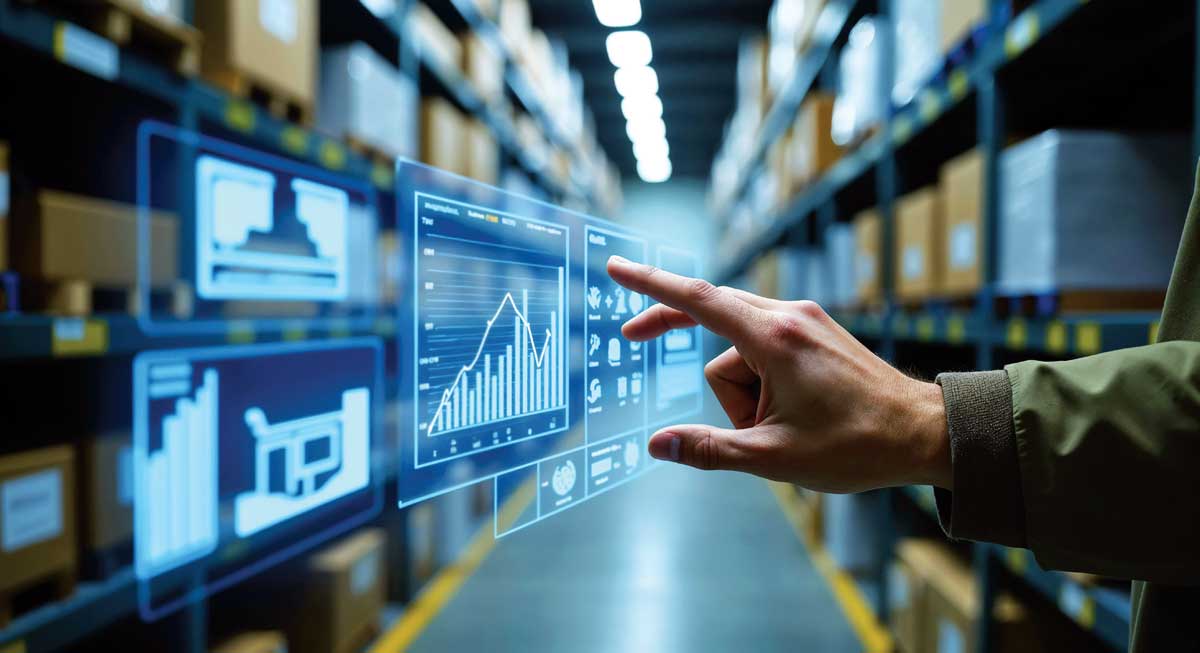
In last one decade due to digitalisation era, IT has created the big changes in entire trucking industry and their productivity and efficiency. Driven by the IIoT (Industrial Internet of Things), the manufacturing sector is a major transformation. Automation has been gaining traction in the logistics industry as well with the continuous adoption of IoT.
Intelligent process flows: The supply chain responsive to rare events such as Covid-19 is not easy as the systems are not trained to absorb the shocks provided by such situation. One of the ways to make the supply chain responsive is to transform the supply chain processes to intelligent process flow. A company can transform all verticals into an intelligent process flow starting from demand planning and manufacturing execution to order orchestration and fulfillment. This will allow the processes, people, and technology to interact – bridging the current gap in a company’s ability to understand the changes in the environment.
Digital technology: Company needs to leverage the power of AI and other emerging technologies. Such dependencies on advanced technologies can help companies navigate through the supply chain vulnerabilities caused by Covid-19 and assist in business continuity amid disruption and uncertainty. Including automation, Blockchain, IoT, and edge computing in its supply chain design and management may help company turn unanticipated into the envisioned.
IT system-based order punching to order allotment: In this current digital India, the use of Computers / Smart Phones is very common for all of us. We have to develop a very strong IT system in that we can manage real time automated punching of our marketing orders through CRM Software to orders’ allotment to transporters, trucks’ confirmation, online lorry receipt generation, e-invoicing, e-way bill and e-PoD from Customers etc. It will help to marketing, logistics and transporters touch free work environment and social distancing for protecting from Covid-19.
GPS based trucking/logistics management: In view of the Covid-19, transporter has hesitancy to interact with multiple agencies (like gate security, logistics officers, WB operator, packing plant supervisor, truck loading workers, etc.). We have to develop strong RFID/GPS system based trucking management and monitoring system. The GPS will provide real-time visibility into the specific location and movement of vehicles.
GPS solutions provide real-time tracking of fleet and workforce from the first mile to long haul to the last mile. Logistics and Technology have become synonymous. It is strictly followed that driver should remain inside his truck and the activities such as security in-out, weighment of truck will do automatic with the help of RFID-based system and Automation of Weighbridge integration. This will help minimum interaction of drivers with security, logistics officers, weigh bridge operation and packing plant workers. In order to enhance driver’s experience, despatch related information can now be shared on his mobile with the help of the GPS System, so that he do not have to interact with logistics, transporters and packing plant operators.
Usually, drivers use to wait for long time to get the delivery instructions, Invoice papers and e-way bill, etc. at cement plant. But with the use of GPS system, automatic weighbridge, SAP integration process and IT -based logistics management applications, automation of packing plant operation and the print of DI, invoice, E-way bill can generate automatically and handed over to drivers while truck goes out and driver remain seated in his truck.
GPS system will help to monitoring real time truck transit time, halt during travelling, expected time of reaching at customer site, reaching at delivery point, delivery confirmation through e-PoD from customers etc touch free work environment and without human intervention.
Technological advancements now enable businesses to build end-to-end supply chain solutions that speed up processes and avoid bottlenecks in the supply chain. Business intelligence tools have helped to improve forecasting and identify areas of concern without any major time lag. The entire system is touch free work environment and social distancing for protecting from Covid-19.
Logistics central monitoring cell: Given the constantly evolving scenario, it is vital for consumer goods/commodity companies, retailers and brands to establish a cross-functional empowered Central Monitoring cell to take decisions fluidly. Given the current volatility in consumer behaviour and internal operating chain, it is critical to establish the guiding principles and core objectives for the monitoring cell while providing the decision-making authority to decide and implement initiatives on the go.
Conclusion
The supply chain is the backbone of any country’s economy as a majority of goods and services flow through the supply chain partners. Supply chains have become highly sophisticated and vital to the competitiveness of many companies. A decades-long focus on supply chain optimisation to minimise costs, reduce inventories, and drive up asset utilisation has removed buffers and flexibility to absorb delays and disruptions. The effect of Covid-19 on the supply chain that leads to issues in manufacturing, distribution, and retailing has exposed the dire need for proactive strategies. As companies move through the current crisis, firms will realise the value of intelligent process flows, self-correcting and smart supply chain, implications of AI and augmented techniques, and a forward-looking strategic approach.
Several technological advances have been made in recent times to ensure optimum utilisation of resources, tracking of consignments and seamless distribution of cargo such as Automatic Identification and Data Capture (AIDC) Technology, Quick response (QR) code, real-time locating systems and RFID. Adoption of Warehouse Management System (WMS) and other IT-driven solutions are becoming effective in increasing the competitiveness of the warehousing industry.
The entire digitalisation system will help overall productivity, efficiency, proper and efficient fleet utilisation resulting huge cost saving in logistics management in cement industry. The future successful company will be the one that has a dynamically optimised supply chain network with preparation and readiness to address the next disruption whether the next wave of Covid-19 or a new threat to business practices.
Footnote: The article is authored by Dr Girish Mehta.