Connect with us

Economy & Market

Seaborne cementitious trade increases globally Asia-Pacific absorbs over 50 of total trade

Published

on

Shares
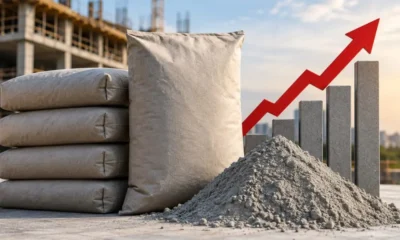
According to the latest update of the World Cement, Clinker & Slag Sea-Based Trade Report from CW Research, more than 174 million tonnes (MT) of cementitious materials were traded by sea-going vessels in 2016. The trade volumes grew 1.3 per cent compared to the 171.9 MT of cementitious materials traded by sea in 2015.
CW Research’s latest research shows that seaborne cementitious trade has benefited from low shipping rates. Moreover, the increase in imports in some key markets where cement production has leveled out (such as the US), has also motivated higher seaborne cementitious trade volumes in 2016, compared to 2015.
Raluca Cercel, CW Research’s Lead Analyst for the report, stresses that, in the seaborne global trade context, "About 2 to 3 per cent of total cement consumption is traded internationally, and two-thirds of the total trade is performed by sea-going vessels".
In the worldwide seaborne cementitious trade, gray cement continues to be the most traded cementitious commodity by sea. In 2016, more than half of the sea-based cementitious trade, comprising gray cement, white cement, slag, clinker, and fly ash, was made up of gray cement. Clinker (including both white and gray) accounted for 33 per cent of total seaborne cementitious trade in 2016, followed by ground blast furnace slag, with a 12 per cent share of the trade.
Far less traded, white cement and fly ash made for 3 per cent and for less than 2 per cent, respectively, of total seaborne trade of cementitious materials.
According to CW Research, on the main trade routes and regions, the Asia Pacific region absorbs 51 per cent of the total seaborne trade of cementitious materials. Due to proximity and pricing considerations, the largest volumes of cementitious materials were traded within this region, with almost 90 MT shipped in 2016.
Global companies LafargeHolcim, HC Trading and Cemex together control about 30 per cent of the cement trading market. The two largest Asian cement traders (Taiheyo and Tong Yang Cement) together control around 10 per cent of the market.
Worldwide there are more than 900 cement terminals, more than 100 waterside grinding plants (slag and clinker) and almost 140 waterside integrated cement plants. Most of the cement terminals are located in Far East Asia, followed by the Med Basin and the Black Sea. In terms of waterside integrated plants (used as export facilities), the Far East has a total of 51 plants, while 46 integrated waterside plants are located in the Med Basin and Black Sea region.
The presence of these facilities in the Asia Pacific region favors the trade of cementitious materials, therefore explaining the large volumes that were shipped in the area.
Utilisation of cement carriers has currently reached almost 100 per cent – and is a forecasted to grow in the coming years (mostly concentrated in Far East Asia, India, Northern and the Baltic Sea). In terms of the specialised cement carrier market, there are currently more than 300 cement carriers used for seaborne distribution of cementitious materials. An additional 200 cement carriers under the 1,000 dwt allow for environmental friendly, speedy and weather independent cement distribution.
Driven in particular by production shortages and supply chain optimization efforts, CW forecasts that the total traded volume of cementitious materials will exceed 200 MT, increasing at a CAGR of more than 3 per cent between 2016 and 2021.
"Cement trading ensures that surplus and shortages of cementitious materials are ironed out across markets. More than that, maintaining utilisation rates weighs heavily in the future of traded cement volumes. These are only two of the factors that balance the scale in favour of increased sea-trade volumes in the next five years. Hindering factors, such as potential fuel related restrictions on the shipping industry, as well as new capacity additions in traditional import markets, will counterbalance positive drivers,: emphasises Raluca Cercel, CW Research’s Lead Analyst for the report.
In conclusion, seaborne cementitious trade volumes increased globally between 2015 and 2016. That was largely due to consumption in the Asia Pacific region, which absorbed more than half of the total seaborne trade of cementitious materials. Even though fuel usage regulations in maritime shipping and local autonomy in cement production may condition the promising numbers, the outlook for seaborne cementitious trade volumes remains optimistic.


Continue Reading
Click to comment

Leave a Reply

Your email address will not be published. Required fields are marked *

Concrete

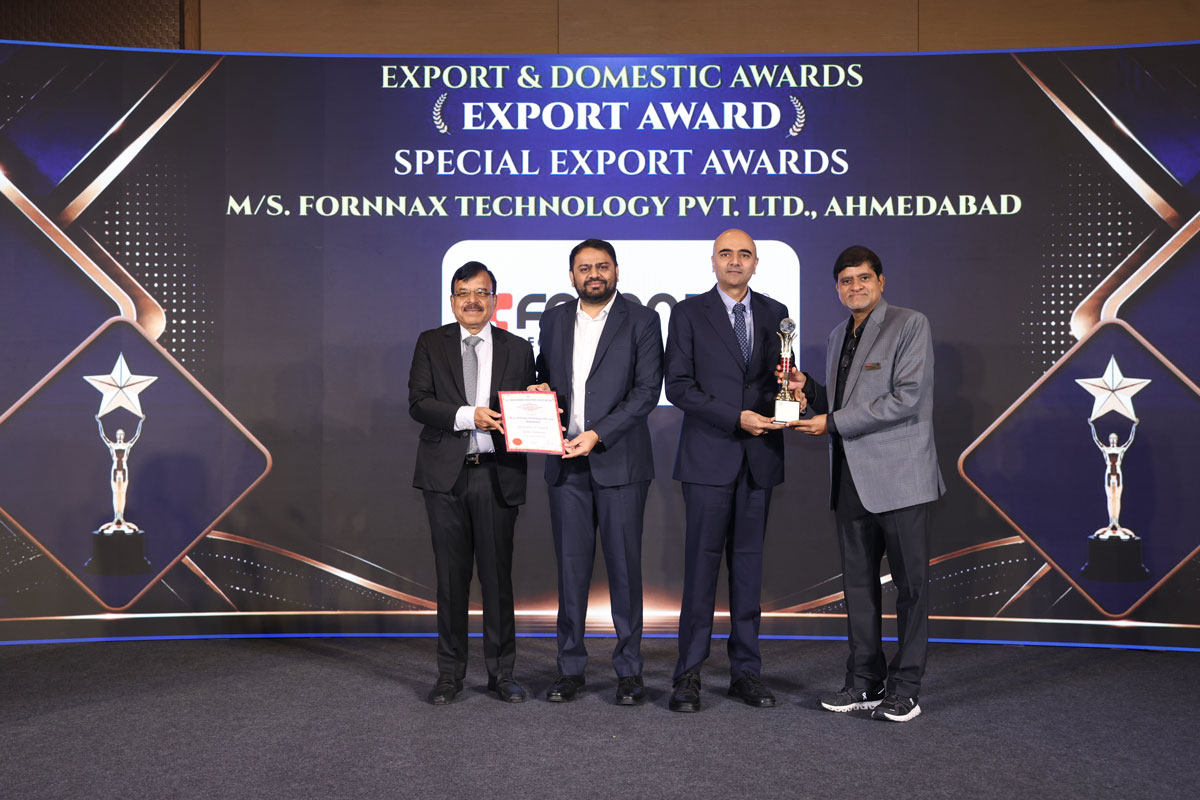
Fornnax Wins AIRIA’s Special Export Award for Rubber Machinery in 2025-26

Published

on

By

Shares

Fornnax Technology Pvt. Ltd. has been honoured with the Special Export Award – Rubber Machinery for 2025–26 by the All-India Rubber Industries Association (AIRIA), in recognition of its highest exports of tyre recycling plants to the European region.

With more than a decade of experience in India’s tyre recycling industry, Fornnax has contributed to the development of advanced recycling technologies and infrastructure. The company currently holds a 90% market share in India’s domestic tyre recycling sector, while exports account for 30% of its business, spanning markets such as Europe, Australia and the GCC.

The award marks another milestone for Fornnax, whose tyre recycling lines and advanced shredding technologies are supporting the growth of the circular economy in India and international markets.

Commenting on the recognition, Mr. Jignesh Kundaria, Founder and Director of Fornnax, said:

“This honour from AIRIA is a reflection of an incredible journey we have undertaken over the years. When we started Fornnax, there was no established recycling industry in India to follow. We chose to build for the future instead. Today, when you see India’s tyre recycling sector, it has already transformed into a dynamic, high-growth industry and we are extremely proud to have played our part in building it.”

Unlike standalone equipment suppliers, Fornnax focuses on developing complete, high-capacity recycling infrastructure. Its integrated systems combine multiple stages of shredding and size reduction to enable efficient, continuous operations. This system-level engineering approach helps recycling operators improve throughput, equipment reliability and operational consistency.

The recognition reinforces Fornnax’s commitment to developing engineering technologies that contribute to a more efficient and circular recycling ecosystem.

Looking ahead, the company aims to expand its international presence while continuing to develop advanced shredding and recycling solutions to address the growing volumes and evolving requirements of the global recycling industry.

For more information, visit: www.fornnax.com

Continue Reading

Concrete

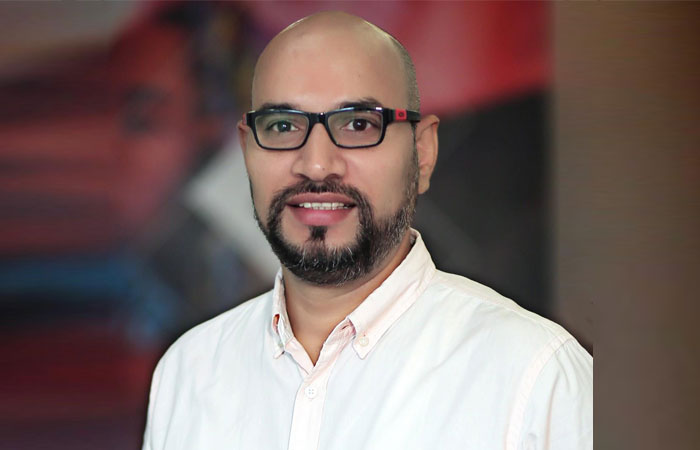
Wonder Cement appoints Mahesh Singh as VP Corporate Brand Communication 

Published

on

By

Shares

Singh brings 20+ years of brand and marketing experience, and will lead integrated corporate brand communication initiatives at Wonder Cement 

New Delhi

Wonder Cement, a leading cement manufacturer, has appointed Mahesh Singh as Vice President – Corporate Brand Communication. In his new role, he will oversee corporate brand strategy and communication, including digital and performance marketing, public relations, trade, events, exhibitions, sports and experiential marketing. 

Singh brings over two decades of experience across marketing and communications, with roles spanning the automotive industry, agencies and entrepreneurship. He spent more than a decade with Honda Motorcycle & Scooter India, working across integrated communication, media, digital, retail and consumer engagement. His stint also included helping build the company’s digital marketing capabilities. 

He moved to dentsu X India as Vice President – Strategy & Planning, working across categories such as automotive, auto components, electric vehicles, FMCG, consumer electronics, BFSI, apparel and brand consulting. His responsibilities included media and marketing strategy, product launches, content, performance marketing and consumer activations. 

Singh subsequently took an entrepreneurial route with Radiant Brands before joining Shriram Ltd (SPR Autotech) as Head – Marketing & Communications. There, his remit included brand and corporate strategy, communications, PR and ORM, retail identity, loyalty programmes and events. 

At Wonder Cement, Singh will be responsible for bringing together the company’s corporate brand communication initiatives across digital, performance marketing, PR, trade, sports and experiential platforms. The role will focus on creating an integrated approach to communication across consumers, trade partners and other key stakeholders. 

The appointment brings to Wonder Cement a marketer whose career has spanned the brand, agency and entrepreneurial sides of the communications ecosystem. 

Wonder Cement, part of the RK Group, is a cement manufacturer with roots in Rajasthan and a focus on quality, trust and transparency. The company has grown to six manufacturing plants, and a cement capacity of 21.5 MTPA. With more than 2,000 employees and a network of over 5,000 dealers, its operations span manufacturing, distribution and customer engagement, with a focus on consistent product quality and efficient execution. 

Continue Reading

Concrete

JSW Cement commissions additional 1 MTPA grinding unit at Nagaur

Published

on

By

Shares

With this commissioning, JSW Cement’s total cement grinding capacity has increased to 25.10 MTPA, 
Mumbai

JSW Cement, one of India’s leading green cement producers and part of the diversified JSW Group, today announced the successful commissioning of an additional 1.00 MTPA cement grinding unit at Nagaur, Rajasthan. The commissioning marks another significant milestone in the Company’s growth strategy.

With this commissioning, JSW Cement’s total cement grinding capacity has increased to 25.10 MTPA, while its total clinker manufacturing capacity, including clinker capacity at its joint venture, JSW Cement FZC, stands at 9.74 MTPA.

JSW Cement had commenced operations in North India in March 2026 with the Nagaur Integrated Plant, comprising a 3.30 MTPA clinkerisation unit and 2.50 MTPA cement grinding unit. With the commissioning of the additional 1.00 MTPA cement grinding unit, the plant’s total cement grinding capacity has increased to 3.50 MTPA, enhancing the company’s ability to cater to the growing cement demand across Rajasthan, Haryana, Punjab and the National Capital Region (NCR). The expansion has been funded through a strategic mix of equity and long-term debt.

During the quarter ended 30th September 2026, JSW Cement has also commissioned the Alternate Fuel Handling System and the Waste Heat Recovery system (WHRS) at the Nagaur Integrated Plant.

Nilesh Narwekar, CEO, JSW Cement, said: “The commissioning of additional 1.00 MTPA grinding capacity at Nagaur is a key strategic priority for us and will accelerate JSW Cement’s expansion into North India. We look forward to servicing the growing needs of the region and contributing to the economic growth of Rajasthan, Haryana, Punjab and the NCR area. I am delighted to share that the company has commissioned this grinding unit within the expected timeline, showcasing our project execution capabilities. Further, the Alternate Fuel Handling System and the Waste Heat Recovery system (WHRS) are expected to substantially reduce our production costs going forward.”

Continue Reading

Video Thumbnail
▶

    SIGN-UP FOR OUR GENERAL NEWSLETTER

    Trending News

    SUBSCRIBE TO THE NEWSLETTER


    Don't miss out on valuable insights and opportunities to connect with like minded professionals.


      This will close in 0 seconds