Technology
Fly ash | From Trash to Cash
Published
10 years agoon
By
admin
Many civil engineers are attracted to fly ash today, mostly due to commercial considerations. However, if it is looked upon as a performance improver, fly ash can solve many problems.
Fly ash is a by-product obtained while generating electrical power using coal as a fuel. For the last few decades, the demand for electricity has been increasing continually due to growing population and new industries being launched across the world.
During the year 2014-15; the total generation of fly ash has been 184.14 Million Tonnes out of which 102.54 Million tonnes is used, i.e.about 55.69 per cent of generated fly ash. (Information sourced from Central Electricity Authority, Govt. of India) But since fly ash contains a lot of heavy metals, its production causes problems to the environment. Because of this reason, it has become necessary to invent some newer aspects for utilising fly ash, rather than stick to the conventional ways. Fly ash disposal is a serious environmental concern due to its hazardous properties, impact on agriculture and long-term risks to both ecosystems and human beings. Fly ash is a coal-combustion product, composed of the fine particles that are driven out of the boiler with the flue gases. Ash that falls in the bottom of the boiler is called bottom ash. In modern coal-fired power plants, fly ash is generally captured by electrostatic precipitators or other particle filtration equipment before the flue gases reach the chimneys. Together with bottom ash removed from the bottom of the boiler, it is known as coal ash.
Depending upon the source and makeup of the coal being burned, the chemical composition of fly ash will vary considerably; but in general, all fly ash includes substantial amounts of silicon dioxide (SiO2) – both amorphous and crystalline, aluminium oxide (Al2O3) and calcium oxide (CaO), the main mineral compounds in coal-bearing rock strata.
Past Processes
In the past, fly ash was generally released into the atmosphere, but air pollution control standards now require that it be captured prior to release by fitting pollution control equipment. In many countries, fly ash is either stored at coal power plants or placed in landfills. A substantial part of fly ash goes to the cement industry as a cement substituting material, to produce hydraulic cement or hydraulic plaster and a replacement or partial replacement for Portland cement in concrete production. Pozzolans ensure the setting of concrete and plaster and provide concrete with more protection from wet conditions and chemical attack.
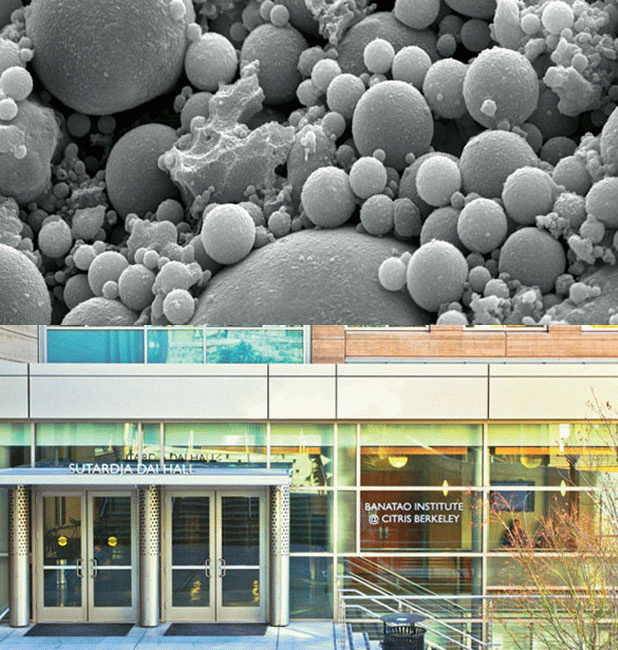
Cenospheres are the most important ingredient of fly ash. These are unique free-flowing powders composed of hard-shelled, hollow, minute spheres. Cenospheres are made up of silica, iron and alumina. These have a size range from 1 to 500 microns with an average compressive strength of 3000+ psi. Colours range from white to dark grey.
Chemical composition
Fly ash particles are generally spherical in shape and range in size from 0.5?m to 300?m. The major consequence of the rapid cooling is that few minerals have time to crystallise, and that mainly amorphous, quenched glass remains. Nevertheless, some refractory phases in the pulverised coal do not melt entirely, and remain crystalline. In consequence, fly ash is a heterogeneous material. SiO2, Al2O3, Fe2O3 and occasionally CaO are the main chemical components present in fly ash. The mineralogy of fly ash is very diverse. The main phases encountered are a glass phase, together with quartz, mullite and the iron oxides hematite, magnetite and/or maghemite. Other phases often identified are cristobalite, anhydrite, free lime, periclase, calcite, sylvite, halite, portlandite, rutile and anatase. The Ca-bearing minerals anorthite, gehlenite, akermanite and various calcium silicates and calcium aluminates identical to those found in Portland cement can be identified in Ca-rich fly ash. The mercury content can reach 1 ppm, but is generally included in the range 0.01 – 1 ppm for bituminous coal. The concentrations of other trace elements vary as well according to the kind of coal combusted to form it.
The fineness or the particle size of fly ash is a very critical property. The commercial value of fly ash depends on the particles and percentage of unburned carbon. A total of 75 per cent of the ash must have a fineness of 45 -?m or less, and have carbon content, measured by the loss on ignition (LOI), of less than 4 per cent. The quality of fly ash also depends on the type of technology used in the boiler and the quality of coal. Indian coal generally has high percentage of ash compared to either Australian or South African coal.
The bottom ash, which is still a neglected portion of the same waste, can also find its way into concrete, replacing the stone aggregates. But a lot needs to be done on this material in our country.
Benificiation, the value addition
By using air separators, the fly ash can be divided into different grades depending on the particle size. The best example is that of Dirk India, a company which is only into selling of fly ash, and thriving. Dirk sources its fly ash from state electricity generating companies, and by using air classifiers, produces four different varieties of fly ash which have a good demand in the market.
Challenges in handling fly ash
In a typical fly ash handling system, the material that is generated as a result of combustion is captured by an electrostatic precipitator (ESP) or a bag house before the flue gases reach the stack. These ESPs and bag houses generally have multiple pyramidal hoppers at the bottom, in which the ash is collected by gravity and is then transferred to a storage silo. These storage silos generally have provisions for a truck load-out to carry the fly ash for disposal or reuse. As a result of the frictional nature and fine particle size distribution, fly ash handling systems often experience problems if they are designed without following a prudent engineering approach.
Flow rate limitation
The permeability of fly ash is typically very low, due to its fine particle size distribution. As a result, when de-aerated, fly ash provides considerable resistance to the flow of air or other gases. During discharge from a silo or hopper outlet, air counter-flow through the fly ash bed provides an opposing force to gravity. This air ingress occurs as a result of the natural expansion of the ash bed within the hopper as it flows, or simply due to leakage from the conveying system below. As a result, fly ash hoppers and silos are limited in terms of the maximum discharge rates that they can provide by gravity alone.
Flooding or uncontrolled flow
As a fine powder, fly ash can behave like a fluid when sufficient air is present. Flooding can result, particularly when the handling rate is too high to allow sufficient time for the entrained air to escape. In this case, the fly ash may become fluidised and flush through the outlet unless the feeder can contain it. Flooding not only creates a challenge in metering the discharge, it can also lead to serious environmental, health and safety concerns.
Wear
The presence of a significant portion of silicon dioxide makes fly ash very abrasive and frictional. As a result of material sliding and impacting within the handling equipment, wall surfaces undergo tremendous wear.
Dust generation
Dusting can particularly occur at transfer points where the air entrained in the powder is suddenly expelled, carrying these finer particles with it. Dust generation also occurs when local air currents have sufficient velocity to pick up particles from the surface of a pile. Dust by itself is a nuisance and, more importantly, it can result in safety concerns including the health effects of operator exposure and the potential for explosions.
Other problems
Agglomerated lumps of fly ash and foreign materials can create flow problems, especially when handling fly ash with air slides or aerated bin bottoms. Therefore handling of fly ash always requires proper engineering inputs. The progress made so far has been reasonable, but a lot still needs to be done considering the potential of the material. Let us look at some of the possibilities.
Fly ash as cement replacement and high-volume fly ash concrete
Indian codes permit use of fly ash up to 35 per cent as cement replacement in cement manufacturing. However, in the case of concrete, the percentage will depend on the mix design recipe. If we see the practise abroad, up to 65 per cent of fly ash can be used in concrete.
Two researchers, Dr PK Mehta and Dr VM Malhotra, have made a significant contribution to the engineering community. Dr Mehta is well known for his work on high-volume fly ash concrete. Here is an extract from one of his papers called ?Cement & Concrete Mixtures for Sustainability?:
"For a variety of reasons, the concrete construction industry is not sustainable. First, it consumes huge quantities of virgin materials. Second, the principal binder in concrete is Portland cement, the production of which is a major contributor to greenhouse gas emissions that are implicated in global warming and climate change. Third, many concrete structures suffer from lack of durability which has an adverse effect on the resource productivity of the industry. Because the high-volume fly ash concrete system addresses all three sustainability issues, its adoption will enable the concrete construction industry to become more sustainable."
In this paper, a brief review is presented of the theory and construction practice with concrete mixtures containing more than 50 per cent fly ash by mass of the cementitious material. Dr Mehta is a champion of using more than 50 per cent fly ash by mass of the cementitious material. Mechanisms are discussed by which the incorporation of high volume of fly ash in concrete reduces the water demand, improves the workability, minimises cracking due to thermal and drying shrinkage, and enhances durability to reinforcement corrosion, sulfate attack, and alkali-silica expansion. For countries like China and India, this technology can play an important role in meeting the huge demand for infrastructure in a sustainable manner, says Dr Mehta.
High-performance concrete (HVFA)
As per Dr Mehta, the characteristics defining a HVFA concrete mixture are, minimum of 50 per cent of fly ash by mass of the cementitious materials must be maintained, low water content, generally less than 130 kg/m3 is mandatory and for cement content, generally no more than 200kg/m3 is desirable. For concrete mixtures with specified 28-day compressive strength of 30 MPa or higher, slumps more than 150 mm, and water-to-cementitious materials ratio of the order of 0.30, the use of high-range water-reducing admixtures (super-plasticizers) is mandatory. For concrete exposed to freezing and thawing environments, the use of an air-entraining admixture resulting in adequate air-void spacing factor is mandatory. For concrete mixtures with slumps less than 150 mm and 28-day compressive strength of less than 30 MPa, HVFA concrete mixtures with a water-to-cementitious materials ratio of the order of 0.40 may be used without super-plasticizers. Dr Mehta further concludes in his paper, that throughout the world, waste-disposal costs have escalated greatly. At the same time, the concrete construction industry has realised that coal fly ash is a relatively inexpensive and widely available by-product that can be used for partial cement replacement to achieve excellent workability in fresh concrete mixtures.
Consequently, in the modern construction practice, 15 to 20 per cent of fly ash by mass of the cementitious material is now commonly used in North America. Higher amounts of fly ash in the order of 25-30 per cent are recommended when there is a concern over thermal cracking, alkali-silica expansion or sulfate attack. Such high proportions of fly ash are not readily accepted by the construction industry due to a slower rate of strength development at an early age.
The high-volume fly ash concrete system overcomes the problems of low early strength to a great extent through a drastic reduction in the water-cementitious materials ratio by using a combination of methods, such as taking advantage of the super-plasticizing effect of fly ash when used in a large volume, with the use of a chemical super-plasticizer, and a judicious aggregate grading.
Consequently, properly cured high-volume concrete products are very homogenous in microstructure, virtually crack-free, and highly durable. Because there is a direct link between durability and resource productivity, the increasing use of high-volume concrete will help to enhance the sustainability of the concrete industry.
In conclusion, high-volume fly ash concrete offers a holistic solution to the problem of meeting the increasing demands for concrete in the future in a sustainable manner and at a reduced or no additional cost. At the same time, it reduces the environmental impact of two industries that are vital to economic development – the cement industry and the coal-fired power industry. The technology of high-volume fly ash concrete is especially significant for countries like China and India, where, given the limited amount of financial and natural resources, the huge demand for concrete needed for infrastructure and housing can be easily met in a cost-effective and ecological manner.
Concrete
Redefining Efficiency with Digitalisation
Published
3 days agoon
February 20, 2026By
admin
Professor Procyon Mukherjee discusses how as the cement industry accelerates its shift towards digitalisation, data-driven technologies are becoming the mainstay of sustainability and control across the value chain.
The cement industry, long perceived as traditional and resistant to change, is undergoing a profound transformation driven by digital technologies. As global infrastructure demand grows alongside increasing pressure to decarbonise and improve productivity, cement manufacturers are adopting data-centric tools to enhance performance across the value chain. Nowhere is this shift more impactful than in grinding, which is the energy-intensive final stage of cement production, and in the materials that make grinding more efficient: grinding media and grinding aids.
The imperative for digitalisation
Cement production accounts for roughly 7 per cent to 8 per cent of global CO2 emissions, largely due to the energy intensity of clinker production and grinding processes. Digital solutions, such as AI-driven process controls and digital twins, are helping plants improve stability, cut fuel use and reduce emissions while maintaining consistent product quality. In one deployment alongside ABB’s process controls at a Heidelberg plant in Czechia, AI tools cut fuel use by 4 per cent and emissions by 2 per cent, while also improving operational stability.
Digitalisation in cement manufacturing encompasses a suite of technologies, broadly termed as Industrial Internet of Things (IIoT), AI and machine learning, predictive analytics, cloud-based platforms, advanced process control and digital twins, each playing a role in optimising various stages of production from quarrying to despatch.
Grinding: The crucible of efficiency and cost
Of all the stages in cement production, grinding is among the most energy-intensive, historically consuming large amounts of electricity and representing a significant portion of plant operating costs. As a result, optimising grinding operations has become central to digital transformation strategies.
Modern digital systems are transforming grinding mills from mechanical workhorses into intelligent, interconnected assets. Sensors throughout the mill measure parameters such as mill load, vibration, mill speed, particle size distribution, and power consumption. This real-time data, fed into machine learning and advanced process control (APC) systems, can dynamically adjust operating conditions to maintain optimal throughput and energy usage.
For example, advanced grinding systems now predict inefficient conditions, such as impending mill overload, by continuously analysing acoustic and vibration signatures. The system can then proactively adjust clinker feed rates and grinding media distribution to sustain optimal conditions, reducing energy consumption and improving consistency.
Digital twins: Seeing grinding in the virtual world
One of the most transformative digital tools applied in cement grinding is the digital twin, which a real-time virtual replica of physical equipment and processes. By integrating sensor data and
process models, digital twins enable engineers to simulate process variations and run ‘what-if’
scenarios without disrupting actual production. These simulations support decisions on variables such as grinding media charge, mill speed and classifier settings, allowing optimisation of energy use and product fineness.
Digital twins have been used to optimise kilns and grinding circuits in plants worldwide, reducing unplanned downtime and allowing predictive maintenance to extend the life of expensive grinding assets.
Grinding media and grinding aids in a digital era
While digital technologies improve control and prediction, materials science innovations in grinding media and grinding aids have become equally crucial for achieving performance gains.
Grinding media, which comprise the balls or cylinders inside mills, directly influence the efficiency of clinker comminution. Traditionally composed of high-chrome cast iron or forged steel, grinding media account for nearly a quarter of global grinding media consumption by application, with efficiency improvements translating directly to lower energy intensity.
Recent advancements include ceramic and hybrid media that combine hardness and toughness to reduce wear and energy losses. For example, manufacturers such as Sanxin New Materials in China and Tosoh Corporation in Japan have developed sub-nano and zirconia media with exceptional wear resistance. Other innovations include smart media embedded with sensors to monitor wear, temperature, and impact forces in real time, enabling predictive maintenance and optimal media replacement scheduling. These digitally-enabled media solutions can increase grinding efficiency by as much as 15 per cent.
Complementing grinding media are grinding aids, which are chemical additives that improve mill throughput and reduce energy consumption by altering the surface properties of particles, trapping air, and preventing re-agglomeration. Technology leaders like SIKA AG and GCP Applied Technologies have invested in tailored grinding aids compatible with AI-driven dosing platforms that automatically adjust additive concentrations based on real-time mill conditions. Trials in South America reported throughput improvements nearing 19 per cent when integrating such digital assistive dosing with process control systems.
The integration of grinding media data and digital dosing of grinding aids moves the mill closer to a self-optimising system, where AI not only predicts media wear or energy losses but prescribes optimal interventions through automated dosing and operational adjustments.
Global case studies in digital adoption
Several cement companies around the world exemplify digital transformation in practice.
Heidelberg Materials has deployed digital twin technologies across global plants, achieving up to 15 per cent increases in production efficiency and 20 per cent reductions in energy consumption by leveraging real-time analytics and predictive algorithms.
Holcim’s Siggenthal plant in Switzerland piloted AI controllers that autonomously adjusted kiln operations, boosting throughput while reducing specific energy consumption and emissions.
Cemex, through its AI and predictive maintenance initiatives, improved kiln availability and reduced maintenance costs by predicting failures before they occurred. Global efforts also include AI process optimisation initiatives to reduce energy consumption and environmental impact.
Challenges and the road ahead
Despite these advances, digitalisation in cement grinding faces challenges. Legacy equipment may lack sensor readiness, requiring retrofits and edge-cloud connectivity upgrades. Data governance and integration across plants and systems remains a barrier for many mid-tier producers. Yet, digital transformation statistics show momentum: more than half of cement companies have implemented IoT sensors for equipment monitoring, and digital twin adoption is growing rapidly as part of broader Industry 4.0 strategies.
Furthermore, as digital systems mature, they increasingly support sustainability goals: reduced energy use, optimised media consumption and lower greenhouse gas emissions. By embedding intelligence into grinding circuits and material inputs like grinding aids, cement manufacturers can strike a balance between efficiency and environmental stewardship.
Conclusion
Digitalisation is not merely an add-on to cement manufacturing. It is reshaping the competitive and sustainability landscape of an industry often perceived as inertia-bound. With grinding representing a nexus of energy intensity and cost, digital technologies from sensor networks and predictive analytics to digital twins offer new levers of control. When paired with innovations in grinding media and grinding aids, particularly those with embedded digital capabilities, plants can achieve unprecedented gains in efficiency, predictability and performance.
For global cement producers aiming to reduce costs and carbon footprints simultaneously, the future belongs to those who harness digital intelligence not just to monitor operations, but to optimise and evolve them continuously.
About the author:
Professor Procyon Mukherjee, ex-CPO Lafarge-Holcim India, ex-President Hindalco, ex-VP Supply Chain Novelis Europe, has been an industry leader in logistics, procurement, operations and supply chain management. His career spans 38 years starting from Philips, Alcan Inc (Indian Aluminum Company), Hindalco, Novelis and Holcim. He authored the book, ‘The Search for Value in Supply Chains’. He serves now as Visiting Professor in SP Jain Global, SIOM and as the Adjunct Professor at SBUP. He advises leading Global Firms including Consulting firms on SCM and Industrial Leadership and is a subject matter expert in aluminum and cement. An Alumnus of IIM Calcutta and Jadavpur University, he has completed the LH Senior Leadership Programme at IVEY Academy at Western University, Canada.
Concrete
Digital Pathways for Sustainable Manufacturing
Published
3 days agoon
February 20, 2026By
admin
Dr Y Chandri Naidu, Chief Technology Officer, Nextcem Consulting highlights how digital technologies are enabling Indian cement plants to improve efficiency, reduce emissions, and transition toward sustainable, low-carbon manufacturing.
Cement manufacturing is inherently resource- and energy-intensive due to high-temperature clinkerisation and extensive material handling and grinding operations. In India, where cement demand continues to grow in line with infrastructure development, producers must balance capacity expansion with sustainability commitments. Energy costs constitute a major share of operating expenditure, while process-related carbon dioxide emissions from limestone calcination remain unavoidable.
Traditional optimisation approaches, which are largely dependent on operator experience, static control logic and offline laboratory analysis, have reached their practical limits. This is especially evident when higher levels of alternative fuel and raw materials (AFR) are introduced or when raw material variability increases.
Digital technologies provide a systematic pathway to manage this complexity by enabling
real-time monitoring, predictive optimisation and integrated decision-making across cement manufacturing operations.
Digital cement manufacturing is enabled through a layered architecture integrating operational technology (OT) and information technology (IT). At the base are plant instrumentation, analysers, and automation systems, which generate continuous process data. This data is contextualised and analysed using advanced analytics and AI platforms, enabling predictive and prescriptive insights for operators and management.
Digital optimisation of energy efficiency
- Thermal energy optimisation
The kiln and calciner system accounts for approximately 60 per cent to 65 per cent of total energy consumption in an integrated cement plant. Digital optimisation focuses on reducing specific thermal energy consumption (STEC) while maintaining clinker quality and operational stability.
Advanced Process Control (APC) stabilises critical parameters such as burning zone temperature, oxygen concentration, kiln feed rate and calciner residence time. By minimising process variability, APC reduces the need for conservative over-firing. Artificial intelligence further enhances optimisation by learning nonlinear relationships between raw mix chemistry, AFR characteristics, flame dynamics and heat consumption.
Digital twins of kiln systems allow engineers to simulate operational scenarios such as increased AFR substitution, altered burner momentum or changes in raw mix burnability without operational risk. Indian cement plants adopting these solutions typically report STEC reductions in the range of 2 per cent to 5 per cent. - Electrical energy optimisation
Electrical energy consumption in cement plants is dominated by grinding systems, fans and material transport equipment. Machine learning–based optimisation continuously adjusts mill parameters such as separator speed, grinding pressure and feed rate to minimise specific power consumption while maintaining product fineness.
Predictive maintenance analytics identify inefficiencies caused by wear, fouling or imbalance in fans and motors. Plants implementing plant-wide electrical energy optimisation typically achieve
3 per cent to 7 per cent reduction in specific power consumption, contributing to both cost savings and indirect CO2 reduction.
Digital enablement of AFR
AFR challenges in the Indian context: Indian cement plants increasingly utilise biomass, refuse-derived fuel (RDF), plastic waste and industrial by-products. However, variability in calorific value, moisture, particle size, chlorine and sulphur content introduces combustion instability, build-up formation and emission risks.
Digital AFR management: Digital platforms integrate real-time AFR quality data from online analysers with historical kiln performance data. Machine learning models predict combustion behaviour, flame stability and emission trends for different AFR combinations. Based on these predictions, fuel feed distribution, primary and secondary air ratios, and burner momentum are dynamically adjusted to ensure stable kiln operation. Digitally enabled AFR management in cement plants will result in increased thermal substitution rates by 5-15 percentage points, reduced fossil fuel dependency, and improved kiln stability.
Digital resource and raw material optimisation
Raw mix control: Raw material variability directly affects kiln operation and clinker quality. AI-driven raw mix optimisation systems continuously adjust feed proportions to maintain target chemical parameters such as Lime Saturation Factor (LSF), Silica Modulus (SM), and Alumina Modulus (AM). This reduces corrective material usage and improves kiln thermal efficiency.
Clinker factor reduction: Reducing clinker factor through supplementary cementitious materials (SCMs) such as fly ash, slag and calcined clay is a key decarbonisation lever. Digital models simulate blended cement performance, enabling optimisation of SCM proportions while maintaining strength and durability requirements.
Challenges and strategies for digital adoption
Key challenges in Indian cement plants include data quality limitations due to legacy instrumentation, resistance to algorithm-based decision-making, integration complexity across multiple OEM systems, and site-specific variability in raw materials and fuels.
Successful digital transformation requires strengthening the data foundation, prioritising high-impact use cases such as kiln APC and energy optimisation, adopting a human-in-the-loop approach, and deploying modular, scalable digital platforms with cybersecurity by design.
Future Outlook
Future digital cement plants will evolve toward autonomous optimisation, real-time carbon intensity tracking, and integration with emerging decarbonisation technologies such as carbon capture, utilisation and storage (CCUS). Digital platforms will also support ESG reporting and regulatory compliance.
Digital pathways offer a practical and scalable solution for sustainable cement manufacturing in India. By optimising energy consumption, enabling higher AFR substitution and improving resource efficiency, digital technologies deliver measurable environmental and economic benefits. With appropriate data infrastructure, organisational alignment and phased implementation, digital transformation will remain central to the Indian cement industry’s low-carbon transition.
About the author:
Dr Y Chandri Naidu is a cement industry professional with 30+ years of experience in process optimisation, quality control and quality assistance, energy conservation and sustainable manufacturing, across leading organisations including NCB, Ramco, Prism, Ultratech, HIL, NCL and Vedanta. He is known for guiding teams, developing innovative plant solutions and promoting environmentally responsible cement production. He is also passionate about mentoring professionals and advancing durable, resource efficient technologies for future of construction materials.

Concrete
Turning Downtime into Actionable Intelligence
Published
4 days agoon
February 19, 2026By
admin
Stoppage Insights instantly identifies root causes and maps their full operational impact.
In cement, mining and minerals processing operations, every unplanned stoppage equals lost production and reduced profitability. Yet identifying what caused a stoppage remains frustratingly complex. A single motor failure can trigger cascading interlocks and alarm floods, burying the root cause under layers of secondary events. Operators and maintenance teams waste valuable time tracing event chains when they should be solving problems. Until now.
Our latest innovation to our ECS Process Control Solution(1) eliminates this complexity. Stoppage Insights, available with the combined updates to our ECS/ControlCenter™ (ECS) software and ACESYS programming library, transforms stoppage events into clear, actionable intelligence. The system automatically identifies the root cause of every stoppage – whether triggered by alarms, interlocks, or operator actions – and maps all affected equipment. Operators can click any stopped motor’s faceplate to view what caused the shutdown instantly. The Stoppage UI provides a complete record of all stoppages with drill-down capabilities, replacing manual investigation with immediate answers.
Understanding root cause in Stoppage Insights
In Stoppage Insights, ‘root cause’ refers to the first alarm, interlock, or operator action detected by the control system. While this may not reveal the underlying mechanical, electrical or process failure that a maintenance team may later discover, it provides an actionable starting point for rapid troubleshooting and response. And this is where Stoppage Insights steps ahead of traditional first-out alarm systems (ISA 18.2). In this older type of system, the first alarm is identified in a group. This is useful, but limited, as it doesn’t show the complete cascade of events, distinguish between operator-initiated and alarm-triggered stoppages, or map downstream impacts. In contrast, Stoppage Insights provides complete transparency:
- Comprehensive capture: Records both regular operator stops and alarm-triggered shutdowns.
- Complete impact visibility: Maps all affected equipment automatically.
- Contextual clarity: Eliminates manual tracing through alarm floods, saving critical response time.
David Campain, Global Product Manager for Process Control Systems, says, “Stoppage Insights takes fault analysis to the next level. Operators and maintenance engineers no longer need to trace complex event chains. They see the root cause clearly and can respond quickly.”
Driving results
1.Driving results for operations teams
Stoppage Insights maximises clarity to minimise downtime, enabling operators to:
• Rapidly identify root causes to shorten recovery time.
• View initiating events and all affected units in one intuitive interface.
• Access complete records of both planned and unplanned stoppages
- Driving results for maintenance and reliability teams
Stoppage Insights helps prioritise work based on evidence, not guesswork:
• Access structured stoppage data for reliability programmes.
• Replace manual logging with automated, exportable records for CMMS, ERP or MES.(2)
• Identify recurring issues and target preventive maintenance effectively.
A future-proof and cybersecure foundation
Our Stoppage Insights feature is built on the latest (version 9) update to our ACESYS advanced programming library. This industry-leading solution lies at the heart of the ECS process control system. Its structured approach enables fast engineering and consistent control logic across hardware platforms from Siemens, Schneider, Rockwell, and others.
In addition to powering Stoppage Insights, ACESYS v9 positions the ECS system for open, interoperable architectures and future-proof automation. The same structured data used by Stoppage Insights supports AI-driven process control, providing the foundation for machine learning models and advanced analytics.
The latest releases also respond to the growing risk of cyberattacks on industrial operational technology (OT) infrastructure, delivering robust cybersecurity. The latest ECS software update (version 9.2) is certified to IEC 62443-4-1 international cybersecurity standards, protecting your process operations and reducing system vulnerability.
What’s available now and what’s coming next?
The ECS/ControlCenter 9.2 and ACESYS 9 updates, featuring Stoppage Insights, are available now for:
- Greenfield projects.
- ECS system upgrades.
- Brownfield replacement of competitor systems.
Stoppage Insights will also soon integrate with our ECS/UptimeGo downtime analysis software. Stoppage records, including root cause identification and affected equipment, will flow seamlessly into UptimeGo for advanced analytics, trending and long-term reliability reporting. This integration creates a complete ecosystem for managing and improving plant uptime.
(1) The ECS Process Control Solution for cement, mining and minerals processing combines proven control strategies with modern automation architecture to optimise plant performance, reduce downtime and support operational excellence.
(2) CMMS refers to computerised maintenance management systems; ERP, to enterprise resource planning; and MES to manufacturing execution systems.
Refractory demands in our kiln have changed
Digital supply chain visibility is critical
Redefining Efficiency with Digitalisation
Cement Additives for Improved Grinding Efficiency
Digital Pathways for Sustainable Manufacturing
Refractory demands in our kiln have changed
Digital supply chain visibility is critical
Redefining Efficiency with Digitalisation
Cement Additives for Improved Grinding Efficiency
Digital Pathways for Sustainable Manufacturing
Trending News
-
Concrete4 weeks agoAris Secures Rs 630 Million Concrete Supply Order
-
Concrete4 weeks agoNITI Aayog Unveils Decarbonisation Roadmaps
-
Concrete3 weeks agoJK Cement Commissions 3 MTPA Buxar Plant, Crosses 31 MTPA
-
Economy & Market3 weeks agoBudget 2026–27 infra thrust and CCUS outlay to lift cement sector outlook