Connect with us

Economy & Market

Manufacturers are just looking to their profits.

Published

on

Shares

Rajesh Amonkar, Proprietor, Mahalaxmi Enterprises

I will be completing 20 years in this business soon. We basically cater to Bardez Taluka, a part of the north Goa district. We stock around 40 tonnes of various brands of cement in my godown and sell around 800 tonnes every month. The economic slowdown has affected us to a very large extent as also the total ban on the lifting and extraction of sand here in Goa. Sales have dropped drastically. Presently the position is such that us dealers cannot do anything; that this is the best time to wait and watch, control investments and keep liquid cash in hand. With the number of brands increasing in the market, the number of dealers too, is increasing, and it becomes difficult to concentrate on one particular brand. However, the market share of every company is decreasing and the inventory on our part is increasing.

The dealership model has changed to a great extent in the period that I served the market. Earlier the dealers had cordial relations with the customers; other than business relations, they had a sort of bond which cannot be seen now. Today, it is totally a business- centric relationship. The manufacturers are just looking at their profits, nothing else!

Presently there is nothing that the companies are doing to promote products. Earlier they used to hold technical meets, mason meets, dealers meets. Some aggressive advertising was done in the form of gifts to customers, etc, which is not seen now.

Continue Reading
Click to comment

Leave a Reply

Your email address will not be published. Required fields are marked *

Economy & Market

Montra Electric becomes First Indian Brand to roll out 1,000 electric heavy-duty trucks

Published

on

By

Shares

Driven by customer’s trust and repeat buys 1000 Rhino trucks have covered over 36 million km; removing an estimated 30.4 million kgs of tailpipe CO₂ emissions; and saved customers more than Rs 700 million. First OEM to receive PM E-DRIVE certificate for a heavy-duty electric truck

New Delhi

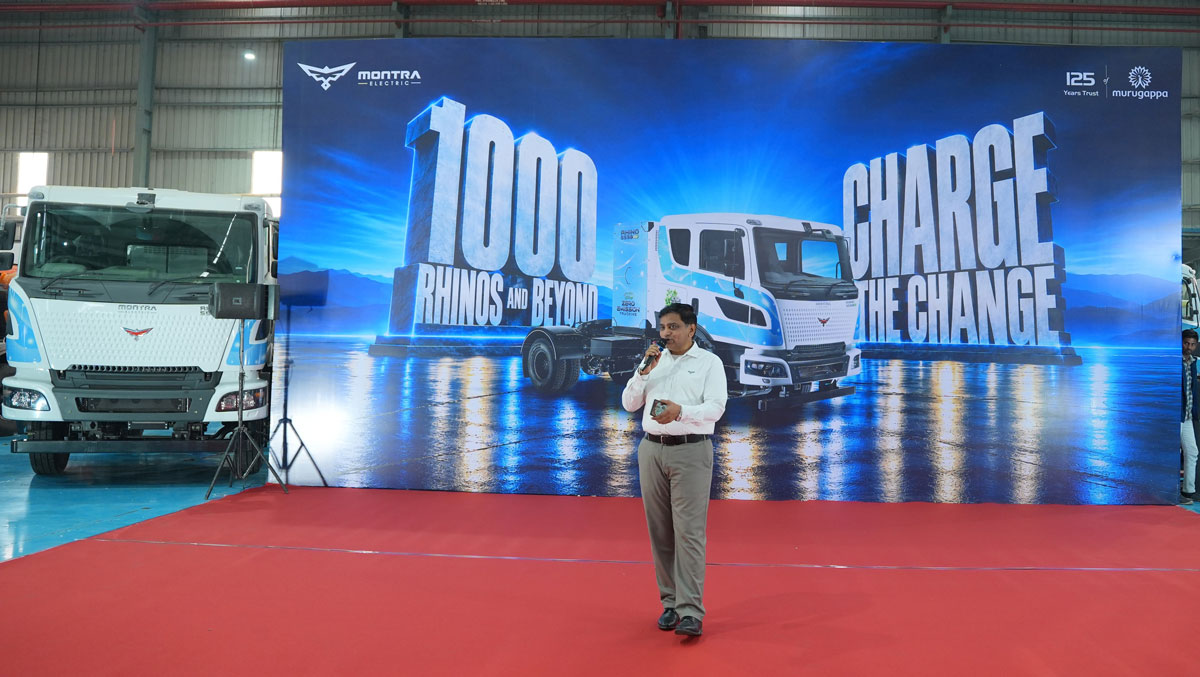
Montra Electric, India’s full-spectrum electric commercial vehicle brand, today rolled out its 1,000th Rhino electric truck at its Manesar facility. Montra Electric has become the first Indian brand to achieve this milestone.

To mark this milestone, the brand is marking the milestone under the theme ‘1,000 Rhinos & Beyond. Charge the Change.’The impactcan bemeasured from the fact that all the Rhino trucks deployed to date have together covered more than 36 million kilometres and removed an estimated 30.4 million kgs of tailpipe C02 emissions; roughly what 14 lakh trees absorb in a year. They have also saved their operators more than Rs 700 million in running costs.

The PM E-DRIVE scheme added to the momentum when the Rhino 5538 EV became India’s first heavy-duty electric truck to be certified under in January 2026. This scheme gives buyers an incentive of up to Rs 9.6 lakh per vehicle.

Commenting on the milestone, Jalaj Gupta, Managing Director, Montra Electric, (TI Clean Mobility Pvt Ltd), said, “When we started, there was no electric heavy truck market in India to build on. We had to prove, load after load, that these trucks could do the job and pay for themselves. With policy support such as PM E-DRIVE, and customers coming back to expand their fleets, electric heavy trucking in India has reached a tipping point. Our first 1,000 Rhinos belong as much to our customers and partners as they do to us. They backed electric trucks early, and the next 1,000 will be built on that trust.”

Montra Electric entered the segment at a time when very few Indian fleet operators had ever run an electric heavy truck. Charging points were scarce, and buyers doubted that a battery-powered truck could haul full loads over long distances and still make commercial sense. The company chose to settle those doubts on its customers’ routes, one deployment at a time.

Navneet Sethi, CEO-eM&HCV, Montra Electric, (IPL Tech Pvt Ltd), said, “The 1,000th Rhino roll-out marks an important milestone in demonstrating the commercial viability of electric heavy-duty trucking in India. Our trucks have demonstrated their ability to deliver on the parameters that matter the most to fleet operators – performance under load, operational uptime, range and cost efficiency, across demanding applications and long-haul routes. The growing number of repeat orders reflects customer confidence in the product and its ability to deliver tangible business value. Our next priority is to build on this momentum, deepen customer partnerships and expand the footprint of electric heavy-duty trucks across key applications and markets in India.”

As Montra Electric enters its next phase of growth, the focus will be on scaling deployments, deepening customer partnerships and expanding the adoption of electric commercial vehicles across India’s transportation ecosystem. From setting out to create a market for electric heavy-duty trucking to demonstrating its commercial viability at scale, Montra Electric’s journey reflects the possibilities that emerge when technology, customer confidence and a long-term commitment converge.

Montra Electric is a pioneering clean mobility brand from the Murugappa Group, one of India’s oldest and most respected business conglomerates, with a legacy spanning 126 years. Drawing on deep expertise in converting ‘Metal to Mobility’, earned over decades of manufacturing high-precision automotive and industrial components for India and global markets, and a track record of building strong brands, Montra Electric has set out with a vision of clean mobility. The company operates under four business verticals: e-3Wheelers, e-Small Commercial Vehicles, e-Tractors and e-Medium & Heavy Commercial Vehicles. Montra Electric’s fast-expanding portfolio includes India’s first 55-tonne electric truck trailer RHINO, the 3.5-tonne small commercial vehicle EVIATOR, the last-mile passenger vehicle SUPER AUTO, the last-mile delivery solution SUPER CARGO and India’s first electric tractor, E-27.

Continue Reading

Concrete

ABB Extends Drive Lifespan at ACC Cement Plant Without Production Shutdown

Published

on

By

Shares

ABB reconditions 25 drives at ACC’s Jamul cement plant, avoiding 16 tonnes of CO₂ emissions while improving reliability through predictive maintenance.
Chhattisgarh

ABB has signed a multi-year Motion OneCare service agreement with ACC Limited, part of the Adani Group, to modernise ageing industrial drives at its Jamul cement plant in Chhattisgarh, improving operational reliability while avoiding approximately 16 tonnes of carbon dioxide (CO₂) emissions without disrupting production.

Announced on 27 October 2026, the agreement combines scheduled drive reconditioning, digital condition monitoring and energy appraisals to extend equipment lifespan, improve plant uptime and optimise maintenance costs. The initiative marks a shift from conventional equipment replacement towards a more resource-efficient approach to industrial asset management.

The first phase, completed in April 2026, involved the on-site reconditioning of 25 ABB ACS800 variable speed drives without a major plant shutdown. By retaining the existing cabinets and restoring the drive modules rather than replacing entire panels, ABB helped ACC preserve capital investment, minimise material consumption and avoid approximately 16 tonnes of CO₂ emissions.

A second phase, covering an additional 25 ACS800 drive modules, is scheduled for the fourth quarter of 2026. The programme is designed to improve long-term equipment reliability while allowing maintenance activities to be aligned with the plant’s operational schedules.

The ACS800 drives, installed at Jamul in 2010, had delivered more than a decade of near-continuous service in demanding cement manufacturing conditions. However, ageing electrical components and changing fault patterns had begun to affect their ability to meet the plant’s reliability requirements.

Rather than opting for complete equipment replacement, ACC engaged ABB’s certified engineers to conduct a comprehensive asset health assessment. The evaluation found that the existing cabinets and enclosures remained structurally sound, making targeted reconditioning a technically viable and cost-effective alternative to full replacement.

Drawing on nearly two decades of experience with ACC’s equipment and operating requirements, ABB developed a maintenance framework tailored to the plant’s shutdown windows, budget cycles and production priorities.

The Motion OneCare agreement incorporates planned equipment restoration, condition-based monitoring and energy assessments, enabling ACC to adopt a more systematic approach to maintaining critical electrical infrastructure.

As part of the programme, ACC has implemented ABB Ability™ Digital Powertrain Insights to monitor drive performance and identify emerging operational issues before they result in equipment failures.

The digital platform provides continuous visibility into parameters such as temperature, current, vibration and fault patterns. These insights allow maintenance teams to detect early signs of equipment deterioration, schedule interventions more effectively and reduce the likelihood of unexpected downtime.

Amit Gupta, Local Division Manager, Motion Services, ABB India, said: “We know what unchecked wear costs over time: a small inefficiency that eats away at ROI for years. At Jamul, the evidence pointed clearly to assets with productive life still in them.”

“Our job was to restore them properly and give the team the tools to stay ahead of the next problem. At ABB, we don’t just fix what fails. We want to protect what works.”

The initiative also demonstrates the growing relevance of circular economy principles in cement manufacturing, where extending the service life of existing industrial equipment can reduce capital expenditure, material consumption and the environmental impact associated with manufacturing replacement components.

According to ABB, drive reconditioning can reduce lifecycle emissions by 50 to 80 per cent compared with complete equipment replacement. By preserving functional components and restoring critical modules, the process helps retain the economic and material value of existing industrial assets.

The addition of energy appraisals in subsequent phases will further expand the programme beyond equipment restoration, enabling ACC to assess drive performance, identify energy-saving opportunities and improve operating efficiency.

For cement manufacturers, variable speed drives play an important role in controlling motors and optimising energy consumption across production processes. Maintaining their reliability and efficiency is essential for minimising operational disruptions and managing electricity costs.

Vinod Bahety, CEO – Cement Business, Adani Group, said: “Moving from reactive firefighting to a structured maintenance plan was exactly what this operation needed. That kind of peace of mind doesn’t come easily. It comes from a partner that understands how your business runs.”

“We didn’t need a full system overhaul; we needed expert support, actionable insights, and a plan we could execute around our schedule. That’s what we got.”

The project supports ACC’s broader strategy to improve manufacturing efficiency through digital transformation, preventive maintenance and sustainable asset management.

ACC, a subsidiary of Ambuja Cements and part of the Adani Group, operates 20 cement manufacturing facilities and 119 ready-mix concrete plants across India. The company has been advancing initiatives focused on renewable energy, circular economy practices and technology-driven operational improvements.

Alongside Ambuja Cements, ACC is part of a large-scale building materials business committed to achieving net-zero emissions by 2050, with near-term and net-zero targets validated by the Science Based Targets initiative (SBTi).

The Jamul initiative aligns with these sustainability objectives by demonstrating how equipment life extension and digital monitoring can contribute to resource efficiency without requiring large-scale replacement of existing infrastructure.

ABB, a global technology company specialising in electrification and automation, brings more than 140 years of industrial expertise and employs approximately 110,000 people worldwide. Its Motion Services business supports industrial customers through equipment maintenance, modernisation, digital monitoring and lifecycle management solutions.

The agreement also reflects a wider shift in industrial maintenance practices, with manufacturers increasingly adopting predictive technologies to improve equipment availability, manage costs and reduce unplanned shutdowns.

With 25 drives already reconditioned and another 25 scheduled for restoration, ABB’s collaboration with ACC illustrates how targeted modernisation, digital monitoring and circular maintenance practices can extend the operational life of critical equipment while supporting more efficient and sustainable cement production.


Continue Reading

Concrete

ABB Drives Digital Transformation at TCI MAX Cement Plant in J&K

Published

on

By

Shares

ABB deploys advanced process control at TCI MAX’s Srinagar cement plant to improve clinker quality, energy efficiency and sustainable manufacturing.

Kashmir 

ABB has deployed its advanced process control technology at TCI MAX Cement’s Srinagar facility in Jammu and Kashmir, marking the region’s first reported implementation of advanced process control (APC) in cement manufacturing and strengthening efforts towards more efficient, digitally enabled production.

Announced on 5 November 2026, the deployment of ABB Ability™ Expert Optimizer at the facility, operated by Trumboo Industries Pvt. Ltd., aims to improve process stability, clinker quality, energy efficiency and overall plant productivity. The implementation forms part of TCI MAX’s strategy to modernise its manufacturing operations through automation and digital technologies.

Following the integration of ABB’s advanced process control solution and supporting IT infrastructure, TCI MAX has reported improvements in operational productivity, product quality and sustainability-related performance indicators. The technology focuses on optimising the cement pyro process, a critical stage of production involving high-temperature processing and clinker formation.

Waseem Ahmed Trumboo, Director, Trumboo Industries Pvt. Ltd., said: “Introducing advanced process control at TCI MAX is an important step in how we are evolving our operations. Our focus is on improving the stability and efficiency of our processes while maintaining consistent clinker quality. We have been encouraged by the performance of the solution during commissioning and by the support from the ABB team, and we look forward to realizing its full potential.”

ABB Ability™ Expert Optimizer combines advanced process control, model predictive control (MPC) and artificial intelligence (AI) to continuously monitor and optimise manufacturing operations. By analysing process conditions, predicting operational behaviour and automatically adjusting key parameters, the system enables more consistent production while reducing process variability.

In cement manufacturing, maintaining stable pyro-processing conditions is essential for achieving uniform clinker quality and optimising thermal energy consumption. Fluctuations in operating parameters can affect fuel efficiency, production output and product consistency.

The deployment is designed to address these challenges through real-time process optimisation, helping operators maintain more stable kiln operations while improving the utilisation of fuel, electricity and raw materials.

Kapil Agarwal, Senior Vice President and Local Division Manager, Process Industries Division, ABB India, said: “Cement producers are increasingly looking to adopt digital technologies to achieve greater consistency and efficiency while addressing their sustainability priorities. ABB Ability™ Expert Optimizer brings advanced process control and deep cement process expertise together to help operators make their processes more stable and efficient. We are pleased to support TCI MAX as it takes this important step in its digital transformation.”

The technology also supports sustainability objectives by optimising fuel consumption, improving electrical energy efficiency and minimising process waste. More stable operations can contribute to lower energy intensity and reduced emissions associated with cement production.
For TCI MAX, the investment represents a move towards data-driven manufacturing, where automated control systems complement operator expertise to improve production performance and operational reliability.

The implementation is particularly significant for Jammu and Kashmir’s cement industry, as it introduces advanced process optimisation technology to a regional manufacturing facility. Its deployment could demonstrate the potential for wider adoption of digital automation across cement plants seeking to modernise their operations.

The project builds on ABB’s experience in delivering advanced process control solutions to cement manufacturers worldwide. Through the integration of industrial automation, predictive technologies and process engineering expertise, the company supports manufacturers in improving resource efficiency and maintaining consistent production quality.

As cement producers face increasing pressure to manage energy costs, improve productivity and reduce their environmental footprint, technologies such as AI-enabled process control and predictive optimisation are becoming important components of plant modernisation strategies.

ABB’s Expert Optimizer provides a platform for addressing these priorities by enabling automated adjustments based on changing process conditions, reducing reliance on manual intervention and supporting more efficient plant operation.

ABB, a global technology company specialising in electrification and automation, has more than 140 years of industrial experience and approximately 110,000 employees worldwide. Its Automation business employs around 26,000 people and provides technologies and services across process, hybrid and maritime industries.

The TCI MAX deployment reinforces ABB’s growing role in the digital transformation of cement manufacturing in India, where improving process efficiency and reducing energy consumption remain critical to the industry’s long-term sustainability.

With the advanced process control system now implemented at its Srinagar facility, TCI MAX aims to build on the initial operational improvements and further optimise production efficiency, clinker consistency and environmental performance.

Continue Reading

Video Thumbnail
▶

    SIGN-UP FOR OUR GENERAL NEWSLETTER

    Trending News

    SUBSCRIBE TO THE NEWSLETTER


    Don't miss out on valuable insights and opportunities to connect with like minded professionals.


      This will close in 0 seconds