Connect with us

Concrete

Material, Machinery and Manpower!

Published

on

Shares

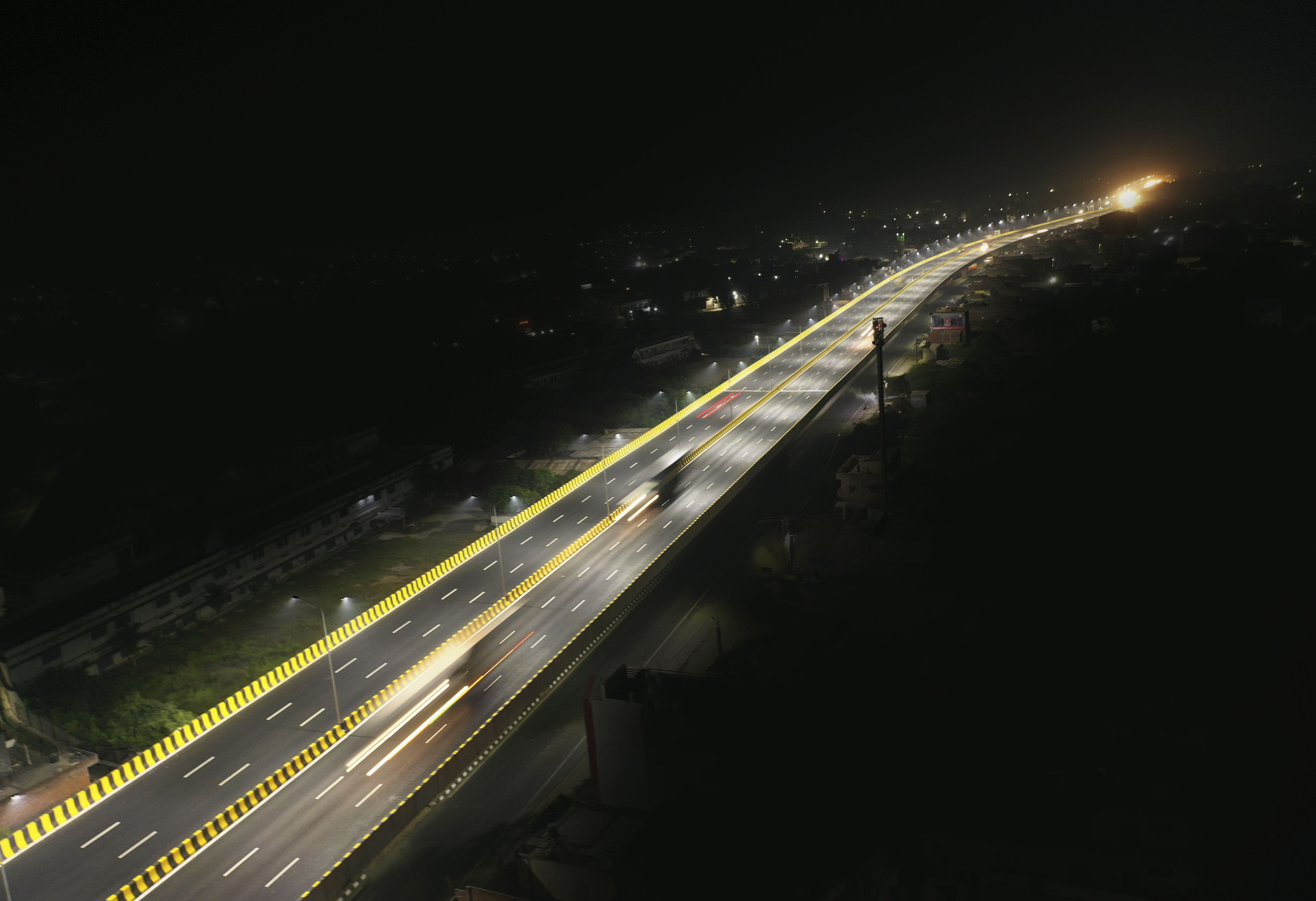
Here?? the latest connection between the ancient cities of Prayagraj and Varanasi: the six-laning of the Handia to Varanasi section of NH-2 from 712.900-km to 785.544-km in Uttar Pradesh under NHDP Phase 5 on HAM. At Rs.24.47 billion, the completion of this highway has opened doors of accessibility for national and international tourists and devotees. It is also a major part of the Delhi Calcutta Golden Quadrilateral Project-1 and Asian Highway-1. The stretch passes through the major districts of Eastern Uttar Pradesh, i.e. Prayagraj, Bhadohi, Mirzapur and Varanasi.

With this project, the travel time between Prayagraj and Varanasi has been reduced to between one-and-a-half and two hours only, from three to four hours previously.

Initial brief

The NHAI (developer) tender document provided the development features as six-laning of the existing four-lane road in 72.644-km length, with the provision of five new elevated structures, three new grade separators, three minor bridges, 10 new VUPs, and 12 new PUPs, and provided the inventory of the existing four-lane road.

As for manpower, machinery and time, RC Jain, Senior Vice-President – Operations, GR Infraprojects, says. ??e have used a short-term schedule to map out the detailed tasks needed to coordinate day-to-day work in each specific activity for timely completion of the project.??The schedule was developed by the key personnel of the highway and structures team to plan and coordinate their work at the detail level. Further, the schedules used to be revised by the team every one, two or four weeks depending on the complexity of the work. ??his encouraged continuity of work to complete it within its given time schedule of 910 days. Although it was one project, we planned it in five separate packages and mobilised the team accordingly.??/p>

Machinery and materials

A huge fleet of specialised plant and equipment was procured. Ratan Lal Kashyap, Senior Vice-President – Procurement, GR Infraprojects, says, ??amp sites were established at five locations on the project stretch to execute such a humongous task within such a short period. Further, the advanced and newly purchased equipment fleet and machineries have played a vital role, resulting in less maintenance and good efficiency.??/p>

In highway works, this included two concrete batching plants for PQC concrete, an advanced HMP plant and WMM plant along with a number of pavers, graders, dozers, excavators, rollers and dumpers. As for structure works, here?? the list:

  • Four concrete batching plants to produce concrete

  • Three hydraulic rigs for piling works along with cranes of the required capacity

  • Boom placers, transit mixers, shuttering and stagging material and other allied tools and tackles for concreting works

  • Four launching girders operated simultaneously on five elevated structures with 228 spans of PSC precast segmental spine and wings in the superstructure

  • Four high-capacity cranes to launch the flyover girders

  • Development of a casting yard with EOT cranes, batching plant, and automatic cutting and binding machine for reinforcement

  • Advanced quality control lab for testing concrete and various other materials.

Further, in terms of vital construction materials used in highway construction, Kashyap mentions ??G-40 grade of bitumen for enhanced performance; polymer-modified bitumen for BC for enhanced performance; and CTSB in subbase to improve the CBR.??As for structure works, he adds, ??MT steel of Grade FE 550D: 45,000 mt; high-tensile strand (HTS): 6,500 mt; spherical bearings: 932; and modular expansion joints, which were used in the superstructure of the elevated structures.??/p>

How technology took over the construction challenge!

Jain elaborates on the role technology played in overcoming construction-related challenges that arose during the project:

  • RE wall: A huge quantity of earth fill was required for filling at the RE wall locations. For fulfilling the required quantity, the earth was stocked at various locations prior to the rainy season, by which we were able to continuously carry out the work. Further, traffic was also plying on the existing four-lane area; hence, work had to be executed with deployment of machinery with precise safety.

  • Kanwar Yatra during July-August each year and Kumbh Mela in January 2019: These were major deterrents to progress. During this period, the administration would take over control of the site to maintain safe passage for pilgrims travelling between Prayagraj and Varanasi. Progress was drastically hampered during such events. To overcome the situation, additional machinery and manpower were deployed during the day and night.

  • Highway works: Availability of hindrance-free land is the challenge, which constrains execution of work to bits and pieces, involving a lot of shifting of machinery. Thus was overcome by deploying extra machinery and continuous planning.

  • Structure works: An elevated structure having a 23.55-m deck width with a single pier is the most challenging to design and even more difficult to execute in a densely populated area managing the flow of existing highway traffic in available ROW of 26-30 m at most places. To overcome such challenges, a segmental superstructure with spine and wings arrangement was adopted. The spine and wing segments were cast in the casting yard, transported by specially designed trailers, erected by launching girders and, thereafter, prestressed with high-capacity jacks.

Despite the deployment of various techniques and technologies, work was completely suspended at the onset of pandemic. ??ut later,??as Kashyap shares, ??ith the help of the administration, adopting standard operating procedures for preventing COVID-19 among workers and maintaining social distancing and hygienic conditions at camps and workplaces, we could start critical works with 20 per cent of the workforce. We gradually increased this in the next three months as per approval from the local administration.??/p>

Accident-free execution and safe activity

The total number of labour involved in this project has varied month to month; on average, 367,500 man-month labourers were deployed during the construction period. Also, an elaborate safety plan was prepared at the start of work and regular safety audits were conducted by the safety consultant appointed by the client, NHAI. Jain says, ??HAI helped us ensure safety in the work zone for traffic and the workforce. We also had our separate safety team, which ensured safety measures were undertaken before the start of each activity and until the safe completion of the same.??/p>

Impact on economic development

This project will lead to various benefits such as economic development owing to better connectivity between Prayagraj and Varanasi and other areas of Uttar Pradesh; employment opportunities to locals during construction and operation phases; greater road safety; reduction in vehicle operating costs, environmental benefits such as reduction in emissions and noise levels because of smooth traffic flow on the improved road; and improvement in existing cross-drainage structures, minimising water logging along the road.

– SHRIYAL SETHUMADHAVAN

Project Details:

Cost: Rs 24.47 billion

Completion: November 2020

Construction period: 910 days

Total length: 72.644-km

Developer: National Highway Authority of India (NHAI)

Concessionaire: Varanasi Sangam Expressway

EPC contractor: GR Infraprojects

Consultant: Theme Engineering Services, Jaipur

Equipment supplier: Owned equipment by GR Infraprojects

Steel supplier: SAIL, TATA Steel

Road signage and thermoplast production: In-house development

Continue Reading
Click to comment

Leave a Reply

Your email address will not be published. Required fields are marked *

Concrete

FORNNAX Appoints Dieter Jerschl as Sales Partner for Central Europe

Published

on

By

Shares

FORNNAX TECHNOLOGY has appointed industry veteran Dieter Jerschl as its new sales partner in Germany to strengthen its presence across Central Europe. The partnership aims to accelerate the adoption of FORNNAX’s high-capacity, sustainable recycling solutions while building long-term regional capabilities.

FORNNAX TECHNOLOGY, one of the leading advanced recycling equipment manufacturers, has announced the appointment of a new sales partner in Germany as part of its strategic expansion into Central Europe. The company has entered into a collaborative agreement with Mr. Dieter Jerschl, a seasoned industry professional with over 20 years of experience in the shredding and recycling sector, to represent and promote FORNNAX’s solutions across key European markets.

Mr. Jerschl brings extensive expertise from his work with renowned companies such as BHS, Eldan, Vecoplan, and others. Over the course of his career, he has successfully led the deployment of both single machines and complete turnkey installations for a wide range of applications, including tyre recycling, cable recycling, municipal solid waste, e-waste, and industrial waste processing.

Speaking about the partnership, Mr. Jerschl said,
“I’ve known FORNNAX for over a decade and have followed their growth closely. What attracted me to this collaboration is their state-of-the-art & high-capacity technology, it is powerful, sustainable, and economically viable. There is great potential to introduce FORNNAX’s innovative systems to more markets across Europe, and I am excited to be part of that journey.”

The partnership will primarily focus on Central Europe, including Germany, Austria, and neighbouring countries, with the flexibility to extend the geographical scope based on project requirements and mutual agreement. The collaboration is structured to evolve over time, with performance-driven expansion and ongoing strategic discussions with FORNNAX’s management. The immediate priority is to build a strong project pipeline and enhance FORNNAX’s brand presence across the region.

FORNNAX’s portfolio of high-performance shredding and pre-processing solutions is well aligned with Europe’s growing demand for sustainable and efficient waste treatment technologies. By partnering with Mr. Jerschl—who brings deep market insight and established industry relationships—FORNNAX aims to accelerate adoption of its solutions and participate in upcoming recycling projects across the region.

As part of the partnership, Mr. Jerschl will also deliver value-added services, including equipment installation, maintenance, and spare parts support through a dedicated technical team. This local service capability is expected to ensure faster project execution, minimise downtime, and enhance overall customer experience.

Commenting on the long-term vision, Mr. Jerschl added,
“We are committed to increasing market awareness and establishing new reference projects across the region. My goal is not only to generate business but to lay the foundation for long-term growth. Ideally, we aim to establish a dedicated FORNNAX legal entity or operational site in Germany over the next five to ten years.”

For FORNNAX, this partnership aligns closely with its global strategy of expanding into key markets through strong regional representation. The company believes that local partnerships are critical for navigating complex market dynamics and delivering solutions tailored to region-specific waste management challenges.

“We see tremendous potential in the Central European market,” said Mr. Jignesh Kundaria, Director and CEO of FORNNAX.
“Partnering with someone as experienced and well-established as Mr. Jerschl gives us a strong foothold and allows us to better serve our customers. This marks a major milestone in our efforts to promote reliable, efficient and future-ready recycling solutions globally,” he added.

This collaboration further strengthens FORNNAX’s commitment to environmental stewardship, innovation, and sustainable waste management, supporting the transition toward a greener and more circular future.


Continue Reading

Concrete

Budget 2026–27 infra thrust and CCUS outlay to lift cement sector outlook

Published

on

By

Shares

Higher capex, city-led growth and CCUS funding improve demand visibility and decarbonisation prospects for cement

Mumbai

Cement manufacturers have welcomed the Union Budget 2026–27’s strong infrastructure thrust, with public capital expenditure increased to Rs 12.2 trillion, saying it reinforces infrastructure as the central engine of economic growth and strengthens medium-term prospects for the cement sector. In a statement, the Cement Manufacturers’ Association (CMA) has welcomed the Union budget 2026-27 for reinforcing the ambitions for the nation’s growth balancing the aspirations of the people through inclusivity inspired by the vision of Narendra Modi, Prime Minister of India, for a Viksit Bharat by 2047 and Atmanirbharta.

The budget underscores India’s steady economic trajectory over the past 12 years, marked by fiscal discipline, sustained growth and moderate inflation, and offers strong demand visibility for infrastructure linked sectors such as cement.

The Budget’s strong infrastructure push, with public capital expenditure rising from Rs 11.2 trillion in fiscal year 2025–26 to Rs 12.2 trillion in fiscal year 2026–27, recognises infrastructure as the primary anchor for economic growth creating positive prospects for the Indian cement industry and improving long term visibility for the cement sector. The emphasis on Tier 2 and Tier 3 cities with populations above 5 lakh and the creation of City Economic Regions (CERs) with an allocation of Rs 50 billion per CER over five years, should accelerate construction activity across housing, transport and urban services, supporting broad based cement consumption.

Logistics and connectivity measures announced in the budget are particularly significant for the cement industry. The announcement of new dedicated freight corridors, the operationalisation of 20 additional National Waterways over the next five years, the launch of the Coastal Cargo Promotion Scheme to raise the modal share of waterways and coastal shipping from 6 per cent to 12 per cent by 2047, and the development of ship repair ecosystems should enhance multimodal freight efficiency, reduce logistics costs and improve the sector’s carbon footprint. The announcement of seven high speed rail corridors as growth corridors can be expected to further stimulate regional development and construction demand.

Commenting on the budget, Parth Jindal, President, Cement Manufacturers’ Association (CMA), said, “As India advances towards a Viksit Bharat, the three kartavya articulated in the Union Budget provide a clear context for the Nation’s growth and aspirations, combining economic momentum with capacity building and inclusive progress. The Cement Manufacturers’ Association (CMA) appreciates the Union Budget 2026-27 for the continued emphasis on manufacturing competitiveness, urban development and infrastructure modernisation, supported by over 350 reforms spanning GST simplification, labour codes, quality control rationalisation and coordinated deregulation with States. These reforms, alongside the Budget’s focus on Youth Power and domestic manufacturing capacity under Atmanirbharta, stand to strengthen the investment environment for capital intensive sectors such as Cement. The Union Budget 2026-27 reflects the Government’s focus on infrastructure led development emerging as a structural pillar of India’s growth strategy.”

He added, “The Rs 200 billion CCUS outlay for various sectors, including Cement, fundamentally alters the decarbonisation landscape for India’s emissions intensive industries. CCUS is a significant enabler for large scale decarbonisation of industries such as Cement and this intervention directly addresses the technology and cost requirements of the Cement sector in context. The Cement Industry, fully aligned with the Government of India’s Net Zero commitment by 2070, views this support as critical to enabling the adoption and scale up of CCUS technologies while continuing to meet the Country’s long term infrastructure needs.”

Dr Raghavpat Singhania, Vice President, CMA, said, “The government’s sustained infrastructure push supports employment, regional development and stronger local supply chains. Cement manufacturing clusters act as economic anchors across regions, generating livelihoods in construction, logistics and allied sectors. The budget’s focus on inclusive growth, execution and system level enablers creates a supportive environment for responsible and efficient expansion offering opportunities for economic growth and lending momentum to the cement sector. The increase in public capex to Rs 12.2 trillion, the focus on Tier 2 and Tier 3 cities, and the creation of City Economic Regions stand to strengthen the growth of the cement sector. We welcome the budget’s emphasis on tourism, cultural and social infrastructure, which should broaden construction activity across regions. Investments in tourism facilities, heritage and Buddhist circuits, regional connectivity in Purvodaya and North Eastern States, and the strengthening of emergency and trauma care infrastructure in district hospitals reinforce the cement sector’s role in enabling inclusive growth.”

CMA also noted the Government’s continued commitment to fiscal discipline, with the fiscal deficit estimated at 4.3 per cent of GDP in FY27, reinforcing macroeconomic stability and investor confidence.

Continue Reading

Concrete

Steel: Shielded or Strengthened?

CW explores the impact of pro-steel policies on construction and infrastructure and identifies gaps that need to be addressed.

Published

on

By

Shares

Going forward, domestic steel mills are targeting capacity expansion
of nearly 40 per cent through till FY31, adding 80-85 mt, translating
into an investment pipeline of $ 45-50 billion. So, Jhunjhunwala points
out that continuing the safeguard duty will be vital to prevent a surge
in imports and protect domestic prices from external shocks. While in
FY26, the industry operating profit per tonne is expected to hold at
around $ 108, similar to last year, the industry’s earnings must
meaningfully improve from hereon to sustain large-scale investments.
Else, domestic mills could experience a significant spike in industry
leverage levels over the medium term, increasing their vulnerability to
external macroeconomic shocks.(~$ 60/tonne) over the past one month,
compressing the import parity discount to ~$ 23-25/tonne from previous
highs of ~$ 70-90/tonne, adds Jhunjhunwala. With this, he says, “the
industry can expect high resistance to further steel price increases.”

Domestic HRC prices have increased by ~Rs 5,000/tonne
“Aggressive
capacity additions (~15 mt commissioned in FY25, with 5 mt more by
FY26) have created a supply overhang, temporarily outpacing demand
growth of ~11-12 mt,” he says…

To read the full article Click Here

Continue Reading

Trending News