Smart Board is a smooth surfaced cement board manufactured without using asbestos, as opposed to conventional cement boards. Its composite-cement manufacturing process does not create any industrial dust, dirt and oil. Harsh Bhutani, Executive Director, Hydrobaths Ramco Marketing, explains why smart boards have great potential in India.
Investment in the construction sector has increased from 5.4 per cent to 11 per cent of GDP from the 1970-71 till date. The industry is expected to grow at a rate of 26 per cent annually, as Rs.1 invested in this sector gives an increase of Rs.0.80 in GDP. There is a need for adaptation of strong, durable, environment friendly, ecologically appropriate, energy efficient yet cost- effective material and technology for construction. The building construction cost can be divided into two parts û building material cost, which accounts for 65-70 per cent, and labour that makes-up the remaining 35-30 per cent of the cost. Factors that affect the cost of the project primarily include project accessibility, labour rates, material cost, economic pressure and the time of the year. There is an urgent need to encourage mechanisation to build up the sector’s capacity to deliver the critical infrastructure needed for economic development. The poor state of technology adopted by the construction sector adversely affects its performance and upgradation of technology is required, both in the manufacturing of construction materials and in the construction activities. A well planned, technologically advanced constructed space is now well within their grasp and its being reflected in the growing construction industry.
Better building materials
The building materials sector in India is a key constituent of the country’s construction industry. One of the biggest problems for project delays in India lies in the way we build partition walls. Even though we use the most advanced structural systems to make buildings faster and better, our technology to make walls remains pretty much the same as it was a hundred years ago. There really has not been much of innovation in wall technology in India. Over 95 per cent of the partition walls built in India are primarily brick/block walls with cement plaster and POP covering. This system is time-consuming, dirty, cumbersome, and heavy and labour intensive. In addition to these problems, the procurement of good quality bricks, good quality labour, construction sand, water and other materials is becoming more and more expensive and difficult by the day. Globally most countries have graduated to the drywall technology several decades ago. The drywall technology was originally designed with gypsum based construction. But the gypsum based system has many problems especially in India and other south- east Asian countries due to the weak nature of the gypsum board. Brickless products will be successful in India if they have strength and durability of a brick wall and can be setup with the efficiency and speed of a drywall.
Technological demand
Advancing technology has allowed the consumer to demand more and better products. The cost- conscious consumer today is looking for a product with a longer life. The building materials sector in India is a key constituent of the country’s construction industry. Growth rate expected for prefab products in India in the next three to five years would be about 30 per cent. We need to build structures that are stronger, more durable, leaks and cracks- proof and far more weather resistant than traditional homes, in almost half the time taken to construct compared to the traditional methods. Brickless formwork is well integrated with pre-fabricated and pre-engineered concrete form system that works as an alternate to plyboard and gypsum.
Brickless technology
Brickless technology is not new concept. In fact, internationally it has been used for many decades. Smartwalls from Smartboard as a product/solution, counters all the weaknesses of gypsum boards and combines the best of the both the worlds by giving the walls the strength and durability of a brick wall with the efficiency and speed of a drywall. Brickless technology has been spoken and tested in India since the last three to five years. However, it has gained popularity only in the last two years. Usually, pre-engineered or pre-fabricated houses show better performance, as factory or the assembly-line-produced homes are manufactured to stricter norms. Such building solutions use cutting edge technology and reduce the number of manufacturing defects given the strong quality checks that can be put in place. It reduces the dead load (1/6th the weight of a conventional 4.5" brick wall) of the building resulting in cost savings in steel /concrete/ foundation in the building structural system. Since the wall thickness is reduced (approx 3"), it results in more saleable /usable area.
It will help developers to plan accurately and reduce the risk of fluctuation, enable them to forecast and plan cost, anticipate return on investment and evaluate the impact of increased delivery commitment on developer’s reputation. These products possess special properties such as low thermal conductivity and high fire resistance, making them adaptable to virtually any climatic environment or seismic condition such as earth¡quakes and cyclones. They are also waterproof, termite- proof and possess high strength.
Benefits
Strength and durability: Smartboards can take a lot of heavy beating without any damage and are also flexible enough to be bent if needed. They can be used both in interiors and exteriors. The board has high point load strength and can hang heavy paintings or TV screens without any special framing in the back. Each point can carry a load of 80-90 kg.
Speed: The wall can be set up 30 times faster than a conventional wall. The average efficiency of brick wall with a good team of 1 skilled mason and 2 helpers is around 35 sq ft/ day. With Smartwall, one can achieve an efficiency of 1,000-1,200 sq ft in one day with a skilled team. Large amounts of money can be saved due to faster completion of projects.
Easy maintenance: Since all the electrical, plumbing conduits are within the hollow wall, the wall can be opened if repair and maintenance is required and then easily and closed up.
Economical: The direct cost of this system is similar to the construction cost of a 4.5ö brick wall but with indirect cost saving due to light weight, faster speeds, and more carpet area, which would be about 20-30 per cent cheaper than the conventional systems.
Green product
The essence of green building refers to a structure constructed using a process that is environmentally responsible and resource-efficient throughout a building’s life-cycle. Smartboard is a non- asbestos product that qualifies it as an environment friendly/green product. It also registered with USGBC. The production process and products of this brickless technology includes sustainability before, during and after the application incorporated. During several stages in the production process, the water is reused and recycled. The production uses the pulp from farmed trees which means that no green forests are sacrificed or harmed in the process.
Smartboard
Smartboard is manufactured by Siam Cement Public Company (SCG). With an investment of $50 million, the Thailand-based SCG is mulling setting up a manufacturing plant in India within the next two years. The company makes smartboard fibre cement sheets and smartwood fibre cement based wood alternatives. Currently, SCG’s annual sales of its two products in India stands at 3,00,000 sq mts; the company will go ahead with its plans to have its manufacturing base once the sales volumes of Smartboard and Smartwood touches the critical volume of 1 million square metre (sq mts) a year in India. Listed on the Thailand Stock Exchange, SCG is stated to have annual sales of $20 billion worldwide. Hydrobaths Ramco Marketing, a producer of bath products, is a joint venture partner of SCG in India.. It markets SCG products in India.
Growth rate
expected for prefab products in India in the next three to five years would be about 30 per cent.
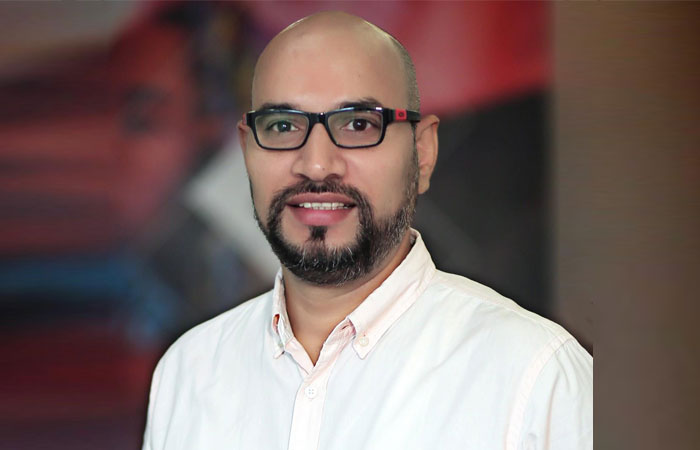
Harsh Bhutani, Executive Director, Hydrobaths Ramco Marketing,






 Concrete4 weeks ago

 Concrete3 weeks ago
 Concrete4 weeks ago
 Concrete3 weeks ago