Connect with us

Economy & Market

The rating system has helped us become more sustainable and green

Published

on

Shares

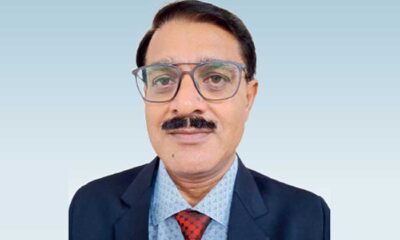
CK Jain, Unit Head, Vasavadatta Cement, Sedam

THE Green Company Rating System has helped us in effectively communicating to our stake holders about our commitment to sustainable growth, to reduce consumption of natural resources without jeopardising growth of the company, says CK Jain, Unit Head, Vasavadatta Cement, Sedam. In an exclusive chat with Agith G Antony, Jain elaborates on various aspects of sustainability initiatives taken by the plant which is the first one to be awarded Greenco Gold, by the CII for the year 2012-15 under the GreenCo, Green Company Rating System. Excerpts from the interview.

What were the major objectives of going through with the GreenCo Rating System by CII?

One of the most important reasons behind applying for the rating system was to understand our environmental performance on various aspects of environmental sustainability. This includes areas such as energy efficiency, water conservation, greenhouse gas emission, waste management, material conservation, recycling and recyclability, green supply chain, product stewardship, life cycle analysis, other areas like ventilation, biodiversity preservation, innovation, etc. Another major objective was to frame a long term roadmap on going green.

What were the major challenges involved?

VC has always been a believer of sustainable growth and has taken several initiatives on the ecological front. These initiatives helped in achieving GreenCo certification. However, the missing component was the meticulous system of documentation required for GreenCo certification. The certification system helped us in documenting the initiatives taken.

The system presented a challenge that turned into an opportunity for us to record our savings in terms of energy savings, water savings, and GHG emissions mitigation and track the results on a regular basis. GreenCo system has been designed with 30 per cent weightage for systems and 70 per cent weightage for performance and results achieved. This emphasises the fact that just having systems in place is not sufficient and requires actual implementation of initiatives and consequent savings in terms of natural resource conservation.

What are the tangible advantages of the rating system?

GreenCo gives energy efficiency 20 per cent weightage (200 out of total 1000 points). Energy costs also account for approximately 45 per cent of our expenditure.

The system emphasises on the need to have an energy policy, formation of cross- functional energy management cell, energy metering and monitoring systems, setting internal, national and international benchmarks and equipment wise efficiency monitoring. All these initiatives have a direct impact on the energy consumption of the plant as well as energy costs.

The second parameter under GreenCo was, water conservation encourages companies to avoid competition and conflict with the neighbouring communities for shared resources like water. The rating emphasises on the need to have a water policy, water management team, targets for reduction and benchmarks for reduction in consumption. This has helped the plant in understanding and preparing itself for the future to ensure availability of water for both the community and the plant operations.

The plant also has to pay huge amounts of money for disposing hazardous waste. GreenCo encourages companies to reduce, reuse and recycle and practice sustainable waste management practices. For all the other parameters like GHG mitigation, material conservation, greening the supply chain, the rating has given us several tangible benefits.

The rating system has helped us in achieving our objectives of understanding our environmental performance on various aspects of environmental sustainability and in framing a long term roadmap on how to be greener.

Do you think it is a value addition in terms of your marketing strategies?

Yes, most certainly. GreenCo, the Green Company Rating System, has helped us in effectively communicating to our stake holders about our commitment to sustainable growth, to reduce consumption of natural resources without jeopardising growth of the company.

We have been in the cement industry since the year 1983-84, with a rich experience of more than 30 years. In these years, we have encountered all sorts of challenges. These challenges have made the organisation even bolder and determined in its journey to be the best in the country.

We have built faith and trust with our clients and builders by taking various initiatives on the ecological front. GreenCo has helped us in reiterating these initiatives to the near-by communities, our customers, stakeholders and employees.

To what extent has this rating system helped the company to become more sustainable and green?

It’s the proud proclamation but not egoistic exaggeration that this rating system has helped the company to become more sustainable and green. Vasavadatta Cement keeps its eyes and ears always open and vigilant to international standards, conventions and treaties to grasp the spirit with mind and heart.

What is VC’s stated goal of reducing your carbon footprint?

The plant has a target to reduce GHG emissions by 2-3 per cent every year for the next ten years. The following initiatives have been identified and implemented or are in process of implementation –

  • Installation of new lime-crusher (capacity 1400 tph) in mines to reduce transportation of vehicles and fuel consumption;
  • Increase of fly ash injection in PPC;
  • Increase of PPC production;
  • Installation of hot disc to consume WDF, AFR.

The plant has also adopted the following policies and guidelines-

  • Energy policy.
  • TPM policy.
  • Mission on sustainable growth.
  • Green procurement policy.
  • Green transport policy.
  • ISO 50001 and SA 8000 are under implementation

Could you brief us about the use of AFR in the plant?

We recently installed hot disc to consume all types of AFR like municipal solid waste, tyre, plastic waste, carbon black powder, etc. This will help the plant in reducing emissions from usage of conventional fuels.

Tell us about the thrust on renewable energy sources.

The plant has implemented solar heating system for industrial canteen (steam cooking) and uses wood/agro-waste in cement kiln/CPP. In addition, the plant also has plans to install solar lighting for 100 kw at new ADM building, and install waste heat recovery system for cooler and PH exit gases. There is possibility of 17 mw power generation with WHRS.

Vasavadatta Cement is very determined to implement WHR as soon as completing up gradation of all the four clinker coolers. We have finalised the site and layout for installation of WHR Squeesed techno commercial matters with different vendors.

What can you tell us about high efficiency pollution control equipment used for cement kilns, raw mills?

The plant has taken initiatives on fugitive emissions management using mist spray and effective mines management to ensure minimum impact in the surrounding areas. For kilm and raw mills U-III and IV RABH, Unit-I, ESP to bag house is under commissioning. For Unit-II, ESP to bag house conversion is under progress. All coal mills have bag filters. All power plants have ESPs.

What are the steps initiated to reduce water consumption in your plants?

Water mist sprays are used for dust suppression, where specially designed stainless steel nozzles are used with potential water savings of 85 cubic meter per day. 65 per cent of the water used in the plant is sourced from rainwater harvested in four storage ponds of 44,00,000 m3 capacity.

The company has a target to meet 99.9 per cent of its water needs from rainwater harvesting in the next five years.

  • Unit-III & IV raw mills considered for roller press with finish grinding which needs no water.
  • Effluent water is used for cooling bed ash (U-2) in CPP.
  • Recycling of DM water to CT sump IN CPP.
  • Recycling of back wash water.
  • Reutilisation of waste water for process and gardening.
  • Air cooled condenser for U-IV and V captive power plant.
  • We also received the National Award for Excellence in Water Management in 2012.

Green Initiatives

The plant has one of the best specific energy consumption figures in the country. VC also adopts cradle to cradle approach to environmental sustainability as recommended by GreenCo. The plant has taken the following initiatives –

  • Installation of limestone crusher at mines about one KM from plant which has resulted in fuel savings.
  • Installation of roller press for raw mill finish grinding which saves power does not require water.
  • Installation of bag filters for all production centres.
  • Friction drive kiln without girth gear.
  • Deo flex burner for U-III&IV.
  • SF cross bar cooler for u-III &IV.
  • Combi flex drive for cement mill-III&IV no girth gear.
  • Open wagon loading facility for cement.
  • Bulk loading facility for trucks as well as wagons.
  • All major equipments installed with VVFD (Plant-300 & CPP-125) & SPRS.
  • Water harvesting at mines and CPP total capacity of 44 lack M3.
  • We are in the process of implementing projects for further improvement identified during GreenCo assessment. This will enable us to achieve our ambition of GreenCo Platinum, thus making Vasavadatta a world class cement plant.

Resource Management Initiatives

Water conservation –

Celebration of Leak Detection week.

Usage of water mist spray used for dust suppression.

Rainwater harvesting in 4 storage ponds of 44,00,000 m3 capacity.

Energy conservation –

Formulation of energy policy and cross -functional energy management cell.

Performance evaluation of all energy intensive equipment

Suggestion schemes by employees.

Various energy efficiency projects.

Material conservation-

Substitution of high grade limestone with low grade limestone.

Usage of fly ash up to 32 per cent.

Usage of waste as alternative fuel.

Continue Reading
Click to comment

Leave a Reply

Your email address will not be published. Required fields are marked *

Concrete

Budget 2026–27 infra thrust and CCUS outlay to lift cement sector outlook

Published

on

By

Shares

Higher capex, city-led growth and CCUS funding improve demand visibility and decarbonisation prospects for cement

Mumbai

Cement manufacturers have welcomed the Union Budget 2026–27’s strong infrastructure thrust, with public capital expenditure increased to Rs 12.2 trillion, saying it reinforces infrastructure as the central engine of economic growth and strengthens medium-term prospects for the cement sector. In a statement, the Cement Manufacturers’ Association (CMA) has welcomed the Union budget 2026-27 for reinforcing the ambitions for the nation’s growth balancing the aspirations of the people through inclusivity inspired by the vision of Narendra Modi, Prime Minister of India, for a Viksit Bharat by 2047 and Atmanirbharta.

The budget underscores India’s steady economic trajectory over the past 12 years, marked by fiscal discipline, sustained growth and moderate inflation, and offers strong demand visibility for infrastructure linked sectors such as cement.

The Budget’s strong infrastructure push, with public capital expenditure rising from Rs 11.2 trillion in fiscal year 2025–26 to Rs 12.2 trillion in fiscal year 2026–27, recognises infrastructure as the primary anchor for economic growth creating positive prospects for the Indian cement industry and improving long term visibility for the cement sector. The emphasis on Tier 2 and Tier 3 cities with populations above 5 lakh and the creation of City Economic Regions (CERs) with an allocation of Rs 50 billion per CER over five years, should accelerate construction activity across housing, transport and urban services, supporting broad based cement consumption.

Logistics and connectivity measures announced in the budget are particularly significant for the cement industry. The announcement of new dedicated freight corridors, the operationalisation of 20 additional National Waterways over the next five years, the launch of the Coastal Cargo Promotion Scheme to raise the modal share of waterways and coastal shipping from 6 per cent to 12 per cent by 2047, and the development of ship repair ecosystems should enhance multimodal freight efficiency, reduce logistics costs and improve the sector’s carbon footprint. The announcement of seven high speed rail corridors as growth corridors can be expected to further stimulate regional development and construction demand.

Commenting on the budget, Parth Jindal, President, Cement Manufacturers’ Association (CMA), said, “As India advances towards a Viksit Bharat, the three kartavya articulated in the Union Budget provide a clear context for the Nation’s growth and aspirations, combining economic momentum with capacity building and inclusive progress. The Cement Manufacturers’ Association (CMA) appreciates the Union Budget 2026-27 for the continued emphasis on manufacturing competitiveness, urban development and infrastructure modernisation, supported by over 350 reforms spanning GST simplification, labour codes, quality control rationalisation and coordinated deregulation with States. These reforms, alongside the Budget’s focus on Youth Power and domestic manufacturing capacity under Atmanirbharta, stand to strengthen the investment environment for capital intensive sectors such as Cement. The Union Budget 2026-27 reflects the Government’s focus on infrastructure led development emerging as a structural pillar of India’s growth strategy.”

He added, “The Rs 200 billion CCUS outlay for various sectors, including Cement, fundamentally alters the decarbonisation landscape for India’s emissions intensive industries. CCUS is a significant enabler for large scale decarbonisation of industries such as Cement and this intervention directly addresses the technology and cost requirements of the Cement sector in context. The Cement Industry, fully aligned with the Government of India’s Net Zero commitment by 2070, views this support as critical to enabling the adoption and scale up of CCUS technologies while continuing to meet the Country’s long term infrastructure needs.”

Dr Raghavpat Singhania, Vice President, CMA, said, “The government’s sustained infrastructure push supports employment, regional development and stronger local supply chains. Cement manufacturing clusters act as economic anchors across regions, generating livelihoods in construction, logistics and allied sectors. The budget’s focus on inclusive growth, execution and system level enablers creates a supportive environment for responsible and efficient expansion offering opportunities for economic growth and lending momentum to the cement sector. The increase in public capex to Rs 12.2 trillion, the focus on Tier 2 and Tier 3 cities, and the creation of City Economic Regions stand to strengthen the growth of the cement sector. We welcome the budget’s emphasis on tourism, cultural and social infrastructure, which should broaden construction activity across regions. Investments in tourism facilities, heritage and Buddhist circuits, regional connectivity in Purvodaya and North Eastern States, and the strengthening of emergency and trauma care infrastructure in district hospitals reinforce the cement sector’s role in enabling inclusive growth.”

CMA also noted the Government’s continued commitment to fiscal discipline, with the fiscal deficit estimated at 4.3 per cent of GDP in FY27, reinforcing macroeconomic stability and investor confidence.

Continue Reading

Concrete

JK Cement Crosses 31 MTPA Capacity with Commissioning of Buxar Plant in Bihar

Published

on

By

Shares

JK Cement has commissioned a 3 MTPA Grey Cement plant in Buxar, Bihar, taking its total capacity to 31.26 MTPA and placing it among India’s top five grey cement producers. The ₹500 crore investment strengthens the company’s national footprint while supporting Bihar’s infrastructure growth and local economic development.

JK Cement Ltd., one of India’s leading cement manufacturers, has announced the commissioning of its new state-of-the-art Grey Cement plant in Buxar, Bihar, marking a significant milestone in the company’s growth trajectory. With the commissioning of this facility, JK Cement’s total production capacity has increased to 31.26 million tonnes per annum (MTPA), enabling the company to cross the 30 MTPA threshold.

This expansion positions JK Cement among the top five Grey Cement manufacturers in India, strengthening its national footprint and reinforcing its long-term growth strategy.

Commenting on the strategic achievement, Dr Raghavpat Singhania, Managing Director, JK Cement, said, “Crossing 31 MTPA is a significant turning point in JK Cement’s expansion and demonstrates the scale, resilience, and aspirations of our company. In addition to making a significant contribution to Bihar’s development vision, the commissioning of our Buxar plant represents a strategic step towards expanding our national footprint. We are committed to developing top-notch manufacturing capabilities that boost India’s infrastructure development and generate long-term benefits for local communities.”

The Buxar plant has a capacity of 3 MTPA and is spread across 100 acres. Strategically located on the Patna–Buxar highway, the facility enables faster and more efficient distribution across Bihar and adjoining regions. While JK Cement entered the Bihar market last year through supplies from its Prayagraj plant, the Buxar facility will now allow the company to serve the state locally, with deliveries possible within 24 hours across Bihar.

Sharing his views on the expansion, Madhavkrishna Singhania, Joint Managing Director & CEO, JK Cement, said, “JK Cement is now among India’s top five producers of grey cement after the Buxar plant commissioning. Our capacity to serve Bihar locally, more effectively, and on a larger scale is strengthened by this facility. Although we had already entered the Bihar market last year using Prayagraj supplies, local manufacturing now enables us to be nearer to our clients and significantly raise service standards throughout the state. Buxar places us at the center of this chance to promote sustainable growth for both the company and the region in Bihar, a high-growth market with strong infrastructure momentum.”

The new facility represents a strategic step in supporting Bihar’s development vision by ensuring faster access to superior quality cement for infrastructure, housing, and commercial projects. JK Cement has invested approximately ₹500 crore in the project. Construction began in March 2025, and commercial production commenced on January 29, 2026.

In addition to strengthening JK Cement’s regional presence, the Buxar plant is expected to generate significant direct and indirect employment opportunities and attract ancillary industries, thereby contributing to the local economy and the broader industrial ecosystem.

Continue Reading

Economy & Market

From Vision to Action: Fornnax Global Growth Strategy for 2026

Published

on

By

Shares

Jignesh Kundaria, Director & CEO, Fornnax Recycling Technology

As 2026 begins, Fornnax is accelerating its global growth through strategic expansion, large-scale export-led installations, and technology-driven innovation across multiple recycling streams. Backed by manufacturing scale-up and a strong people-first culture, the company aims to lead sustainable, high-capacity recycling solutions worldwide.

As 2026 begins, Fornnax stands at a pivotal stage in its growth journey. Over the past few years, the company has built a strong foundation rooted in engineering excellence, innovation, and a firm commitment to sustainable recycling. The focus ahead is clear: to grow faster, stronger, and on a truly global scale.

“Our 2026 strategy is driven by four key priorities,” explains Mr. Jignesh Kundaria, Director & CEO of Fornnax.

First, Global Expansion

We will strengthen our presence in major markets such as Europe, Australia, and the GCC, while continuing to grow across our existing regions. By aligning with local regulations and customer requirements, we aim to establish ourselves as a trusted global partner for advanced recycling solutions.

A major milestone in this journey will be export-led global installations. In 2026, we will commission Europe’s highest-capacity shredding line, reinforcing our leadership in high-capacity recycling solutions.

Second, Product Innovation and Technology Leadership

Innovation remains at the heart of our vision to become a global leader in recycling technology by 2030. Our focus is on developing solutions that are state-of-the-art, economical, efficient, reliable, and environmentally responsible.

Building on a decade-long legacy in tyre recycling, we have expanded our portfolio into new recycling applications, including municipal solid waste (MSW), e-waste, cable, and aluminium recycling. This diversification has already created strong momentum across the industry, marked by key milestones scheduled to become operational this year, such as:

  • Installation of India’s largest e-waste and cable recycling line.
  • Commissioning of a high-capacity MSW RDF recycling line.

“Sustainable growth must be scalable and profitable,” emphasizes Mr. Kundaria. In 2026, Fornnax will complete Phase One of our capacity expansion by establishing the world’s largest shredding equipment manufacturing facility. This 23-acre manufacturing unit, scheduled for completion in July 2026, will significantly enhance our production capability and global delivery capacity.

Alongside this, we will continue to improve efficiency across manufacturing, supply chain, and service operations, while strengthening our service network across India, Australia, and Europe to ensure faster and more reliable customer support.

Finally: People and Culture

“People remain the foundation of Fornnax’s success. We will continue to invest in talent, leadership development, and a culture built on ownership, collaboration, and continuous improvement,” states Mr. Kundaria.

With a strong commitment to sustainability in everything we do, our ambition is not only to grow our business, but also to actively support the circular economy and contribute to a cleaner, more sustainable future.

Guided by a shared vision and disciplined execution, 2026 is set to be a defining year for us, driven by innovation across diverse recycling applications, large-scale global installations, and manufacturing excellence.

Continue Reading

Trending News