Connect with us

Concrete

Fuller Technologies QCX® Lab Automation Systems

Published

on

Shares

Rizwan Sabjan, Head of Sales & Proposals, and Ramakrishna Nuti, Global Sales Manager -Automation Technologies, Fuller Technologies Cement India, discuss cement laboratory automation.

India’s cement industry is on a strong growth path, driven by infrastructure projects and urban housing demand, with the market expected to grow at over 10 per cent CAGR through 2030. Over the next five years, the sector will reshape the nation by powering mega-corridors, smart cities, and expanding urban centers, while adopting green cement and alternative fuels and waste-heat recovery systems to cut emissions.
The cement manufacturing sector faces mounting pressure from rising demand for high-quality cement products and increasingly stringent environmental regulations. To remain competitive, organisations must enhance productivity, ensure regulatory compliance, and reduce operational costs, all without compromising product quality. These challenges are further intensified by skills shortages, stricter safety requirements, and the need to manage more complex and demanding operating conditions.

The Challenges of Going Green
The cement manufacturing process has evolved significantly as the industry strives to improve cost efficiency and environmental performance. The growing use of alternative fuels and supplementary cementitious materials introduces variability that directly impacts product quality, requiring continuous monitoring and adjustment through precise, agile quality control systems. At the same time, increasing market demand for specialised products places greater emphasis on maintaining tight process control across all stages of production.
To fully capitalise on these opportunities, quality control systems must respond rapidly and effectively to changing conditions. Their ability to deliver timely, accurate insights is critical, often determining whether a plant can maintain competitiveness or risks losing market share.

Automated Laboratory Solutions
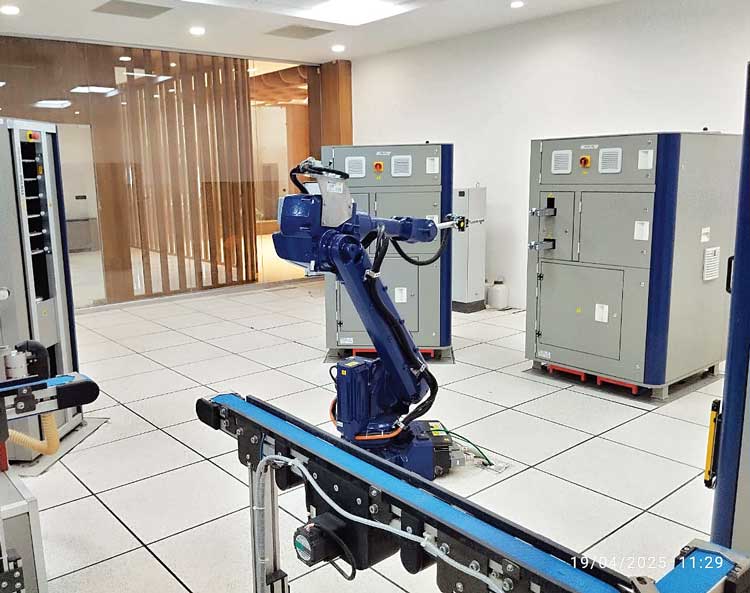
Fortunately, the capability of quality control systems has grown immensely in recent years. Where previously plants relied on the skills of their laboratory team, today automated laboratory solutions can achieve optimum consistency in representative sampling, better solid sample preparation and accurate analysis through fast, automated systems. As one can see below there has been tremendous growth in QCX/RoboLabs® in recent years.
Fuller has been a pioneer in this field. With our Lab Automation Solution, cement plants can say goodbye to inconsistencies in quality and excess operational costs, such as a daily variation in power and fuel consumption. They are no longer held back by the skills shortage, or unable to take on the challenge of greener production for fear of undermining quality.
QCX/RoboLab® is a quantum leap in quality control for the cement industry, delivering consistency throughout quality control operations.
The QCX/RoboLab® laboratory concept, which utilises an industrial robot for sample handling allows for very flexible laboratory layouts and a high sample throughput.
Lab Automation speeds up every aspect of quality control operations, from sampling / sample collection to accurate pellet preparation for analysis, and especially when it comes to taking control actions to achieve a desired target with QCX/BlendExpert™ (Raw Mix Control). Plus, by eliminating the potential for manual errors, precision is significantly increased. And the laboratory becomes a much safer environment, with fewer operators and a far reduced risk to health and safety. The advanced, user-friendly software can be tailored to your specific cement production needs, including special fuels, and supports continuous 24/7 operations.

Benefits of QCX® Lab Automation System
Enhance quality control

Achieve consistent, reliable results through automated sampling, preparation, and analysis—eliminating human errors and variability.
Reduce fuel and energy consumption Improve raw material consistency to optimise preheater and kiln performance, leading to lower fuel usage and energy costs.
Ensure a safe and healthy work environment
Minimise exposure to hazardous tasks by automating processes and maintaining clean, dust-free laboratory and sample preparation areas.
Strengthen competitive advantage
Deliver superior product quality by leveraging best-in-class technology and advanced process control systems.
Extend equipment lifespan
Stabilise operations to reduce mechanical stress and wear, increasing the durability and reliability of plant machinery.
Simplify compliance and management
Meet quality standards with ease while supporting continuous improvement through automated reporting and data-driven insights.

Productivity Quality Savings Safety
Fast and accurate results with consistency in operational behavior 24/7/365 Uniformity in quality control with sound chemistry that doesn’t compromise on safety Reduced number of unplanned stoppages with precise chemistry recipe  2 × 350 TPH

Continue Reading

Concrete

Cement Prices Likely to Rise Rs. 10-15 per Bag from Mid-October

Input costs and steady demand may drive cement price increases

Published

on

By

Shares


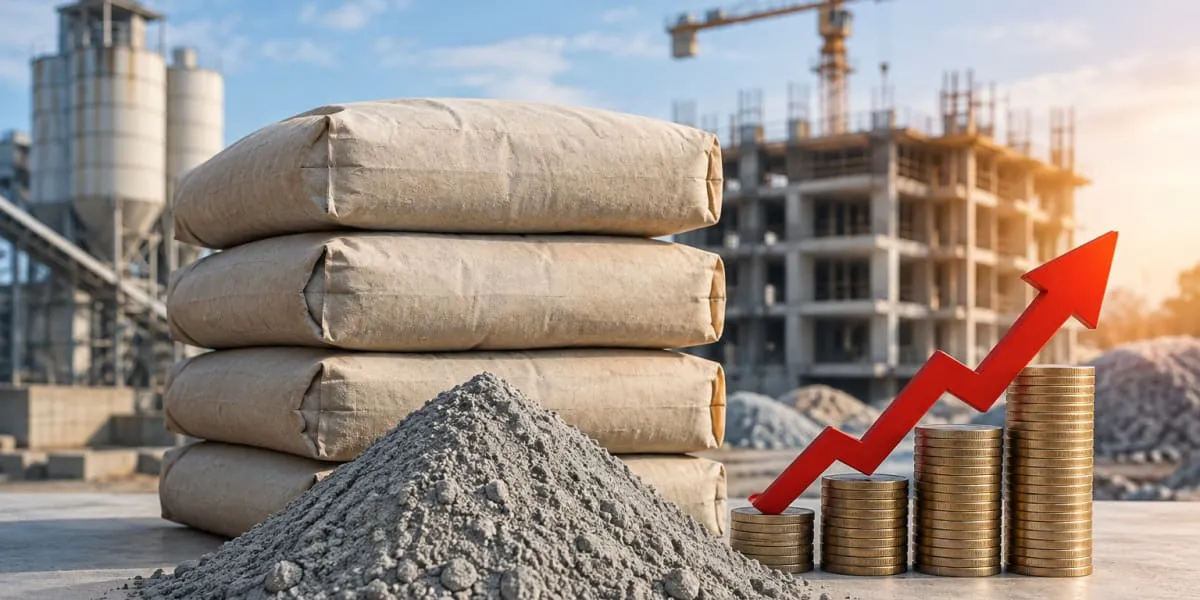
Cement manufacturers in India are likely to raise prices by Rs. 10-15 per bag from mid-October, as they seek to offset persistent increases in power and fuel costs. Emkay Research said its channel checks indicated a high probability of an increase from October 12, supported by the start of the busy construction season and favourable demand-supply conditions.

The sector had implemented similar rate adjustments of Rs. 10-15 per bag during the first quarter, but the increases were insufficient to cover higher operating costs. Prices also softened during July and August because of the monsoon, widening the gap between realisations and input expenses. Delayed plant expansion programmes have pushed clinker utilisation rates towards 79 per cent by FY28, helping to balance market fundamentals.

Emkay Research said steady volume offtake was supporting cement consumption, with non-trade demand driving activity across regional markets. Industry volumes are expected to grow by 7-8 per cent year on year during the first half of FY27, while demand momentum is projected to remain firm over the following 18 months. The outlook includes the busy construction season in the second half of FY27 and infrastructure activity linked to general elections in the first half of calendar year 2029.

The brokerage expects overall cement demand to record a compound annual growth rate of about 7 per cent between FY26 and FY28. However, elevated operating expenses are likely to continue weighing on profitability. Input costs have risen by Rs. 300-400 per t over the past six to seven months, with the full impact expected to become visible in second-quarter earnings and remain persistent through the second half of FY27.

Spot prices for petcoke and imported coal are approximately 20 per cent and 16 per cent above their second-quarter averages, at USD 175 per t and USD 150 per t, respectively. Packing costs have also increased, with polypropylene granule prices rising above Rs. 135 per kg. Emkay Research estimated that second-quarter earnings could decline by Rs. 200-250 per t sequentially because of higher fuel bills and negative operating leverage, and said the sector requires sustained price increases of about Rs. 10 per bag to offset cost inflation.

Continue Reading

Concrete

Nuvoco Marks 10 Years, Targets 35 MMTPA Capacity by FY28

Nuvoco celebrates a decade of growth, targeting 35 MMTPA cement capacity by FY28.

Published

on

By

Shares


Nuvoco Vistas Corporation Limited is celebrating a decade of operations under the theme ‘Dus Saal Bemisaal’, highlighting its expansion in India’s building materials sector. The company has grown from a single cement manufacturing facility into a diversified organisation operating across cement, ready-mix concrete (RMC) and modern building materials.
The company’s journey began in 2014 when its parent, Nirma Group, commissioned a 2 million metric tonnes per annum (MMTPA) greenfield cement plant at Nimbol, Rajasthan. A major milestone followed in October 2016 with the acquisition of Lafarge India, significantly expanding its manufacturing footprint.
Nuvoco strengthened its market presence through the acquisition of Emami Cement, now NU Vista Limited, in 2020, followed by its public listing in 2021. In April 2025, the company added Vadraj Cement to its portfolio, strengthening its presence in western India.
Nuvoco has an operating cement capacity of 27 MMTPA and 14 manufacturing units, including the Kutch and Sachana facilities in Gujarat, which are in advanced stages of completion. It also operates 58 ready-mix concrete plants across India and offers a range of modern building materials.
The company aims to increase its cement capacity to 35 MMTPA by FY2027-28, representing approximately 15-fold growth over the decade.
Reflecting on the milestone, Hiren Patel, Chairman, Nuvoco Vistas Corporation Limited, said, “From our beginnings at Nimbol to the organisation we are today, every milestone has added a new chapter to Nuvoco’s journey and strengthened our belief in building for the long term.”
The company continues to focus on capacity expansion, operational efficiency, innovation and sustainability while strengthening its position in India’s construction materials market.

Continue Reading

Concrete

J&K Government Notifies City Gas Distribution Policy

Policy targets PNG and CNG expansion across all 20 districts

Published

on

By

Shares


Jammu and Kashmir government has notified the City Gas Distribution (CGD) Policy, 2026, following its approval by the Council of Ministers headed by Chief Minister Omar Abdullah. The policy sets out a phased framework for expanding Piped Natural Gas (PNG) and Compressed Natural Gas (CNG) access for households, businesses, industries and the transport sector across the Union Territory.

CGD networks will be expanded in phases across all 20 districts, with the aim of bringing reliable natural gas closer to consumers and supporting a gradual shift from conventional fuels. The government said the policy is designed to improve energy access while creating an investor-friendly and time-bound environment for gas distribution projects.

The policy provides for single-window and time-bound clearances, streamlined procedures for setting up CNG stations and standardised norms for the Right of Way. These measures are intended to reduce procedural delays, simplify project implementation and facilitate investment in natural gas infrastructure.

It also prioritises gas connectivity for major industrial estates, including those in Kathua, Samba and Pulwama. Improved access to natural gas is expected to support industrial activity, enhance energy efficiency and help businesses manage fuel costs, while strengthening their competitiveness and encouraging investment in the clean-energy sector.

The policy is also expected to create opportunities for local employment, apprenticeships and skill development in the construction, operation and maintenance of gas distribution networks and related services. Abdullah described the measure as an important step towards cleaner growth, sustainable development and a modern energy ecosystem in Jammu and Kashmir, saying it would expand reliable energy access and support industry and investment.

Continue Reading

Video Thumbnail
▶

    SIGN-UP FOR OUR GENERAL NEWSLETTER

    Trending News