Connect with us

Concrete

WCA President Emphasises Major Changes in Global Cement Industry

In contrast, cement production in India is rapidly expanding, with more than 200 million tons produced.

Published

on

Shares

The President of the World Cement Association (WCA), Wei Rushan, addresses members to highlight the significant transformations shaping the global cement industry. Emphasising the need for innovation, sustainability, and collaboration, he called on industry stakeholders to embrace the evolving economic, regulatory, and geopolitical challenges ahead.

“The cement industry is experiencing profound changes, with businesses managing overcapacity and upgrading, balancing sustainable development with short-term survival, and weighing social responsibility against shareholder returns,” stated Rushan. “While each region faces unique challenges, our shared focus remains on driving sustainable growth, embracing technological advancements, and tackling climate change.”

As outlined in the WCA’s recent White Paper, global cement demand is expected to decline by 22 per cent by 2050. In established markets like Europe and North America, price increases are expected to persist, while in some emerging markets, prices may experience a short-term decline. However, from a long-term perspective, we expect emerging market to remain dynamic and resilient.

Key regional developments

Multinational companies are adjusting their strategies and scaling back cement business, focusing instead on North America. Meanwhile cement production in Europe continues to decline due to strict CO2 regulations and necessary capacity reductions, driving up cement prices. Efforts to address overcapacity in China and Japan have led to significant consolidation and restructuring.

In contrast, cement production in India is rapidly expanding, with more than 200 million tons produced. Indian companies are strengthening their domestic leadership, while multinational companies are exiting this high-potential market.

Globally, regional leaders are gaining influence, except in Europe and North America, where European multinationals continue to dominate. Chinese cement producers and other independent companies are aggressively expanding, particularly in Africa and Southeast Asia, solidifying their market presence.

Addressing global challenges

Wei identifies overcapacity as a major challenge facing the industry today. As a global representative for the cement industry, the WCA is willing to work with producers and stakeholders to explore ways to modernise and upgrade outdated plants. “To remain both profitable and environmentally responsible, the cement industry must aim to reduce capacity by 50 per cent, from 4.7 billion tons to 2.3 billion tons within the next decade. This requires focusing on modern, sustainable production units.”

He also noted carbon reduction and carbon neutrality as another key challenge. Although progress has been made through Carbon Capture and Storage (CCS) technologies, Rushan acknowledged the high costs and energy intensity of these solutions.

“Cement plays a crucial role in building sustainable infrastructure,” Mr. Wei continued. “By accelerating innovation, adopting low-carbon technologies, and fostering global collaboration, we can ensure cement remains an environmentally responsible material.”

The WCA urges industry stakeholders worldwide to act now by adopting sustainable practices, embracing innovation, and redefining cement industry norms.

Concrete

Cement Prices Likely to Rise Rs. 10-15 per Bag from Mid-October

Input costs and steady demand may drive cement price increases
Published

on

By

Shares

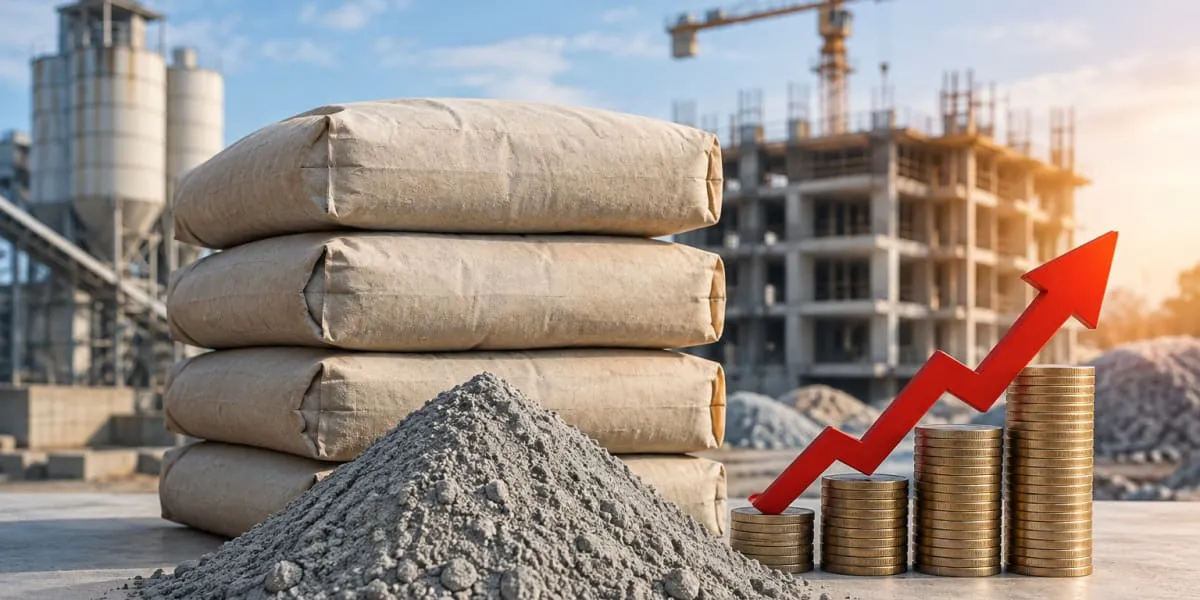
Cement manufacturers in India are likely to raise prices by Rs. 10-15 per bag from mid-October, as they seek to offset persistent increases in power and fuel costs. Emkay Research said its channel checks indicated a high probability of an increase from October 12, supported by the start of the busy construction season and favourable demand-supply conditions.

The sector had implemented similar rate adjustments of Rs. 10-15 per bag during the first quarter, but the increases were insufficient to cover higher operating costs. Prices also softened during July and August because of the monsoon, widening the gap between realisations and input expenses. Delayed plant expansion programmes have pushed clinker utilisation rates towards 79 per cent by FY28, helping to balance market fundamentals.

Emkay Research said steady volume offtake was supporting cement consumption, with non-trade demand driving activity across regional markets. Industry volumes are expected to grow by 7-8 per cent year on year during the first half of FY27, while demand momentum is projected to remain firm over the following 18 months. The outlook includes the busy construction season in the second half of FY27 and infrastructure activity linked to general elections in the first half of calendar year 2029.

The brokerage expects overall cement demand to record a compound annual growth rate of about 7 per cent between FY26 and FY28. However, elevated operating expenses are likely to continue weighing on profitability. Input costs have risen by Rs. 300-400 per t over the past six to seven months, with the full impact expected to become visible in second-quarter earnings and remain persistent through the second half of FY27.

Spot prices for petcoke and imported coal are approximately 20 per cent and 16 per cent above their second-quarter averages, at USD 175 per t and USD 150 per t, respectively. Packing costs have also increased, with polypropylene granule prices rising above Rs. 135 per kg. Emkay Research estimated that second-quarter earnings could decline by Rs. 200-250 per t sequentially because of higher fuel bills and negative operating leverage, and said the sector requires sustained price increases of about Rs. 10 per bag to offset cost inflation.

Continue Reading

Concrete

Nuvoco Marks 10 Years, Targets 35 MMTPA Capacity by FY28

Nuvoco celebrates a decade of growth, targeting 35 MMTPA cement capacity by FY28.
Published

on

By

Shares
Nuvoco Vistas Corporation Limited is celebrating a decade of operations under the theme ‘Dus Saal Bemisaal’, highlighting its expansion in India’s building materials sector. The company has grown from a single cement manufacturing facility into a diversified organisation operating across cement, ready-mix concrete (RMC) and modern building materials.
The company’s journey began in 2014 when its parent, Nirma Group, commissioned a 2 million metric tonnes per annum (MMTPA) greenfield cement plant at Nimbol, Rajasthan. A major milestone followed in October 2016 with the acquisition of Lafarge India, significantly expanding its manufacturing footprint.
Nuvoco strengthened its market presence through the acquisition of Emami Cement, now NU Vista Limited, in 2020, followed by its public listing in 2021. In April 2025, the company added Vadraj Cement to its portfolio, strengthening its presence in western India.
Nuvoco has an operating cement capacity of 27 MMTPA and 14 manufacturing units, including the Kutch and Sachana facilities in Gujarat, which are in advanced stages of completion. It also operates 58 ready-mix concrete plants across India and offers a range of modern building materials.
The company aims to increase its cement capacity to 35 MMTPA by FY2027-28, representing approximately 15-fold growth over the decade.
Reflecting on the milestone, Hiren Patel, Chairman, Nuvoco Vistas Corporation Limited, said, “From our beginnings at Nimbol to the organisation we are today, every milestone has added a new chapter to Nuvoco’s journey and strengthened our belief in building for the long term.”
The company continues to focus on capacity expansion, operational efficiency, innovation and sustainability while strengthening its position in India’s construction materials market.

Continue Reading

Concrete

J&K Government Notifies City Gas Distribution Policy

Policy targets PNG and CNG expansion across all 20 districts
Published

on

By

Shares

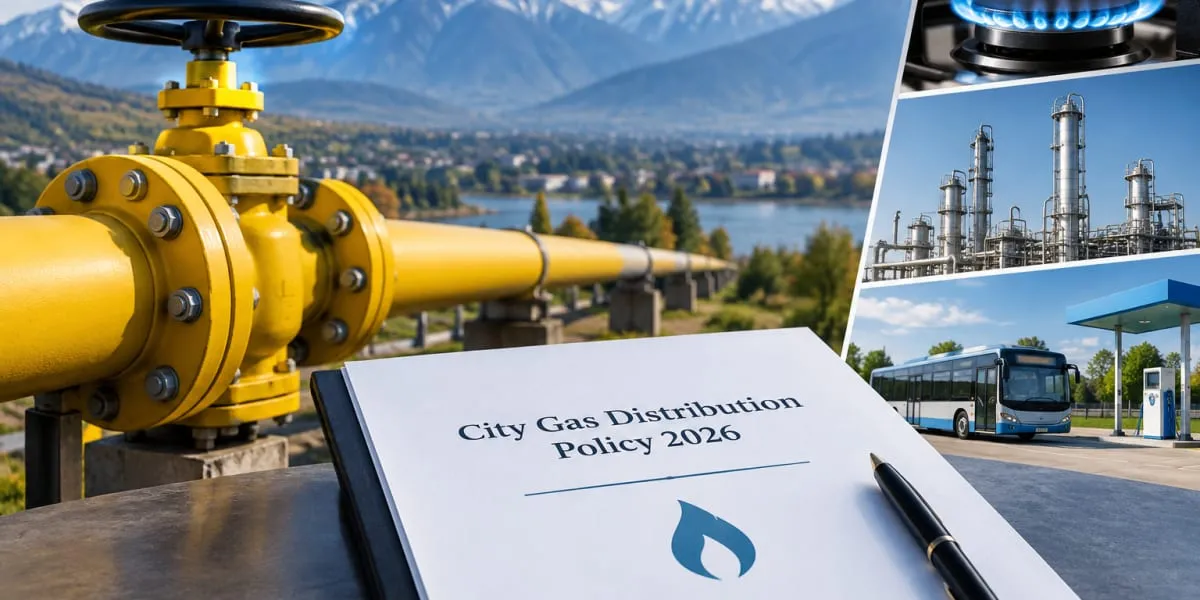
Jammu and Kashmir government has notified the City Gas Distribution (CGD) Policy, 2026, following its approval by the Council of Ministers headed by Chief Minister Omar Abdullah. The policy sets out a phased framework for expanding Piped Natural Gas (PNG) and Compressed Natural Gas (CNG) access for households, businesses, industries and the transport sector across the Union Territory.

CGD networks will be expanded in phases across all 20 districts, with the aim of bringing reliable natural gas closer to consumers and supporting a gradual shift from conventional fuels. The government said the policy is designed to improve energy access while creating an investor-friendly and time-bound environment for gas distribution projects.

The policy provides for single-window and time-bound clearances, streamlined procedures for setting up CNG stations and standardised norms for the Right of Way. These measures are intended to reduce procedural delays, simplify project implementation and facilitate investment in natural gas infrastructure.

It also prioritises gas connectivity for major industrial estates, including those in Kathua, Samba and Pulwama. Improved access to natural gas is expected to support industrial activity, enhance energy efficiency and help businesses manage fuel costs, while strengthening their competitiveness and encouraging investment in the clean-energy sector.

The policy is also expected to create opportunities for local employment, apprenticeships and skill development in the construction, operation and maintenance of gas distribution networks and related services. Abdullah described the measure as an important step towards cleaner growth, sustainable development and a modern energy ecosystem in Jammu and Kashmir, saying it would expand reliable energy access and support industry and investment.

Continue Reading

Video Thumbnail
▶

    SIGN-UP FOR OUR GENERAL NEWSLETTER

    Trending News

    SUBSCRIBE TO THE NEWSLETTER


    Don't miss out on valuable insights and opportunities to connect with like minded professionals.


      This will close in 0 seconds