Connect with us

Concrete

We intend to use C&D waste as a raw material

Published

on

Shares

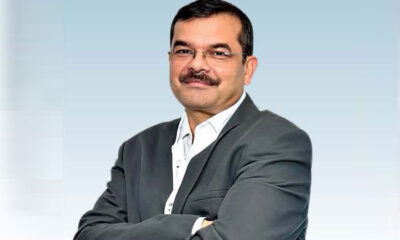
Neeraj Akhoury, Managing Director, Shree Cement, talks about their commitment to sustainability, advanced technology and quality assurance.

What are the various types of concrete mix manufactured by your organisation?
Shree Cement’s product, Bangur Concrete, introduces a range of specialised concrete solutions designed to meet the diverse applications and structural requirements of our customers. Our portfolio includes self-compacting concrete, temperature-controlled concrete, decorative concrete, fibre reinforced concrete, green concrete and high performance concrete.
Our application-specific concrete solutions help in timely completion of all projects, ensuring durable structures for every application in construction projects of all kinds.

Tell us about the key factors that make your concrete brand stand apart from its competitors in the industry.
Bangur Concrete is focused on setting up its own capex state-of-the-art manufacturing units equipped with modern machinery and advanced technology, backed by our world class cement manufacturing units. These units will be equipped to manufacture all types of special concrete, having advanced testing facilities, experienced best-in-industry technical manpower and digitised solutions. One of our USPs is our focus on providing sustainable green solutions to our customers by keeping our plants environmentally friendly and reducing carbon footprint through optimised mix designs and the use of best mineral admixtures.

Which type of concrete mix from your organisation is the revenue driver?
We will be producing concrete ranging from M5 to M80 grades, and special products as well. Typically, a majority of revenue comes from M20-M30 grade of concrete, which is being
used in most of the construction including IHBs.

Tell us about the key technologies used in the manufacturing process of your ready-mix concrete?
We have equipped our plants with various technologies to enhance efficiency and sustainability. These include concrete recycling plants for reusing waste concrete, dust filters for absorbing dust at silos for reuse, vehicle tracking systems for transparent service, quality management systems for quality assurance, advanced batching systems for accuracy in customer orders and filter press for water reuse.

What is the ratio of M-Sand or manufactured sand used in your concrete mix?
We plan to use ~29 per cent manufactured sand in our concrete mix.

How do you incorporate sustainability in your products?
We plan to make ~85 per cent of Bangur concrete using flyash and GGBS, two environmentally sustainable choices which emit less carbon dioxide. Additionally, we intend to use Construction and Demolition (C&D) waste as a raw material in our concrete, addressing environmental issues related to its disposal.

What are the major challenges faced by your concrete brands from manufacturing to delivering stages?
Major challenges that we face include traffic restrictions, space constraints for setting up plants in proximity to the city, changing construction schedules (such as night pours), meeting strict supply windows and navigating changing government norms like NGT ban in Delhi NCR. Additionally, the longer distance between RMC plants and major development areas due to unavailability of industrial lands poses another challenge. However, we have an excellent team in place who are well positioned to find sustainable and logical solutions to challenges that come our way.

What does the near future hold for the ready mix concrete vertical of your organisation?
One of the biggest contributions to our nation’s economy comes from the construction industry where concrete plays a very important part. Ready mix concrete (RMC) is crucial for speedy construction with consistent quality assurance. In India, RMC accounts for 20 per cent of construction consumption, whereas in developing nations it is as high as 75 per cent. We are optimistic that India will soon bridge this gap, boosting the country’s growth and development.
Shree Cement is one of India’s leading cement manufacturers. Foraying into the RMC business will propel us forward in our journey to becoming a multi-product company poised to play a significant role in shaping our country’s vision of having world class infrastructure across sectors like airports, ports, metro, roads, railways, etc. Shree Cement will set up ~100 Bangur concrete plants in the next three years, generating ~3000 direct and indirect employment opportunities. We will be operating in ~50 cities to serve our customers in various segments.

  • Kanika Mathur

Concrete

Steel: Shielded or Strengthened?

CW explores the impact of pro-steel policies on construction and infrastructure and identifies gaps that need to be addressed.

Published

on

By

Shares


Going forward, domestic steel mills are targeting capacity expansion
of nearly 40 per cent through till FY31, adding 80-85 mt, translating
into an investment pipeline of $ 45-50 billion. So, Jhunjhunwala points
out that continuing the safeguard duty will be vital to prevent a surge
in imports and protect domestic prices from external shocks. While in
FY26, the industry operating profit per tonne is expected to hold at
around $ 108, similar to last year, the industry’s earnings must
meaningfully improve from hereon to sustain large-scale investments.
Else, domestic mills could experience a significant spike in industry
leverage levels over the medium term, increasing their vulnerability to
external macroeconomic shocks.(~$ 60/tonne) over the past one month,
compressing the import parity discount to ~$ 23-25/tonne from previous
highs of ~$ 70-90/tonne, adds Jhunjhunwala. With this, he says, “the
industry can expect high resistance to further steel price increases.”

Domestic HRC prices have increased by ~Rs 5,000/tonne
“Aggressive
capacity additions (~15 mt commissioned in FY25, with 5 mt more by
FY26) have created a supply overhang, temporarily outpacing demand
growth of ~11-12 mt,” he says…

To read the full article Click Here

Continue Reading

Concrete

JK Cement Commissions 3 MTPA Buxar Plant, Crosses 31 MTPA

Company becomes India’s fifth-largest grey cement producer

Published

on

By

Shares


JK Cement  has commissioned its new 3 MTPA grey cement plant in Buxar, Bihar, taking the company’s total installed capacity to 31.26 million tonnes per annum (MTPA) and moving it past the 30 MTPA milestone. With this addition, JK Cement now ranks among the top five grey cement manufacturers in India, strengthening its national presence.

Commenting on the development, Dr Raghavpat Singhania, Managing Director, JK Cement, said, “Crossing 31 MTPA is a significant turning point in JK Cement’s expansion and demonstrates the scale, resilience, and aspirations of our company. In addition to making a significant contribution to Bihar’s development vision, the commissioning of our Buxar plant represents a strategic step towards expanding our national footprint. We are committed to developing top-notch manufacturing capabilities that boost India’s infrastructure development and generate long-term benefits for local communities.”

Spread across 100 acres, the Buxar plant is located on the Patna–Buxar highway, enabling efficient distribution across Bihar and neighbouring regions. While JK Cement entered the Bihar market last year through supplies from its Prayagraj plant, the new facility will allow local manufacturing and deliveries within 24 hours across the state.

Mr Madhavkrishna Singhania, Joint Managing Director & CEO, JK Cement, said, “JK Cement is now among India’s top five producers of grey cement after the Buxar plant commissioning. Our capacity to serve Bihar locally, more effectively, and on a larger scale is strengthened by this facility. Although we had already entered the Bihar market last year using Prayagraj supplies, local manufacturing now enables us to be nearer to our clients and significantly raise service standards throughout the state. Buxar places us at the center of this chance to promote sustainable growth for both the company and the region in Bihar, a high-growth market with strong infrastructure momentum.”

The project has involved an investment of Rs 5 billion. Commercial production began on 29 January 2026, following construction commencement in March 2025. The company said the plant is expected to generate significant direct and indirect employment and support ancillary industrial development in the region.

Continue Reading

Concrete

JK Cement Crosses 31 MTPA Capacity with Commissioning of Buxar Plant in Bihar

Published

on

By

Shares


JK Cement has commissioned a 3 MTPA Grey Cement plant in Buxar, Bihar, taking its total capacity to 31.26 MTPA and placing it among India’s top five grey cement producers. The ₹500 crore investment strengthens the company’s national footprint while supporting Bihar’s infrastructure growth and local economic development.

JK Cement Ltd., one of India’s leading cement manufacturers, has announced the commissioning of its new state-of-the-art Grey Cement plant in Buxar, Bihar, marking a significant milestone in the company’s growth trajectory. With the commissioning of this facility, JK Cement’s total production capacity has increased to 31.26 million tonnes per annum (MTPA), enabling the company to cross the 30 MTPA threshold.

This expansion positions JK Cement among the top five Grey Cement manufacturers in India, strengthening its national footprint and reinforcing its long-term growth strategy.

Commenting on the strategic achievement, Dr Raghavpat Singhania, Managing Director, JK Cement, said, “Crossing 31 MTPA is a significant turning point in JK Cement’s expansion and demonstrates the scale, resilience, and aspirations of our company. In addition to making a significant contribution to Bihar’s development vision, the commissioning of our Buxar plant represents a strategic step towards expanding our national footprint. We are committed to developing top-notch manufacturing capabilities that boost India’s infrastructure development and generate long-term benefits for local communities.”

The Buxar plant has a capacity of 3 MTPA and is spread across 100 acres. Strategically located on the Patna–Buxar highway, the facility enables faster and more efficient distribution across Bihar and adjoining regions. While JK Cement entered the Bihar market last year through supplies from its Prayagraj plant, the Buxar facility will now allow the company to serve the state locally, with deliveries possible within 24 hours across Bihar.

Sharing his views on the expansion, Madhavkrishna Singhania, Joint Managing Director & CEO, JK Cement, said, “JK Cement is now among India’s top five producers of grey cement after the Buxar plant commissioning. Our capacity to serve Bihar locally, more effectively, and on a larger scale is strengthened by this facility. Although we had already entered the Bihar market last year using Prayagraj supplies, local manufacturing now enables us to be nearer to our clients and significantly raise service standards throughout the state. Buxar places us at the center of this chance to promote sustainable growth for both the company and the region in Bihar, a high-growth market with strong infrastructure momentum.”

The new facility represents a strategic step in supporting Bihar’s development vision by ensuring faster access to superior quality cement for infrastructure, housing, and commercial projects. JK Cement has invested approximately ₹500 crore in the project. Construction began in March 2025, and commercial production commenced on January 29, 2026.

In addition to strengthening JK Cement’s regional presence, the Buxar plant is expected to generate significant direct and indirect employment opportunities and attract ancillary industries, thereby contributing to the local economy and the broader industrial ecosystem.

Continue Reading

Trending News

SUBSCRIBE TO THE NEWSLETTER


Don't miss out on valuable insights and opportunities to connect with like minded professionals.


    This will close in 0 seconds