

Concrete
Making the right choice

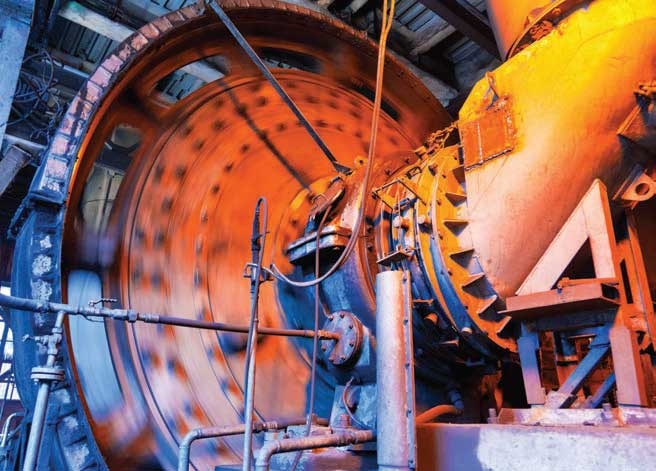
The cement industry has realised the importance of modular grinding techniques and grinding aids to achieve a better quality of product and to obtain high energy efficiency. We see a trend where cement manufacturers are shifting towards more advancement in vertical mill or roll press systems.
The cement industry has realised the importance of modular grinding techniques and grinding aids to achieve a better quality of product and to obtain high energy efficiency. We see a trend where cement manufacturers are shifting towards more advancement in vertical mill or roll press systems.
Energy consumption continues to remain the key issue associated with every industry today. In the cement industry, the grinding process accounts for significant energy consumption. Various research papers suggest that the grinding process consumes 60-70 per cent of a cement plant’s electrical demand. Hence, limiting energy consumption at the grinding process level is a major industry focus today. Another key focus area is the end-product. Cement manufacturers are exploring new ways to expand the cement additives range and cement/clinker ratio to make the final product more durable, stronger, and cost-effective. The solutions available in the market today come with versatile technologies, with low-energy consumption, as well as are easily capable of adapting to a wide range of raw materials. In short, solutions that offer low energy consumption and high flexibility are in high demand.
Trends
The three key trends in the grinding process in the cement industry are– efficiency, reduction of power consumption, and system flexibility/simplicity. In terms of demand, vertical mills have increased their share as compared to ball mills. The use of separate grinding plants is observed to have picked up drastically. IT Vendors have also increased their focus towards offering more and more technologically advanced and energy-efficient solutions for the grinding process.
Avanish Karrahe, Global Product Manager Grinding Products, Cement Industry, FLSmidth, said, “Along with mill design, advancement in high-efficiency separator design has further improved energy efficiency by reducing the amount of over-grinding, unnecessarily returning product-size material to the grinding part of the machine, allowing for more stable operation and better overall product quality.”
He further explains that when combined with the latest mill designs an optimised separator offers potential for up to 10% better overall energy efficiency than mill systems with inferior separators.
Grinding process
Many factors influence the grindability of cement/clinker. For example, clinker with a high content of small pores will be easy to grind. Other factors such as crystal size, cooling velocity, age of clinker also influence the grindability. A part of the grinding is done in a pregrinding unit, with help of roller press, vertical shaft impact crusher, and vertical roller mill.
In another scenario, the tube mill is omitted, and entire grinding work is done in roller press with desagglomerator and rotor type separator or vertical roller mill with integrated rotor type separator.
Various technical and economic aspects are taken into consideration before selecting the best grinding mechanism. Furthermore, factors such as mill feed, composition, grindability of components, grain size, moisture content of additive, mill control, manual or automatic processes, grinding aid, etc.
Explains Dr. Bibekananda Mohapatra, Director General, National Council for Cement and Building Materials, “Comparing different grinding systems, high pressure grinding rolls are at par in energy efficiency as compared to VRMs for grinding purpose. In VRMs, recent development in slave rollers is also providing grinding force enabling high energy efficiency. Advancements in VRM main drive gearbox is leading to lower cooling requirement and reduction in energy loss.”
Ball Mills: Ball mill systems are not the preferred option for any new projects. However, a few companies prefer starting with ball mills with minimum investment, and later when they expand the business, they adopt roller press or vertical mill for pre-grinding of clinker.
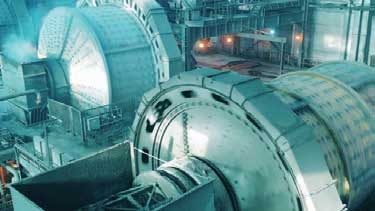
Vertical roller mill systems (VRM): These are the most versatile equipment, which can handle all the types of raw materials, solid fuels, and additives used in the cement process.
Karrahe says that roller presses and vertical roller mills have much higher grinding efficiencies compared to traditional ball mills and can operate with almost half the electrical energy consumption compared to a traditional ball mill.
Roller press systems: Over the last few decades, with the developments of technology and material sciences, roller press technology has now evolved as one of the most energy-efficient grinding systems for raw meal and cement grinding, completely eliminating the ball mills in grinding circuits.
Modular grinding v/s conventional
Traditional method: Grinding of clinker from the kiln is the final manufacturing stage at a cement plant. The griding process includes 4-5 percent gypsum and grinding aids (additives), into the final product, cement.
The cement grinding process accounts for approximately 40-50 percent of the energy consumption. It is noteworthy that the quality of the final cement is extremely dependent on the operation/grinding mode. The cement quality and the consumption of electrical energy are dependent on the grinding procedure. Thus, the cement grinding plant must be adequately designed and operated.
Modular grinding: This system is a portable solution for companies that need of quick start of production or need to increase production capacity on short notice to meet the peak market demands. Today, many vendors offer modular grinding mechanisms that offer quick installation setup, enhanced product performance, and low energy consumption. They are designed in such a way that it suits a wide range of raw material types and finish products’ variety (recipe, fineness, etc).
The advantages of the modular design are:
- Proven technology of major equipment
- Low cost of transportation of equipment to site
- Low delivery times of equipment
- Low investment risk and fast market entry
- Low construction and Installation periods
- Compact design with minimum land usage
Automation in grinding process
Today, a lot of many equipment companies have come up with automation solutions allowing the grinding process to be fully automated. They offer dynamic systems, which are more accurate to control than a conventional ball mill. Fully automated systems allow easy management of raw material quality variations and are very smooth and safe to operate. Moreover, automation in grinding also eliminates the high responsibility of daily operations, thus allowing resources to focus on more valuable tasks.
During the pandemic, remote services have picked up fast, offering daily operations, predictive maintenance, and troubleshooting services. This kind of development has shown its relevance during the pandemic.
In the past decade, the cement industry has realised the importance of process control in grinding circuits to achieve a better quality of product, and to obtain high energy efficiency. The PLC-based automation system is so common even in mill systems of capacities as low as 30 tph.
Karrahe said “The use of digital technology such as advanced process control can further improve energy efficiency by as much as 5 percent. References of combining separator upgrades to modern high-efficiency design or upsizing to accommodate new feed materials and/or product types with advanced process control have yielded as much as 25 percent overall performance improvement.”
“Reduction in mills pressure drop, optimisation of grinding media in ball mills, separator fan volume loading, the addition of grinding aids are some of the optimisation measures adopted by cement plants as seen in recent PAT cycles. Some high-energy efficient plants have already achieved overall specific electrical energy consumption of 63-65 kWh/t cement. It is anticipated that with the improvements in motor efficiencies, fan efficiencies, implementation of above-mentioned technologies and innovations, there is a scope for further electrical energy savings in grinding section,” explains Dr. Mohapatra.
Grinding aids
Cement clinker is difficult to grind, and the fine grinding of this material is one of the major problems of the cement industry. Cement clinker is difficult to grind, and the fine grinding of this material is one of the major problems of the cement industry. One method is to use special breakage machines, but it is usually more expensive as it requires more energy and reduces capacity. The most economic and the best alternative is to use a grinding aid or additives to obtain the best product.
Grinding aid or grinding additives are substances which when mixed into the grinding mill contents lead to an increase in the rate of size reduction and flowability. These additives are added into the material in a certain ratio based on the weight and the grinding machine for a definite time at the same condition. Different types of grinding additives are suitable for clinker grinding, which results in an improvement in the grindability by decreasing agglomeration and increasing breakage.
The use of grinding aid is a common practice in cement manufacturing for bringing improvements in mill capacity and overall better operations. For example, grinding aid stabilises the grinding bed in a VRM. This reduces the vibration level, for more capacity at the same power use. Since grinding aids offer better stability, it reduces the requirement of stopping and starting the mills, which further decreases the total energy consumption.
Conclusion
Globally, cement producers are fighting climate change challenges and the focus is more toward attaining sustainability in each step of cement manufacturing. Suppliers are well aware of this challenge and are coming up with innovative ideas to develop flexible solutions with high levels of energy efficiency, emission control, and product quality. Such kind of evolution will help the cement industry reduce the use of natural resources, make use of recycled materials and preserve energy consumption.
In terms of choosing the grinding system, though ball mill systems are still preferred due to less CAPEX, we see a shift in the industry towards vertical mill or roll press systems.




JSW Cement Commissions 1 MTPA Unit in Rajasthan

Wonder Cement appoints Mahesh Singh as VP Corporate Brand Communication

JSW Cement commissions additional 1 MTPA grinding unit in Rajasthan

JSW Cement Boards Approve Proposed Shiva Cement Merger

JSW Cement commissions additional 1 MTPA grinding unit at Nagaur
JSW Cement Commissions 1 MTPA Unit in Rajasthan
Wonder Cement appoints Mahesh Singh as VP Corporate Brand Communication
JSW Cement commissions additional 1 MTPA grinding unit in Rajasthan
JSW Cement Boards Approve Proposed Shiva Cement Merger







