Connect with us

Economy & Market

Green Cement Plant: Hurdles in the way of a green cement plant

Published

on

Shares

The Indian cement industry has realised that strong business growth can be achieved by sustaining manufacturing in an eco-friendly manner. As the industry is moving ahead to embrace green technologies, SP Deolkar, a veteran in the field, lists out some of the obstacles in its path.

Cement entrepreneurs have to face many challenges while setting up new cement manufacturing plants on greenfield sites. Emphasis on sustainable development is a new dimension to consider while designing the plant. The cement industry is committed to reducing emission of Greenhouse Gasses (GHG) and to save limestone reserves and fossil fuels, while simultaneously maintaining the quality of the ambient air.

All new cement plants are adopting green processes. This means they would be making blended / composite cements, using alternate fuels (AF),using waste gasses to co-generate power or to even make cement and using renewable sources of power like wind and sun.

The challenges

The challenges in setting up a cement plant can be broadly divided into technical challenges and external challenges.

Technical challenges include those related with processes, preparation of raw materials, fuels and semi- finished products for processing, availability of machinery, plant and equipment for various operations, instrumentation and process control management for plant operation at optimum levels.

External challenges are related to deciding on the most suitable location for the plant with respect to access to raw materials, fuel, power, and of course, the market.

Technical challenges Processes

There are hardly any technological challenges with respect to process or machinery; even for current sizes of plants with more than 10,000 tpd kiln capacity. Machinery of required design and capacity is available to be used as single units. Out of necessity, cement mills are installed as multiple units to produce different types of cements simultaneously. Multi -stream pre-heaters and calciners are used on 10,000 tpd production lines. Calciners have been developed to permit multi- stage feeding of raw meal and fuel, and to keep NOx levels down within permissible limits. Both the kiln and calciner can be fired simultaneously with coal/oil and alternate fuels; several designs of highly efficient clinker coolers are available. Vertical mills, roller presses and ball mills of required sizes and capacities are available; the industry has already reached fuel efficiency levels of ~ 650 kcal/kg clinker and power consumption of ~ 80 kwh/tonne of cement.

Alternative fuels

The only new element is the preparation of alternative fuels for firing in kiln/calciner. AFs come from myriad sources in many different forms and are widely different from each other and from coal. Fuel preparation systems have to be designed to suit selected AFs for use on a continuous basis. This could involve crushing, drying, pulverising petcoke, shredding tyres, briquetting rice husk, gasification of biomass, etc. The process may require special equipment like briquetting press, shredders, gasification plant and machineries like hot disc, multi-channel burners to fire oil, coal and gas simultaneously. Such versatile systems are at the disposal of modern cement plants today.

What is most necessary for use of AFs is rigorous quality control at all stages, right from the source, to the point of firing. It is also necessary to monitor chlorine, dioxins, heavy metals, etc, in specific cases. In some cases, it may be necessary to install a kiln bypass system at the kiln inlet. Some AFs are hazardous and need special care in their handling and storage.

Waste heat recovery systems

A wide range of options are available in waste heat recovery systems (WHRS). This wide range makes it crucial to select the system most appropriate. There are many ways in which a WHRS can be installed. Suitable machinery is available for every type of requirement.

External challenges

Apart from the challenges arising from financial angles, setting up a plant would require attention to several other factors. These challenges are common for all types of cements as much as for green cement.

Some external challenges include:

  • Selecting location for the proposed cement plant.
  • Acquisition for land for factory and colony.
  • Obtaining mining lease.
  • Obtaining environmental clearances.

Land acquisition

Acquisition of land can be a big problem particularly if the land is under cultivation. A 10,000 tpd clinkering unit producing ~ 6.5 mtpa of slag cement, along with a railway siding, would require about 300 hectares just for its factory. The selection of the right location for a proposed cement plant is based on access to market, location of mineral deposits, sources of power and fuel, infrastructural facilities like rail and road links, availability of manpower, etc. Now a new dimension is added to this; a sources of AF.

The final location ought to be selected in a way that it balances the pros and cons and veer strongly in favour of the plant. If an ISP (Intermediate Service Provider) is available to supply AFs in ready use form, the problem is resolved to a great extent.

Careful investigations of prospective deposits in terms of quality and quantity to suit the selected process and the the final capacity of the plant is very important. The most promising deposit may not be readily available for exploitation, or if available, it may not be large enough. Thus, finalising the deposits and acquiring a mining lease can be a long drawn-out process. It becomes even more difficult if the deposits are in reserved areas like in forests or in sanctuaries.

Statutory clearances

Clearances for setting up a cement plant must be obtained from the MoEF (Ministry of Environment and Forests) and Pollution Control Boards. These clearances are issued only after various conditions stipulated by government norms are met.

Important conditions linked to: Mining operations, so as to leave as small a footprint as possible.

  • Greening of slopes, use of ground water in mines and afforestation.
  • Water management; recharging groundwater by rainwater harvesting, system of garland canals and check dams in specific cases, ETP, zero waste water discharge.
  • Green belts and landscaping in and around the factory and colony.
  • Monitoring and adhering to emission norms for particulates from stacks and for fugitive dusts as laid down by State and Central Pollution Control Boards.

New dimension

Though not mandatory at the moment, the industry is expected to monitor emissions of greenhouse gasses. These stipulations are to be met by all proposed cement plants, green or grey. Since the cement industry is committed to the principle of sustainable development, it will willingly comply with these stipulations and do necessary planning in advance.

Green buildings

Norms have been developed for green buildings that make maximum use of sun and wind to reduce dependence on lighting and air- conditioning. Though not mandatory, adopting them would make the existing plants greener. The Bureau of Energy Efficiency has issued norms for lighting fixtures and cooling media to be used in refrigerators and air- conditioners. It would be best to keep these in mind right from the planning stage.

Benefits of meeting these challenges

There are several real and tangible benefits of accepting the challenges and in greening the cement plants.

  • GHG emissions can be reduced from ~0.76 t/t for OPC to 0.30 t/t for slag cement with AF and WHR..
  • Substantial savings can be achieved by conserving reserves of limestone and fossil fuels. Capital costs of annual capacity can come down by 30 to 40 per cent even after allowing for additional costs for AF and WHR. Costs of production of naked cement excluding works also come down by 20 to 25 per cent in case of blended cements with AF and WHR.

Renewable energy

Power plants based on renewable sources such as wind and solar power will soon become an integral part of new cement plants, making them greener as these sources of energy are totally free of GHG emissions. The necessary technology to meet these goals is now available and very reliable.

However, the main problem associated with these sources is that the generation of wind and solar power is not consistent. The capacity factor is also very low compared to that of thermal power plants. Secondly, it may not always be possible to locate the wind or solar power plants close to the cement plant. A cement plant would have to manage several sources of electrical energy, grid, captive power plant, WHRS and power from renewable energy. A sound strategy must be in place to ensure continuity of power at optimum cost.

Future challenges

Cement industry will have to gear up itself to meet new challenges in the future such as upgrading its technologies for carbon capture and storage. GHG emissions cannot be pulled down to the targeted levels merely by making blended cements and by using AF. There are technologies for separating CO2 from waste gases on the horizon. It could be used by other industries or it can also be used for making new cements substitutes such as those made by Calera Corporation (http://www.calera.com). Several cement substitutes like Calera, Novacem, Aether, are in various stages of development.

All the new cements are green cements. The cement industry should be watchful and examine how these green products could be made in their existing production facilities.

SP Deolalkar, Director, Deolalkar Consultants, Reference- Author’s forthcoming book : Designing Green, Cement Plants.


Continue Reading
Click to comment

Leave a Reply

Your email address will not be published. Required fields are marked *

Concrete

Budget 2026–27 infra thrust and CCUS outlay to lift cement sector outlook

Published

on

By

Shares

Higher capex, city-led growth and CCUS funding improve demand visibility and decarbonisation prospects for cement

Mumbai

Cement manufacturers have welcomed the Union Budget 2026–27’s strong infrastructure thrust, with public capital expenditure increased to Rs 12.2 trillion, saying it reinforces infrastructure as the central engine of economic growth and strengthens medium-term prospects for the cement sector. In a statement, the Cement Manufacturers’ Association (CMA) has welcomed the Union budget 2026-27 for reinforcing the ambitions for the nation’s growth balancing the aspirations of the people through inclusivity inspired by the vision of Narendra Modi, Prime Minister of India, for a Viksit Bharat by 2047 and Atmanirbharta.

The budget underscores India’s steady economic trajectory over the past 12 years, marked by fiscal discipline, sustained growth and moderate inflation, and offers strong demand visibility for infrastructure linked sectors such as cement.

The Budget’s strong infrastructure push, with public capital expenditure rising from Rs 11.2 trillion in fiscal year 2025–26 to Rs 12.2 trillion in fiscal year 2026–27, recognises infrastructure as the primary anchor for economic growth creating positive prospects for the Indian cement industry and improving long term visibility for the cement sector. The emphasis on Tier 2 and Tier 3 cities with populations above 5 lakh and the creation of City Economic Regions (CERs) with an allocation of Rs 50 billion per CER over five years, should accelerate construction activity across housing, transport and urban services, supporting broad based cement consumption.

Logistics and connectivity measures announced in the budget are particularly significant for the cement industry. The announcement of new dedicated freight corridors, the operationalisation of 20 additional National Waterways over the next five years, the launch of the Coastal Cargo Promotion Scheme to raise the modal share of waterways and coastal shipping from 6 per cent to 12 per cent by 2047, and the development of ship repair ecosystems should enhance multimodal freight efficiency, reduce logistics costs and improve the sector’s carbon footprint. The announcement of seven high speed rail corridors as growth corridors can be expected to further stimulate regional development and construction demand.

Commenting on the budget, Parth Jindal, President, Cement Manufacturers’ Association (CMA), said, “As India advances towards a Viksit Bharat, the three kartavya articulated in the Union Budget provide a clear context for the Nation’s growth and aspirations, combining economic momentum with capacity building and inclusive progress. The Cement Manufacturers’ Association (CMA) appreciates the Union Budget 2026-27 for the continued emphasis on manufacturing competitiveness, urban development and infrastructure modernisation, supported by over 350 reforms spanning GST simplification, labour codes, quality control rationalisation and coordinated deregulation with States. These reforms, alongside the Budget’s focus on Youth Power and domestic manufacturing capacity under Atmanirbharta, stand to strengthen the investment environment for capital intensive sectors such as Cement. The Union Budget 2026-27 reflects the Government’s focus on infrastructure led development emerging as a structural pillar of India’s growth strategy.”

He added, “The Rs 200 billion CCUS outlay for various sectors, including Cement, fundamentally alters the decarbonisation landscape for India’s emissions intensive industries. CCUS is a significant enabler for large scale decarbonisation of industries such as Cement and this intervention directly addresses the technology and cost requirements of the Cement sector in context. The Cement Industry, fully aligned with the Government of India’s Net Zero commitment by 2070, views this support as critical to enabling the adoption and scale up of CCUS technologies while continuing to meet the Country’s long term infrastructure needs.”

Dr Raghavpat Singhania, Vice President, CMA, said, “The government’s sustained infrastructure push supports employment, regional development and stronger local supply chains. Cement manufacturing clusters act as economic anchors across regions, generating livelihoods in construction, logistics and allied sectors. The budget’s focus on inclusive growth, execution and system level enablers creates a supportive environment for responsible and efficient expansion offering opportunities for economic growth and lending momentum to the cement sector. The increase in public capex to Rs 12.2 trillion, the focus on Tier 2 and Tier 3 cities, and the creation of City Economic Regions stand to strengthen the growth of the cement sector. We welcome the budget’s emphasis on tourism, cultural and social infrastructure, which should broaden construction activity across regions. Investments in tourism facilities, heritage and Buddhist circuits, regional connectivity in Purvodaya and North Eastern States, and the strengthening of emergency and trauma care infrastructure in district hospitals reinforce the cement sector’s role in enabling inclusive growth.”

CMA also noted the Government’s continued commitment to fiscal discipline, with the fiscal deficit estimated at 4.3 per cent of GDP in FY27, reinforcing macroeconomic stability and investor confidence.

Continue Reading

Concrete

JK Cement Crosses 31 MTPA Capacity with Commissioning of Buxar Plant in Bihar

Published

on

By

Shares

JK Cement has commissioned a 3 MTPA Grey Cement plant in Buxar, Bihar, taking its total capacity to 31.26 MTPA and placing it among India’s top five grey cement producers. The ₹500 crore investment strengthens the company’s national footprint while supporting Bihar’s infrastructure growth and local economic development.

JK Cement Ltd., one of India’s leading cement manufacturers, has announced the commissioning of its new state-of-the-art Grey Cement plant in Buxar, Bihar, marking a significant milestone in the company’s growth trajectory. With the commissioning of this facility, JK Cement’s total production capacity has increased to 31.26 million tonnes per annum (MTPA), enabling the company to cross the 30 MTPA threshold.

This expansion positions JK Cement among the top five Grey Cement manufacturers in India, strengthening its national footprint and reinforcing its long-term growth strategy.

Commenting on the strategic achievement, Dr Raghavpat Singhania, Managing Director, JK Cement, said, “Crossing 31 MTPA is a significant turning point in JK Cement’s expansion and demonstrates the scale, resilience, and aspirations of our company. In addition to making a significant contribution to Bihar’s development vision, the commissioning of our Buxar plant represents a strategic step towards expanding our national footprint. We are committed to developing top-notch manufacturing capabilities that boost India’s infrastructure development and generate long-term benefits for local communities.”

The Buxar plant has a capacity of 3 MTPA and is spread across 100 acres. Strategically located on the Patna–Buxar highway, the facility enables faster and more efficient distribution across Bihar and adjoining regions. While JK Cement entered the Bihar market last year through supplies from its Prayagraj plant, the Buxar facility will now allow the company to serve the state locally, with deliveries possible within 24 hours across Bihar.

Sharing his views on the expansion, Madhavkrishna Singhania, Joint Managing Director & CEO, JK Cement, said, “JK Cement is now among India’s top five producers of grey cement after the Buxar plant commissioning. Our capacity to serve Bihar locally, more effectively, and on a larger scale is strengthened by this facility. Although we had already entered the Bihar market last year using Prayagraj supplies, local manufacturing now enables us to be nearer to our clients and significantly raise service standards throughout the state. Buxar places us at the center of this chance to promote sustainable growth for both the company and the region in Bihar, a high-growth market with strong infrastructure momentum.”

The new facility represents a strategic step in supporting Bihar’s development vision by ensuring faster access to superior quality cement for infrastructure, housing, and commercial projects. JK Cement has invested approximately ₹500 crore in the project. Construction began in March 2025, and commercial production commenced on January 29, 2026.

In addition to strengthening JK Cement’s regional presence, the Buxar plant is expected to generate significant direct and indirect employment opportunities and attract ancillary industries, thereby contributing to the local economy and the broader industrial ecosystem.

Continue Reading

Economy & Market

From Vision to Action: Fornnax Global Growth Strategy for 2026

Published

on

By

Shares

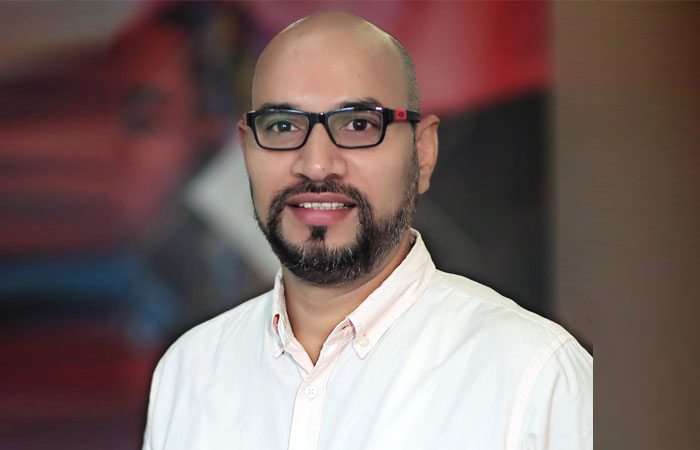
Jignesh Kundaria, Director & CEO, Fornnax Recycling Technology

As 2026 begins, Fornnax is accelerating its global growth through strategic expansion, large-scale export-led installations, and technology-driven innovation across multiple recycling streams. Backed by manufacturing scale-up and a strong people-first culture, the company aims to lead sustainable, high-capacity recycling solutions worldwide.

As 2026 begins, Fornnax stands at a pivotal stage in its growth journey. Over the past few years, the company has built a strong foundation rooted in engineering excellence, innovation, and a firm commitment to sustainable recycling. The focus ahead is clear: to grow faster, stronger, and on a truly global scale.

“Our 2026 strategy is driven by four key priorities,” explains Mr. Jignesh Kundaria, Director & CEO of Fornnax.

First, Global Expansion

We will strengthen our presence in major markets such as Europe, Australia, and the GCC, while continuing to grow across our existing regions. By aligning with local regulations and customer requirements, we aim to establish ourselves as a trusted global partner for advanced recycling solutions.

A major milestone in this journey will be export-led global installations. In 2026, we will commission Europe’s highest-capacity shredding line, reinforcing our leadership in high-capacity recycling solutions.

Second, Product Innovation and Technology Leadership

Innovation remains at the heart of our vision to become a global leader in recycling technology by 2030. Our focus is on developing solutions that are state-of-the-art, economical, efficient, reliable, and environmentally responsible.

Building on a decade-long legacy in tyre recycling, we have expanded our portfolio into new recycling applications, including municipal solid waste (MSW), e-waste, cable, and aluminium recycling. This diversification has already created strong momentum across the industry, marked by key milestones scheduled to become operational this year, such as:

  • Installation of India’s largest e-waste and cable recycling line.
  • Commissioning of a high-capacity MSW RDF recycling line.

“Sustainable growth must be scalable and profitable,” emphasizes Mr. Kundaria. In 2026, Fornnax will complete Phase One of our capacity expansion by establishing the world’s largest shredding equipment manufacturing facility. This 23-acre manufacturing unit, scheduled for completion in July 2026, will significantly enhance our production capability and global delivery capacity.

Alongside this, we will continue to improve efficiency across manufacturing, supply chain, and service operations, while strengthening our service network across India, Australia, and Europe to ensure faster and more reliable customer support.

Finally: People and Culture

“People remain the foundation of Fornnax’s success. We will continue to invest in talent, leadership development, and a culture built on ownership, collaboration, and continuous improvement,” states Mr. Kundaria.

With a strong commitment to sustainability in everything we do, our ambition is not only to grow our business, but also to actively support the circular economy and contribute to a cleaner, more sustainable future.

Guided by a shared vision and disciplined execution, 2026 is set to be a defining year for us, driven by innovation across diverse recycling applications, large-scale global installations, and manufacturing excellence.

Continue Reading

Trending News

SUBSCRIBE TO THE NEWSLETTER


Don't miss out on valuable insights and opportunities to connect with like minded professionals.


    This will close in 0 seconds