Connect with us

Economy & Market

Is India on track to meet its Paris commitments

Published

on

Shares

The country may not meet its targets completely but is within reach to achieve a substantial part of it.

India’s greenhouse gas (GHG) emissions accounted for 6.5 per cent of 2014 global total, according to data from the World Resources Institute. This made the country the fourth-largest emitter after China, the United States and the European Union. Per capita, India’s emission from fossil fuels (in 2017) is by far the lowest among major economies:

India: 1.83 MT carbon dioxide (CO2)
China: 7.72 MT in China
The EU: 6.97 MT
The US: 15.74 MT

Despite its low per capita emissions, India has made significant commitments in its Intended Nationally Determined Contribution (NDC) submitted to the United Nations Framework Convention on Climate Change (UNFCCC) in 2015 as part of the Paris Agreement.

The Climate Action Tracker website has rated its climate efforts as "2-degree compatible" = that can contribute to limiting warming by the end of the century to 2? Celsius; making India the only major economy to be so highly rated. India’s headline Paris pledge was to reduce the emission intensity of its gross domestic product (GHG emissions per unit GDP) by 33-35 per cent over 2005 levels by 2030. Assessing progress towards this target is tough: Official emissions data, which India communicates to the UNFCCC, is available until 2014 only. Also, data is available only for select years (1994, 2000, 2007, 2010 and 2014), not including the baseline year 2005.

This data (in conjunction with World Bank data for GDP) shows an unwelcome trend: A decrease in the rate of reduction of emission intensity during 2010-14 from 2007-10, as emissions continued to grow unabated despite a weakening of economic growth. More recent unofficial estimates indicate that this trend may have been temporary.

India’s annual GDP growth was only about 1 percentage point slower than the average in the years before, emission growth rate nearly halved, from 4.8 per cent before 2015 to 2.3 per cent in 2015 and 2.9 per cent in 2016 and 2017, according to the 2018 edition of the Trends in Global CO2 and Total Greenhouse Gas Emissions report by the PBL Netherlands Environmental Assessment Agency. These fluctuations point to the perils of the assumption that the decoupling of economic growth from emissions is a straightforward process.

In its second Biennial Update Report submitted to the UNFCCC in 2019, India claimed to have reduced the emission intensity of its economy by 21 per cent by 2014. But it didn’t specify emissions data for 2005 or the GDP data series used to arrive at the conclusion.

Nevertheless, the figure indicates that India is on track to meet the 2030 emission intensity commitment. An analysis by US-based Institute for Energy Economics and Financial Analysis has gone so far as to argue that the figure indicates that India could meet its target a decade early.

A study by Navroz Dubash and others published last year in Environmental Research Letters analysed seven previously published energy / emission scenarios together with current policies, and similarly argued that India’s economy-emission trajectory was consistent with the Paris Agreement.

A note on emission intensity is in order. It is a quantity that has decreased over time in many economies. One study shows CO2 emission intensity of the global economy has been steadily falling since at least 1990. This is not just due to, say, an increasing usage of renewable energy or energy efficiency, but also due to the change in the sectoral composition of the economy as it shifts from industry to (often less energy-intensive) services.

There is little clarity as to the extent to which the claimed 21 per cent reduction between 2005 and 2014 is due to concerted climate action. For comparison, in its own NDC, China claimed to have reduced the CO2 emission intensity of its GDP by 33.8 per cent during the same period.

In addition, India’s NDC also committed to ensuring that 40 per cent of its installed power capacity is from non-fossil sources (renewables, hydroelectric and nuclear) by 2030. There is an interim target of 175 GW of non-hydel renewable power by 2022 (up from 35 GW in 2015). Non-fossil sources accounted for about 37 per cent of India’s power capacity, as of September 2019, according to the Central Electricity Authority (CEA). Thus, the larger 2030 target seems like an easy one to achieve. Indeed the CEA’s projections yield an installed non-fossil capacity equivalent to nearly 65 per cent of the total capacity by 2029-30. However, on the interim target of 175 GW of non-hydro renewables by 2022, despite strong initial progress, the Government’s plans appear to be floundering.

A recent CRISIL report indicated that India may fall short of this interim target by as high as 42 per cent. If at all the target can be met, it will require more concerted effort by the government and the private sector. India’s final key pledge at Paris was the creation of an additional carbon sink equivalent to 2.5-3 billion tonne CO2 by 2030 through additional forest and tree cover. Analysts agreed that progress on the forestry goal was far from robust.

The Green India Mission, which seeks to work towards the target is woefully underfunded and has been regularly missing its annual targets. This has rendered the fulfilment of the 2030 pledge hard if not altogether unlikely. Thus India is making reasonable progress on two of the three key pledges it made in Paris. The Government needs to correct course where its policy is faltering. It also needs to invest in generating data more regularly than the bare minimum required by the UNFCCC so that way claims can be validated and data analysed to understand the underlying trends.

Courtesy: Kapil Subramanian for Down to Earth Updated on Octoebr 23, 2019 to reflect that the India’s pledge was for 2030, not 2020.


Continue Reading
Click to comment

Leave a Reply

Your email address will not be published. Required fields are marked *

Concrete

Fornnax Wins AIRIA’s Special Export Award for Rubber Machinery in 2025-26

Published

on

By

Shares

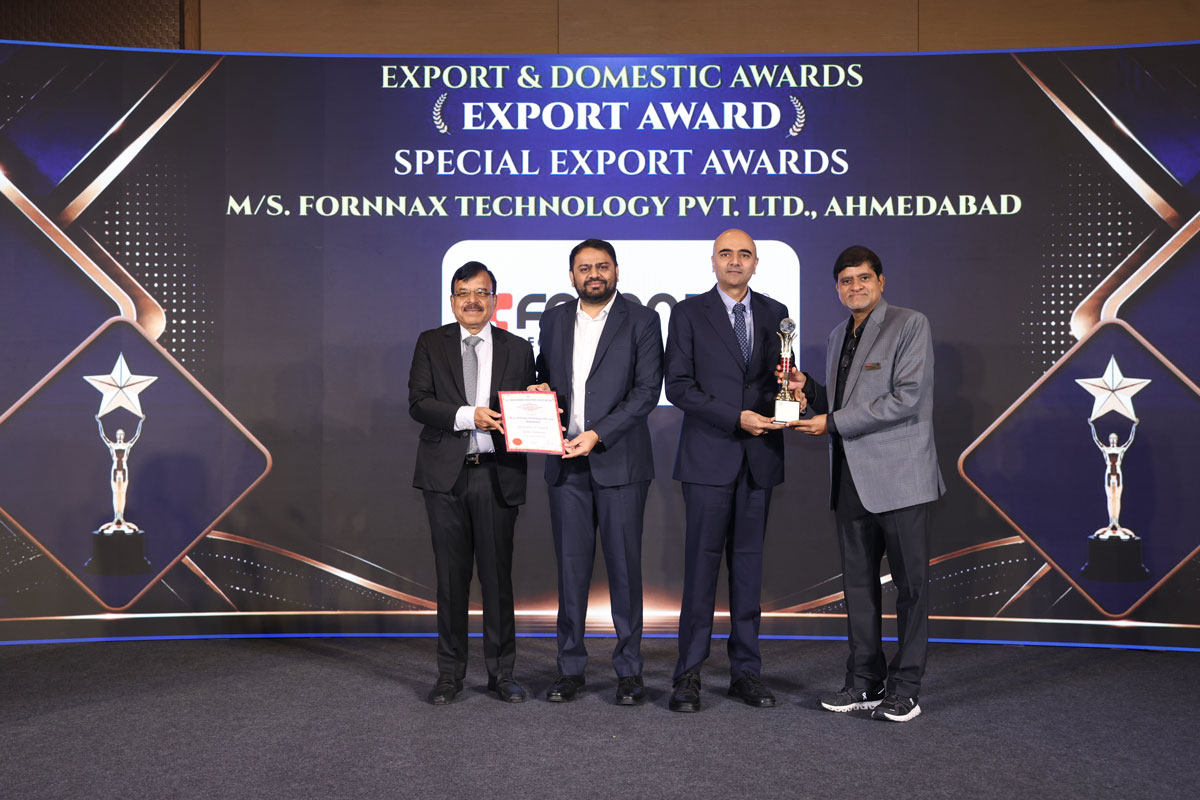
Fornnax Technology Pvt. Ltd. has been honoured with the Special Export Award – Rubber Machinery for 2025–26 by the All-India Rubber Industries Association (AIRIA), in recognition of its highest exports of tyre recycling plants to the European region.

With more than a decade of experience in India’s tyre recycling industry, Fornnax has contributed to the development of advanced recycling technologies and infrastructure. The company currently holds a 90% market share in India’s domestic tyre recycling sector, while exports account for 30% of its business, spanning markets such as Europe, Australia and the GCC.

The award marks another milestone for Fornnax, whose tyre recycling lines and advanced shredding technologies are supporting the growth of the circular economy in India and international markets.

Commenting on the recognition, Mr. Jignesh Kundaria, Founder and Director of Fornnax, said:

“This honour from AIRIA is a reflection of an incredible journey we have undertaken over the years. When we started Fornnax, there was no established recycling industry in India to follow. We chose to build for the future instead. Today, when you see India’s tyre recycling sector, it has already transformed into a dynamic, high-growth industry and we are extremely proud to have played our part in building it.”

Unlike standalone equipment suppliers, Fornnax focuses on developing complete, high-capacity recycling infrastructure. Its integrated systems combine multiple stages of shredding and size reduction to enable efficient, continuous operations. This system-level engineering approach helps recycling operators improve throughput, equipment reliability and operational consistency.

The recognition reinforces Fornnax’s commitment to developing engineering technologies that contribute to a more efficient and circular recycling ecosystem.

Looking ahead, the company aims to expand its international presence while continuing to develop advanced shredding and recycling solutions to address the growing volumes and evolving requirements of the global recycling industry.

For more information, visit: www.fornnax.com

Continue Reading

Concrete

Wonder Cement appoints Mahesh Singh as VP Corporate Brand Communication 

Published

on

By

Shares

Singh brings 20+ years of brand and marketing experience, and will lead integrated corporate brand communication initiatives at Wonder Cement 

New Delhi

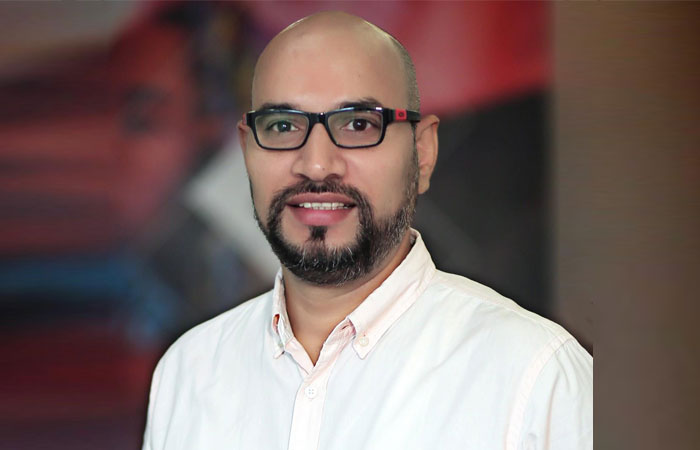
Wonder Cement, a leading cement manufacturer, has appointed Mahesh Singh as Vice President – Corporate Brand Communication. In his new role, he will oversee corporate brand strategy and communication, including digital and performance marketing, public relations, trade, events, exhibitions, sports and experiential marketing. 

Singh brings over two decades of experience across marketing and communications, with roles spanning the automotive industry, agencies and entrepreneurship. He spent more than a decade with Honda Motorcycle & Scooter India, working across integrated communication, media, digital, retail and consumer engagement. His stint also included helping build the company’s digital marketing capabilities. 

He moved to dentsu X India as Vice President – Strategy & Planning, working across categories such as automotive, auto components, electric vehicles, FMCG, consumer electronics, BFSI, apparel and brand consulting. His responsibilities included media and marketing strategy, product launches, content, performance marketing and consumer activations. 

Singh subsequently took an entrepreneurial route with Radiant Brands before joining Shriram Ltd (SPR Autotech) as Head – Marketing & Communications. There, his remit included brand and corporate strategy, communications, PR and ORM, retail identity, loyalty programmes and events. 

At Wonder Cement, Singh will be responsible for bringing together the company’s corporate brand communication initiatives across digital, performance marketing, PR, trade, sports and experiential platforms. The role will focus on creating an integrated approach to communication across consumers, trade partners and other key stakeholders. 

The appointment brings to Wonder Cement a marketer whose career has spanned the brand, agency and entrepreneurial sides of the communications ecosystem. 

Wonder Cement, part of the RK Group, is a cement manufacturer with roots in Rajasthan and a focus on quality, trust and transparency. The company has grown to six manufacturing plants, and a cement capacity of 21.5 MTPA. With more than 2,000 employees and a network of over 5,000 dealers, its operations span manufacturing, distribution and customer engagement, with a focus on consistent product quality and efficient execution. 

Continue Reading

Concrete

JSW Cement commissions additional 1 MTPA grinding unit at Nagaur

Published

on

By

Shares

With this commissioning, JSW Cement’s total cement grinding capacity has increased to 25.10 MTPA, 
Mumbai

JSW Cement, one of India’s leading green cement producers and part of the diversified JSW Group, today announced the successful commissioning of an additional 1.00 MTPA cement grinding unit at Nagaur, Rajasthan. The commissioning marks another significant milestone in the Company’s growth strategy.

With this commissioning, JSW Cement’s total cement grinding capacity has increased to 25.10 MTPA, while its total clinker manufacturing capacity, including clinker capacity at its joint venture, JSW Cement FZC, stands at 9.74 MTPA.

JSW Cement had commenced operations in North India in March 2026 with the Nagaur Integrated Plant, comprising a 3.30 MTPA clinkerisation unit and 2.50 MTPA cement grinding unit. With the commissioning of the additional 1.00 MTPA cement grinding unit, the plant’s total cement grinding capacity has increased to 3.50 MTPA, enhancing the company’s ability to cater to the growing cement demand across Rajasthan, Haryana, Punjab and the National Capital Region (NCR). The expansion has been funded through a strategic mix of equity and long-term debt.

During the quarter ended 30th September 2026, JSW Cement has also commissioned the Alternate Fuel Handling System and the Waste Heat Recovery system (WHRS) at the Nagaur Integrated Plant.

Nilesh Narwekar, CEO, JSW Cement, said: “The commissioning of additional 1.00 MTPA grinding capacity at Nagaur is a key strategic priority for us and will accelerate JSW Cement’s expansion into North India. We look forward to servicing the growing needs of the region and contributing to the economic growth of Rajasthan, Haryana, Punjab and the NCR area. I am delighted to share that the company has commissioned this grinding unit within the expected timeline, showcasing our project execution capabilities. Further, the Alternate Fuel Handling System and the Waste Heat Recovery system (WHRS) are expected to substantially reduce our production costs going forward.”

Continue Reading

Video Thumbnail
▶

    SIGN-UP FOR OUR GENERAL NEWSLETTER

    Trending News

    SUBSCRIBE TO THE NEWSLETTER


    Don't miss out on valuable insights and opportunities to connect with like minded professionals.


      This will close in 0 seconds