Connect with us

Economy & Market

When Cement Meets Climate Action

Published

on

Shares

Amit Banka, Founder and CEO, WeNaturalists, discusses the success of CCUS depends on collaboration, carbon literacy and shared digital ecosystems rather than isolated technologies.

India’s cement industry churns out roughly
340 million tonnes annually. It is the lifeline of our infrastructure, the backbone of our urban aspirations, and the reason our highways connect villages to cities. But here lies an uncomfortable truth: every tonne of cement produced emits nearly one tonne of CO2. The industry accounts for 5.8 per cent of India’s total carbon emissions—a figure that challenges even the most committed sustainability advocates.
We stand at a peculiar crossroads. India’s infrastructure ambitions roar forward with plans for highways, hospitals, schools, and homes to serve 1.4 billion people. Simultaneously, the climate emergency demands action at unprecedented scales. The cement industry cannot simply reduce production. Yet it must transform. This is where Carbon Capture, Utilisation and Storage (CCUS) enters—not as a distant fantasy, but as urgent infrastructure for change.

India’s CCUS moment has arrived
It is encouraging that India has moved beyond treating CCUS as laboratory theory. The Department of Science and Technology (DST) has launched five carbon capture and utilisation testbeds specifically within the cement sector, representing the first such integrated cluster initiative in India. These are not token projects. They bring together premier research institutions—IIT Bombay, IIT Kanpur, IIT Madras—with cement leaders including JSW Cement, Dalmia Cement, and UltraTech, structured through an innovative Public-Private Partnership model.
Each testbed attacks a different dimension. One transforms CO2 into lightweight construction blocks. Another employs mineralisation techniques, literally converting pollution into solid minerals. A third uses vacuum swing adsorption technology to separate captured CO2 from cement kiln gases. Together, they represent India’s first real attempt at institutionalising CCUS for hard-to-abate sectors.
The Global Cement and Concrete Association (GCCA) India, collaborating with TERI, has released India’s decarbonisation roadmap targeting net-zero CO2 emissions by 2070. Alongside government support and industry commitment, there now exists a structured pathway. Yet a critical question lingers: what will determine whether this remains a blueprint or becomes lived reality?
The answer: platforms that connect, literacy that educates, and ecosystems that accelerate.

Breaking the silo trap: Why collaboration platforms matter
Consider the challenge that keeps cement plant managers awake: CCUS economics do not work in isolation. A cement plant capturing CO2 must find somewhere to store it. Transport costs become prohibitive if storage sites are distant. Utilisation opportunities for captured CO2—whether in enhanced oil recovery, chemicals production, or building materials—scatter across different industries and geographies. The traditional model—where each facility independently solves its own emissions problem—fails spectacularly when costs explode and timelines extend endlessly.
This is precisely where industrial hubs reshape the game.
Collaborative CCUS hubs concentrate captured carbon from multiple emitters, transport it through shared pipeline infrastructure, and coordinate utilisation and storage at scale. The Nordics have already validated this approach. Norway’s Northern Lights project receives CO2 from various industrial emitters, centralises management, and delivers offshore sequestration—reducing per-tonne costs substantially and making the business case credible.
In India, GCCA and DST explicitly emphasise hub identification and development potential, particularly recognising that certain regions possess optimal clustering opportunities. Yet hubs cannot materialise through goodwill alone. They require coordination across cement manufacturers, technology providers, logistics operators, carbon verification agencies, and government regulators—stakeholders with different incentives, geographies, and timelines. This is where collaborative digital platforms become essential infrastructure. When a cement manufacturer explores CCUS partnerships, when researchers seek industrial pilot sites, when policymakers track implementation progress across regions—these activities demand platforms that create real-time visibility and alignment.
Platforms like WeNaturalists recognise that climate action cannot thrive in information silos. The ability to facilitate multi-stakeholder collaborations, enable geographic discovery, manage complex projects transparently, and connect professionals horizontally creates conditions for faster partnership formation and deployment. Here is the essential insight: cement’s CCUS future depends less on any single breakthrough technology than on structures that connect the innovators, implementers, financiers, and regulators who will collectively bring CCUS to scale. Collaborative platforms are that connective infrastructure.

Carbon literacy crisis: Why knowledge is hard infrastructure
Spend time in any cement plant, and an interesting pattern emerges. Senior managers articulate climate commitments at macro levels. Plant engineers master their equipment intimately. Yet the connective tissue—the shared language about embodied carbon, capture methodologies, utilisation economics, and storage verification—often feels startlingly thin.
This is not knowledge scarcity. It is literacy scarcity. Carbon literacy means more than understanding that CO2 harms the climate. It means cement professionals grasping why their specific plant’s emissions profile matters, how different CCUS technologies trade off between energy consumption and capture rates, where utilisation opportunities align with their operational reality, and what governance frameworks ensure verified, permanent carbon sequestration.
Cement manufacturing contributes approximately 8 per cent of global carbon emissions. Addressing this requires professionals who understand CCUS deeply enough to make capital decisions, troubleshoot implementation challenges, and convince boards to invest substantial capital.
Current training pathways exist. The Decarbonising Cement Manufacture Course provides comprehensive six-week programmes covering capture technologies and energy efficiency. Specialist trainers offer bespoke carbon programmes for construction professionals. Yet in India’s cement sector, systematic carbon literacy infrastructure remains patchy. This creates a bottleneck: adoption lags not because the technology is unproven, but because insufficient professionals understand it well enough to champion deployment.
Consider the DST testbeds through a different lens: they are not merely technology incubators. They are the training grounds for India’s first generation of CCUS practitioners. These researchers, engineers, and technicians will migrate across the sector, carrying deep understanding of capture chemistry, operational protocols, verification procedures, and economic models. They become multipliers—transforming isolated expertise into distributed, sector-wide capability.
The cement industry must embed carbon literacy systematically. This means formal training programmes, industry forums for peer learning, and platforms connecting practitioners horizontally so they absorb lessons from others’ implementation journeys. When professionals understand not just their speciality but the broader CCUS ecosystem, they accelerate adoption across the entire value chain.
This is precisely why WeNaturalists’ emphasis on upskilling and awareness programs aligns so powerfully with cement’s decarbonisation challenge. Platforms that connect professionals, facilitate knowledge sharing, and highlight career pathways in climate solutions create the enabling environment for literacy to flourish.

Digital rcosystems as acceleration infrastructure
Visualise this scenario: An IIT team develops a catalyst improving CO2 capture efficiency by 15 per cent. A cement manufacturer in Maharashtra plans a CCUS retrofit. A logistics company specialises in cryogenic transport. A carbon verification agency operates across multiple projects. A development bank seeks green cement opportunities. A cement associations’ innovation team seeks to track
emerging solutions.
Without coordinated digital infrastructure, this innovation journey takes years—if it occurs at all. Findings get published in journals. The cement company never learns about them. The logistics operator never discovers the opportunity. The capital provider never assembles the deal. With digital ecosystems, this timeline collapses. Innovation visibility becomes immediate. Partnerships form faster. Capital confidence increases. Implementation accelerates.
Digital ecosystems serve critical functions in CCUS scaling. They make R&D outputs visible to industry practitioners in real-time, not confined to academic journals or conference abstracts. When one cement plant solves an operational challenge with CCUS, others learn instantly rather than independently rediscovering the solution. They create transparency around carbon accounting and verification, building credibility in carbon credits and storage durability. They coordinate fragmented supply chains—capture, transport, utilisation, and storage—from isolated silos into functioning value chains.
The DST testbeds represent networked innovation clusters. Their impact multiplies exponentially if findings flow through digital platforms. When IIT Bombay’s catalyst-based system produces operational data, that intelligence should reach cement manufacturers, equipment suppliers, and policymakers in real-time, not wait for annual reports.
WeNaturalists infrastructure for project management, community building, network transparency, and cross-geographic data analysis exemplifies this approach. The platform enables research-to-deployment acceleration by making opportunities visible, connecting capabilities with challenges, and providing data infrastructure for monitoring progress.
There is an additional dimension often overlooked. Digital platforms democratise opportunity access. A researcher in a Tier-2 city discovers CCUS projects globally. A cement worker interested in green skills finds training opportunities. A small-scale equipment supplier gains visibility to larger ecosystem players. This is not charity; it is economic efficiency—leveraging India’s entire talent pool for decarbonisation
rather than concentrating opportunities among established incumbents.

The inflection point
India’s cement industry occupies a remarkable moment. CCUS technology pathways are mapped. Government support flows through DST testbeds and NITI Aayog coordination. Industry commitment is visible in the GCCA roadmap. What determines whether these align into scaled deployment? Three interlocking elements.
First: Collaborative platforms that align stakeholder incentives and reduce transaction costs for partnership formation.
Second: Carbon literacy programmes that upskill the workforce beyond their specialised roles toward integrated understanding of the entire decarbonisation ecosystem.
Third: Digital ecosystems that accelerate research-to-deployment cycles, create transparency, and democratise opportunity access.
None suffice independently. Technology without collaboration becomes orphaned innovation. Collaboration without literacy moves glacially.
Both without digital infrastructure remain invisible and fragmented.
India’s cement industry has always embodied stories of scale—scaled production, scaled infrastructure, scaled built environments. The next chapter must be scale coupled with wisdom: the wisdom to connect what requires connecting, educate what requires educating, and accelerate what requires accelerating.
Platforms like WeNaturalists understand this intuitively. They do not seek to replace traditional industry structures or government roles. Instead, they provide connective tissue allowing research, regulation, investment, implementation, and continuous learning to move in concert.
India’s decarbonisation pathway for cement depends less on any single innovation than on our collective ability to connect, learn, and accelerate together. The technology is ready. The moment is now. What remains is building—and building better—the platforms and people networks that transform ambition into action.

About the author:
Amit Banka, Founder and CEO, WeNaturalists, is a business builder and ecosystem creator focused on driving nature-positive growth by combining media, digital platforms, sustainability, and strategic investments.


Economy & Market

Smart Pumping for Rock Blasting

Published

on

By

Shares

SEEPEX introduces BN pumps with Smart Joint Access (SJA) to improve efficiency, reliability, and inspection speed in demanding rock blasting operations.
Designed for abrasive and chemical media, the solution supports precise dosing, reduced downtime, and enhanced operational safety.

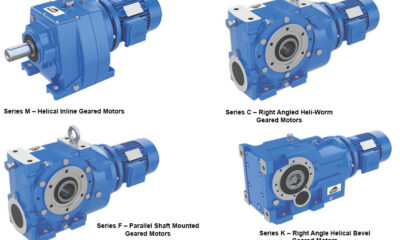
SEEPEX has introduced BN pumps with Smart Joint Access (SJA), engineered for the reliable and precise transfer of abrasive, corrosive, and chemical media in mining and construction. Designed for rock blasting, the pump features a large inspection opening for quick joint checks, a compact footprint for mobile or skid-mounted installations, and flexible drive and material options for consistent performance and uptime.

“Operators can inspect joints quickly and rely on precise pumping of shear-sensitive and abrasive emulsions,” said Magalie Levray, Global Business Development Manager Mining at SEEPEX. “This is particularly critical in rock blasting, where every borehole counts for productivity.” Industry Context

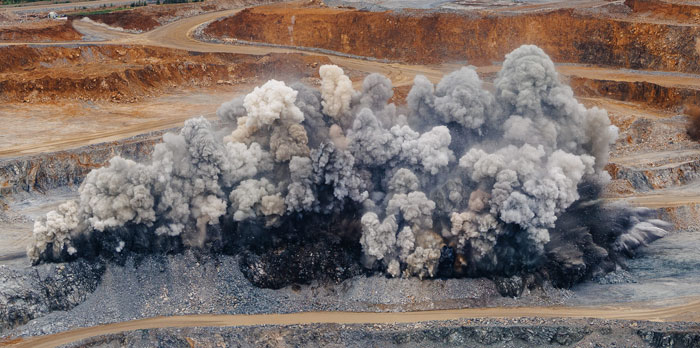
Rock blasting is essential for extracting hard rock and shaping safe excavation profiles in mining and construction. Accurate and consistent loading of explosive emulsions ensures controlled fragmentation, protects personnel, and maximizes productivity. Even minor deviations in pumping can cause delays or reduce product quality. BN pumps with SJA support routine maintenance and pre-operation checks by allowing fast verification of joint integrity, enabling more efficient operations.

Always Inspection Ready

Smart Joint Access is designed for inspection-friendly operations. The large inspection opening in the suction housing provides direct access to both joints, enabling rapid pre-operation checks while maintaining high operational reliability. Technicians can assess joint condition quickly, supporting continuous, reliable operation.

Key Features

  • Compact Footprint: Fits truck-mounted mobile units, skid-mounted systems, and factory installations.
  • Flexible Drive Options: Compact hydraulic drive or electric drive configurations.
  • Hydraulic Efficiency: Low-displacement design reduces oil requirements and supports low total cost of ownership.
  • Equal Wall Stator Design: Ensures high-pressure performance in a compact footprint.
  • Material Flexibility: Stainless steel or steel housings, chrome-plated rotors, and stators in NBR, EPDM, or FKM.

Operators benefit from shorter inspection cycles, reliable dosing, seamless integration, and fast delivery through framework agreements, helping to maintain uptime in critical rock blasting processes.

Applications – Optimized for Rock Blasting

BN pumps with SJA are designed for mining, tunneling, quarrying, civil works, dam construction, and other sectors requiring precise handling of abrasive or chemical media. They provide robust performance while enabling fast, reliable inspection and maintenance.With SJA, operators can quickly access both joints without disassembly, ensuring emulsions are transferred accurately and consistently. This reduces downtime, preserves product integrity, and supports uniform dosing across multiple bore holes.

With the Smart Joint Access inspection opening, operators can quickly access and assess the condition of both joints without disassembly, enabling immediate verification of pump readiness prior to blast hole loading. This allows operators to confirm that emulsions are transferred accurately and consistently, protecting personnel, minimizing product degradation, and maintaining uniform dosing across multiple bore holes.

The combination of equal wall stator design, compact integration, flexible drives, and progressive cavity pump technology ensures continuous, reliable operation even in space-limited, high-pressure environments.

From Inspection to Operation

A leading explosives provider implemented BN pumps with SJA in open pit and underground operations. By replacing legacy pumps, inspection cycles were significantly shortened, allowing crews to complete pre-operation checks and return mobile units to productive work faster. Direct joint access through SJA enabled immediate verification, consistent emulsion dosing, and reduced downtime caused by joint-related deviations.

“The inspection opening gives immediate confidence that each joint is secure before proceeding to bore holes,” said a site technician. “It allows us to act quickly, keeping blasting schedules on track.”

Framework agreements ensured rapid pump supply and minimal downtime, supporting multi-site operations across continents

Continue Reading

Concrete

Digital process control is transforming grinding

Published

on

By

Shares

Satish Maheshwari, Chief Manufacturing Officer, Shree Cement, delves into how digital intelligence is transforming cement grinding into a predictive, stable, and energy-efficient operation.

Grinding sits at the heart of cement manufacturing, accounting for the largest share of electrical energy consumption. In this interview, Satish Maheshwari, Chief Manufacturing Officer, Shree Cement, explains how advanced grinding technologies, data-driven optimisation and process intelligence are transforming mill performance, reducing power consumption and supporting the industry’s decarbonisation goals.

How has the grinding process evolved in Indian cement plants to meet rising efficiency and sustainability expectations?
Over the past decade, Indian cement plants have seen a clear evolution in grinding technology, moving from conventional open-circuit ball mills to high-efficiency closed-circuit systems, Roller Press–Ball Mill combinations and Vertical Roller Mills (VRMs). This shift has been supported by advances in separator design, improved wear-resistant materials, and the growing use of digital process automation. As a result, grinding units today operate as highly controlled manufacturing systems where real-time data, process intelligence and efficient separation work together to deliver stable and predictable performance.
From a sustainability perspective, these developments directly reduce specific power consumption, improve equipment reliability and lower the carbon footprint per tonne of cement produced.

How critical is grinding optimisation in reducing specific power consumption across ball mills and VRMs?
Grinding is the largest consumer of electrical energy in a cement plant, which makes optimisation one of the most effective levers for improving energy efficiency. In ball mill systems, optimisation through correct media selection, charge design, diaphragm configuration, ventilation management and separator tuning can typically deliver power savings of 5 per cent to 8 per cent. In VRMs, fine-tuning airflow balance, grinding pressure, nozzle ring settings, and circulating load can unlock energy reductions in the range of 8 per cent to 12 per cent. Across both systems, sustained operation under stable conditions is critical. Consistency in mill loading and operating parameters improves quality control, reduces wear, and enables long-term energy efficiency, making stability a key operational KPI.

What challenges arise in maintaining consistent cement quality when using alternative raw materials and blended compositions?
The increased use of alternative raw materials and supplementary cementitious materials (SCM) introduces variability in chemistry, moisture, hardness, and loss on ignition. This variability makes it more challenging to maintain consistent fineness, particle size distribution, throughput and downstream performance parameters such as setting time, strength development and workability.
As clinker substitution levels rise, grinding precision becomes increasingly important. Even small improvements in consistency enable higher SCM utilisation without compromising cement performance.
Addressing these challenges requires stronger feed homogenisation, real-time quality monitoring and dynamic adjustment of grinding parameters so that output quality remains stable despite changing input characteristics.

How is digital process control changing the way grinding performance is optimised?
Digital process control is transforming grinding from an operator-dependent activity into a predictive, model-driven operation. Technologies such as online particle size and residue analysers, AI-based optimisation platforms, digital twins for VRMs and Roller Press systems, and advanced process control solutions are redefining how performance is managed.
At the same time, workforce roles are evolving. Operators are increasingly focused on interpreting data trends through digital dashboards and responding proactively rather than relying on manual interventions. Together, these tools improve mill stability, enable faster response to disturbances, maintain consistent fineness, and reduce specific energy consumption while minimising manual effort.

How do you see grinding technologies supporting the industry’s low-clinker and decarbonisation goals?
Modern grinding technologies are central to the industry’s decarbonisation efforts. They enable higher incorporation of SCMs such as fly ash, slag, and limestone, improve particle fineness and reactivity, and reduce overall power consumption. Efficient grinding makes it possible to maintain consistent cement quality at lower clinker factors. Every improvement in energy intensity and particle engineering directly contributes to lower CO2 emissions.
As India moves toward low-carbon construction, precision grinding will remain a foundational capability for delivering sustainable, high-performance cement aligned with national and global climate objectives.

How much potential does grinding optimisation hold for immediate energy
and cost savings?
The potential for near-term savings is substantial. Without major capital investment, most plants can achieve 5 per cent to 15 per cent power reduction through measures such as improving separator efficiency, optimising ventilation, refining media grading, and fine-tuning operating parameters.
With continued capacity expansion across India, advanced optimisation tools will help ensure that productivity gains are not matched by proportional increases in energy demand. Given current power costs, this translates into direct and measurable financial benefits, making grinding optimisation one of the fastest-payback operational initiatives available to cement manufacturers today.

Continue Reading

Concrete

Refractory demands in our kiln have changed

Published

on

By

Shares

Radha Singh, Senior Manager (P&Q), Shree Digvijay Cement, points out why performance, predictability and life-cycle value now matter more than routine replacement in cement kilns.

As Indian cement plants push for higher throughput, increased alternative fuel usage and tighter shutdown cycles, refractory performance in kilns and pyro-processing systems is under growing pressure. In this interview, Radha Singh, Senior Manager (P&Q), Shree Digvijay Cement, shares how refractory demands have evolved on the ground and how smarter digital monitoring is improving kiln stability, uptime and clinker quality.

How have refractory demands changed in your kiln and pyro-processing line over the last five years?
Over the last five years, refractory demands in our kiln and pyro line have changed. Earlier, the focus was mostly on standard grades and routine shutdown-based replacement. But now, because of higher production loads, more alternative fuels and raw materials (AFR) usage and greater temperature variation, the expectation from refractory has increased.
In our own case, the current kiln refractory has already completed around 1.5 years, which itself shows how much more we now rely on materials that can handle thermal shock, alkali attack and coating fluctuations. We have moved towards more stable, high-performance linings so that we don’t have to enter the kiln frequently for repairs.
Overall, the shift has been from just ‘installation and run’ to selecting refractories that give longer life, better coating behaviour and more predictable performance under tougher operating conditions.

What are the biggest refractory challenges in the preheater, calciner and cooler zones?
• Preheater: Coating instability, chloride/sulphur cycles and brick erosion.
• Calciner: AFR firing, thermal shock and alkali infiltration.
• Cooler: Severe abrasion, red-river formation and mechanical stress on linings.
Overall, the biggest challenge is maintaining lining stability under highly variable operating conditions.

How do you evaluate and select refractory partners for long-term performance?
In real plant conditions, we don’t select a refractory partner just by looking at price. First, we see their past performance in similar kilns and whether their material has actually survived our operating conditions. We also check how strong their technical support is during shutdowns, because installation quality matters as much as the material itself.
Another key point is how quickly they respond during breakdowns or hot spots. A good partner should be available on short notice. We also look at their failure analysis capability, whether they can explain why a lining failed and suggest improvements.
On top of this, we review the life they delivered in the last few campaigns, their supply reliability and their willingness to offer plant-specific custom solutions instead of generic grades. Only a partner who supports us throughout the life cycle, which includes selection, installation, monitoring and post-failure analysis, fits our long-term requirement.

Can you share a recent example where better refractory selection improved uptime or clinker quality?
Recently, we upgraded to a high-abrasion basic brick at the kiln outlet. Earlier we had frequent chipping and coating loss. With the new lining, thermal stability improved and the coating became much more stable. As a result, our shutdown interval increased and clinker quality remained more consistent. It had a direct impact on our uptime.

How is increased AFR use affecting refractory behaviour?
Increased AFR use is definitely putting more stress on the refractory. The biggest issue we see daily is the rise in chlorine, alkalis and volatiles, which directly attack the lining, especially in the calciner and kiln inlet. AFR firing is also not as stable as conventional fuel, so we face frequent temperature fluctuations, which cause more thermal shock and small cracks in the lining.
Another real problem is coating instability. Some days the coating builds too fast, other days it suddenly drops, and both conditions impact refractory life. We also notice more dust circulation and buildup inside the calciner whenever the AFR mix changes, which again increases erosion.
Because of these practical issues, we have started relying more on alkali-resistant, low-porosity and better thermal shock–resistant materials to handle the additional stress coming from AFR.

What role does digital monitoring or thermal profiling play in your refractory strategy?
Digital tools like kiln shell scanners, IR imaging and thermal profiling help us detect weakening areas much earlier. This reduces unplanned shutdowns, helps identify hotspots accurately and allows us to replace only the critical sections. Overall, our maintenance has shifted from reactive to predictive, improving lining life significantly.

How do you balance cost, durability and installation speed during refractory shutdowns?
We focus on three points:
• Material quality that suits our thermal profile and chemistry.
• Installation speed, in fast turnarounds, we prefer monolithic.
• Life-cycle cost—the cheapest material is not the most economical. We look at durability, future downtime and total cost of ownership.
This balance ensures reliable performance without unnecessary expenditure.

What refractory or pyro-processing innovations could transform Indian cement operations?
Some promising developments include:
• High-performance, low-porosity and nano-bonded refractories
• Precast modular linings to drastically reduce shutdown time
• AI-driven kiln thermal analytics
• Advanced coating management solutions
• More AFR-compatible refractory mixes

These innovations can significantly improve kiln stability, efficiency and maintenance planning across the industry.

Continue Reading

Trending News

SUBSCRIBE TO THE NEWSLETTER


Don't miss out on valuable insights and opportunities to connect with like minded professionals.


    This will close in 0 seconds