Connect with us

Concrete

When Cement Meets Climate Action
Published

on

Shares

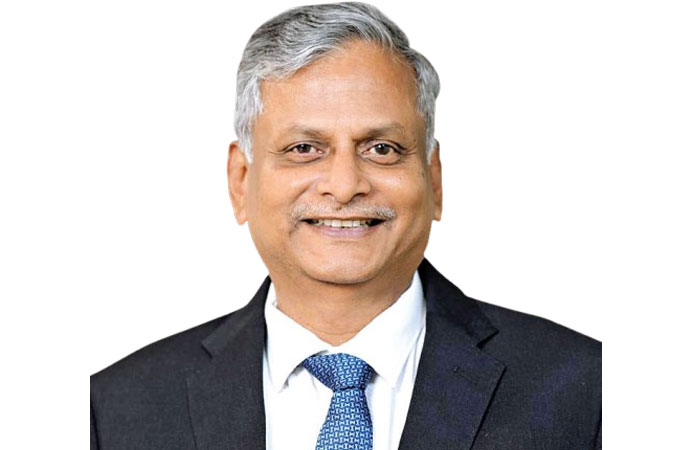
Amit Banka, Founder and CEO, WeNaturalists, discusses the success of CCUS depends on collaboration, carbon literacy and shared digital ecosystems rather than isolated technologies.

India’s cement industry churns out roughly
340 million tonnes annually. It is the lifeline of our infrastructure, the backbone of our urban aspirations, and the reason our highways connect villages to cities. But here lies an uncomfortable truth: every tonne of cement produced emits nearly one tonne of CO2. The industry accounts for 5.8 per cent of India’s total carbon emissions—a figure that challenges even the most committed sustainability advocates.
We stand at a peculiar crossroads. India’s infrastructure ambitions roar forward with plans for highways, hospitals, schools, and homes to serve 1.4 billion people. Simultaneously, the climate emergency demands action at unprecedented scales. The cement industry cannot simply reduce production. Yet it must transform. This is where Carbon Capture, Utilisation and Storage (CCUS) enters—not as a distant fantasy, but as urgent infrastructure for change.

India’s CCUS moment has arrived
It is encouraging that India has moved beyond treating CCUS as laboratory theory. The Department of Science and Technology (DST) has launched five carbon capture and utilisation testbeds specifically within the cement sector, representing the first such integrated cluster initiative in India. These are not token projects. They bring together premier research institutions—IIT Bombay, IIT Kanpur, IIT Madras—with cement leaders including JSW Cement, Dalmia Cement, and UltraTech, structured through an innovative Public-Private Partnership model.
Each testbed attacks a different dimension. One transforms CO2 into lightweight construction blocks. Another employs mineralisation techniques, literally converting pollution into solid minerals. A third uses vacuum swing adsorption technology to separate captured CO2 from cement kiln gases. Together, they represent India’s first real attempt at institutionalising CCUS for hard-to-abate sectors.
The Global Cement and Concrete Association (GCCA) India, collaborating with TERI, has released India’s decarbonisation roadmap targeting net-zero CO2 emissions by 2070. Alongside government support and industry commitment, there now exists a structured pathway. Yet a critical question lingers: what will determine whether this remains a blueprint or becomes lived reality?
The answer: platforms that connect, literacy that educates, and ecosystems that accelerate.

Breaking the silo trap: Why collaboration platforms matter
Consider the challenge that keeps cement plant managers awake: CCUS economics do not work in isolation. A cement plant capturing CO2 must find somewhere to store it. Transport costs become prohibitive if storage sites are distant. Utilisation opportunities for captured CO2—whether in enhanced oil recovery, chemicals production, or building materials—scatter across different industries and geographies. The traditional model—where each facility independently solves its own emissions problem—fails spectacularly when costs explode and timelines extend endlessly.
This is precisely where industrial hubs reshape the game.
Collaborative CCUS hubs concentrate captured carbon from multiple emitters, transport it through shared pipeline infrastructure, and coordinate utilisation and storage at scale. The Nordics have already validated this approach. Norway’s Northern Lights project receives CO2 from various industrial emitters, centralises management, and delivers offshore sequestration—reducing per-tonne costs substantially and making the business case credible.
In India, GCCA and DST explicitly emphasise hub identification and development potential, particularly recognising that certain regions possess optimal clustering opportunities. Yet hubs cannot materialise through goodwill alone. They require coordination across cement manufacturers, technology providers, logistics operators, carbon verification agencies, and government regulators—stakeholders with different incentives, geographies, and timelines. This is where collaborative digital platforms become essential infrastructure. When a cement manufacturer explores CCUS partnerships, when researchers seek industrial pilot sites, when policymakers track implementation progress across regions—these activities demand platforms that create real-time visibility and alignment.
Platforms like WeNaturalists recognise that climate action cannot thrive in information silos. The ability to facilitate multi-stakeholder collaborations, enable geographic discovery, manage complex projects transparently, and connect professionals horizontally creates conditions for faster partnership formation and deployment. Here is the essential insight: cement’s CCUS future depends less on any single breakthrough technology than on structures that connect the innovators, implementers, financiers, and regulators who will collectively bring CCUS to scale. Collaborative platforms are that connective infrastructure.

Carbon literacy crisis: Why knowledge is hard infrastructure
Spend time in any cement plant, and an interesting pattern emerges. Senior managers articulate climate commitments at macro levels. Plant engineers master their equipment intimately. Yet the connective tissue—the shared language about embodied carbon, capture methodologies, utilisation economics, and storage verification—often feels startlingly thin.
This is not knowledge scarcity. It is literacy scarcity. Carbon literacy means more than understanding that CO2 harms the climate. It means cement professionals grasping why their specific plant’s emissions profile matters, how different CCUS technologies trade off between energy consumption and capture rates, where utilisation opportunities align with their operational reality, and what governance frameworks ensure verified, permanent carbon sequestration.
Cement manufacturing contributes approximately 8 per cent of global carbon emissions. Addressing this requires professionals who understand CCUS deeply enough to make capital decisions, troubleshoot implementation challenges, and convince boards to invest substantial capital.
Current training pathways exist. The Decarbonising Cement Manufacture Course provides comprehensive six-week programmes covering capture technologies and energy efficiency. Specialist trainers offer bespoke carbon programmes for construction professionals. Yet in India’s cement sector, systematic carbon literacy infrastructure remains patchy. This creates a bottleneck: adoption lags not because the technology is unproven, but because insufficient professionals understand it well enough to champion deployment.
Consider the DST testbeds through a different lens: they are not merely technology incubators. They are the training grounds for India’s first generation of CCUS practitioners. These researchers, engineers, and technicians will migrate across the sector, carrying deep understanding of capture chemistry, operational protocols, verification procedures, and economic models. They become multipliers—transforming isolated expertise into distributed, sector-wide capability.
The cement industry must embed carbon literacy systematically. This means formal training programmes, industry forums for peer learning, and platforms connecting practitioners horizontally so they absorb lessons from others’ implementation journeys. When professionals understand not just their speciality but the broader CCUS ecosystem, they accelerate adoption across the entire value chain.
This is precisely why WeNaturalists’ emphasis on upskilling and awareness programs aligns so powerfully with cement’s decarbonisation challenge. Platforms that connect professionals, facilitate knowledge sharing, and highlight career pathways in climate solutions create the enabling environment for literacy to flourish.

Digital rcosystems as acceleration infrastructure
Visualise this scenario: An IIT team develops a catalyst improving CO2 capture efficiency by 15 per cent. A cement manufacturer in Maharashtra plans a CCUS retrofit. A logistics company specialises in cryogenic transport. A carbon verification agency operates across multiple projects. A development bank seeks green cement opportunities. A cement associations’ innovation team seeks to track
emerging solutions.
Without coordinated digital infrastructure, this innovation journey takes years—if it occurs at all. Findings get published in journals. The cement company never learns about them. The logistics operator never discovers the opportunity. The capital provider never assembles the deal. With digital ecosystems, this timeline collapses. Innovation visibility becomes immediate. Partnerships form faster. Capital confidence increases. Implementation accelerates.
Digital ecosystems serve critical functions in CCUS scaling. They make R&D outputs visible to industry practitioners in real-time, not confined to academic journals or conference abstracts. When one cement plant solves an operational challenge with CCUS, others learn instantly rather than independently rediscovering the solution. They create transparency around carbon accounting and verification, building credibility in carbon credits and storage durability. They coordinate fragmented supply chains—capture, transport, utilisation, and storage—from isolated silos into functioning value chains.
The DST testbeds represent networked innovation clusters. Their impact multiplies exponentially if findings flow through digital platforms. When IIT Bombay’s catalyst-based system produces operational data, that intelligence should reach cement manufacturers, equipment suppliers, and policymakers in real-time, not wait for annual reports.
WeNaturalists infrastructure for project management, community building, network transparency, and cross-geographic data analysis exemplifies this approach. The platform enables research-to-deployment acceleration by making opportunities visible, connecting capabilities with challenges, and providing data infrastructure for monitoring progress.
There is an additional dimension often overlooked. Digital platforms democratise opportunity access. A researcher in a Tier-2 city discovers CCUS projects globally. A cement worker interested in green skills finds training opportunities. A small-scale equipment supplier gains visibility to larger ecosystem players. This is not charity; it is economic efficiency—leveraging India’s entire talent pool for decarbonisation
rather than concentrating opportunities among established incumbents.

The inflection point
India’s cement industry occupies a remarkable moment. CCUS technology pathways are mapped. Government support flows through DST testbeds and NITI Aayog coordination. Industry commitment is visible in the GCCA roadmap. What determines whether these align into scaled deployment? Three interlocking elements.
First: Collaborative platforms that align stakeholder incentives and reduce transaction costs for partnership formation.
Second: Carbon literacy programmes that upskill the workforce beyond their specialised roles toward integrated understanding of the entire decarbonisation ecosystem.
Third: Digital ecosystems that accelerate research-to-deployment cycles, create transparency, and democratise opportunity access.
None suffice independently. Technology without collaboration becomes orphaned innovation. Collaboration without literacy moves glacially.
Both without digital infrastructure remain invisible and fragmented.
India’s cement industry has always embodied stories of scale—scaled production, scaled infrastructure, scaled built environments. The next chapter must be scale coupled with wisdom: the wisdom to connect what requires connecting, educate what requires educating, and accelerate what requires accelerating.
Platforms like WeNaturalists understand this intuitively. They do not seek to replace traditional industry structures or government roles. Instead, they provide connective tissue allowing research, regulation, investment, implementation, and continuous learning to move in concert.
India’s decarbonisation pathway for cement depends less on any single innovation than on our collective ability to connect, learn, and accelerate together. The technology is ready. The moment is now. What remains is building—and building better—the platforms and people networks that transform ambition into action.

About the author:
Amit Banka, Founder and CEO, WeNaturalists, is a business builder and ecosystem creator focused on driving nature-positive growth by combining media, digital platforms, sustainability, and strategic investments.

Concrete

FORNNAX Appoints Dieter Jerschl as Sales Partner for Central Europe

Published

on

By

Shares

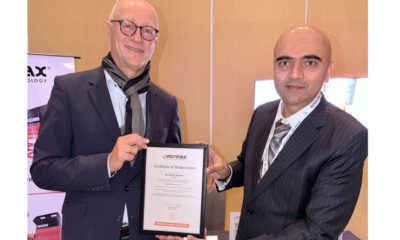
FORNNAX TECHNOLOGY has appointed industry veteran Dieter Jerschl as its new sales partner in Germany to strengthen its presence across Central Europe. The partnership aims to accelerate the adoption of FORNNAX’s high-capacity, sustainable recycling solutions while building long-term regional capabilities.

FORNNAX TECHNOLOGY, one of the leading advanced recycling equipment manufacturers, has announced the appointment of a new sales partner in Germany as part of its strategic expansion into Central Europe. The company has entered into a collaborative agreement with Mr. Dieter Jerschl, a seasoned industry professional with over 20 years of experience in the shredding and recycling sector, to represent and promote FORNNAX’s solutions across key European markets.

Mr. Jerschl brings extensive expertise from his work with renowned companies such as BHS, Eldan, Vecoplan, and others. Over the course of his career, he has successfully led the deployment of both single machines and complete turnkey installations for a wide range of applications, including tyre recycling, cable recycling, municipal solid waste, e-waste, and industrial waste processing.

Speaking about the partnership, Mr. Jerschl said,
“I’ve known FORNNAX for over a decade and have followed their growth closely. What attracted me to this collaboration is their state-of-the-art & high-capacity technology, it is powerful, sustainable, and economically viable. There is great potential to introduce FORNNAX’s innovative systems to more markets across Europe, and I am excited to be part of that journey.”

The partnership will primarily focus on Central Europe, including Germany, Austria, and neighbouring countries, with the flexibility to extend the geographical scope based on project requirements and mutual agreement. The collaboration is structured to evolve over time, with performance-driven expansion and ongoing strategic discussions with FORNNAX’s management. The immediate priority is to build a strong project pipeline and enhance FORNNAX’s brand presence across the region.

FORNNAX’s portfolio of high-performance shredding and pre-processing solutions is well aligned with Europe’s growing demand for sustainable and efficient waste treatment technologies. By partnering with Mr. Jerschl—who brings deep market insight and established industry relationships—FORNNAX aims to accelerate adoption of its solutions and participate in upcoming recycling projects across the region.

As part of the partnership, Mr. Jerschl will also deliver value-added services, including equipment installation, maintenance, and spare parts support through a dedicated technical team. This local service capability is expected to ensure faster project execution, minimise downtime, and enhance overall customer experience.

Commenting on the long-term vision, Mr. Jerschl added,
“We are committed to increasing market awareness and establishing new reference projects across the region. My goal is not only to generate business but to lay the foundation for long-term growth. Ideally, we aim to establish a dedicated FORNNAX legal entity or operational site in Germany over the next five to ten years.”

For FORNNAX, this partnership aligns closely with its global strategy of expanding into key markets through strong regional representation. The company believes that local partnerships are critical for navigating complex market dynamics and delivering solutions tailored to region-specific waste management challenges.

“We see tremendous potential in the Central European market,” said Mr. Jignesh Kundaria, Director and CEO of FORNNAX.
“Partnering with someone as experienced and well-established as Mr. Jerschl gives us a strong foothold and allows us to better serve our customers. This marks a major milestone in our efforts to promote reliable, efficient and future-ready recycling solutions globally,” he added.

This collaboration further strengthens FORNNAX’s commitment to environmental stewardship, innovation, and sustainable waste management, supporting the transition toward a greener and more circular future.


Continue Reading

Concrete

Budget 2026–27 infra thrust and CCUS outlay to lift cement sector outlook

Published

on

By

Shares

Higher capex, city-led growth and CCUS funding improve demand visibility and decarbonisation prospects for cement

Mumbai

Cement manufacturers have welcomed the Union Budget 2026–27’s strong infrastructure thrust, with public capital expenditure increased to Rs 12.2 trillion, saying it reinforces infrastructure as the central engine of economic growth and strengthens medium-term prospects for the cement sector. In a statement, the Cement Manufacturers’ Association (CMA) has welcomed the Union budget 2026-27 for reinforcing the ambitions for the nation’s growth balancing the aspirations of the people through inclusivity inspired by the vision of Narendra Modi, Prime Minister of India, for a Viksit Bharat by 2047 and Atmanirbharta.

The budget underscores India’s steady economic trajectory over the past 12 years, marked by fiscal discipline, sustained growth and moderate inflation, and offers strong demand visibility for infrastructure linked sectors such as cement.

The Budget’s strong infrastructure push, with public capital expenditure rising from Rs 11.2 trillion in fiscal year 2025–26 to Rs 12.2 trillion in fiscal year 2026–27, recognises infrastructure as the primary anchor for economic growth creating positive prospects for the Indian cement industry and improving long term visibility for the cement sector. The emphasis on Tier 2 and Tier 3 cities with populations above 5 lakh and the creation of City Economic Regions (CERs) with an allocation of Rs 50 billion per CER over five years, should accelerate construction activity across housing, transport and urban services, supporting broad based cement consumption.

Logistics and connectivity measures announced in the budget are particularly significant for the cement industry. The announcement of new dedicated freight corridors, the operationalisation of 20 additional National Waterways over the next five years, the launch of the Coastal Cargo Promotion Scheme to raise the modal share of waterways and coastal shipping from 6 per cent to 12 per cent by 2047, and the development of ship repair ecosystems should enhance multimodal freight efficiency, reduce logistics costs and improve the sector’s carbon footprint. The announcement of seven high speed rail corridors as growth corridors can be expected to further stimulate regional development and construction demand.

Commenting on the budget, Parth Jindal, President, Cement Manufacturers’ Association (CMA), said, “As India advances towards a Viksit Bharat, the three kartavya articulated in the Union Budget provide a clear context for the Nation’s growth and aspirations, combining economic momentum with capacity building and inclusive progress. The Cement Manufacturers’ Association (CMA) appreciates the Union Budget 2026-27 for the continued emphasis on manufacturing competitiveness, urban development and infrastructure modernisation, supported by over 350 reforms spanning GST simplification, labour codes, quality control rationalisation and coordinated deregulation with States. These reforms, alongside the Budget’s focus on Youth Power and domestic manufacturing capacity under Atmanirbharta, stand to strengthen the investment environment for capital intensive sectors such as Cement. The Union Budget 2026-27 reflects the Government’s focus on infrastructure led development emerging as a structural pillar of India’s growth strategy.”

He added, “The Rs 200 billion CCUS outlay for various sectors, including Cement, fundamentally alters the decarbonisation landscape for India’s emissions intensive industries. CCUS is a significant enabler for large scale decarbonisation of industries such as Cement and this intervention directly addresses the technology and cost requirements of the Cement sector in context. The Cement Industry, fully aligned with the Government of India’s Net Zero commitment by 2070, views this support as critical to enabling the adoption and scale up of CCUS technologies while continuing to meet the Country’s long term infrastructure needs.”

Dr Raghavpat Singhania, Vice President, CMA, said, “The government’s sustained infrastructure push supports employment, regional development and stronger local supply chains. Cement manufacturing clusters act as economic anchors across regions, generating livelihoods in construction, logistics and allied sectors. The budget’s focus on inclusive growth, execution and system level enablers creates a supportive environment for responsible and efficient expansion offering opportunities for economic growth and lending momentum to the cement sector. The increase in public capex to Rs 12.2 trillion, the focus on Tier 2 and Tier 3 cities, and the creation of City Economic Regions stand to strengthen the growth of the cement sector. We welcome the budget’s emphasis on tourism, cultural and social infrastructure, which should broaden construction activity across regions. Investments in tourism facilities, heritage and Buddhist circuits, regional connectivity in Purvodaya and North Eastern States, and the strengthening of emergency and trauma care infrastructure in district hospitals reinforce the cement sector’s role in enabling inclusive growth.”

CMA also noted the Government’s continued commitment to fiscal discipline, with the fiscal deficit estimated at 4.3 per cent of GDP in FY27, reinforcing macroeconomic stability and investor confidence.

Continue Reading

Concrete

Steel: Shielded or Strengthened?

CW explores the impact of pro-steel policies on construction and infrastructure and identifies gaps that need to be addressed.

Published

on

By

Shares

Going forward, domestic steel mills are targeting capacity expansion
of nearly 40 per cent through till FY31, adding 80-85 mt, translating
into an investment pipeline of $ 45-50 billion. So, Jhunjhunwala points
out that continuing the safeguard duty will be vital to prevent a surge
in imports and protect domestic prices from external shocks. While in
FY26, the industry operating profit per tonne is expected to hold at
around $ 108, similar to last year, the industry’s earnings must
meaningfully improve from hereon to sustain large-scale investments.
Else, domestic mills could experience a significant spike in industry
leverage levels over the medium term, increasing their vulnerability to
external macroeconomic shocks.(~$ 60/tonne) over the past one month,
compressing the import parity discount to ~$ 23-25/tonne from previous
highs of ~$ 70-90/tonne, adds Jhunjhunwala. With this, he says, “the
industry can expect high resistance to further steel price increases.”

Domestic HRC prices have increased by ~Rs 5,000/tonne
“Aggressive
capacity additions (~15 mt commissioned in FY25, with 5 mt more by
FY26) have created a supply overhang, temporarily outpacing demand
growth of ~11-12 mt,” he says…

To read the full article Click Here

Continue Reading

Trending News

SUBSCRIBE TO THE NEWSLETTER


Don't miss out on valuable insights and opportunities to connect with like minded professionals.


    This will close in 0 seconds