Connect with us

Concrete

Policy is the central fulcrum for CCUS success

Published

on

Shares

CCUS is positioned as the only scalable pathway for India’s cement industry to achieve deep decarbonisation. Lovish Ahuja, Chief Sustainability Officer, Dalmia Cement (Bharat) explores a balanced approach combining utilisation with long-term storage.

CCUS is emerging as a critical lever for deep decarbonisation in the cement industry, especially as traditional efficiency measures reach their limits. In this interaction, Lovish Ahuja, Chief Sustainability Officer, Dalmia Cement (Bharat), shares insights on India’s CCUS readiness, key challenges, and the path from pilots to large-scale adoption.

How critical is CCUS to achieving deep decarbonisation in cement compared to alternative levers like clinker substitution and energy transition?
Deep decarbonisation in the cement industry is uniquely challenging because most emissions stem from calcination—which inherently releases carbon dioxide. This means that even a fully renewable powered cement plant would continue to generate substantial process related CO2 emissions. In India, the industry has already achieved meaningful reductions through improved energy efficiency, increased use of alternative fuels, and expanded adoption of Secondary Cementitious Materials (SCMs) such as fly ash and slag. However, these interventions are nearing their technical and economic limits due to the fundamental chemistry and process requirements of cement production. Given these constraints, Carbon Capture, Utilisation, and Storage (CCUS) emerges as the only scalable and durable pathway to push emissions below the 350–400 kg CO2 per tonne threshold and enable deeper, sector wide decarbonisation. For India’s large and growing cement capacity, CCUS becomes indispensable for aligning the industry with long term national and global climate goals.

What stage of CCUS readiness is the Indian cement sector currently at—pilot, demonstration, or early commercial adoption?
India’s cement sector CCUS landscape remains nascent, with activity yet to reach genuine pilot or demonstration scale. While government led initiatives have announced targeted testbeds and several producers are exploring capture technologies, no integrated, full scale CCUS project has reached financial closure or commercial operation. Even so, recent years have seen meaningful progress in building domestic engineering capability, adapting capture technologies to Indian flue gas conditions, and improving clarity on utilisation and storage pathways. In contrast, several international first mover projects already have mechanically complete or operational capture units. These offer useful benchmarks, but replication in India requires context specific engineering to accommodate local constraints such as power reliability, water availability, high dust loads, and cluster based transport and storage logistics. The key barrier now is not technical feasibility but the financial ecosystem—demanding stronger government support through grants, carbon market mechanisms, and risk sharing frameworks.
In the near term, 1–2 tonne per day CCU testbeds are expected to come online with support from the Department of Science & Technology (DST). A proactive, mission mode approach from the government will be essential to accelerate deployment and move the sector toward large scale commercial readiness.

What are the biggest technical challenges of integrating carbon capture into existing Indian kiln systems without disrupting productivity?
One of the major challenges in deploying CCUS at cement plants is the significant space requirement. Most brownfield expansion sites—and even many greenfield facilities—are already tightly configured. With capacity expected to grow over the next 30–40 years, finding adequate space for capture trains, blowers, pre treatment units, compression systems, and intermediate CO2 storage becomes extremely difficult.
A second constraint is input gas quality. Cement flue gas carries high dust loads along with SOx, NOx, and other trace elements, all of which accelerate solvent or membrane degradation. This necessitates complex and costly pre treatment before capture can begin. Utilities present a third major challenge. Current carbon capture technologies demand substantial heat and power, yet cement plants typically operate without surplus steam or electricity. Since CCUS would significantly increase total energy demand—most of which would need to come from renewable sources—ensuring a stable and adequate energy supply becomes a major hurdle. Finally, once CO2 is captured, large scale transport, storage, or utilisation remains a technically and logistically demanding challenge.

How does the high cost of CCUS impact cement pricing, and who ultimately bears this cost—the producer, policymaker, or consumer?
CCUS significantly shifts the cost curve for cement production. Beyond carbon capture itself, the added requirements for compression, purification, transport, and storage introduce substantial capital and operating costs. Depending on the technology pathway and site conditions, the fully loaded cost of CCUS can more than double the price of low carbon cement compared with conventional production. For a commodity sector with thin margins, absorbing or passing through such costs is extremely challenging without external financial support. Experiences from advanced markets explain how large scale CCUS deployment has been possible there. In Europe, cement producers benefit from free EU ETS allowances, access to the EU Innovation Fund for large scale projects, low cost renewable power, and policy mechanisms that support price premiums for green or low carbon materials. These instruments collectively bridge upfront capital needs and early stage learning costs. Yet even with this extensive support, CCUS projects remain uncommon—illustrating the scale of the challenge for India, where enabling frameworks are still evolving and markets are highly price sensitive.
That said, there are pockets where cost pass through is feasible. In premium housing, using low carbon or net zero materials typically raises overall project costs by only 2 per cent to 3 per cent. This suggests that the luxury and high value real estate segment could serve as an early adopter—creating the first demand signal needed to scale CCUS enabled cement and build broader market acceptance.

What role do carbon utilisation pathways (such as concrete curing, fuels, or chemicals) realistically play versus long-term geological storage in India?
Utilisation is attractive because it converts a liability into a long term business opportunity. CO2 cured concrete products, synthetic fuels, methanol, and carbonates are among the promising utilisation pathways. In India, industrial symbiosis with refineries, fertiliser plants, and chemical industries can absorb part of the captured CO2, and these avenues should be prioritised to drive early commercial viability. Precast curing also offers a practical near term option, as carbon can be mineralised within controlled logistics and at relatively low cost. However, scale remains a challenge: a single large cement plant emits 1.5–2 million tonnes of CO2 annually—far beyond what current utilisation markets can absorb. Meanwhile, fuels and chemical pathways are energy intensive and require inputs such as green hydrogen, which remain uncompetitive without fiscal support. For these reasons, utilisation alone cannot deliver
Net Zero; CO2 storage will need to serve as the backbone, with utilisation playing an important but supporting role.
On the storage side, India has credible geological options. Offshore saline aquifers, mature oil and gas fields, and basalt formations such as the Deccan Traps offer significant CO2 storage potential. Strategically mapping cement clusters to nearby storage basins can reduce logistics complexity and make CCUS deployment more feasible. The pragmatic approach is clear: utilise where it is easy and economical, store where it is necessary.

How important is government policy support—carbon markets, incentives, or mandates—in making CCUS commercially viable for Indian cement plants?
Policy is the central fulcrum for CCUS success globally, and India is no exception. CCUS requires investment well beyond what market demand alone can support, making grants, fiscal incentives, and robust carbon market mechanisms essential to transition projects from strong environmental concepts to financially bankable solutions. Clear standards are equally critical—covering storage regulations, permitting processes, transport frameworks, CCU product specifications, removal of market barriers, and supportive tax structures. Together, these elements form the foundational prerequisites for CCUS project realisation and scale up. India has begun this journey from a promising starting point. The country’s lead policy think tank, NITI Aayog, has already convened national level workshops, developed detailed policy recommendations, and is progressing toward a dedicated CCUS Mission. Such coordinated policy action will be pivotal in accelerating India’s CCUS ecosystem and enabling commercial deployment at scale.

Can CCUS be scaled across mid-sized and older plants, or will it remain viable only for large, new-generation integrated facilities?
In our view, early CCUS projects will logically cluster around large, modern cement plants, where space constraints are minimal and process as well as energy integration can be optimised. These facilities offer lower incremental costs for integration and better energy efficiency, while their scale naturally improves the economics of carbon capture—positioning them as ideal anchor points for shared CO2 transport and storage infrastructure.
Mid sized and older plants can be considered in later phases, once the value chain is established and sufficient local experience has been built.
However, if older facilities are planning major refurbishment, that window provides an opportunity to incorporate CCUS friendly design choices from the outset, improving long term readiness and reducing retrofit complexity.

Over the next decade, do you see CCUS becoming a competitive advantage or a regulatory necessity for Indian cement manufacturers?
The trajectory of CCUS adoption will depend heavily on policy direction, market sentiment, and the pace of technological maturity. Early movers stand to benefit if green procurement strengthens and embodied carbon performance begins to attract measurable and rewarded premiums. As India progresses toward its Net Zero 2070 target, CCUS will gradually shift from an optional initiative to a necessary compliance requirement. Companies
that invest early—through pilots, supply chain partnerships, and capability building—will be better positioned to optimise cost, execution timelines, and regulatory alignment when mandates and incentives eventually converge.
CCUS should be viewed as both a shield and a sword. It acts as a shield by future proofing assets against long term climate and regulatory risks, and a sword in markets where compliance remains mandatory but enabling support systems are limited. India likely has a 15–20 year window before such pressures fully materialise—time that the cement industry must use to build technical readiness, operational know how, and strategic preparedness for the moment when CCUS becomes unavoidable.

Concrete

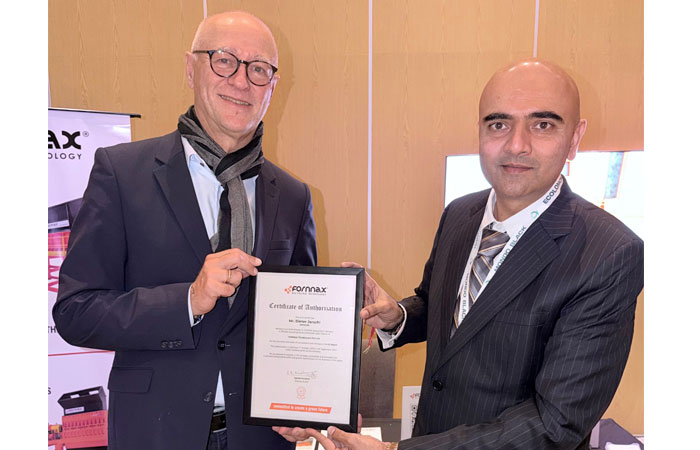
FORNNAX Appoints Dieter Jerschl as Sales Partner for Central Europe

Published

on

By

Shares

FORNNAX TECHNOLOGY has appointed industry veteran Dieter Jerschl as its new sales partner in Germany to strengthen its presence across Central Europe. The partnership aims to accelerate the adoption of FORNNAX’s high-capacity, sustainable recycling solutions while building long-term regional capabilities.

FORNNAX TECHNOLOGY, one of the leading advanced recycling equipment manufacturers, has announced the appointment of a new sales partner in Germany as part of its strategic expansion into Central Europe. The company has entered into a collaborative agreement with Mr. Dieter Jerschl, a seasoned industry professional with over 20 years of experience in the shredding and recycling sector, to represent and promote FORNNAX’s solutions across key European markets.

Mr. Jerschl brings extensive expertise from his work with renowned companies such as BHS, Eldan, Vecoplan, and others. Over the course of his career, he has successfully led the deployment of both single machines and complete turnkey installations for a wide range of applications, including tyre recycling, cable recycling, municipal solid waste, e-waste, and industrial waste processing.

Speaking about the partnership, Mr. Jerschl said,
“I’ve known FORNNAX for over a decade and have followed their growth closely. What attracted me to this collaboration is their state-of-the-art & high-capacity technology, it is powerful, sustainable, and economically viable. There is great potential to introduce FORNNAX’s innovative systems to more markets across Europe, and I am excited to be part of that journey.”

The partnership will primarily focus on Central Europe, including Germany, Austria, and neighbouring countries, with the flexibility to extend the geographical scope based on project requirements and mutual agreement. The collaboration is structured to evolve over time, with performance-driven expansion and ongoing strategic discussions with FORNNAX’s management. The immediate priority is to build a strong project pipeline and enhance FORNNAX’s brand presence across the region.

FORNNAX’s portfolio of high-performance shredding and pre-processing solutions is well aligned with Europe’s growing demand for sustainable and efficient waste treatment technologies. By partnering with Mr. Jerschl—who brings deep market insight and established industry relationships—FORNNAX aims to accelerate adoption of its solutions and participate in upcoming recycling projects across the region.

As part of the partnership, Mr. Jerschl will also deliver value-added services, including equipment installation, maintenance, and spare parts support through a dedicated technical team. This local service capability is expected to ensure faster project execution, minimise downtime, and enhance overall customer experience.

Commenting on the long-term vision, Mr. Jerschl added,
“We are committed to increasing market awareness and establishing new reference projects across the region. My goal is not only to generate business but to lay the foundation for long-term growth. Ideally, we aim to establish a dedicated FORNNAX legal entity or operational site in Germany over the next five to ten years.”

For FORNNAX, this partnership aligns closely with its global strategy of expanding into key markets through strong regional representation. The company believes that local partnerships are critical for navigating complex market dynamics and delivering solutions tailored to region-specific waste management challenges.

“We see tremendous potential in the Central European market,” said Mr. Jignesh Kundaria, Director and CEO of FORNNAX.
“Partnering with someone as experienced and well-established as Mr. Jerschl gives us a strong foothold and allows us to better serve our customers. This marks a major milestone in our efforts to promote reliable, efficient and future-ready recycling solutions globally,” he added.

This collaboration further strengthens FORNNAX’s commitment to environmental stewardship, innovation, and sustainable waste management, supporting the transition toward a greener and more circular future.


Continue Reading

Concrete

Budget 2026–27 infra thrust and CCUS outlay to lift cement sector outlook

Published

on

By

Shares

Higher capex, city-led growth and CCUS funding improve demand visibility and decarbonisation prospects for cement

Mumbai

Cement manufacturers have welcomed the Union Budget 2026–27’s strong infrastructure thrust, with public capital expenditure increased to Rs 12.2 trillion, saying it reinforces infrastructure as the central engine of economic growth and strengthens medium-term prospects for the cement sector. In a statement, the Cement Manufacturers’ Association (CMA) has welcomed the Union budget 2026-27 for reinforcing the ambitions for the nation’s growth balancing the aspirations of the people through inclusivity inspired by the vision of Narendra Modi, Prime Minister of India, for a Viksit Bharat by 2047 and Atmanirbharta.

The budget underscores India’s steady economic trajectory over the past 12 years, marked by fiscal discipline, sustained growth and moderate inflation, and offers strong demand visibility for infrastructure linked sectors such as cement.

The Budget’s strong infrastructure push, with public capital expenditure rising from Rs 11.2 trillion in fiscal year 2025–26 to Rs 12.2 trillion in fiscal year 2026–27, recognises infrastructure as the primary anchor for economic growth creating positive prospects for the Indian cement industry and improving long term visibility for the cement sector. The emphasis on Tier 2 and Tier 3 cities with populations above 5 lakh and the creation of City Economic Regions (CERs) with an allocation of Rs 50 billion per CER over five years, should accelerate construction activity across housing, transport and urban services, supporting broad based cement consumption.

Logistics and connectivity measures announced in the budget are particularly significant for the cement industry. The announcement of new dedicated freight corridors, the operationalisation of 20 additional National Waterways over the next five years, the launch of the Coastal Cargo Promotion Scheme to raise the modal share of waterways and coastal shipping from 6 per cent to 12 per cent by 2047, and the development of ship repair ecosystems should enhance multimodal freight efficiency, reduce logistics costs and improve the sector’s carbon footprint. The announcement of seven high speed rail corridors as growth corridors can be expected to further stimulate regional development and construction demand.

Commenting on the budget, Parth Jindal, President, Cement Manufacturers’ Association (CMA), said, “As India advances towards a Viksit Bharat, the three kartavya articulated in the Union Budget provide a clear context for the Nation’s growth and aspirations, combining economic momentum with capacity building and inclusive progress. The Cement Manufacturers’ Association (CMA) appreciates the Union Budget 2026-27 for the continued emphasis on manufacturing competitiveness, urban development and infrastructure modernisation, supported by over 350 reforms spanning GST simplification, labour codes, quality control rationalisation and coordinated deregulation with States. These reforms, alongside the Budget’s focus on Youth Power and domestic manufacturing capacity under Atmanirbharta, stand to strengthen the investment environment for capital intensive sectors such as Cement. The Union Budget 2026-27 reflects the Government’s focus on infrastructure led development emerging as a structural pillar of India’s growth strategy.”

He added, “The Rs 200 billion CCUS outlay for various sectors, including Cement, fundamentally alters the decarbonisation landscape for India’s emissions intensive industries. CCUS is a significant enabler for large scale decarbonisation of industries such as Cement and this intervention directly addresses the technology and cost requirements of the Cement sector in context. The Cement Industry, fully aligned with the Government of India’s Net Zero commitment by 2070, views this support as critical to enabling the adoption and scale up of CCUS technologies while continuing to meet the Country’s long term infrastructure needs.”

Dr Raghavpat Singhania, Vice President, CMA, said, “The government’s sustained infrastructure push supports employment, regional development and stronger local supply chains. Cement manufacturing clusters act as economic anchors across regions, generating livelihoods in construction, logistics and allied sectors. The budget’s focus on inclusive growth, execution and system level enablers creates a supportive environment for responsible and efficient expansion offering opportunities for economic growth and lending momentum to the cement sector. The increase in public capex to Rs 12.2 trillion, the focus on Tier 2 and Tier 3 cities, and the creation of City Economic Regions stand to strengthen the growth of the cement sector. We welcome the budget’s emphasis on tourism, cultural and social infrastructure, which should broaden construction activity across regions. Investments in tourism facilities, heritage and Buddhist circuits, regional connectivity in Purvodaya and North Eastern States, and the strengthening of emergency and trauma care infrastructure in district hospitals reinforce the cement sector’s role in enabling inclusive growth.”

CMA also noted the Government’s continued commitment to fiscal discipline, with the fiscal deficit estimated at 4.3 per cent of GDP in FY27, reinforcing macroeconomic stability and investor confidence.

Continue Reading

Concrete

Steel: Shielded or Strengthened?

CW explores the impact of pro-steel policies on construction and infrastructure and identifies gaps that need to be addressed.

Published

on

By

Shares

Going forward, domestic steel mills are targeting capacity expansion
of nearly 40 per cent through till FY31, adding 80-85 mt, translating
into an investment pipeline of $ 45-50 billion. So, Jhunjhunwala points
out that continuing the safeguard duty will be vital to prevent a surge
in imports and protect domestic prices from external shocks. While in
FY26, the industry operating profit per tonne is expected to hold at
around $ 108, similar to last year, the industry’s earnings must
meaningfully improve from hereon to sustain large-scale investments.
Else, domestic mills could experience a significant spike in industry
leverage levels over the medium term, increasing their vulnerability to
external macroeconomic shocks.(~$ 60/tonne) over the past one month,
compressing the import parity discount to ~$ 23-25/tonne from previous
highs of ~$ 70-90/tonne, adds Jhunjhunwala. With this, he says, “the
industry can expect high resistance to further steel price increases.”

Domestic HRC prices have increased by ~Rs 5,000/tonne
“Aggressive
capacity additions (~15 mt commissioned in FY25, with 5 mt more by
FY26) have created a supply overhang, temporarily outpacing demand
growth of ~11-12 mt,” he says…

To read the full article Click Here

Continue Reading

Trending News

SUBSCRIBE TO THE NEWSLETTER


Don't miss out on valuable insights and opportunities to connect with like minded professionals.


    This will close in 0 seconds