Connect with us

Concrete

Looking Beyond Carbon

Published

on

Shares

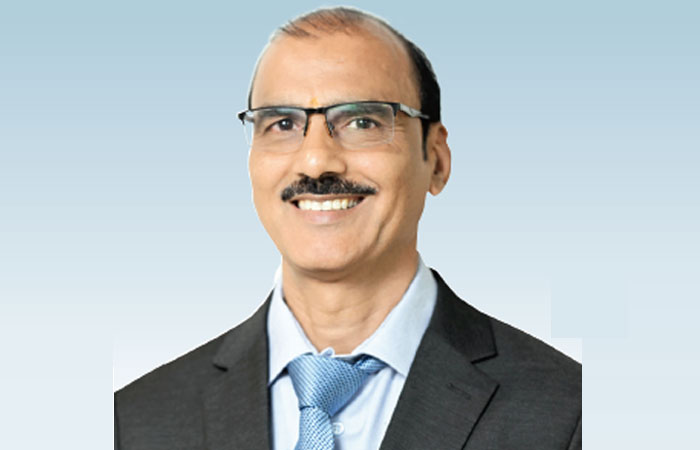
Dr Uttam Sur, Global Head of ESG, Valency International, discusses the role of the 3Cs – Cut, Cement, Carbon – in decarbonising India’s cement sector for a sustainable future.

India’s cement industry, the second largest globally, is a cornerstone of infrastructure development and a significant contributor to carbon emissions. With the nation’s commitment to Net Zero emissions by 2070, the sector must undergo a transformative shift. The theme ‘The 3Cs – Cut, Cement, Carbon’ offers a strategic lens to guide this transition: Cut emissions, innovate Cement, and capture Carbon.

Cut: Reducing emissions at source
The first imperative is to cut emissions from both energy use and the calcination process.

Key levers:

  • Clinker substitution: Increasing the use of Supplementary Cementitious Materials (SCMs) like fly ash, slag, and calcined clay can reduce emissions by up to 30 per cent.
  • Alternative fuels: The sector is targeting a 35 per cent thermal substitution rate using biomass, municipal solid waste, and RDF by 2030
  • Energy efficiency: The Perform, Achieve and Trade (PAT) scheme has driven adoption of energy-efficient technologies, reducing specific energy consumption across plants

Cement: Innovating materials and processes
The second ‘C’ focuses on redefining cement itself to lower its carbon footprint.

Innovations:

  • Limestone Calcined Clay Cement (LC3) and Portland Limestone Cement (PLC) are gaining traction for their lower clinker content and comparable performance.
  • Geopolymer and alkali-activated cements offer potential for zero-clinker binders.
  • Circular economy practices: Use of industrial by-products and recycled aggregates is reducing virgin material demand and emissions.
    However, standardisation and regulatory approval (e.g., for LC3) remain critical to scaling these innovations

Carbon: Capturing and utilising emissions
The third ‘C’ addresses residual emissions through Carbon Capture, Utilisation, and Storage (CCUS).
Progress and potential:

  • India has identified CCUS hubs with a potential to abate 36.4 million tonnes of CO2 annually.
  • Utilisation pathways include mineralisation, carbonated aggregates, and methanol synthesis.
  • Pilot projects like microalgae-based photoreactors at IOCL Mathura show promising capture efficiencies of up to 75 per cent.

Despite its promise, CCUS faces high capital costs and requires robust policy and financial support to scale.

Policy impacts and success stories
India’s policy landscape is evolving to support deep decarbonisation in the cement sector. Several initiatives have already demonstrated success:

1. PAT Scheme (Perform, Achieve and Trade)

  • Cement was one of the first sectors included.
  • Plants participating in PAT Phase I achieved energy savings of over 1.5 million tonnes of oil equivalent, reducing emissions and operational costs

2. Decarbonisation roadmap by GCCA India and TERI

  • Launched in 2025, this roadmap aligns with India’s net-zero target and sets interim goals
    for 2047.
  • It outlines a structured pathway for reducing emissions through clinker substitution, CCUS and alternative fuels.
  • The roadmap is backed by industry leaders like JSW Cement and supported by the Cement Manufacturers’ Association.

3. CCUS policy frameworks

  • NITI Aayog and the Department of Science and Technology have initiated Centres of Excellence for CCUS in Mumbai and Bengaluru
  • These centers promote R&D, public awareness and pilot projects.
  • A CO2-to-methanol plant is under construction in Pudimadaka, showcasing industrial-scale carbon utilisation

International collaboration

  • India is engaging with global platforms like the Clean Energy Ministerial and Global CCS Institute to develop financing models and regulatory frameworks for CCUS.

Here are future policy directions that could accelerate decarbonisation in India’s cement sector, aligned with the ‘3Cs – Cut, Cement, Carbon’ framework:

1. Mandate low-carbon cement in public procurement

  • Why it matters: Government infrastructure projects are major consumers of cement.
  • Policy direction: Introduce mandatory use of LC3, PLC, or blended cements in public works (roads, housing, railways).
  • Impact: Creates demand-pull for low-carbon products and encourages manufacturers to scale production.

2. Expand and deepen the PAT scheme

  • Why it matters: PAT has proven effective in improving energy efficiency.
  • Policy direction: Include carbon intensity targets, not just energy metrics, and extend to smaller cement plants.
  • Impact: Drives holistic decarbonisation and brings more players into the fold.

3. Establish a national carbon market

  • Why it matters: A carbon pricing mechanism incentivizes emission reductions.
  • Policy direction: Launch a cap-and-trade system with sector-specific benchmarks for cement.
  • Impact: Rewards early movers and enables cost-effective decarbonisation.

4. Accelerate CCUS deployment with fiscal incentives

  • Why it matters: CCUS is essential for deep decarbonisation but capital-intensive.
  • Policy direction: Offer tax credits, viability gap funding, and accelerated depreciation for CCUS infrastructure.
  • Impact: Makes CCUS financially viable and scalable across clusters.

5. Support R&D and pilot projects for alternative binders

  • Why it matters: Innovation in cement chemistry is key to reducing emissions.
  • Policy direction: Fund academic-industry collaborations to develop and test geopolymer, magnesium-based, and bio-cements.Impact: Diversifies the cement portfolio and reduces reliance on clinker.

6. Create green certification and labelling standards

  • Why it matters: Buyers need clarity on the environmental impact of cement products.
  • Policy direction: Develop a national ecolabel for low-carbon cement, similar to BEE star ratings.
  • Impact: Enhances transparency and consumer awareness.

7. Promote circular economy regulations

  • Why it matters: Waste reuse reduces emissions and resource consumption.
  • Policy direction: Mandate co-processing of industrial waste, incentivise recycled aggregates, and streamline waste-to-fuel approvals.
  • Impact: Reduces landfill pressure and supports sustainable cement production.

Rethinking the 3Cs – A critical view
While the ‘3Cs – Cut, Cement, Carbon’ framework presents a structured approach to decarbonising India’s cement sector, it may fall short in addressing the complexity and urgency of the climate challenge. The model, though conceptually appealing, risks oversimplifying the multifaceted nature of industrial decarbonisation.
1. Overemphasis on technological fixes: The framework leans heavily on technological interventions like CCUS and alternative binders, which are still nascent, capital-intensive, and not yet scalable. This could divert attention from more immediate, systemic changes such as demand-side management and urban planning reforms.
2. Neglect of demand reduction: The ‘Cut’ component focuses on emission reduction at the production level but overlooks the need to reduce overall cement consumption through design innovation, material efficiency, and alternative construction practices.
3. Limited scope for socioeconomic integration: The framework does not adequately address the socioeconomic dimensions of decarbonisation—such as job transitions, skill development, and community engagement—which are critical for a just and inclusive transition.
4. Policy dependency and uncertain implementation: Many proposed solutions hinge on future policy support, fiscal incentives, and regulatory reforms. Without strong enforcement mechanisms and accountability, these measures may remain aspirational.
5. Carbon capture as a silver bullet?: The reliance on CCUS as a major pillar raises concerns. Given its high cost, energy intensity, and uncertain long-term viability, CCUS should be seen as a complementary—not central—strategy.

A more holistic path forward
India’s cement sector needs a broader paradigm shift—one that integrates material efficiency, behavioural change, urban design, and lifecycle thinking. Rather than focusing narrowly on the 3Cs, a more inclusive framework could be:

  • Rethink: Challenge the necessity of cement-intensive infrastructure.
  • Redesign: Promote low-impact construction and modular design.
  • Regenerate: Align industrial practices with ecological restoration.

ABOUT THE AUTHOR:
Dr Uttam Sur, Global Head of ESG, Valency International, is an ESG and CSR leader with over 20 years of global experience, driving SDG-aligned sustainability strategies and partnerships.

Concrete

Niraj Cement JV Wins Railway and Metro Contracts

Two orders worth over Rs 1.64 billion boost infrastructure portfolio

Published

on

By

Shares

Niraj Cement Structurals (JV) has secured two major contracts from the Northeast Frontier Railway (NF Railway) and the Mumbai Metropolitan Region Development Authority (MMRDA), strengthening its position in large-scale infrastructure development.

The first contract, valued at Rs 815.2 million, has been awarded by NF Railway. It involves the construction of multiple-span 12.20-metre PSC slab underpasses, a major bridge (No. 727), retaining and guide walls, embankments and one minor bridge along the proposed UP and Down line near Deepor Beel. The project covers Km 163/00 to 164/200 between Azara and Kamakhya stations and forms part of the New Bongaigaon–Goalpara Town–Kamakhya (NBQ–GLPT–KYQ) railway doubling programme.

The second contract, worth Rs 826.6 million, has been awarded by MMRDA for constructing a foot overbridge (FOB) equipped with a travellator to improve connectivity between the SGMC monorail station and the Mahalaxmi metro and suburban railway stations.

The two projects underscore the company’s technical capabilities in both transportation infrastructure and environmentally sensitive construction, further strengthening its portfolio in key railway and urban mobility developments.

Continue Reading

Concrete

Peddapalli MP Seeks Clear Timelines for Rs 42.10 Bn Projects

Peddapalli MP Gaddam Vamshi Krishna has urged the Union Government to specify execution timelines for major infrastructure projects worth Rs 42.10 billion in his constituency.

Published

on

By

Shares

Peddapalli MP Gaddam Vamshi Krishna has called on the Centre to provide definitive timelines for a series of sanctioned infrastructure works that he said are essential for the region’s economic progress. Speaking in the Lok Sabha, he stressed that many approved projects remain stalled without clear implementation schedules, limiting their potential impact on connectivity and employment.

A key pending work is the Peddapalli–Manuguru Railway Line, a 137 km stretch linking Peddapalli with Manuguru in Bhadradri Kothagudem district. Although the line has received required approvals and special project status, the execution schedule has not yet been announced. The project is expected to support freight efficiency, improve coal logistics, and strengthen local job creation.

Extending his appeal beyond physical infrastructure, the MP urged the Centre to consider including Peddapalli in the India Semiconductor Mission, citing the district’s industrial ecosystem, skilled workforce, and readiness to support advanced manufacturing.

By pressing for structured timelines, Krishna emphasised the need for coordinated planning and timely execution to advance the constituency’s long-term development goals.

Continue Reading

Concrete

IndiaAI, Gujarat Govt Host Regional Conclave Ahead of 2026 AI Summit

A regional pre-summit event in Gandhinagar recently gathered leaders to advance AI for good governance.

Published

on

By

Shares

The IndiaAI Mission under the Ministry of Electronics and Information Technology, along with the Government of Gujarat and IIT Gandhinagar, convened a Regional Pre-Summit Event at Mahatma Mandir, Gandhinagar. The initiative is part of the build-up to the India–AI Impact Summit 2026, scheduled for 15–20 February 2026 at Bharat Mandapam, New Delhi.

The conclave brought together senior policymakers, technology leaders, researchers and industry practitioners to examine how AI can accelerate economic, digital and social transformation across sectors. The programme focused on the overarching theme of ‘AI for Good Governance: Empowering India’s Digital Future’.

The inaugural session featured key dignitaries including Bhupendrabhai Rajnikant Patel, Chief Minister of Gujarat; Harsh Rameshbhai Sanghavi, Deputy Chief Minister of Gujarat; Arjunbhai Devabhai Modhwadia, Minister for Science & Technology, Government of Gujarat; Manoj Kumar Das, Chief Secretary, Government of Gujarat; Abhishek Singh, Additional Secretary, MeitY and Director General, NIC; and Ponugumatla Bharathi, Secretary, Department of Science & Technology, Government of Gujarat.

High-impact keynote sessions led by national and global experts from MeitY, Bhashini, Google Cloud, Microsoft, IBM Research, NVIDIA, Oracle and AWS examined themes including AI in governance, public service delivery, urban development, rural transformation, healthcare, agriculture, fintech and multilingual accessibility enabled through Bhashini.
Delegates also visited an Experience Zone curated by IndiaAI and DST Gujarat, which showcased AI solutions across governance, agriculture, health and industry.

By convening government, industry and academic stakeholders, the conclave aimed to strengthen India’s AI ecosystem through frameworks that prioritise trust, scalability and public interest. Insights generated from the event will contribute directly to the agenda and outcomes of the India–AI Impact Summit 2026. 

Continue Reading

Trending News

SUBSCRIBE TO THE NEWSLETTER


Don't miss out on valuable insights and opportunities to connect with like minded professionals.


    This will close in 0 seconds