Connect with us

Concrete

Transforming Interior Spaces: Trendy Wall Putty Designs to Enhance Your Home

Published

on

Shares
When it comes to interior design, walls are more than just structural elements—they serve as the canvas for self-expression, setting the mood and personality of a space. While paint and wallpaper have long been the go-to choices for wall finishes, wall putty is emerging as a game-changer in home décor. With its smooth finish, durability, and versatility, wall putty opens a world of creative possibilities. In this article, we explore trendy wall putty designs that can elevate your interiors, turning ordinary walls into extraordinary design statements.
Wall Putty is a Must-Have in Modern Homes
Wall putty is no longer just a preparatory material for painting; it plays a significant role in modern home aesthetics. It enhances the finish of walls, making them smoother, stronger, and resistant to cracks and moisture. Additionally, high-quality putty like Birla White Wall Putty ensures better paint adhesion, resulting in long-lasting vibrancy.
Beyond its functional benefits, wall putty allows homeowners to experiment with textures and patterns, giving walls a designer touch without the hassle of high-maintenance materials like stone or wood. Whether you’re aiming for a minimalist, rustic, or ultra-modern aesthetic, wall putty designs can help achieve the look effortlessly.
Trendy Wall Putty Designs for Stunning Interiors
1. Textured Wall Putty for a Tactile Appeal
Textured walls are a popular interior trend, adding depth and dimension to living spaces. By using wall putty, homeowners can create a variety of textures, including:
  • Rustic Texture: Mimicking natural stone or aged plaster for an earthy, vintage feel.
  • Wave Patterns: Adding a sense of movement and fluidity to walls, perfect for living rooms and entryways.
  • Sand Finish: A subtle grainy effect that provides a sophisticated touch.
Textured putty walls work exceptionally well in accent areas, such as behind a television unit or as a backdrop for artwork.
2. Sleek and Smooth Walls for a Luxurious Look
For those who prefer a refined and elegant aesthetic, a smooth putty finish is ideal. A flawlessly smooth wall creates a premium appearance, amplifying the impact of high-quality paints. Opting for a high-performance putty like Birla White WallCare Putty ensures a glass-like finish that complements modern and contemporary interiors.
This design is perfect for:
  • Monochrome interiors where walls serve as a sleek backdrop.
  • High-gloss or matte-painted walls that need a seamless base.
  • Spaces with minimal décor where the walls themselves make a statement.
3. Geometric & Abstract Patterns for a Contemporary Edge
Wall putty can be artistically applied to create striking geometric or abstract patterns, adding a unique character to interiors.
Popular designs include:
  • Chevron or Herringbone: A dynamic, sophisticated look that pairs well with both modern and mid-century décor.
  • 3D Raised Panels: Using putty to craft subtle raised patterns, adding a sculptural effect to the wall.
  • Asymmetrical Shapes: For a bold and avant-garde touch.
  • These patterns work best in bedrooms, study areas, or accent walls in open spaces.
4. Venetian Plaster for a Luxe European Aesthetic
Venetian plaster, an age-old technique, is making a grand comeback in modern interiors. With wall putty, you can achieve this exquisite marble-like effect, which exudes luxury and timeless charm.
This design works well for:
  • Statement walls in living rooms and foyers.
  • Elegant dining areas where a touch of opulence is desired.
  • Boutique-style bedrooms with a rich, textured finish.
A high-quality white cement-based putty can replicate this effect beautifully, making the walls look naturally luminous.
5. Dual-Tone or Ombre Walls for a Soft Gradient Effect
The ombre effect, a gradient transition between two colors, is a trendy and artistic way to enhance interiors. When applied over a smooth wall putty base, the gradient blends seamlessly, offering a dreamy, watercolor-like appeal.
This style is perfect for:
  • Children’s rooms or play areas, creating a fun and dynamic atmosphere.
  • Bedrooms with a soothing pastel gradient for a calming effect.
  • Dining spaces where a bold color fade adds character.
6. Metallic & Glossy Finishes for a Chic Look
For homeowners who love glamour and sophistication, combining wall putty with metallic paints or glossy finishes can create a high-end appeal. The smooth base of putty enhances the reflective qualities of metallic shades like gold, silver, or bronze, resulting in an opulent and dramatic effect.
Best suited for:
  • Luxurious master bedrooms and dressing areas.
  • Accent walls in dining rooms or home bars.
  • Commercial spaces like boutiques and salons.
How to Achieve the Best Wall Putty Designs
  • Choose the Right Putty: Opt for a premium wall putty like Birla White WallCare Putty to ensure durability, a smooth finish, and long-lasting appeal.
  • Prepare the Surface: Ensure the walls are clean, dry, and free from loose particles before application.
  • Apply in Layers: Depending on the design, putty can be applied in single or multiple layers for the desired effect.
  • Use the Right Tools: Trowels, spatulas, sponges, or patterned rollers help create specific textures and patterns.
  • Seal with Paint or Polish: Once the putty is dry, finishing it with paint, polish, or protective coatings enhances its aesthetic and durability.
Conclusion
Wall putty has evolved beyond its traditional role, now serving as a medium for creative interior design. Whether you prefer textured finishes, sleek smooth walls, or artistic patterns, wall putty designs can elevate your home’s aesthetics while offering durability and elegance. By selecting the  best putty for wall and application technique, you can transform your interior walls into stunning masterpieces, setting the perfect backdrop for your lifestyle.
For high-quality wall finishes that stand the test of time, Birla White WallCare Putty ensures both beauty and performance, making your dream interiors a reality.

Concrete

Merlin Prime Spaces Acquires 13,185 Sq M Land Parcel In Pune

Rs 273 crore purchase broadens the developer’s Pune presence

Published

on

By

Shares

Merlin Prime Spaces (MPS) has acquired a 13,185 sq m land parcel in Pune for Rs 273 crore, marking a notable expansion of its footprint in the city.

The transaction value converts to Rs 2,730 mn or Rs 2.73 bn.

The parcel is located in a strategic area of Pune and the firm described the acquisition as aligned with its growth objectives.

The deal follows recent activity in the region and will be watched by investors and developers.

MPS said the acquisition will support its planned development pipeline and enable delivery of commercial and residential space to meet local demand.

The company expects the site to provide flexibility in product design and phased development to respond to market conditions.

The move reflects an emphasis on land ownership in key suburban markets.

The emphasis on land acquisition reflects a strategy to secure inventory ahead of demand cycles.

The purchase follows a period of sustained investor interest in Pune real estate, driven by expanding office ecosystems and residential demand from professionals.

MPS will integrate the new holding into its existing portfolio and plans to engage with local authorities and stakeholders to progress approvals and infrastructure readiness.

No financial partners were disclosed in the announcement.

The firm indicated that timelines will depend on approvals and prevailing market conditions.

Analysts note that strategic land acquisitions at scale can help developers manage costs and timelines while preserving optionality for future projects.

MPS will now hold an enlarged land bank in the region as it pursues growth, and the acquisition underlines continued corporate appetite for measured expansion in second tier cities.

The company intends to move forward with detailed planning in the coming months.

Stakeholders will assess how the site is positioned relative to existing infrastructure and connectivity.

Continue Reading

Concrete

Adani Cement and Naredco Partner to Promote Sustainable Construction

Collaboration to focus on skills, technology and greener practices

Published

on

By

Shares

Adani Cement has entered a strategic partnership with the National Real Estate Development Council (Naredco) to support India’s construction needs with a focus on sustainability, workforce capability and modern building technologies. The collaboration brings together Adani Cement’s building materials portfolio, research and development strengths and technical expertise with Naredco’s nationwide network of more than 15,000 member organisations. The agreement aims to address evolving demand across housing, commercial and infrastructure sectors.

Under the partnership, the organisations will roll out skill development and certification programmes for masons, contractors and site supervisors, with training to emphasise contemporary construction techniques, safety practices and quality standards. The programmes are intended to improve project execution and on-site efficiency and to raise labour productivity through standardised competencies. Emphasis will be placed on practical training and certification pathways that can be scaled across regions.

The alliance will function as a platform for knowledge sharing and technology exchange, facilitating access to advanced concrete solutions, innovative construction practices and modern materials. The effort is intended to enhance structural durability, execution quality and environmental responsibility across developments while promoting adoption of low-carbon technologies and green cement alternatives. Companies expect these measures to contribute to longer term resilience of built assets.

Senior executives conveyed that the partnership reflects a shared commitment to strengthening quality and sustainability in construction and that closer engagement with developers will help integrate advanced materials and technical support throughout the project lifecycle. Leadership noted the need for responsible construction practices as urbanisation accelerates and indicated that the association should encourage wider adoption of green building norms and collaboration within the real estate and construction ecosystem.

The organisations said they will also explore integrated building solutions, including ready-mix concrete offerings, while supporting initiatives aligned with affordable and inclusive housing. The partnership will progress through engagements, conferences and joint training programmes targeting rapidly urbanising cities and growth centres where demand for efficient and environmentally responsible construction grows. Naredco, established under the aegis of the Ministry of Housing and Urban Affairs, will leverage its policy and advocacy role to support implementation.

Continue Reading

Concrete

Operational Excellence Redefined!

Published

on

By

Shares

Operational excellence in cement is no longer about producing more—it is about producing smarter, cleaner and more reliably, where cost per tonne meets carbon per tonne.

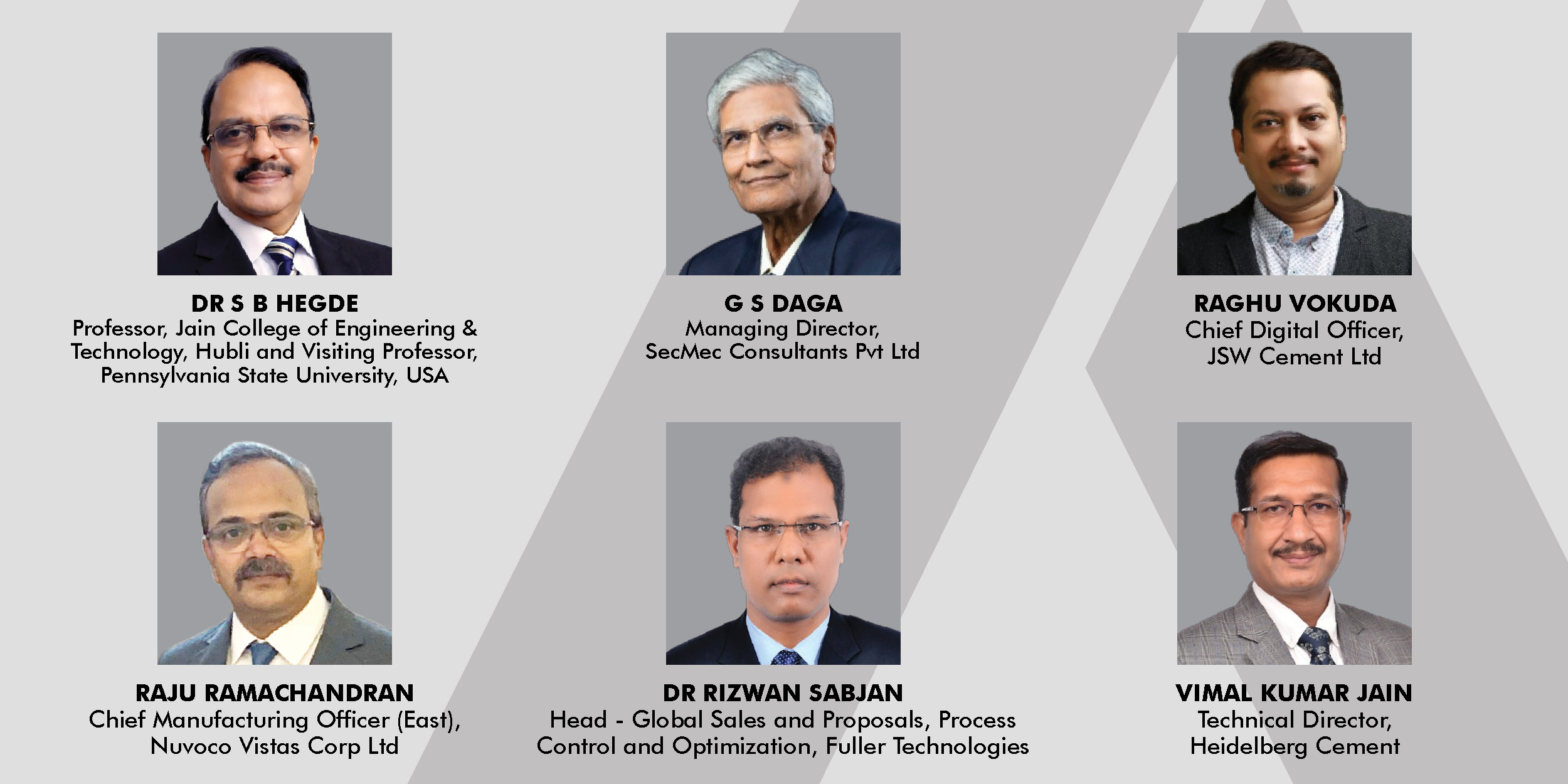
Operational excellence in cement has moved far beyond the old pursuit of ‘more tonne’. The new benchmark is smarter, cleaner, more reliable production—delivered with discipline across process, people and data. In an industry where energy can account for nearly 30 per cent of manufacturing cost, even marginal gains translate into meaningful value. As Dr SB Hegde, Professor, Jain College of Engineering & Technology, Hubli and Visiting Professor, Pennsylvania State University, USA, puts it, “Operational excellence… is no longer about producing more. It is about producing smarter, cleaner, more reliably, and more sustainably.” The shift is structural: carbon per tonne will increasingly matter as much as cost per tonne, and competitiveness will be defined by the ability to stabilise operations while steadily lowering emissions.

From control rooms to command centres

The modern cement plant is no longer a handful of loops watched by a few operators. Control rooms have evolved from a few hundred signals to thousands—today, up to 25,000 signals can compete for attention. Dr Rizwan Sabjan, Head – Global Sales and Proposals, Process Control and Optimization, Fuller Technologies, frames the core problem plainly: plants have added WHRS circuits, alternative fuels, higher line capacities and tighter quality expectations, but human attention remains finite. “It is very impossible for an operator to operate the plant with so many things being added,” he says. “We need somebody who can operate 24×7… without any tiredness, without any distraction… The software can do that for us better.”

This is where advanced process control shifts from ‘automation spend’ to a financial lever. Dr Hegde underlines the logic: “Automation is not a technology expense. It is a financial strategy.” In large kilns, a one per cent improvement is not incremental—it is compounding.

Stability is the new productivity

At the heart of operational excellence lies stability. Not because stability is comfortable, but because it is profitable—and increasingly, low-carbon. When setpoints drift and operators chase variability, costs hide in refractory damage, thermal shocks, stop-start losses and quality swings. Dr Sabjan argues that algorithmic control can absorb process disturbances faster than any operator, acting as ‘a co-pilot or an autopilot’, making changes ‘as quick as possible’ rather than waiting for manual intervention. The result is not just fuel saving—it is steadier operation that extends refractory life and reduces avoidable downtime.

The pay-off can be seen through the lens of variability: manual operation often amplifies swings, while closed-loop optimisation tightens control. As Dr Sabjan notes, “It’s not only about savings… there are many indirect benefits, like increasing the refractory life, because we are avoiding the thermal shocks.”

Quality control

If stability is the base, quality is the multiplier. A high-capacity plant can dispatch enormous volumes daily, and quality cannot be a periodic check—it must be continuous. Yet, as Dr Sabjan points out, the biggest error is not in analysis equipment but upstream: “80 per cent of the error is happening at the sampling level.” If sampling is inconsistent, even the best XRF and XRD become expensive spectators.

Automation closes the loop by standardising sample collection, transport, preparation, analysis and corrective action. “We do invest a lot of money on analytical equipment like XRD and XRF, but if it is not put on the closed loop then there’s no use of it,” he says, because results become person-dependent and slow.

Raju Ramachandran, Chief Manufacturing Officer (East), Nuvoco Vistas Corp, reinforces the operational impact from the plant floor: “There’s a stark difference in what a RoboLab does… ensuring that the consistent quality is there… starts right from the sample collection.” For him, automation is not about removing people; it is about making outcomes repeatable.

Human-centric automation

One of the biggest barriers to performance is not hardware—it is fear. Dr Sabjan describes a persistent concern that digital tools exist to replace operators. “That’s not the way,” he says. “The technology is here to help operator… not to replace them… but to complement them.” The plants that realise this early tend to sustain performance because adoption becomes collaborative rather than forced.

Dr Hegde adds an important caveat: tools can mislead without competence. “If you don’t have the knowledge about the data… this will mislead you… it is like… using ChatGPT… it may tell the garbage.” His point is not anti-technology; it is pro-capability. Operational excellence now requires multidisciplinary teams—process, chemistry, physics, automation and reliability—working as one.

GS Daga, Managing Director, SecMec Consultants, takes the argument further, warning that the technology curve can outpace human readiness: “Our technology movement AI will move fast, and our people will be lagging behind.” For him, the industry’s most urgent intervention is systematic skilling—paired with the environment to apply those skills. Without that, even high-end systems remain underutilised.

Digital energy management

Digital optimisation is no longer confined to pilots; its impact is increasingly quantifiable. Raghu Vokuda, Chief Digital Officer, JSW Cement, describes the outcomes in practical terms: reductions in specific power consumption ‘close to 3 per cent to 7 per cent’, improvements in process stability ‘10 per cent to 20 per cent’, and thermal energy reductions ‘2–5 per cent’. He also highlights value beyond the process line—demand optimisation through forecasting models can reduce peak charges, and optimisation of WHRS can deliver ‘1 per cent to 3 per cent’ efficiency gains.

What matters is the operating approach. Rather than patchwork point solutions, he advocates blueprinting a model digital plant across pillars—maintenance, quality, energy, process, people, safety and sustainability—and then scaling. The difference is governance: defined ownership of data, harmonised OT–IT integration, and dashboards designed for each decision layer—from shopfloor to plant head to network leadership.

Predictive maintenance

Reliability has become a boardroom priority because the cost of failure is blunt and immediate. Dr Hegde captures it crisply: “One day of kiln stoppage can cost several crores.” Predictive maintenance and condition monitoring change reliability from reaction to anticipation—provided plants invest in the right sensors and a holistic architecture.

Dr Sabjan stresses the need for ‘extra investment’ where existing instrumentation is insufficient—kiln shell monitoring, refractory monitoring and other critical measurements. The goal is early warning: “How to have those pre-warnings… where the failures are going to come… and then ensure that the plant availability is high, the downtime is low.”

Ramachandran adds that IoT sensors are increasingly enabling early intervention—temperature rise in bearings, vibration patterns, motor and gearbox signals—moving from prediction to prescription. The operational advantage is not only fewer failures, but planned shutdowns: “Once the shutdown is planned in advance… you have lesser… unpredictable downtimes… and overall… you gain on the productivity.”

Alternative fuels and raw materials

As decarbonisation tightens, AFR becomes central—but scaling it is not simply a procurement decision. Vimal Kumar Jain, Technical Director, Heidelberg Cement, frames AFR as a structured programme built on three foundations: strong pre-processing infrastructure, consistent AFR quality, and a stable pyro process. “Only with the fundamentals in place can AFR be scaled safely—without compromising clinker quality or production stability.”

He also flags a ground reality: India’s AFR streams are often seasonal and variable. “In one season to another season, there is major change… high variation in the quality,” he says, making preprocessing capacity and quality discipline mandatory.

Ramachandran argues the sector also needs ecosystem support: a framework for AFR preprocessing ‘hand-in-hand’ between government and private players, so fuels arrive in forms that can be used efficiently and consistently.

Design and execution discipline

Operational excellence is increasingly determined upstream—by the choices made in concept, layout, technology selection, operability and maintainability. Jain puts it unambiguously: “Long term performance is largely decided before the plant is commissioned.” A disciplined design avoids bottlenecks that are expensive to fix later; disciplined execution ensures safe, smooth start-up with fewer issues.

He highlights an often-missed factor: continuity between project and operations teams. “When knowledge transfer is strong and ownership carries beyond commissioning, the plant stabilises much faster… and lifecycle costs reduce significantly.”

What will define the next decade

Across the value chain, the future benchmark is clear: carbon intensity. “Carbon per ton will matter as much as cost per ton,” says Dr Hegde. Vokuda echoes it: the industry will shift from optimising cost per tonne to carbon per ton.

The pathway, however, is practical rather than idealistic—low-clinker and blended cements, higher thermal substitution, renewable power integration, WHRS scaling and tighter energy efficiency. Jain argues for policy realism: if blended cement can meet quality, why it shall not be allowed more widely, particularly in government projects, and why supplementary materials cannot be used more ambitiously where performance is proven.

At the same time, the sector must prepare for CCUS without waiting for it. Jain calls for CCUS readiness—designing plants so capture can be added later without disruptive retrofits—while acknowledging that large-scale rollout may take time as costs remain high.

Ultimately, operational excellence will belong to plants that integrate—not isolate—the levers: process stability, quality automation, structured AFR, predictive reliability, disciplined execution, secure digitalisation and continuous learning. As Dr Sabjan notes, success will not come from one department owning the change: “Everybody has to own it… then only… the results could be wonderful.”

And as Daga reminds the industry, the future will reward those who keep their feet on the ground while adopting the new: “I don’t buy technology for the sake of technology. It has to make a commercial sense.” In the next decade, that commercial sense will be written in two numbers—cost per tonne and carbon per tonne—delivered through stable, skilled and digitally disciplined operations.


Continue Reading

Trending News

SUBSCRIBE TO THE NEWSLETTER


Don't miss out on valuable insights and opportunities to connect with like minded professionals.


    This will close in 0 seconds