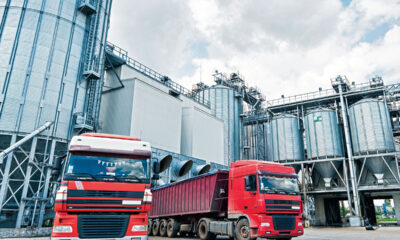
The new solution promisescontinuous, real-time tertiary air flow measurement in cement plant operations.
PROMECON GmbH has launched the McON IR Compact, an infrared-based measuring system designed to deliver continuous, real-time tertiary air flow measurement in cement plant operations. The system addresses the longstanding process control challenge of accurate tertiary air monitoring under extreme kiln conditions. It uses patented infrared time-of-flight measurement technology that operates without calibration or maintenance intervention.
Precise tertiary air measurement is a critical requirement for stable rotary kiln operation. The McON IR Compact is engineered to function reliably at temperatures up to 1,200°C and in the presence of abrasive clinker dust. Its vector-based digital measurement architecture ensures that readings remain unaffected by swirl, dust deposits or drift. Due to these conditions conventional measurement systems in pyroprocess environments are often compromised.
The system is fully non-intrusive and requires no K-factors, recalibration or periodic readjustment, enabling years of uninterrupted operation. This design directly supports plant availability and reduces the maintenance overhead typically associated with process instrumentation in high-temperature zones.
PROMECON has deployed the McON IR Compact at multiple cement facilities, including Warta Cement in Poland. Plant operators report that the system has aided in identifying blockages, optimising purging cycles for gas burners, and supplying accurate flow data for AI-based process optimisation programmes. The practical outcomes include more stable kiln operation, improved process control, and earlier detection of process disturbances.
On the energy side, real-time tertiary air data enables reduction in induced draft fan load and helps flatten process oscillations across the pyroprocess. This translates to lower fuel and energy consumption, fewer unplanned shutdowns, and a measurable reduction in NOx peaks. This directly reflects on the downstream cost implications for plants operating SCR or SNCR systems for emissions compliance.