Connect with us

Uncategorized

China’s Steel Sector Is Softening, but With Resilience

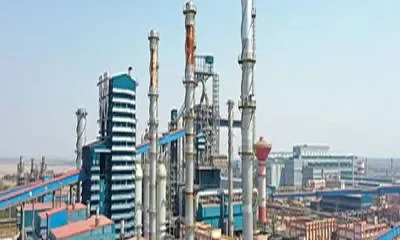
China’s steel production peaked at 1.065 billion metric tonne in 2020.

Published

on

Shares

There are two ways of looking at the 1.7% decline in China’s steel output last year.The first is that it confirms that the world’s largest producer of the key industrial metal is now in an established downtrend, and further weakness is likely this year.
The second is that the steel industry is actually remarkably resilient in the face of major economic challenges, and that output has been essentially flat at extremely strong levels for the past five years. Both are essentially factual, and reflect the classic glass half-full or half-empty dilemma.
On the half-empty side of the ledger is the fact that China’s steel production peaked at 1.065 billion metric tons in 2020, and has trended lower since then, with 2024 output coming in at 1.005 billion tons. But another way to look at China’s steel output is that it has been within a 70 million ton range between 2019 and 2024, which is actually quite a stable performance.
Perhaps the best way to characterise China’s steel production is that it likely has peaked, but the decline so far has been gentle, and output remains relatively high despite the well-publicised struggles of the world’s second-biggest economy since the COVID-19 pandemic.
Similar to other markets, the answer remains unclear and subject to factors yet to come into play, chief among them what trade tariffs are put in place by the new administration of U.S. President Donald Trump, who resumed the office . It’s also uncertain as to whether 2025 is the year China’s struggling residential property sector gets back on its feet, or whether it remains hostage to weak developer balance sheets and consumer wariness. A third factor is what will happen to China’s steel exports in 2025, after they hit a nine-year high of 110.72 million tons in 2024.
This was up 22.7%, or just over 20 million tons, from the previous year, with the increase helping to offset some loss of domestic consumption for steel mills. The volume of Chinese steel hitting global markets has led to some consternation among countries such as India, which is trying to boost the pace of expansion of its own steel sector.
This raises the possibility that China may find it harder to increase steel exports in 2025.But it is worth noting that not all importing countries are opposed to buying more steel from China, especially those without a domestic steel sector. The best-case scenario for China’s steel sector this year is one where trade tariffs aren’t too punitive, the domestic economy continues to regain momentum and construction activity stabilises, or perhaps even increases. Under such a scenario, the best outcome for China’s steel production would be steady output around 1 billion tons. This also means that China’s demand for iron ore is likely to remain steady as well, although it may ease from the record high of 1.24 billion tons in 2024.

Uncategorized

Foundation is always product performance

Published

on

By

Shares

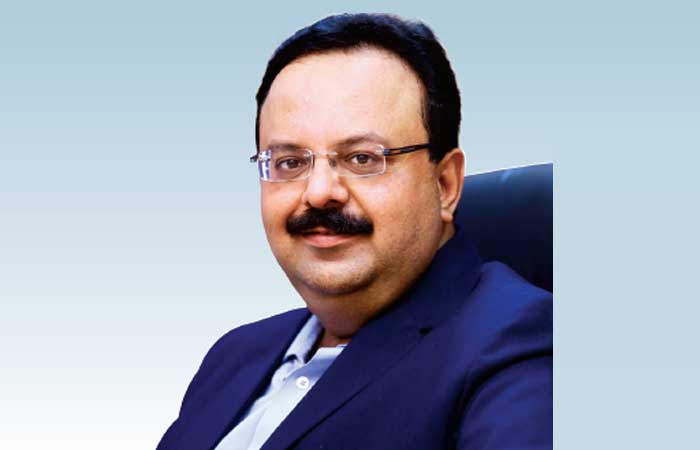
Pushp Raj Singh, Group President – Sales and Marketing, JK Cement, explains how brand loyalty is cultivated with superior product performance and consistent communication for a sustainable competitive advantage.

At JK Cement, branding is embedded in the business strategy, built into every customer touchpoint, and measured against outcomes that go well beyond awareness and reach. In this exclusive interview, Pushp Raj Singh, Group President – Sales and Marketing, JK Cement, brings clarity to what modern cement branding actually demands, while emphasising that the shift from commodity to brand begins not in advertising but in the consistency of experience that a contractor, dealer or homebuilder encounters every single time they interact with the product, the company and the people behind it.

How has branding evolved from being a support function to a strategic growth driver in the cement industry?
In a largely standardised category like cement, branding today is a strategic growth lever. It builds trust, drives preference and strengthens long-term loyalty.
For consumers, our brand provides confidence and assurance in building their homes. For our customers — including dealers, retailers, contractors and institutional partners — it creates market pull, credibility and stronger business relationships.
At JK Super Cement, branding is closely aligned with business strategy, ensuring that every touchpoint reinforces our promise of quality, reliability and BUILDing STRONG.

What are the key pillars that define a strong and differentiated cement brand today?
A strong cement brand today is built on five key pillars: consistent product quality, trust earned through performance, innovation, sustainability and customer engagement. While product performance remains fundamental, consumers increasingly value brands that provide technical support, both offline and online, and demonstrate responsible manufacturing. The ability to deliver a superior customer experience across every interaction is what truly differentiates a brand.

How do you balance product performance, trust, and emotional appeal in your
branding strategy?
The foundation is always product performance because trust is earned on the construction site. For us, product performance remains the starting point because trust in this category is earned on the construction site, project after project. A brand can only create lasting preference when its promise is consistently proven through quality, durability, and reliability.
At the same time, we recognise that people are not just buying cement; they are building homes, businesses, aspirations, and legacies. Our communication, therefore, goes beyond functional superiority to connect with the deeper emotional significance of building something that must stand strong for generations. This is where our positioning of “Build Strong” comes alive, not only as a product promise, but as a belief that reflects strength, confidence, and long-term value for every stakeholder in the construction ecosystem.
By combining performance-led credibility with emotionally resonant storytelling, we are able to build stronger relationships with our consumers & customers alike. Our communication reflects both functional excellence and the significance of creating structures that last for generations. This combination helps build deeper brand relationships with all stakeholders in the ecosystem.

What role does digital marketing play in influencing dealers, contractors and end consumers?
Digital marketing has become an essential engagement platform across the construction ecosystem. It enables us to educate customers, showcase product innovations, share technical knowledge and maintain continuous engagement with dealers, contractors, architects, engineers and homeowners. Digital channels also provide valuable insights into customer preferences helping us to deliver more relevant communication and improve the overall marketing effectiveness.

How do you measure the effectiveness and ROI of your branding initiatives?
We evaluate effectiveness through both business and brand metrics. We track indicators such as brand awareness & recall, recommendation, consideration engagement, channel participation and lead generation. More importantly, we assess how branding contributes to business outcomes including market penetration, dealer engagement, premium product adoption and customer loyalty.

How has consumer awareness changed the way cement brands communicate their value proposition?
Consumers are highly informed and research driven. They seek information about product performance, certifications, and application suitability before making purchase decisions. As a result, communication has become more transparent and educational. We simplify technical information to aide our customers in making an informed decision during their home building journey.

What challenges do cement manufacturers face in building brand loyalty in a largely commoditised market?
The biggest barrier to building loyalty is the conversation centred around price. While cement may often be viewed as a commodity, users continue to value consistency, reliability, technical support, and trusted relationships. Building loyalty requires delivering consistently superior product quality, technical services, and a consistent supply. Strong brands create confidence among their users that extends beyond the product itself.

What branding trends do you believe will shape the future of the cement industry over the next five years?
The future will be shaped by a digital-first engagement, sustainability-led storytelling, with a high focus on customer experience on ground. Along with strength, customers also expect brands to demonstrate transparency and environmental responsibility. We also see greater integration of technology across the construction ecosystem making digital engagement an important differentiator. Brands that combine product excellence with purpose and innovation will lead the industry.

-Kanika Mathur

Continue Reading

Uncategorized

SAIL Posts Highest-Ever December Sales, FY26 Growth Strong

December volumes jump 37 per cent, momentum continues through April–December.

Published

on

By

Shares


Steel Authority of India (SAIL), a Maharatna central public sector enterprise and one of India’s largest steel producers, has recorded its highest-ever sales for the month of December, reflecting strong demand and improved operational performance.
According to provisional data, SAIL clocked sales of 2.1 million tonnes (MT) in December 2025, registering a robust growth of around 37 per cent compared with 1.5 MT sold in December 2024. This marks the company’s best performance for the month of December to date, with strong growth reported across product categories and sales channels, alongside a significant reduction in inventory levels.
The strong monthly performance was driven by a sharp focus on timely customer deliveries and enhanced market engagement. SAIL has also stepped up its branding and outreach initiatives in recent months, contributing to improved visibility and stronger customer connect in both retail and institutional segments.
The December showing helped SAIL sustain its growth momentum during the current financial year. Cumulative sales for the April–December 2025 period stood at 14.7 MT (provisional), reflecting a growth of about 17 per cent compared with 12.6 MT recorded during the corresponding period of the previous year.
In addition to solid performance in the domestic market, SAIL’s export volumes have also witnessed a significant increase, highlighting the company’s expanding global footprint and competitiveness in international markets. The improved export performance comes amid volatile global steel market conditions, underscoring SAIL’s ability to adapt and capitalise on emerging opportunities.
The sustained improvement in sales volumes reflects SAIL’s strengthened market presence, customer-centric approach and operational efficiencies. The record-breaking achievements across domestic and overseas markets reinforce the company’s position among India’s leading steel producers and are expected to further enhance its standing among major global steel players in the coming years.

Continue Reading

Uncategorized

Ministry of Steel Invites Media Partners for Bharat Steel 2026

Global steel conference to be held in New Delhi in April 2026.

Published

on

By

Shares


The Ministry of Steel, Government of India, has invited media organisations to partner with Bharat Steel 2026, an international conference-cum-exhibition scheduled to be held on April 16–17, 2026, at Bharat Mandapam in New Delhi. Envisioned as a premier global platform, the event will bring together policymakers, industry leaders, investors, technology providers and international stakeholders to discuss the future of the steel sector in India and worldwide.
Bharat Steel 2026 aims to showcase India’s steel vision, policy roadmap and investment opportunities, while fostering structured engagement between the Government of India and the global steel ecosystem. The conference is expected to see high-level participation from senior government leadership, key central ministries, state governments, chief executives of leading Indian and international steel and mining companies, global technology players, financial institutions, trade bodies and international delegations.
The two-day event is likely to feature key policy deliberations, industry announcements, business collaborations and knowledge-sharing sessions, with a strong focus on sustainability, innovation and long-term growth of the steel industry. Given its scale and international participation, Bharat Steel 2026 is expected to attract significant national and global attention.
In this context, the Ministry of Steel proposes to collaborate with leading media organisations to ensure wide-ranging and impactful coverage of the conference. Media partners are being invited across categories, including digital media, print media (magazines and newspapers), and electronic and television platforms.
The tentative scope of collaboration includes digital promotions through dedicated web banners and social media posts, publication of advertisements and editorial content in print, and broadcast of promotional material, interviews, panel discussions and event highlights on electronic and television channels. Coverage is envisaged across pre-event, event and post-event phases to ensure sustained visibility.
Partnering media organisations will gain enhanced visibility, access to senior government and industry leaders, exclusive content opportunities, press briefings and on-ground coverage during the event, enabling close engagement with one of the most significant government-led platforms in the steel sector.

Continue Reading

Video Thumbnail

    SIGN-UP FOR OUR GENERAL NEWSLETTER


    Trending News

    SUBSCRIBE TO THE NEWSLETTER


    Don't miss out on valuable insights and opportunities to connect with like minded professionals.


      This will close in 0 seconds