Connect with us

Concrete

Birla Opus Focuses on Organic Growth

Organic expansion prioritized over acquisitions.

Published

on

Shares

Birla Opus, the recently launched paints division of the Aditya Birla Group, has emphasized its commitment to organic growth, steering clear of the inorganic growth route through mergers and acquisitions. This strategic decision aligns with the company’s vision to independently build its brand and operations in the competitive paints market. Key Highlights:
Organic Growth Strategy:

Birla Opus aims to expand by leveraging its strong distribution network and innovative product offerings.
The focus is on developing a unique brand identity in the highly competitive Indian paints sector.
Rejection of Inorganic Growth:

No immediate plans to acquire existing companies or brands in the paint market.
This decision reflects a deliberate approach to sustainable growth without taking on acquisition-related risks.
Initial Investments:

The company has already committed significant resources to set up state-of-the-art manufacturing facilities.
A robust marketing campaign is underway to position Birla Opus as a trusted player.
Rationale for Organic Growth:
Independence and Control:

Developing capabilities from the ground up ensures greater autonomy over operations and strategies.
Allows Birla Opus to build a strong consumer-centric brand identity without the baggage of acquisitions.
Long-Term Focus:

Organic growth fosters sustainable market penetration and enhances the ability to adapt to consumer preferences.
Creates a solid foundation for future scalability.
Competitive Landscape:
Market Leaders: Birla Opus will face stiff competition from established players like Asian Paints, Berger Paints, and Nerolac.
Differentiation Strategy: By focusing on innovation and sustainability, Birla Opus aims to carve a niche for itself.
Challenges Ahead:
Market Entry Barriers:
Overcoming the dominance of established brands will require innovative marketing and superior product quality.
Consumer Trust:
Building trust as a new entrant in a market driven by brand loyalty.
Opportunities:
Growing Demand:
India’s paints market is expanding due to rising urbanization and construction activity.
Sustainability Trends:
A focus on eco-friendly products could attract environmentally conscious consumers.
Conclusion:
Birla Opus’s focus on organic growth reflects its confidence in building a robust, independent presence in the paints industry. While challenges in competing with established brands persist, its long-term strategy and emphasis on sustainability and innovation position it well to capture market share.

Concrete

Cement Prices Likely to Rise Rs. 10-15 per Bag from Mid-October

Input costs and steady demand may drive cement price increases
Published

on

By

Shares

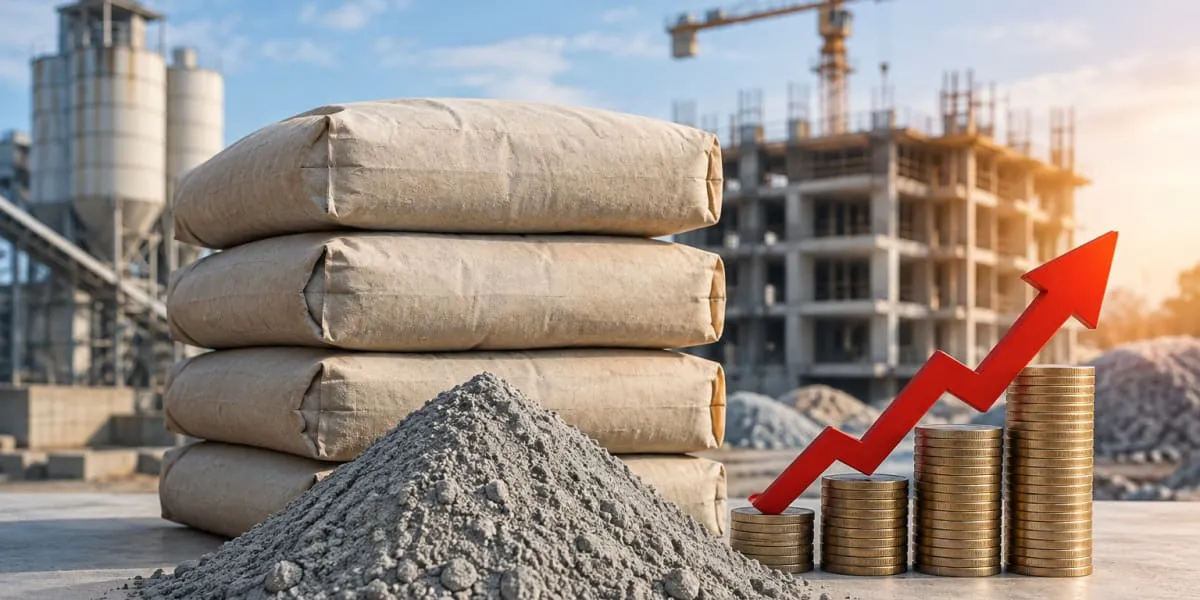
Cement manufacturers in India are likely to raise prices by Rs. 10-15 per bag from mid-October, as they seek to offset persistent increases in power and fuel costs. Emkay Research said its channel checks indicated a high probability of an increase from October 12, supported by the start of the busy construction season and favourable demand-supply conditions.

The sector had implemented similar rate adjustments of Rs. 10-15 per bag during the first quarter, but the increases were insufficient to cover higher operating costs. Prices also softened during July and August because of the monsoon, widening the gap between realisations and input expenses. Delayed plant expansion programmes have pushed clinker utilisation rates towards 79 per cent by FY28, helping to balance market fundamentals.

Emkay Research said steady volume offtake was supporting cement consumption, with non-trade demand driving activity across regional markets. Industry volumes are expected to grow by 7-8 per cent year on year during the first half of FY27, while demand momentum is projected to remain firm over the following 18 months. The outlook includes the busy construction season in the second half of FY27 and infrastructure activity linked to general elections in the first half of calendar year 2029.

The brokerage expects overall cement demand to record a compound annual growth rate of about 7 per cent between FY26 and FY28. However, elevated operating expenses are likely to continue weighing on profitability. Input costs have risen by Rs. 300-400 per t over the past six to seven months, with the full impact expected to become visible in second-quarter earnings and remain persistent through the second half of FY27.

Spot prices for petcoke and imported coal are approximately 20 per cent and 16 per cent above their second-quarter averages, at USD 175 per t and USD 150 per t, respectively. Packing costs have also increased, with polypropylene granule prices rising above Rs. 135 per kg. Emkay Research estimated that second-quarter earnings could decline by Rs. 200-250 per t sequentially because of higher fuel bills and negative operating leverage, and said the sector requires sustained price increases of about Rs. 10 per bag to offset cost inflation.

Continue Reading

Concrete

Nuvoco Marks 10 Years, Targets 35 MMTPA Capacity by FY28

Nuvoco celebrates a decade of growth, targeting 35 MMTPA cement capacity by FY28.
Published

on

By

Shares
Nuvoco Vistas Corporation Limited is celebrating a decade of operations under the theme ‘Dus Saal Bemisaal’, highlighting its expansion in India’s building materials sector. The company has grown from a single cement manufacturing facility into a diversified organisation operating across cement, ready-mix concrete (RMC) and modern building materials.
The company’s journey began in 2014 when its parent, Nirma Group, commissioned a 2 million metric tonnes per annum (MMTPA) greenfield cement plant at Nimbol, Rajasthan. A major milestone followed in October 2016 with the acquisition of Lafarge India, significantly expanding its manufacturing footprint.
Nuvoco strengthened its market presence through the acquisition of Emami Cement, now NU Vista Limited, in 2020, followed by its public listing in 2021. In April 2025, the company added Vadraj Cement to its portfolio, strengthening its presence in western India.
Nuvoco has an operating cement capacity of 27 MMTPA and 14 manufacturing units, including the Kutch and Sachana facilities in Gujarat, which are in advanced stages of completion. It also operates 58 ready-mix concrete plants across India and offers a range of modern building materials.
The company aims to increase its cement capacity to 35 MMTPA by FY2027-28, representing approximately 15-fold growth over the decade.
Reflecting on the milestone, Hiren Patel, Chairman, Nuvoco Vistas Corporation Limited, said, “From our beginnings at Nimbol to the organisation we are today, every milestone has added a new chapter to Nuvoco’s journey and strengthened our belief in building for the long term.”
The company continues to focus on capacity expansion, operational efficiency, innovation and sustainability while strengthening its position in India’s construction materials market.

Continue Reading

Concrete

J&K Government Notifies City Gas Distribution Policy

Policy targets PNG and CNG expansion across all 20 districts
Published

on

By

Shares

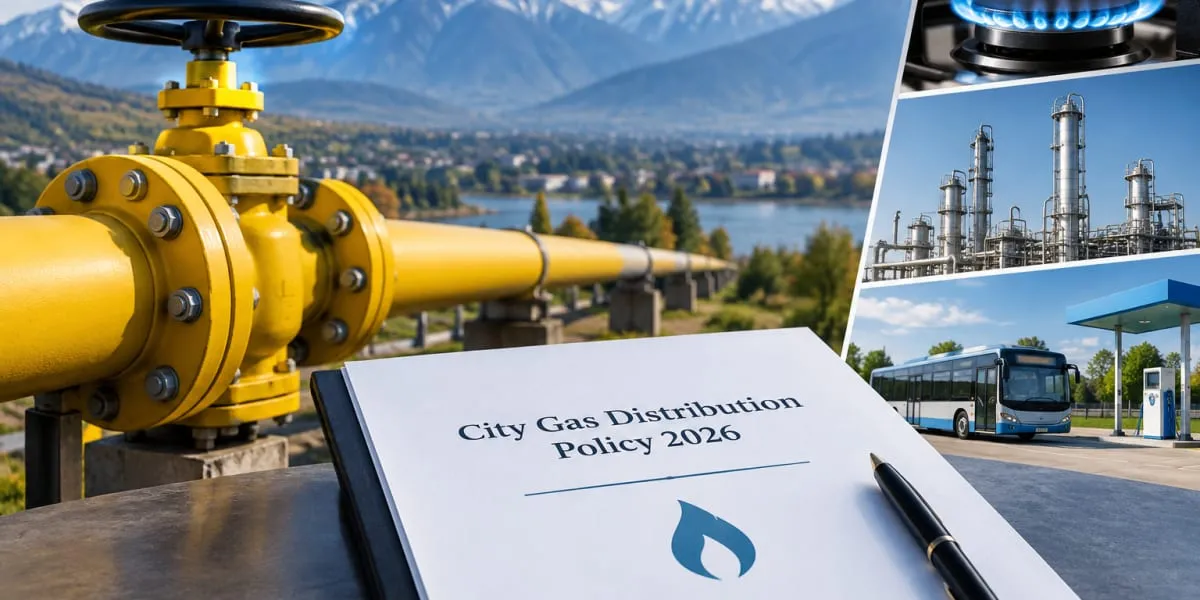
Jammu and Kashmir government has notified the City Gas Distribution (CGD) Policy, 2026, following its approval by the Council of Ministers headed by Chief Minister Omar Abdullah. The policy sets out a phased framework for expanding Piped Natural Gas (PNG) and Compressed Natural Gas (CNG) access for households, businesses, industries and the transport sector across the Union Territory.

CGD networks will be expanded in phases across all 20 districts, with the aim of bringing reliable natural gas closer to consumers and supporting a gradual shift from conventional fuels. The government said the policy is designed to improve energy access while creating an investor-friendly and time-bound environment for gas distribution projects.

The policy provides for single-window and time-bound clearances, streamlined procedures for setting up CNG stations and standardised norms for the Right of Way. These measures are intended to reduce procedural delays, simplify project implementation and facilitate investment in natural gas infrastructure.

It also prioritises gas connectivity for major industrial estates, including those in Kathua, Samba and Pulwama. Improved access to natural gas is expected to support industrial activity, enhance energy efficiency and help businesses manage fuel costs, while strengthening their competitiveness and encouraging investment in the clean-energy sector.

The policy is also expected to create opportunities for local employment, apprenticeships and skill development in the construction, operation and maintenance of gas distribution networks and related services. Abdullah described the measure as an important step towards cleaner growth, sustainable development and a modern energy ecosystem in Jammu and Kashmir, saying it would expand reliable energy access and support industry and investment.

Continue Reading

Video Thumbnail
▶

    SIGN-UP FOR OUR GENERAL NEWSLETTER

    Trending News