Connect with us

Concrete

Indian Cement Review: Person of the Year 2023

Published

on

Shares

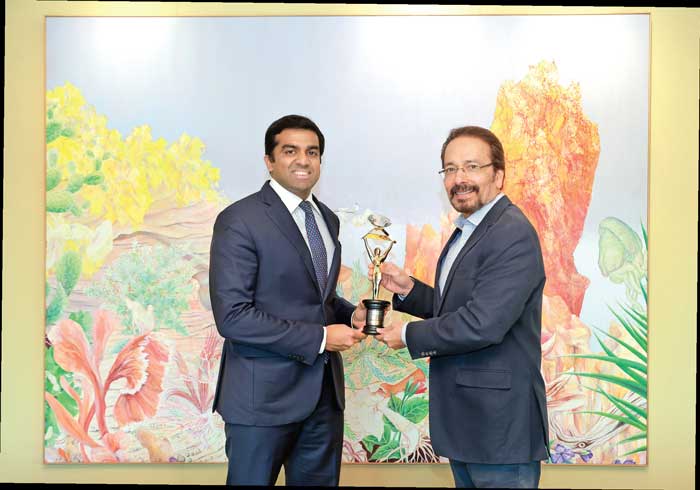
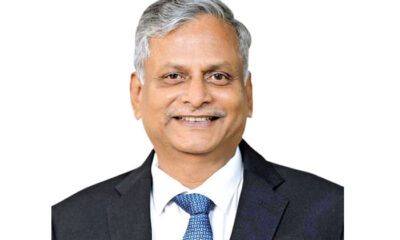
Parth Jindal, the dynamic Managing Director of JSW Cement, has rightfully received the Indian Cement Review – Person of the Year Award. JSW Cement, currently a
$600 million organisation with a capacity of 17 MTPA is slated to reach 25 MTPA by 2024, under Jindal’s stewardship. An MBA from Harvard Business School (2016) and a Bachelor of Arts in Economics and Political Science from Brown University (2012), he worked abroad for two years – first with a hedge fund in New York, and then with JFE Steel in Japan (JSW Steel’s JV Partners), before he joined the $23 billion JSW Group in 2012.
He is also Managing Director-JSW Paints (established in May 2019), Director-JSW Energy, and Director-JSW Ventures and JSW USA.
Passionate about sports, he founded JSW Sports, that owns and manages ISL 2018-19 Champions Bengaluru FC and Pro-Kabaddi League team Haryana Steelers; and he is Chairman and Co-Owner of Delhi Capitals. He is also the Founder of the Inspire Institute of Sport, a visionary project aimed at enhancing India’s Olympic calibre. Under his leadership, JSW Sports received the ‘Rashtriya Khel Protsahan Puruskar 2018’ from the President of India for its contribution to sports through corporate social responsibility.
Parth Jindal has been recognised as the youngest business leader on the ‘2019 Economic Times 40 under Forty’ list, one of GQ’s ‘50 Most Influential Young Indians for 2018’, and was honoured by News24 as the 2018 Youth Icon for his contribution to the nation. As Director of Bengaluru FC, Parth was elected unopposed as Vice-President of the Western India Football Association.
Under his visionary leadership, JSW Cement is poised to soar to greater heights, showcasing Jindal’s remarkable stewardship and strategic acumen.

Concrete

Coforge Launches AI-Led Data Cosmos Analytics Platform

New cloud-native platform targets enterprise data modernisation and GenAI adoption

Published

on

By

Shares


Coforge Limited has recently announced the launch of Coforge Data Cosmos, an AI-enabled, cloud-native data engineering and advanced analytics platform aimed at helping enterprises convert fragmented data environments into intelligent, high-performance data ecosystems. The platform strengthens Coforge’s technology stack by introducing a foundational innovation layer that supports cloud-native, domain-specific solutions built on reusable blueprints, proprietary IP, accelerators, agentic components and industry-aligned capabilities.

Data Cosmos is designed to address persistent enterprise challenges such as data fragmentation, legacy modernisation, high operational costs, limited self-service analytics, lack of unified governance and the complexity of GenAI adoption. The platform is structured around five technology portfolios—Supernova, Nebula, Hypernova, Pulsar and Quasar—covering the full data transformation lifecycle, from legacy-to-cloud migration and governance to cloud-native data platforms, autonomous DataOps and scaled GenAI orchestration.

To accelerate speed-to-value, Coforge has introduced the Data Cosmos Toolkit, comprising over 55 IPs and accelerators and 38 AI agents powered by the Data Cosmos Engine. The platform also enables Galaxy solutions, which combine industry-specific data models with the core technology stack to deliver tailored solutions across sectors including BFS, insurance, travel, transportation and hospitality, healthcare, public sector and retail.

“With Data Cosmos, we are setting a new benchmark for how enterprises convert data complexity into competitive advantage,” said Deepak Manjarekar, Global Head – Data HBU, Coforge. “Our objective is to provide clients with a fast, adaptive and AI-ready data foundation from day one.”

Supported by a strong ecosystem of cloud and technology partners, Data Cosmos operates across multi-cloud and hybrid environments and is already being deployed in large-scale transformation programmes for global clients.

Continue Reading

Concrete

India, Sweden Launch Seven Low-Carbon Steel, Cement Projects

Joint studies to cut industrial emissions under LeadIT

Published

on

By

Shares


India and Sweden have announced seven joint projects aimed at reducing carbon emissions in the steel and cement sectors, with funding support from India’s Department of Science and Technology and the Swedish Energy Agency.

The initiatives, launched under the LeadIT Industry Transition Partnership, bring together major Indian companies including Tata Steel, JK Cement, Ambuja Cements, Jindal Steel and Power, and Prism Johnson, alongside Swedish technology firms such as Cemvision, Kanthal and Swerim. Leading Indian academic institutions, including IIT Bombay, IIT-ISM Dhanbad, IIT Bhubaneswar and IIT Hyderabad, are also participating.

The projects will undertake pre-pilot feasibility studies on a range of low-carbon technologies. These include the use of hydrogen in steel rotary kilns, recycling steel slag for green cement production, and applying artificial intelligence to optimise concrete mix designs. Other studies will explore converting blast furnace carbon dioxide into carbon monoxide for reuse and assessing electric heating solutions for steelmaking.

India’s steel sector currently accounts for about 10–12 per cent of the country’s carbon emissions, while cement contributes nearly 6 per cent. Globally, heavy industry is responsible for roughly one-quarter of greenhouse gas emissions and consumes around one-third of total energy.

The collaboration aims to develop scalable, low-carbon industrial technologies that can support India’s net-zero emissions target by 2070. As part of the programme, Tata Steel and Cemvision will examine methods to convert steel slag into construction materials, creating a circular value chain for industrial byproducts.

Continue Reading

Concrete

Jindal Steel Scales Up Heat Treatment to 60,000 Tpm

Expansion positions firm as India’s largest in the segment

Published

on

By

Shares


Jindal Steel on Thursday said it has expanded its heat treatment capacity to 60,000 tonnes per month, tripling it from 20,000 tonnes and making the company the largest player in the segment in India. Heat treatment involves processing steel to modify properties such as hardness, toughness and strength to meet specialised application requirements.

The company said the expanded capacity will cater to rising demand from sectors including infrastructure, engineering, energy and heavy machinery. With the scale-up, Jindal Steel now offers an extensive range of furnace normalised and quenched and tempered products.

According to S K Pradhan, Head of Flat Products at Jindal Steel, the facility is capable of processing steel plates with thicknesses ranging from 6 mm to 200 mm and widths of up to 5 metres. He said the technological upgrade enables the company to manufacture high-end steel products that were previously imported, directly supporting the Atmanirbhar Bharat initiative.

Jindal Steel operates two integrated steel plants at Angul in Odisha and Raigarh in Chhattisgarh, with a combined capacity of 12.6 million tonnes. The company plans to increase its overall capacity to 15.6 million tonnes by FY26.

Continue Reading

Trending News

SUBSCRIBE TO THE NEWSLETTER


Don't miss out on valuable insights and opportunities to connect with like minded professionals.


    This will close in 0 seconds