Connect with us

Concrete

A Common Control Platform

Published

on

Shares

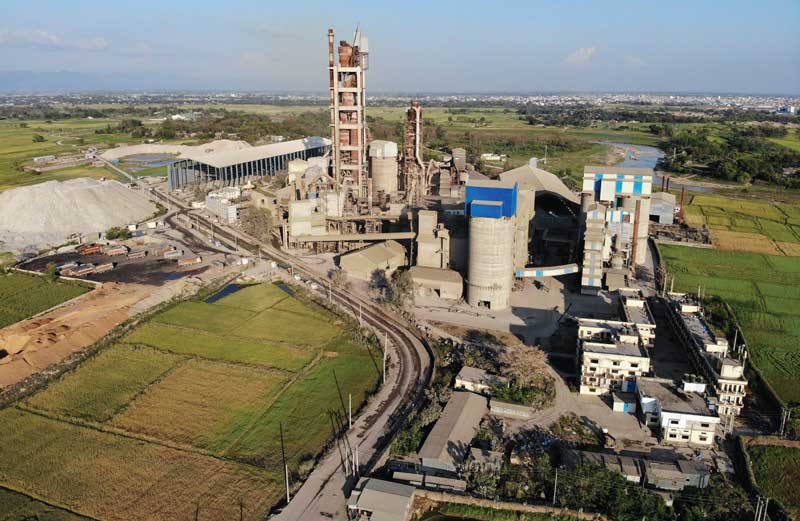
Combining the old and new production lines on a common FLSmidth ECS/ControlCenter™ Platform at Arghakhanchi Cement, Nepal.

Having experienced the benefits of the latest FLSmidth ECS/ControlCenter™ control software on its newest production line, Arghakhanchi Cement was convinced of the need to upgrade the obsolete and fault-prone software on its existing line 1. With both lines now controlled from a common platform, productivity has increased and knowledge sharing between operators has improved.

AN OBSOLETE CONTROL SYSTEM CAUSES PROBLEMS
Production line 1 at Arghakhanchi Cement in Nepal was experiencing an increasing amount of unplanned downtime, caused by an obsolete control system. It was resulting in a loss of production. But the issue came to a head when production line 2 was commissioned with the latest FLSmidth ECS/ControlCenter™ process control software. process control software. This really highlighted the benefits of a modern state-of-the-art control for achieving reliable productivity.
“When production line 2 was commissioned with ECS/ControlCenter v8, the benefits were evident. With easier fault tracing, advanced trending and reporting features, it is much easier to achieve stable operation, as operators can easily understand and fix potential issues,” explained Krishna Pandey, General Manager – Plant, Arghakhanchi Cement.
The old system was engineered without any standardisation, which meant only specific engineers knew how to troubleshoot and maintain the system.
“A great advantage of ECS/ControlCenter v8 is that everything is based on a standard system, so learning how to operate the system and extract information is simple and intuitive. This applies to everything from troubleshooting to configuring process analytics using trend and reporting tools, and even back-up and restore functions,”said Pandey.
“As a result, operators began to ask for a similar control system to replace the old system on production line 1,” he concluded.

INSTALLATION AND COMMISSIONING
To upgrade the obsolete control system in as cost-efficient a way as possible, much of the existing hardware, with complete I/Os and panels was retained and re-used. This not only made lasting use of the customer’s previous investment; it also has a sustainability advantage. The amount of waste generated and new
materials used is reduced – a key pillar of the circular economy.
PLCs and communication cards had to be replaced, as did the entire PLC programming code. To do so, FLSmidth employed several proven engineering and processing tools to ensure consistent and uniform structure in the PLC programmes.
For commissioning, FLSmidth ECS/ControlCenter v8 includes a device simulation mode that allows the operation of the entire plant to be simulated and tested as per process requirements. This helps to ensure smooth and quick commissioning, allowing any problems to be identified and solved, without impacting the real-world operations of the plant.

NEW AND OLD LINES: A COMMON FLSMIDTH CONTROL PLATFORM
As one example of the benefits of the new system, “all interlocks can be seen and bypassed by every authorised user, directly from the faceplate, most often from the engineering system,” explained Pandey. “It means the new system is very easy to operate and – most importantly – we avoid the plant tripping, as operators can take action very quickly. Before, it was very difficult to know the interlocks and impossible to bypass them from the faceplate, as each bypass required reprogramming of the PLC system,” he added.
The upgrade of production line 1 is another example of the benefits gained by customers using FLSmidth ECS/ControlCenter v8. It is also a demonstration of FLSmidth skills and expertise to suggest the optimum upgrade strategy, even for obsolete and third-party supplied PLC hardware.
“From a control and logistics point of view, we wanted to have one central control room for both lines,” said Pandey. “The new system from FLSmidth gives us more flexibility with process control, more powerful control capabilities over both lines and excellent reporting capabilities.”


Continue Reading

Concrete

Steel: Shielded or Strengthened?

CW explores the impact of pro-steel policies on construction and infrastructure and identifies gaps that need to be addressed.

Published

on

By

Shares


Going forward, domestic steel mills are targeting capacity expansion
of nearly 40 per cent through till FY31, adding 80-85 mt, translating
into an investment pipeline of $ 45-50 billion. So, Jhunjhunwala points
out that continuing the safeguard duty will be vital to prevent a surge
in imports and protect domestic prices from external shocks. While in
FY26, the industry operating profit per tonne is expected to hold at
around $ 108, similar to last year, the industry’s earnings must
meaningfully improve from hereon to sustain large-scale investments.
Else, domestic mills could experience a significant spike in industry
leverage levels over the medium term, increasing their vulnerability to
external macroeconomic shocks.(~$ 60/tonne) over the past one month,
compressing the import parity discount to ~$ 23-25/tonne from previous
highs of ~$ 70-90/tonne, adds Jhunjhunwala. With this, he says, “the
industry can expect high resistance to further steel price increases.”

Domestic HRC prices have increased by ~Rs 5,000/tonne
“Aggressive
capacity additions (~15 mt commissioned in FY25, with 5 mt more by
FY26) have created a supply overhang, temporarily outpacing demand
growth of ~11-12 mt,” he says…

To read the full article Click Here

Continue Reading

Concrete

JK Cement Commissions 3 MTPA Buxar Plant, Crosses 31 MTPA

Company becomes India’s fifth-largest grey cement producer

Published

on

By

Shares


JK Cement  has commissioned its new 3 MTPA grey cement plant in Buxar, Bihar, taking the company’s total installed capacity to 31.26 million tonnes per annum (MTPA) and moving it past the 30 MTPA milestone. With this addition, JK Cement now ranks among the top five grey cement manufacturers in India, strengthening its national presence.

Commenting on the development, Dr Raghavpat Singhania, Managing Director, JK Cement, said, “Crossing 31 MTPA is a significant turning point in JK Cement’s expansion and demonstrates the scale, resilience, and aspirations of our company. In addition to making a significant contribution to Bihar’s development vision, the commissioning of our Buxar plant represents a strategic step towards expanding our national footprint. We are committed to developing top-notch manufacturing capabilities that boost India’s infrastructure development and generate long-term benefits for local communities.”

Spread across 100 acres, the Buxar plant is located on the Patna–Buxar highway, enabling efficient distribution across Bihar and neighbouring regions. While JK Cement entered the Bihar market last year through supplies from its Prayagraj plant, the new facility will allow local manufacturing and deliveries within 24 hours across the state.

Mr Madhavkrishna Singhania, Joint Managing Director & CEO, JK Cement, said, “JK Cement is now among India’s top five producers of grey cement after the Buxar plant commissioning. Our capacity to serve Bihar locally, more effectively, and on a larger scale is strengthened by this facility. Although we had already entered the Bihar market last year using Prayagraj supplies, local manufacturing now enables us to be nearer to our clients and significantly raise service standards throughout the state. Buxar places us at the center of this chance to promote sustainable growth for both the company and the region in Bihar, a high-growth market with strong infrastructure momentum.”

The project has involved an investment of Rs 5 billion. Commercial production began on 29 January 2026, following construction commencement in March 2025. The company said the plant is expected to generate significant direct and indirect employment and support ancillary industrial development in the region.

Continue Reading

Concrete

JK Cement Crosses 31 MTPA Capacity with Commissioning of Buxar Plant in Bihar

Published

on

By

Shares


JK Cement has commissioned a 3 MTPA Grey Cement plant in Buxar, Bihar, taking its total capacity to 31.26 MTPA and placing it among India’s top five grey cement producers. The ₹500 crore investment strengthens the company’s national footprint while supporting Bihar’s infrastructure growth and local economic development.

JK Cement Ltd., one of India’s leading cement manufacturers, has announced the commissioning of its new state-of-the-art Grey Cement plant in Buxar, Bihar, marking a significant milestone in the company’s growth trajectory. With the commissioning of this facility, JK Cement’s total production capacity has increased to 31.26 million tonnes per annum (MTPA), enabling the company to cross the 30 MTPA threshold.

This expansion positions JK Cement among the top five Grey Cement manufacturers in India, strengthening its national footprint and reinforcing its long-term growth strategy.

Commenting on the strategic achievement, Dr Raghavpat Singhania, Managing Director, JK Cement, said, “Crossing 31 MTPA is a significant turning point in JK Cement’s expansion and demonstrates the scale, resilience, and aspirations of our company. In addition to making a significant contribution to Bihar’s development vision, the commissioning of our Buxar plant represents a strategic step towards expanding our national footprint. We are committed to developing top-notch manufacturing capabilities that boost India’s infrastructure development and generate long-term benefits for local communities.”

The Buxar plant has a capacity of 3 MTPA and is spread across 100 acres. Strategically located on the Patna–Buxar highway, the facility enables faster and more efficient distribution across Bihar and adjoining regions. While JK Cement entered the Bihar market last year through supplies from its Prayagraj plant, the Buxar facility will now allow the company to serve the state locally, with deliveries possible within 24 hours across Bihar.

Sharing his views on the expansion, Madhavkrishna Singhania, Joint Managing Director & CEO, JK Cement, said, “JK Cement is now among India’s top five producers of grey cement after the Buxar plant commissioning. Our capacity to serve Bihar locally, more effectively, and on a larger scale is strengthened by this facility. Although we had already entered the Bihar market last year using Prayagraj supplies, local manufacturing now enables us to be nearer to our clients and significantly raise service standards throughout the state. Buxar places us at the center of this chance to promote sustainable growth for both the company and the region in Bihar, a high-growth market with strong infrastructure momentum.”

The new facility represents a strategic step in supporting Bihar’s development vision by ensuring faster access to superior quality cement for infrastructure, housing, and commercial projects. JK Cement has invested approximately ₹500 crore in the project. Construction began in March 2025, and commercial production commenced on January 29, 2026.

In addition to strengthening JK Cement’s regional presence, the Buxar plant is expected to generate significant direct and indirect employment opportunities and attract ancillary industries, thereby contributing to the local economy and the broader industrial ecosystem.

Continue Reading

Trending News

SUBSCRIBE TO THE NEWSLETTER


Don't miss out on valuable insights and opportunities to connect with like minded professionals.


    This will close in 0 seconds