Cement major JSW Cement is increasing installed capacities and moving fast towards becoming a green cement producer and a preferred partner in the construction sector.
JSW Cement, a part of the US$ 13 billion JSW Group, is one of India’s fastest growing cement companies and India’s largest green cement company. It is a fast paving way to emerge as a leader in the construction sector, contributing to national projects and strengthening the nation’s infrastructure.
The company has consistently been increasing its revenue and maintaining a strong financial position, despite the onset of the COVID-19-induced pandemic, and remains well positioned to contribute towards AtmaNirbhar Bharat through its world-class cement products. It is positioning itself closer to being listed on the Indian bourses as it moves towards an initial public offering (IPO) towards the end of CY2022. In its quest to be ranked among India’s top five cement players in India and its focus on increasing share of premium products, the Company is expanding its domestic cement manufacturing capacity. With this, it is set to realise its objective of becoming a 25 MTPA producing cement company by 2025.
Notably, within a span of four years, it has more than doubled its manufacturing capacity from 6 MTPA in 2019 to 14 MTPA currently. The cement major plans to augment its capacity mostly through a combination of setting up brownfield and greenfield projects and through inorganic growth opportunities. Currently, it is in the process of adding two cement plants of 5 MTPA each in Rajasthan and Chhattisgarh.
Geographical diversification
The company has a strong business model with deep market presence in western, eastern and southern parts of India. It has established a reputation of having delivered superior quality products to some of India’s largest and prestigious infrastructural projects in the southern and western regions of the country. With a presence in Telangana, Andhra Pradesh, Karnataka, Tamil Nadu, Kerala, Maharashtra, Orissa, and Goa, it has gained a foothold in the relative markets. The cement company draws its key strengths from the Group’s well-established track record in project execution and cost management.
Key risks
However, JSW Cement’s lower capacity utilisation and limited portfolio diversification is a key worry. Also, the substantial capacity expansion planned exposes the company to risks related to project execution. Further, being in the commodity sector, the company is highly susceptible to volatility in input cost and realisation and also to cyclicality in the cement sector. It is also exposed to volatility in input prices for key components including freight, fuel, power and raw material, which has the capability to impact its Operating Profitability Margin.
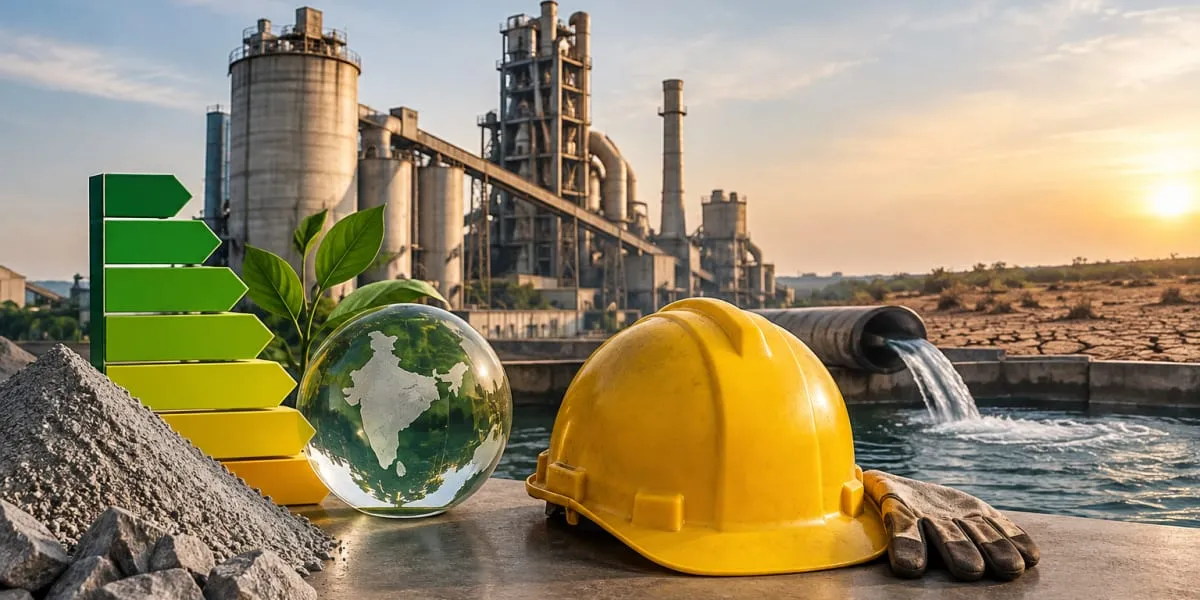
India’s cement sector has improved its energy and carbon efficiency, but rising groundwater use in water-stressed regions and deteriorating worker safety remain significant concerns, according to a report by the International Forum for Environment, Sustainability & Technology (iFOREST). The findings also highlighted weak policy implementation and gaps in sustainability reporting.
India, the world’s second-largest cement producer, uses about 2.54 gigajoules of energy per tonne (GJ/t), below the global average of 2.88 GJ/t. However, renewable sources accounted for only 5.1 per cent of the sector’s energy mix, indicating continued dependence on conventional sources.
The report assessed 18 cement companies against 107 Business Responsibility and Sustainability Reporting indicators for FY24 and FY25. The companies covered 87 per cent of India’s cement production. Carbon emissions intensity declined from 0.58 to 0.57 tonnes of carbon dioxide per tonne, but total emissions increased 4 per cent to 224.3 mn t, equivalent to about 6 to 7 per cent of India’s overall emissions.
Overall water withdrawal declined 9.5 per cent during the study period, while withdrawals in water-stressed areas, mainly in Rajasthan, increased by more than 20 per cent. Groundwater’s share of withdrawals in these areas rose from 27 per cent to 38 per cent, raising concerns about the sector’s impact on vulnerable water resources.
The sector employs about 228,000 people, including 63 per cent contractual workers, 3.1 per cent women and 0.07 per cent persons with disabilities. Women in key managerial roles earned 26.8 per cent less than men, while median pay for women workers fell 11.1 per cent in FY25 as men’s pay increased. Worker injuries rose 36.5 per cent to 359, and fatalities increased from 17 to 22, with workers accounting for more than 90 per cent of deaths.
iFOREST recommended cement-specific reporting guidance, standardised metrics, mandatory production disclosure and third-party verification. It also called for environmental, social and governance policies to be integrated into business strategies and implemented more effectively on the ground.
Ambuja Cements expects its sales volumes to grow faster than the cement industry during the second half of fiscal year 2027, as it seeks a recovery in institutional demand after a weak first half. The Gautam Adani-owned company is aiming to rebuild volumes while protecting profitability.
The company reported a 90 per cent year-on-year decline in consolidated net profit attributable to owners of the parent to Rs. 1.93 bn for the quarter ended 30 September, from Rs. 17.74 bn a year earlier. The previous year’s profit included a reversal of income-tax provisions worth Rs. 16.97 bn. Revenue from operations rose marginally to Rs. 91.66 bn from Rs. 91.3 bn.
Trade volumes increased 8.6 per cent year-on-year in the September quarter, but weaker institutional sales left overall volumes broadly unchanged. Ambuja Cements expects both trade and institutional sales to turn positive in the third and fourth quarters. Trade sales are made through dealers and distributors, while institutional or business-to-business sales involve bulk supplies to infrastructure developers, government projects and real estate companies.
The company had earlier reduced institutional sales that did not generate adequate returns. It now plans to rebuild the business selectively, while continuing to prioritise trade sales and higher-value products. Trade accounted for 74 per cent of sales in the quarter, up six percentage points from a year earlier, while premium products increased to 37 per cent of trade sales from 35 per cent. Blended cement’s share rose to 82 per cent from 77 per cent.
Ambuja Cements commissioned 4.6 mn t of capacity during the quarter. Another 3.2 mn t at Bathinda in Punjab and Jodhpur has stabilised, with the facilities expected to ramp up in the second half. A further 2.4 mn t facility at Varkala in Bihar is scheduled for commissioning during the period. Higher fuel and logistics costs remain a challenge, while the company has realised a cement price increase of about Rs. 10 per bag in October and is targeting operating costs of Rs. 4,250 per t for the full year.
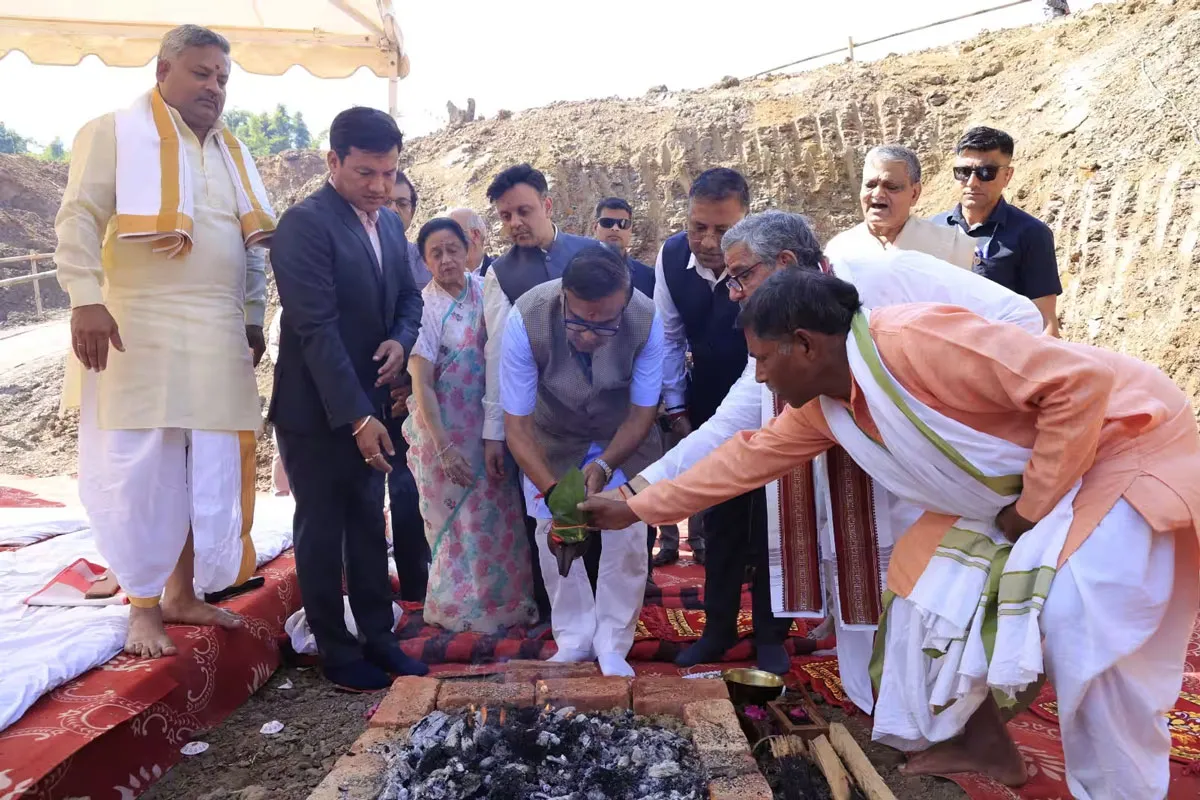
JK Lakshmi Cement has recently laid the foundation stone for Project Kamakshi, its first integrated cement manufacturing facility in Assam, marking its entry into Northeast India. The groundbreaking ceremony was held at Umrangso village in Dima Hasao district in the presence of Assam Chief Minister Himanta Biswa Sarma.
The project involves an investment of Rs 110 billion, including the mining lease, and will have an annual cement production capacity of 2.5 million tonnes, supported by a 1 million tonne clinkerisation unit. Scheduled for completion by FY2029, the facility is expected to generate employment for over 2,000 people while catering primarily to the growing Northeast market.
The integrated plant will feature dedicated railway sidings to facilitate efficient transportation of raw materials and finished cement, strengthening supply chain reliability and regional distribution.
Vinita Singhania, Chairperson and Managing Director, JK Lakshmi Cement, said, “”Project Kamakshi is the start of a long-term relationship with Assam and the wider North East. This is a region that is building fast, and it deserves quality cement made close to home. With this plant, we want to bring scale, jobs, and dependable supply to the region. At JK Lakshmi Cement, we believe that building a stronger India goes beyond infrastructure. It is also about growing together with the communities we serve.””
The investment aligns with the company’s strategy to expand into high-growth markets beyond its established presence in Northern, Western and Eastern India. The project is also expected to support regional economic development and infrastructure growth.
JK Lakshmi Cement aims to pursue its expansion plans while working towards its long-term target of achieving net-zero emissions by 2047.