Uncategorized
Municipal Waste to Wealth

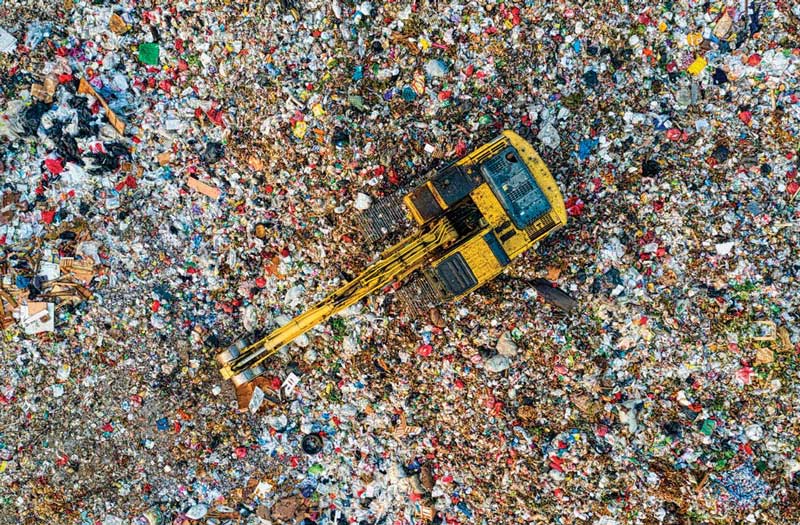
In view of the environmental hazards of dumping and the ever-increasing solid and semi-solid waste, especially in urban centres, we look at the role the cement sector plays in sustainable waste disposal.
In September 2019, I visited the site where the world’s biggest cement kiln was being built on the banks of the Yangtze river, just 40 km from Wuhan, China. For a cement plant to be built that close to a city it would have meant a great deal of network optimisation principles to be rejigged, but this was hardly the case for this unit. It was the municipal waste of Wuhan, which drove the rationale of location to its logical conclusion.
Wuhan had an excess 3000 tonnes of municipal waste per day that was to be consumed by this cement kiln, thus the rationale was driven more by the city’s concern for sustainability and environment than anything else. But it had economics in-built in the operating cost structure of making cement – the proximity to market on the one hand and the replacement cost of coal on the other got the better of many known disadvantages of using municipal wastes, the processing cost included.
Logistics rule
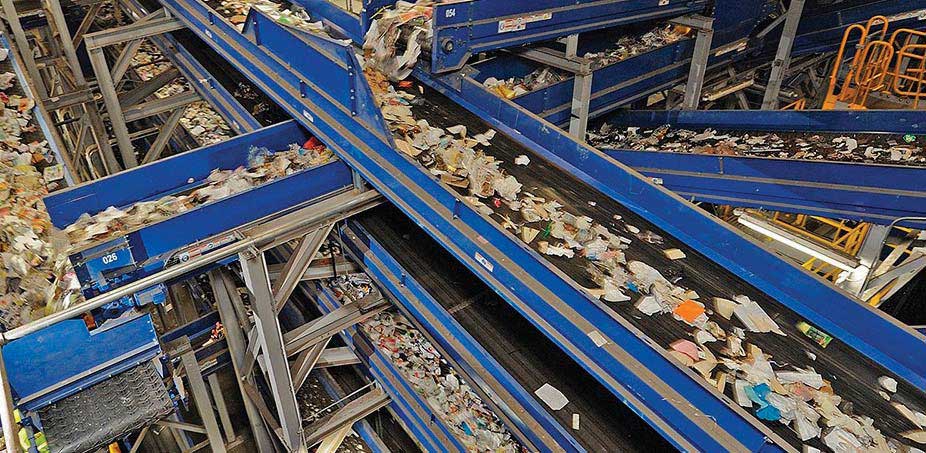
The backbone of the economics of using municipal waste as alternate fuel in this unit was driven by logistics cost, as the Yangtze river provided the perfect ground for moving the entire waste by barges after drying and then through pipeline from the jetty to the pre-calciner section. This was a fraction of the cost of moving coal and the difference of heat value was more than compensated.
One of the major drawbacks of municipal waste is the heat value when compared with coal or
pet coke. The energy density is low—approximately 10-13 MMBTU/ton—well below sub-bituminous coal at roughly 17-21 MMBTU/ton. The second
is the moisture content, which in most MSW (Municipal Waste) is above 50 per cent. The partial drying facilities in this case provided the additional fillip. The rest of the deterrents are more related to sulphur and chlorine, where there are technologies available for mitigation.
The real win-win is brought about by the proximity of the city to the unit that solves the problem of distributed availability of wastes that deters setting up of single location processing units of wastes and consumption, which also reduces the logistics cost. For this facility near Wuhan, the incineration of processed waste in a single kiln provided the best cost alternative to coal as both sides of the market- waste generation and disposal side balancing with the consumption side as alternate fuel economics was weighed, the true cost of externalities included. As the true cost of externalities get built-in the cost of coal or pet coke, this balancing act will only get simpler and easier to implement.
Working hand in hand
To replicate such an act in many other locations, similar partnerships need to be reviewed – between waste handlers, the municipalities and the incinerating agencies that generate power, including cement makers, who can directly use it as heat input for producing clinker. The partnerships will include co-processing centres in between, logistics service providers and the broader public who can hardly be ignored from the equation.
Think of the colossal waste that municipal waste creates, in terms of open dumps, which form 75 per cent of all waste disposal in India, and the bulk of this is adjacent to prime land in the cities. If only the city dwellers and municipalities come together to enact new laws that restrict such dumping, the situation can start to improve.
The enactment of new laws across the world over, starting with the landfill acts, paved the way for municipal waste recycling to move into a new gear. Poland and Germany have shown how these could transform the waste to wealth landscape. No wonder then that Germany and Poland do not use any coal or pet coke in their cement kilns today but only process municipal processed waste instead.
When the projected municipal waste is escalating at a frenetic pace (currently at 500 kg per capita), thanks to urbanisation, the focus must shift to reorganising how the waste could be stopped from simply becoming somebody else’s problem. While technical solutions in processing diverse wastes and solving pollution problems is at the top of the agenda, logistical issues cannot be lost sight of either.
It is in this logistics of waste where several constituencies must come together; if the externalities are accounted for and the principle of ‘polluter pays’ is enacted, the public must come forth as the most important constituent of this jigsaw puzzle. This is where the role of the government also steps up as a positive mediator.
Procyon Mukherjee







Uncategorized
World’s First Book on Carbon Steel Sourcing Launched by Hero Steels CEO
Panckaj N Umrania’s book offers strategic insights into steel sourcing.

Uncategorized
Viva ACP Unveils Bricklyn: A Fusion of Tradition and Innovation
The new ACP series blends classic brick aesthetics with modern engineering.

Uncategorized
HMPL Wins Rs 1 Billion Steel Contract in Maharashtra
The execution of the project is expected to be completed within six months.


Hindalco Buys US Speciality Alumina Firm for $125 Million

Star Cement launches ‘Star Smart Building Solutions’

Nuvoco Vistas reports record quarterly EBITDA

UltraTech Cement increases capacity by 1.4Mt/yr

Shree Cement reports 2025 financial year results
Hindalco Buys US Speciality Alumina Firm for $125 Million
Star Cement launches ‘Star Smart Building Solutions’
Nuvoco Vistas reports record quarterly EBITDA
UltraTech Cement increases capacity by 1.4Mt/yr