Connect with us

Concrete

ACC and Ambuja Cements bring breakthrough technology in Logistics

Published

on

Shares

Holcim in India is deploying its industry-leading Transport Analytics Center (TAC) in 35 plants of ACC and Ambuja to optimise its logistics for road safety, enhanced efficiency and sustainability. TAC is currently tracking more than 20,000 trucks through various data sources like ERP, In Vehicle monitoring system (IVMS), NFC, RFID and others for advanced analytics and artificial intelligence applications.

Neeraj Akhoury, CEO India Holcim and Managing Director & CEO of Ambuja Cements Ltd said, ??AC has proven to be a great catalyst in achieving our net zero goal. It is also a testament to our digital expertise in creating cutting edge digital solutions for our drivers and communities. I am happy to see that our Logistics, IT and Digital teams are not only ensuring driver?? safety and logistics efficiency but also pushing the boundaries of innovation to reach zero harm and reduce overall emissions.

Globally, transportation accounts for around a fifth of the world?? emissions and going farther with less is an essential part of ACC and Ambuja Cement?? Net-Zero pledge.

In India, TAC was implemented in 2018 to monitor road safety KPIs which helped both the companies to achieve nearly 75% kms without any safety violations and a 60% reduction in offsite incidents. In the journey along with ACC and Ambuja, TAC provided data analytics on a daily basis to the Driver Management Center (DMC) in all the 35 plants for focused intervention in the form of training and coaching the drivers to improve their driving behavior. This intervention has helped proactively act on ??t risk??drivers. On the other hand, it enables Transporters engagement in the process and ensures drivers’ participation with a structured reward and recognition program.

For enhancing efficiency, TAC has now moved towards providing solutions to support cost and operation. TAC provides analytics on freight, distance, turnaround time, route adherence, leads and direct dispatches. The recent addition of the TAC KPI Tree application in India provides all the logistics KPIs from ACC and Ambuja to the customer level at a click of a button. This helps companies to drive efficiency improvement and monitor its impact with great ease.

To continuously reduce its environmental footprint in line with its scope 3 emissions target, TAC through its proprietary digital tool enables transparent tracking of its transportation emissions, including those of its third-party suppliers. On its net-zero journey, Holcim set itself its industry?? first scope 3 emissions reduction target, with the aim to reduce its Scope 3 emissions related to transportation and fuels by 20% in 2030. With TAC, Holcim is accelerating its scope 3 emissions reduction target.


Continue Reading
Click to comment

Leave a Reply

Your email address will not be published. Required fields are marked *

Concrete

Shree Cement Expands Bangur Concrete Network with Patna Plant

New facility takes the company’s national RMC network to 36 plants

Published

on

By

Shares

Shree Cement has inaugurated a 60 m³/hour ready-mix concrete plant in Patna, Bihar, under its Bangur Concrete brand. The facility takes the company’s ready-mix concrete (RMC) network to 36 plants across India and strengthens its presence in eastern markets.

The plant was inaugurated by Neeraj Akhoury, managing director of Shree Cement, in the presence of senior company officials and other guests. It has been established to serve demand for ready-mix concrete in Patna and neighbouring areas, where infrastructure development, urban expansion and real estate activity are supporting construction growth.

The facility is designed to supply construction projects across Patna and surrounding markets. Its installed capacity of 60 m³/hour will enable Bangur Concrete to serve customers across the region while improving distribution and supply capabilities in eastern India.

The expansion is intended to improve customer service, strengthen the company’s market presence and support development activity in Bihar. The plant incorporates modern batching technology, material handling systems and quality control processes aimed at maintaining consistency in production and improving operational efficiency.

With the addition of the Patna facility, Bangur Concrete now operates 36 RMC plants across India. The business is expanding its footprint in key construction markets to improve customer access to ready-mix concrete, which is increasingly used in infrastructure, commercial and residential projects because it supports controlled production, consistent quality and more efficient material management at construction sites.

The facility will also follow environmentally responsible operating practices, in line with Shree Cement’s focus on sustainable construction solutions. The latest addition adds capacity to the company’s RMC operations and supports its efforts to serve regional construction markets as development activity continues across Bihar.

Continue Reading

Concrete

Ambuja Plans 2.9 MTPA Godda Cement Unit

Proposed unit forms part of Ambuja Cements’ Rs. 145 bn expansion

Published

on

By

Shares

Ambuja Cements has proposed a 2.9 mn tonnes per annum (MTPA) cement grinding unit in Godda district, Jharkhand, as part of a Rs. 145 bn expansion programme. The plan is intended to lift the company’s overall cement capacity to 155 MTPA by financial year 2029-30 (FY30), from its current 113.5 MTPA.

The proposal forms part of the Adani Group company’s wider manufacturing expansion across eastern and northeastern India, according to a company statement issued on Monday. The Godda unit would add grinding capacity to Ambuja Cements’ network and is intended to help serve demand in Jharkhand and neighbouring states.

Locating production closer to these markets is expected to reduce transportation costs and delivery times, while the project could support employment in plant operations, maintenance, logistics and administration. The company also linked the facility to indirect activity in transportation, contract services, construction, warehousing and local supply chains.

The expansion plan includes a 2.9 MTPA grinding unit each in Assam and Bihar, as well as additional clinker capacity in Assam. Together, the projects are designed to distribute manufacturing capacity more widely and improve the connection between clinker production and grinding operations, Ambuja Cements’ cement-business chief executive Vinod Bahety said.

Clinker is the intermediate material produced before it is ground and blended to make cement, making the Godda proposal part of a broader materials and logistics network rather than an isolated facility. Ambuja Cements has not provided a commissioning timeline, a Godda-specific investment breakdown, land details or a detailed employment estimate in the supplied announcement.

The project’s impact will depend on implementation of the plant, associated transport links and local supply chains. The announcement sets out the capacity objective but does not specify the project’s construction schedule or operational start date.

Continue Reading

Concrete

Capacity with Conscience

Published

on

By

Shares

Ambuja Cements has locked in its next phase of growth. The Adani Group company has earmarked 14,500 crore, roughly 145 billion, for greenfield and brownfield projects that will add 30 MTPA and lift its total capacity to 155 MTPA by FY2030.
It is hardly alone. The industry added about 55 million tonnes in FY2025-26, taking installed grinding capacity to an estimated 720 to 730 MT by March 2026. UltraTech Cement, Adani Cement, Shree Cement, Dalmia Bharat and JK Cement are expected to drive another 115 to 125 MT by FY2027-28. Production itself reached close to 490 million tonnes in FY26. The appetite to build is not in doubt.
Costs are another matter. The conflict in West Asia continues to push up fuel and freight bills, and the pressure on profitability is real. More capacity arriving in a market that is absorbing higher input costs leaves little room for inefficiency.
Then there is carbon. Indian cement emits around 0.62 tonnes of CO2 per tonne of cement, and the decarbonisation roadmap points to 0.56 by 2030 and 0.51 by 2047. Output, meanwhile, is projected to climb towards 1,546 million tonnes by 2070, the year India has set for net zero. Intensity can fall steadily while total emissions still rise. That is the arithmetic the industry must solve.
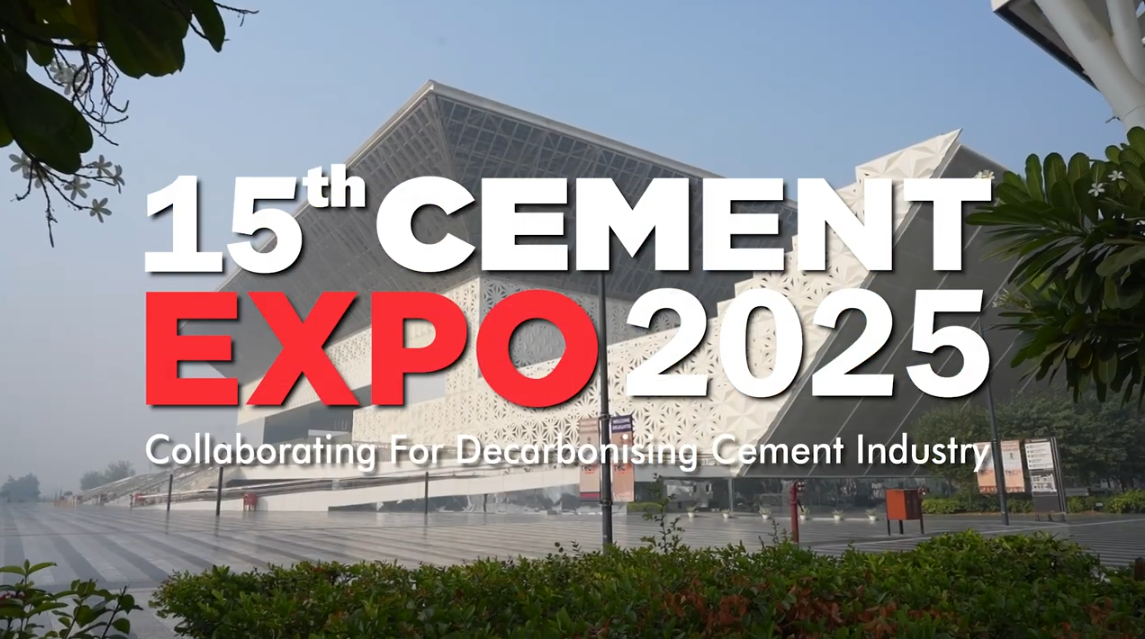
So, how does the sector sustain its expansion momentum while honouring its net-zero commitments? That question anchors the discussions at the Indian Cement Review Conference & Awards and Cement Expo 2026. More than 60 industry leaders will weigh how rising demand, capacity growth and productivity gains can sit alongside decarbonisation across the value chain. They will also examine which technologies, investments and strategies will make that possible.
The Expo runs from 15 to 17 December at India Expo Mart, Greater Noida. Come and be part of the answer.

Continue Reading

Video Thumbnail
▶

    SIGN-UP FOR OUR GENERAL NEWSLETTER

    Trending News