Satander Kumar, Scientist (Retd), talks about the importance of Self Compacting concrete and the other technical aspects of the same.
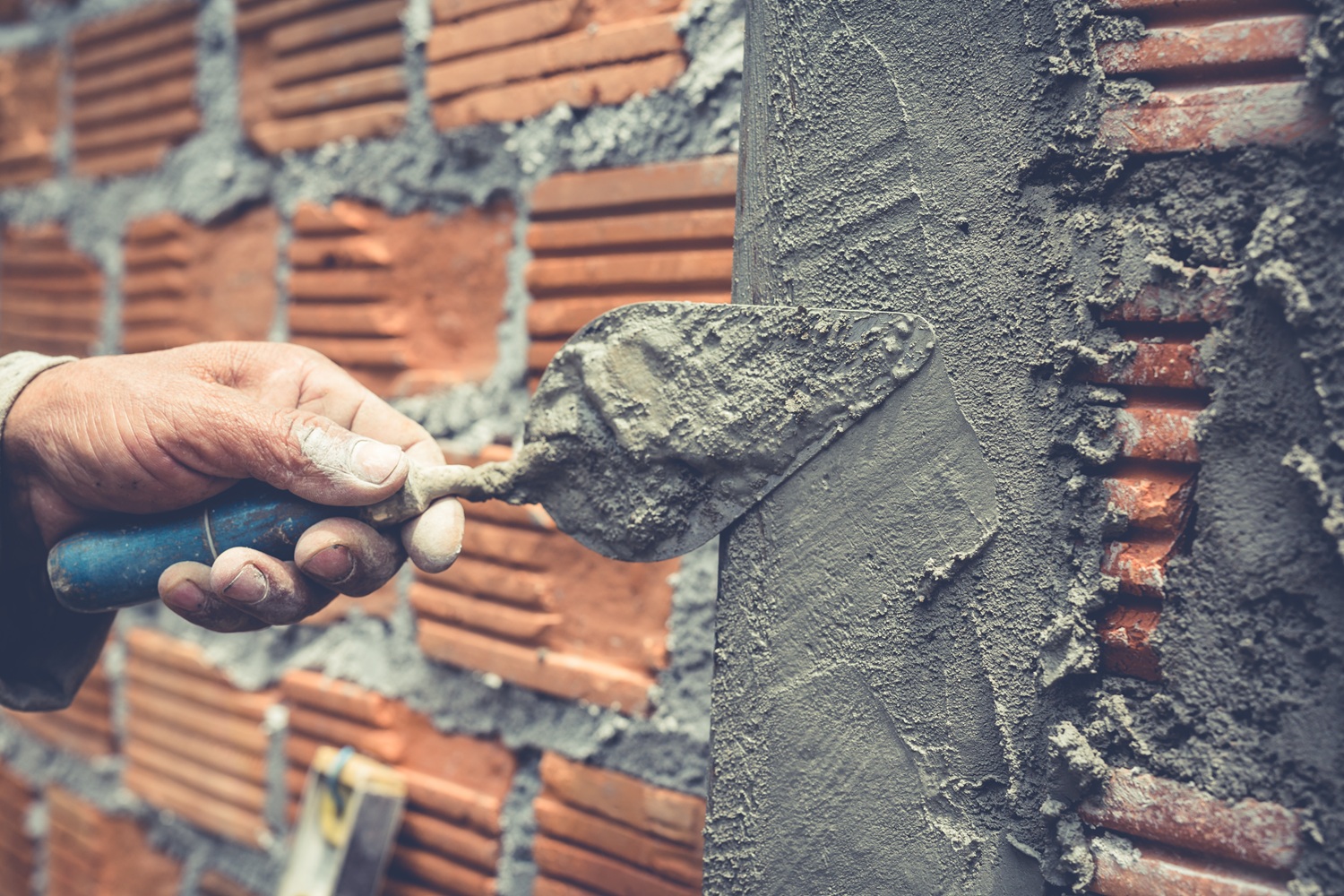
Concrete, which may be manufactured at site, occupies unique position among modern materials. Concrete has its own limitation- it can not, on its own, flow into nooks and corner of the form work. Through compaction, often using vibration is essential for achieving strength and durability of concrete. It has its own limitation depending on the types of structures, its dimensions, and types of reinforcement, location of structures etc. Self compacting concrete (SCC) may provide remedies to these problems. Developed by Prof. Okamura and his team in Japan in 1986, SCC has evolved as new innovative technology, capable of achieving status of being an out-standing advancement in the sphere of concrete technology. There are now many countries who are working on SCC viz Sweden, Thailand, UK, India etc.
"No vibration" is necessary for SCC which can flow around obstructions, encapsulate the reinforcement and fill up the space completely under self weight. The salient advantages are; ensure through compaction employing unskilled labour, minimise repair of finished surface, ensure good finished surface, reduced manpower for casting and finishing, increase in speed of construction and reduces requirements of coarse aggregates and minimises electrical and mechanical energy. Development of SCC is not nascent in stage now. IRC: 112 also recommend use of SCC in concrete bridges and the same is under draft stage to be put in rigid pavement and cell fill pavement by IRC. Studies on SCC and cell fill pavement (which requires SCC also) is largely being undertaken by PL Bongirwar Advisor L&T and Prof BB Pandey, IIT Khargpur. However, it has been tried in the field on many projects in India now. As a safe guard against separation of water, use of a viscosity modifying agent is usually essential to minimise shrinkage due to high powder content in SCC besides additional requirements of fines passing 125 micron. There are typical mixes of SCC similar to conventional concrete where risk of cracking due to shrinkage and thermal stresses could be reduced. Addition of fly ash and other siliceous mineral admixtures such as silica fume, ground granulated slag in conventional concrete in addition to chemical admixtures, make sustainable ‘SCC’. There are many organisation/academic institutions/cement companies (CRRI, NCB, SERC, CBRI, L&T, ACC, Ultra-Tech, Ambuja Cements in India who are working hard in the laboratory and field for the advancement and use of SCC in structures to minimise carbon emission and making cost effective construction product. There is a need to formulate IRC/BIS specifications/ guidelines for the use of SCC in respective structures based on the experience/data gained in India. Guidelines are published by Hampshire, UK (EFNARC-2002)/contract documents on use of SCC in Nuclear Structures. For more details on mix design, materials required, and its different applications reference of June Issue (No. 6 2004) of Indian Concrete Journal may be made. The paper reviews some of the R&D activities carried out in India and abroad. A constant strive to improve performance and acceleration of productivity led to the development of self-compacting concrete (SCC). Traditionally placed concrete mix is compacted with the help of external energy inputs with vibrators, tamping or similar actions. On the other hand, SCC mix has special performance attributes of self-compaction/consolidation under the action of gravity.
Comparison between conventional and SCC
The concrete that is able to flow and consolidate under its own weight, completely fills the formwork even in the presence of dense reinforcement, whilst maintaining homogeneity and without the need for any additional compaction is called Self-compacted fresh concrete. It has the ability to fill formwork and encapsulate reinforcing bar only through the action of gravity, and with maintained homogeneity. The ability is achieved by designing the concrete to have suitable inherent rheological properties. SCC can be used in easy way in most applications where traditionally vibrated concrete is used taking precaution on size of coarse aggregate which kept smaller than conventional size of aggregates. This also depends on spacing of reinforcement (not more than two times the spacing between steel bars. For mould ability, a concrete mix should have the ability to fill the formwork as well as encapsulate reinforcing bars and other embedment in fresh state maintaining homogeneity. In case of conventional mix, it is achieved by means of ensuring a minimum level of slump at fresh state and placing it with the help of external energy. However, a fresh SCC mix shall have appropriate workability under the action of its self-weight for filling all the space within form work (filling ability), passing through the obstructions of reinforcement and embedment (passing ability) and maintaining its homogeneity (resistance to segregation).
High deformability can be achieved by appropriate employment of super plasticizer, maintaining low water powder ratio and viscosity modifying agent (VMA), if needed. These are the basics to achieve the flowability and viscosity of a suspension to achieve self compacting properties. The rheological characteristics of fresh concrete mix is not only necessary for workability to achieve desired mould ability but they also help in achieving desired in-situ strength and durability attributes at the hardened state. The difference between the SCC and conventional concrete exists in the performance requirements during fresh state;
Potential techno-economic advantages
The advantages of SCC are:
i) Enhanced productivity,
ii) Reduction of costly labor and noise discomfort at site.
iii) Improved surface finish
iv) Improved quality of hardened concrete
v) Improvement of working condition
vi) Usage of higher dosages of fly
vii) Enhancement in flow ability
The SCC is a therefore preferred option considering these properties for structures and road (both in insitu and precast components) noting the fact that dense compact concrete in line and level is a prime requirement. Minimum efforts or zero efforts in vibration means light and ordinary screed/needle/side compactor may require in certain situation to get surface in line and level and dense concrete. SCC is therefore ideal solution for rigid pavement and structures.
Material
Following materials are generally being adopted in making SCC; mineral Admixtures (IS 456-2000) viz fly ash, silica fume, ground granulated slag.Chemical Admixture (nathalene based, malamine based, polycaroxylic (PC) based, Geleniun based, viscosity modifier etc. Binder (PPC).
Rhelogy
Rheology is the study of flow and deformations of all forms of matter. The basic property influencing the performance of the fresh concrete in casting and compaction is its rheological behavior. Rheology has thus been central in the development of SCC. Rheology of concrete, mortar as well as paste are all valuable tools in understanding the behavior and optimisation processes.
In workability terms, self-compatibility signifies the ability of the concrete to flow after being discharged from the pump hose, a skip or similar, only through gravity and to fill intended spaces in formwork to achieve a zero-defect and uniform-quality concrete. Self-compatibility as a fresh state property can be characterised by three functional requirements: Filling ability, resistance to segregation and passing ability.
Workability test
Slump-flow test: The slump-flow diameter is a test to assess the flowability and the flow rate of self-compacting concrete in the absence of obstructions. It is based on the slump test described in EN 12350-2, IS 1199, Testing fresh concrete – Part 1: Sampling, EN 9103, Testing fresh concrete – Part 2: Slump test. Visual observations during the Slump flow test and/or measurement of the T500 time can give additional information on the segregation resistance.
Prepare the cone and baseplate as described in EN 12350-2. Fit the collar to the cone if being used (Figure 1). Place the cone coincident with the 200 mm circle on the base plate and hold in position by standing on the foot pieces (or use the weighted collar), ensuring that no concrete can leak from under the cone. Fill the cone without any agitation or rodding, and strike off surplus from the top of the cone. Allow the filled cone to stand for not more than 30s; during this time remove any spilled concrete from the baseplate and ensure the baseplate is damp all over but without any surplus water. Lift the cone vertically in one movement without interfering with the flow of concrete. Without disturbing the baseplate or concrete, measure the largest diameter of the flow spread to the nearest 10 mm. Then measure the diameter of the flow spread at right angles to the nearest 10 mm and record,Check the concrete spread for segregation. The cement paste/mortar may segregate from the coarse aggregate to give a ring of paste/mortar extending several millimetres beyond the coarse aggregate. Segregated coarse aggregate may also be observed in the central area.
V-funnel test: Clean the funnel and bottom gate, the dampen all the inside surface including the gate. Close the gate and pour the sample of concrete into the funnel, without any agitation or rodding, then strike off the top with the straight edge so that the concrete is flush with the top of the funnel. Place the container under the funnel in order to retain the concrete to be passed. After a delay of (10 ¦ 2) s from filling the funnel, open the gate and measure the time to 0,1 s, from opening the gate to when it is possible to see vertically through the funnel into the container below for the first time. The time determined is the V-funnel flow time. (Figure 2 (a))The slump flow requirement for different application is given in Table 1.
Specification
The filling ability and stability of self-compacting concrete in the fresh state can be defined by four key characteristics. Each characteristic can be addressed by one or more test methods as shown in Table 2. As per conformity given in Table 3.
Tentative mix proportion
Mix designs are often use volume as a key parameter because of the importance of the need to over fill the voids between the aggregate particles. Some methods try to fit available constituents to an optimised grading envelope. Another method is to evaluate and optimise the flow and stability of first the paste and then the mortar fractions. The absolute volume of all proportion shall be 1 cu m including volume of admixture/air. (Table 4.)
Self compacted concrete is the need of the hour where heavy compaction is not required without utilising scarcely available electricity, equipment and fuel for driving them at remote places/ pavement. More R&D is needed for finding performance of such concrete products.
Satander Kumar, Scientist (Retd) Central Road Research Institute, New Delhi