Connect with us

Concrete

Core sector output rose to 32-months high in March 2021

Published

on

Shares

The eight core sector output rose to 32-months high of 6.8 per cent in March 2021 chiefly on account of a negative base of -8.5 per cent in the corresponding month of the previous year. Therefore, one needs to read the core sector growth number with caution. The pick-up observed in March 2021 has been on account of significant double-digit growths witnessed in steel, cement, electricity and natural gas, where the production activity had seen a sharp decline in March 2020 on the back of the imposition of the nation-wide lockdown. The contraction witnessed in the month of February 2021 has been revised upwards to -3.8 per cent as against the previous estimate of 4.6 per cent.

For the full fiscal FY21, the core sector has contracted by 7 per cent compared with a subdued pace of 0.4 per cent in FY20. This is the first time in the last eight years when core sector output has declined. In 8 of out the 12 months during the fiscal, core sector output has seen a contraction, reflective of the adverse impact of the pandemic and the consequent lockdowns on the production activities of the 8-core sector. During the year, there has been a broad-based decline across almost all the sectors with the impact being sharp in refinery products, steel and cement sector. Fertiliser has been the only sector which has seen positive growth, which reflects unabated performance of the agriculture sector despite the lockdown while the impact on electricity production has been relatively lower as resumption of economic activities in the second half of the fiscal pushing up the growth number.

Key highlights:

  • Coal production recorded its sharpest contraction in the new series with the base year 2011-12. The de-growth of 21.7 per cent in March 2021 has come against a positive base of 3.7 per cent in March 2020 and it also reflects high level of coal inventories with coal producers. However, there has been a sequential improvement owing to healthy demand from the power steel and cement sector.

  • Crude oil production fell by 3.1 per cent in March 2021 compared with a decline of 5.5 per cent in March 2020 and this is the 40th consecutive month of negative growth for the sector. This decline can be ascribed to delays in installation of new platforms due to COVID-19 restrictions, localised lockdowns and lower planned contribution from work-over, drilling and old wells. Natural gas production rose sharply by 12.3 per cent in March 2021, its highest growth in the new series with the base year 2011-12. This is the first time the segment has recorded positive growth after 21 consecutive months of deceleration. The positive growth has been on account of a low base (-15 per cent in March 2020) coupled with production commencement of natural gas from one of the key players in the private sector.

  • Refinery production declined by 0.7 per cent in March 2021 compared with 0.5 per cent in March 2020, recording the 13th consecutive month of decline in production. Although there has been a sequential improvement, the fall can be ascribed to lower demand for petroleum products and annual maintenance and installation shutdown for some plants.

  • Fertiliser production continued to decline for the second consecutive month. The fall in production has been sharper in March 2021 by 5 per cent compared with 3.7 per cent in February 2021 but is better than 11.8 per cent decline in March 2020. The YoY decline is the sharpest in the last one year.

  • Steel (23 per cent), cement (32.5 per cent) and electricity (21.6 per cent) have registered positive growth of above 20 per cent during March 2021 and is primarily on account of a statistical base effect. However, year-end phenomenon of infrastructure projects being on track coupled with State governments and Central government expediting capex plans have provided the impetus and the same is reflected in the numbers. Sequentially too all three sectors have registered a notable pickup. In case of steel, producers ramped up production backed by higher export demand and realisations.

CARE Ratings??View

The March, April and May 2021 growth numbers for core sector and industrial growth was expected to be high on the back of sharp declines registered last year. The core sector growth numbers for the next two months are likely to be elevated as the decline in April and May 2020 were sharper than March 2020. Hence, we must be cautious in reading the growth numbers for the next two months also as the theme of March 2021 is likely to carry forward. IIP growth for March 2021 is likely to be closer to double-digit mark given the decline of 16.7 per cent last year.

Courtesy: CARE Ratings

ABOUT THE AUTHOR:

The article is authored by Sushant Hedem who is Associate Economist with CARE Ratings. He can be contacted at: sushant.hede@careratings.com | +91-22-6837 4348.

Disclaimer: This report is prepared by CARE Ratings Limited. CARE Ratings has taken utmost care to ensure accuracy and objectivity while developing this report based on information available in public domain. However, neither the accuracy nor completeness of information contained in this report is guaranteed. CARE Ratings is not responsible for any errors or omissions in analysis / inferences / views or for results obtained from the use of information contained in this report and especially states that CARE Ratings has no financial liability whatsoever to the user of this report.

Continue Reading
Click to comment

Leave a Reply

Your email address will not be published. Required fields are marked *

Concrete

Steel: Shielded or Strengthened?

CW explores the impact of pro-steel policies on construction and infrastructure and identifies gaps that need to be addressed.

Published

on

By

Shares

Going forward, domestic steel mills are targeting capacity expansion
of nearly 40 per cent through till FY31, adding 80-85 mt, translating
into an investment pipeline of $ 45-50 billion. So, Jhunjhunwala points
out that continuing the safeguard duty will be vital to prevent a surge
in imports and protect domestic prices from external shocks. While in
FY26, the industry operating profit per tonne is expected to hold at
around $ 108, similar to last year, the industry’s earnings must
meaningfully improve from hereon to sustain large-scale investments.
Else, domestic mills could experience a significant spike in industry
leverage levels over the medium term, increasing their vulnerability to
external macroeconomic shocks.(~$ 60/tonne) over the past one month,
compressing the import parity discount to ~$ 23-25/tonne from previous
highs of ~$ 70-90/tonne, adds Jhunjhunwala. With this, he says, “the
industry can expect high resistance to further steel price increases.”

Domestic HRC prices have increased by ~Rs 5,000/tonne
“Aggressive
capacity additions (~15 mt commissioned in FY25, with 5 mt more by
FY26) have created a supply overhang, temporarily outpacing demand
growth of ~11-12 mt,” he says…

To read the full article Click Here

Continue Reading

Concrete

JK Cement Commissions 3 MTPA Buxar Plant, Crosses 31 MTPA

Company becomes India’s fifth-largest grey cement producer

Published

on

By

Shares

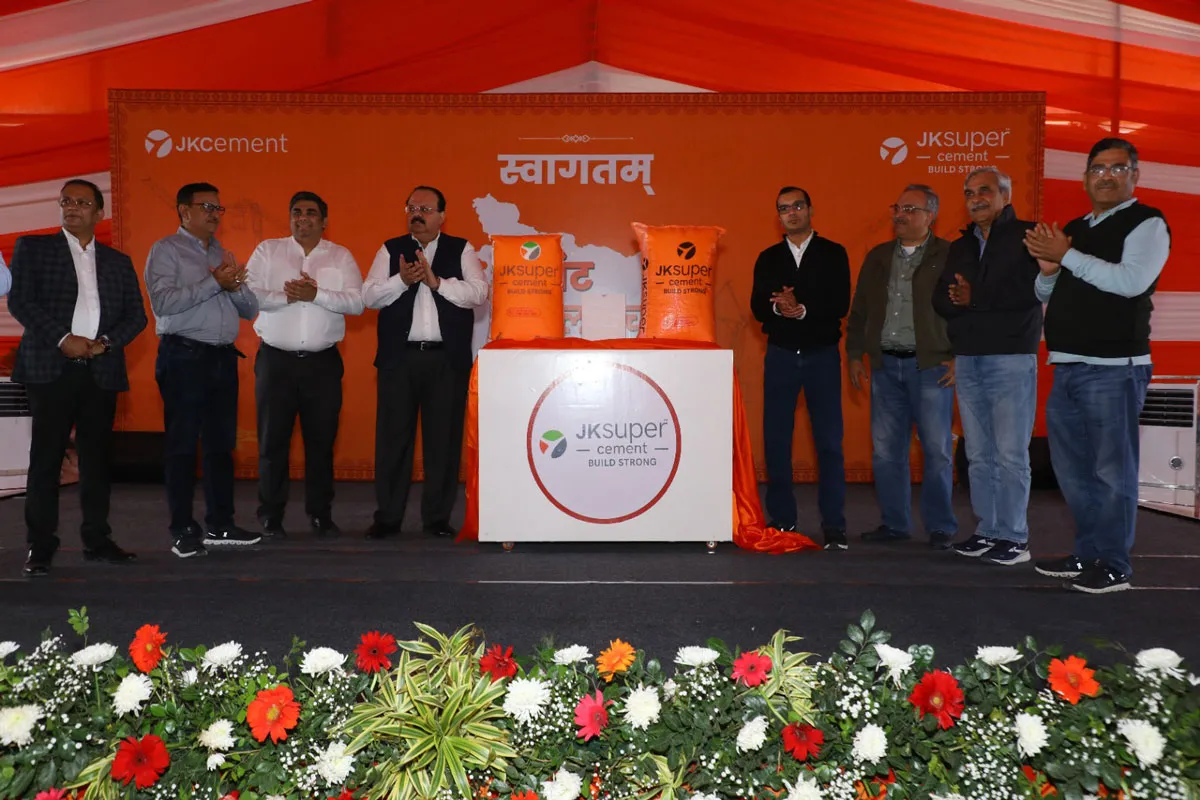
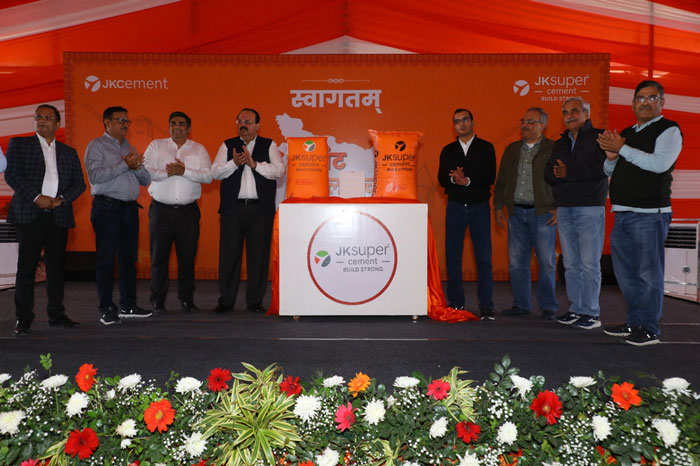
JK Cement  has commissioned its new 3 MTPA grey cement plant in Buxar, Bihar, taking the company’s total installed capacity to 31.26 million tonnes per annum (MTPA) and moving it past the 30 MTPA milestone. With this addition, JK Cement now ranks among the top five grey cement manufacturers in India, strengthening its national presence.

Commenting on the development, Dr Raghavpat Singhania, Managing Director, JK Cement, said, “Crossing 31 MTPA is a significant turning point in JK Cement’s expansion and demonstrates the scale, resilience, and aspirations of our company. In addition to making a significant contribution to Bihar’s development vision, the commissioning of our Buxar plant represents a strategic step towards expanding our national footprint. We are committed to developing top-notch manufacturing capabilities that boost India’s infrastructure development and generate long-term benefits for local communities.”

Spread across 100 acres, the Buxar plant is located on the Patna–Buxar highway, enabling efficient distribution across Bihar and neighbouring regions. While JK Cement entered the Bihar market last year through supplies from its Prayagraj plant, the new facility will allow local manufacturing and deliveries within 24 hours across the state.

Mr Madhavkrishna Singhania, Joint Managing Director & CEO, JK Cement, said, “JK Cement is now among India’s top five producers of grey cement after the Buxar plant commissioning. Our capacity to serve Bihar locally, more effectively, and on a larger scale is strengthened by this facility. Although we had already entered the Bihar market last year using Prayagraj supplies, local manufacturing now enables us to be nearer to our clients and significantly raise service standards throughout the state. Buxar places us at the center of this chance to promote sustainable growth for both the company and the region in Bihar, a high-growth market with strong infrastructure momentum.”

The project has involved an investment of Rs 5 billion. Commercial production began on 29 January 2026, following construction commencement in March 2025. The company said the plant is expected to generate significant direct and indirect employment and support ancillary industrial development in the region.

Continue Reading

Concrete

JK Cement Crosses 31 MTPA Capacity with Commissioning of Buxar Plant in Bihar

Published

on

By

Shares

JK Cement has commissioned a 3 MTPA Grey Cement plant in Buxar, Bihar, taking its total capacity to 31.26 MTPA and placing it among India’s top five grey cement producers. The ₹500 crore investment strengthens the company’s national footprint while supporting Bihar’s infrastructure growth and local economic development.

JK Cement Ltd., one of India’s leading cement manufacturers, has announced the commissioning of its new state-of-the-art Grey Cement plant in Buxar, Bihar, marking a significant milestone in the company’s growth trajectory. With the commissioning of this facility, JK Cement’s total production capacity has increased to 31.26 million tonnes per annum (MTPA), enabling the company to cross the 30 MTPA threshold.

This expansion positions JK Cement among the top five Grey Cement manufacturers in India, strengthening its national footprint and reinforcing its long-term growth strategy.

Commenting on the strategic achievement, Dr Raghavpat Singhania, Managing Director, JK Cement, said, “Crossing 31 MTPA is a significant turning point in JK Cement’s expansion and demonstrates the scale, resilience, and aspirations of our company. In addition to making a significant contribution to Bihar’s development vision, the commissioning of our Buxar plant represents a strategic step towards expanding our national footprint. We are committed to developing top-notch manufacturing capabilities that boost India’s infrastructure development and generate long-term benefits for local communities.”

The Buxar plant has a capacity of 3 MTPA and is spread across 100 acres. Strategically located on the Patna–Buxar highway, the facility enables faster and more efficient distribution across Bihar and adjoining regions. While JK Cement entered the Bihar market last year through supplies from its Prayagraj plant, the Buxar facility will now allow the company to serve the state locally, with deliveries possible within 24 hours across Bihar.

Sharing his views on the expansion, Madhavkrishna Singhania, Joint Managing Director & CEO, JK Cement, said, “JK Cement is now among India’s top five producers of grey cement after the Buxar plant commissioning. Our capacity to serve Bihar locally, more effectively, and on a larger scale is strengthened by this facility. Although we had already entered the Bihar market last year using Prayagraj supplies, local manufacturing now enables us to be nearer to our clients and significantly raise service standards throughout the state. Buxar places us at the center of this chance to promote sustainable growth for both the company and the region in Bihar, a high-growth market with strong infrastructure momentum.”

The new facility represents a strategic step in supporting Bihar’s development vision by ensuring faster access to superior quality cement for infrastructure, housing, and commercial projects. JK Cement has invested approximately ₹500 crore in the project. Construction began in March 2025, and commercial production commenced on January 29, 2026.

In addition to strengthening JK Cement’s regional presence, the Buxar plant is expected to generate significant direct and indirect employment opportunities and attract ancillary industries, thereby contributing to the local economy and the broader industrial ecosystem.

Continue Reading

Trending News