Technology
Environmentally Sustainable Mining Practices In India

Published
6 years agoon
By
admin
Sustainability has assumed considerable importance in developed countries which are extensively involved in mining practices, like Australia, Canada, USA, South Africa and Papua New Guinea etc. They take comprehensive view of sustainable development in mining which includes important dimensions such as local stakeholder engagement, socio-economic development in mining project areas and transparency in communication with the stakeholders, along with environment. These developed nations undertake mining activities with all compliances to regulatory requirements and environmental laws leads to lessen the impact of mining and strictly implement it. These compliances include provisions for mine closure and associated reclamation and rehabilitation of mined land.
In India, major mining companies have taken steps for socio-economic development projects in their mining areas. The Indian mineral industry comprises of large and small mines that are covered under public, private and informal sectors, covering most minerals being extracted. The public sector continues to play a dominant role in production of various major minerals (like coal, lignite, petroleum, iron and steel, bauxite and aluminium) where as a large number of small mines (including quarries for extracting minor minerals) operated by private players in most states. These present difficult challenges for sustainable development as their financial, technical and managerial limitations restrict their ability to take effective corrective measures against the negative impacts of mining.
Major mining companies uses advanced technology, adopt comprehensive environment protection measures, sensitise their personnel on sustainability issues and progressively try to improve their environmental performance. There are other large, medium and even small companies whose environment obligation consists in strictly conforming to the prescribed legal provisions. Major threats for adopting sustainable mining practices are illegal workings, where legal compliances are not observed to the fullest extent. It is reported that the illegal mining of sand is largely responsible for the environmental degradation especially the river beds of all major rivers including Ganga and Jamuna. There are only little checks for controlling illegal and rampant mining, whereas the political interference has turned the situation grim. Even legal mines flout norms and damage the environment considerably.
Concerns for environmentally sustainable mining
Today, the sustainable mining is the key to the security of raw materials and energy for many countries in the world. The sustainable development of mining of mineral resources is a major concern for today’s global world, addressed to mining companies, people of science associated with mining and many other institutions and organisations. Public awareness that the mineral resources are non-renewable assets, is, unfortunately, small and therefore improvements or changes to the situation in this area is another key concerns, it should be followed by concrete actions.
Modern mining, which is considered for negatively affecting the environment, and also causes discomfort for people living in mining areas or their immediate surroundings, must have the public acceptance for its activities. Thus, the real concern about the environment is becoming an important factor for obtaining such public acceptance. Mining in the twenty-first century, while striving for sustainable development, must provide employees with a safe working environment, therefore the problems regarding safety, due to its complexity, is a major challenge for mine operators. The trend of increasing the depth of mines, observed in the world, means that work safety is, and will continue to be a key area of concern for the sustainable development of the mining industry.
The complexity of the problems for the sustainable development of mining and the resulting diversity on a global scale point at the need for the continuous exchange of experience in the field of knowledge, methods, technologies and other solutions. They should provide a sustainable and socially acceptable development and continued operation of mining, invariably needed by people, to provide necessary mineral resources.
Objectives and Effects of sustainable mining practices –
There are several objectives of sustainable mining practices, which are interrelated and success will involve the issues most frequently linked to another. They can be summarised as follows:
Implementation of Sustainable Mining Practices –
Two major methods of implementing sustainable mining practices are – 1) Good governance from Global, Central & State Government bodies resulting in effective laws and regulations for implementation –
Every now and then, the various Government bodies, judiciary systems of India has shown their concerns over bad mining practices and not following sustainable approach. Also efforts are being made by them to implement these mining practices for betterment for eco-system.
At global level, the heads of 193 UN member states prepared a set of 17 Sustainable Development Goals (SDGs), which is for global development framework available for the society and generations. Mining companies have the potential to become leading partners in achieving the SDGs. Through their direct operations, mining companies can generate profits, employment, and economic growth in low-income countries. And through partnerships with government and civil society, they can ensure that benefits of mining extend beyond the life of the mine itself, so that the mining industry has a positive impact on the natural environment, climate change, and social capital.
At the same time, mining companies will be called on to extract with responsibility, produce with less waste, use safer processes, incorporate new sustainable technologies, promote the improved wellbeing of local communities, curb emissions, and improve environmental stewardship. Mining companies committed to the SDGs will benefit from improved relationships with governments and communities and better access to financial resources; those that fail to engage meaningfully with the SDGs will put their operations at risk in the short and long term.
Based on interviews with over 60 global experts from industry, civil society, governments, academia, and financial institutions, the report identifies where sustainable mining practices can enhance the positive impacts it has and mitigate the negative impacts across the 17 SDGs (see figure below).
A Planning Commission report from 2012 titled "Sustainable Development, Emerging issues in India’s mineral sector" observed that in the mineral-rich states of Odisha, Goa, Karnataka and Jharkhand, mining has brought about economic development. At the same time, it has caused significant environmental damages and negatively impacted communities in project areas. To that extent the mining and environmental laws and regulations have not been very effective.
As per the report published by NITI Ayog in 2017 on "Socio Economic Impact Study of Mining and Mining Polices on the Livelihoods of Local Population" has mentioned that mining is considered as one of the necessary evils of the modern world, which provides the materials required to sustain quality of life. While improving the quality of life and giving an impetus to economic development, it has also brought in its wake, a notable impact on the environment as well as socio-economic conditions of local people (Vagholikar and Moghe, 2003).The proposed mining areas and activities have been severely criticized by environmentalists and social activists, on the subjects of potential loss of forests and displacement of villages as the mines increase in number and size of operations. Insufficient attention to managing impacts on the environment and the socio-economic fabric observed in the past, has reflected adversely on public support for reform and private investment needed for accelerating growth in the state.
The most important environmental requirement for a mining project is a comprehensive environment assessment (EIA) programme, which was started in 1994. However, laws and regulatory instruments work unsatisfactorily due to weak enforcement and inadequate coordination among government agencies. Although mining companies tend to meet the legal requirement of preparing a mine closure plan, the implementation falls short. Local communities are not consulted in the preparation and implementation of mine closure plans.
The New Mineral Policy, 2019 has also been focused on main theme of mining being environmentally sustainable, we are going to explore those very efforts, which will answer the very question, and could mining activities ever become environmentally sustainable for both environment and our health?
The answer is, it very much possible to make mining more environmentally sustainable, there are few practices being followed across international mines, which can be implemented at Indian Mines to minimise environment pollution. All we have to do is to develop and integrate these practices that reduce environmental effects resulting from mining operations. Sustainable mining practices is basically mining practices that meets the present demand without compromising the future generation’s needs. In the process, the advent of new mining methods, tools, regulation and legislation, significant efforts are helpful to make mining more environmentally friendly.
2) Self-regulating mining enterprises which are economically viable, financially profitable and technically efficient i.e. innovative mining practices and use of technologies –
There are prime responsibility of mining companies towards the implementation of the principles of sustainability for mining. It has applications for all stages of the mine life cycle, i.e., starting from exploration, mine planning, development, mineral extraction to mine closure, post-closure reclamation and rehabilitation. These principles include elements such as intra and inter-generational equity, the precautionary principle, scientific mining, management of environmental and socio-economic impacts, creation of substitute capital in the form of social and physical infrastructure and most importantly stakeholder engagement..
In some cases, mining operations have been executed without concerning for the "carrying capacity"of the environment and other infrastructural limitations of the surroundings of the mine site. This has put unavoidable pressure on the environment and caused inconvenience to the people living alongside mining areas. Illegal mining in many cases has similar effect while additionally causing loss of public revenues. The mineral extraction and processing release several toxic materials, contaminating the soil and water which leads to deforestation and ground water degradation. Mineral extraction has also disproportionately affected health of forest ecosystems and the surrounding environment and furthermore the tribes as well as the forest dwelling populations are also adversely affected. However, the mining and mineral sectors are perceived to have failed to alleviate poverty for these vulnerable populations around the forest areas. Thus, the impacts of mining and mines upon natural ecosystems, biodiversity and tribal livelihoods have become a key environmental concern and source of conflict and socioeconomic tension.
Most of work done by mining industry to protect environment and address social concerns has not been received due attention of the Government, media and society. In spite of the fact that, their efforts of sustainable mining practices and operations, few NGOs and environmental protection agencies tries to malign all efforts based on stray incidents. With increasing stringent guidelines by the Governments to regulate mining and its impact, the mining industry has been relentlessly striving for not only achieving expectation of regulatory agencies, but also to exceed these and set international benchmarks. Mining companies are striving hard to contribute towards sustainable development of the country
To make mining environmentally friendly, few steps are suggested below, they are in regular discussion on various forums around the world. In India, mining companies can adopt these steps to achieve the goals of New Mineral Policy: –
Reclaimingof Materials used in worked out Mines and properly closing of the area-
This step involves usage of material from the old worked out mines, which affects the environment in a variety of ways, especially in its natural decaying, rotting and eroding processes, withal it can also lead to illegal or unregulated mining activity. This specially occurs in underground mines where support systems, cables, pipes etc, are left out with significant amount of ore, it decays and pollutes environment in a serious way. However, when these areas are adequately excavated, mining companies would find some materials that could be reused productively. In Opencast also, several waste materials like cables, pipes, etc, are left as is post mining and it is buried in mine overburden materials.
Every mining company has to research on these unused resources and materials throughout the mining process, to try and conserve its current "non-renewable" materials. Each company can form small decommissioning groups which study systems and the complete mining processing facilities and plants; this process will allow the pipelines to be drained, equipment and parts of the mine to be cleaned and sold off, the buildings can be repurposed or demolished, warehouse materials recovered and wasted disposed of. These groups then clean and sell off any remaining operational equipment and provided they are still structurally sound, repurpose the premises.
The main objective in reclaiming process is to return the site and the land which surrounds it back to reusable standards, ensuring that any landforms and structures are stable, and the watercourses need to be evaluated in order to regain water quality within the affected area.
This step needs the effective supervision during the process of mining and closure, its successful impacts on the environment could well be diluted through the re-use of materials that would have previously been left to decay.
Closing illegal and unregulated mines
In India, we find several illegal and unregulated mine which is operational. The New Mineral Policy 2019 has tried to curb these types of illegal mine workings. In context with enforcing regulations and maintaining steadfast legislation regarding the behaviour and processes of the mines,strict and swift closing of illegal or unregulated mining activity will set an environmental precedent within the industry.
For example, before 2010, most mines in China were completely unregulated which were affecting surrounding areas gravely. Details are mentioned in coming pages of this article, where effective steps taken by Chinese Government has helped in reducing the damage and provide a sustainable mining areas. Effective closing and reclamation of old mined out areas will significantly help in sustainable mining practices in and around the mineralised belts.
Accurate measurements and declaration of waste mining which creates pollution –
Mining companies always try to save face when it comes to the environmental conservation and try to hide the facts of actual pollution and maintain secrecy in reporting the toxic mining wastes produced by mining operations. These companies usually keep the public in the dark giving an accurate report of what’s being dumped into the environment and the various by not pollutants created by them.
New mineral Policy instructs to frame rules to recognise the actual pollution generated by mining companies; accordingly, a suitable step shall be taken to panelise these companies or to reduce pollution as much as possible, with suitable remedial measures to be suggested. Of course, strict penalties for violating companies have to be decided by State and Central Governments.
Use reusable waste to build and reuse/recycle of material –
At present ubiquitous, mining companies are discovering efficient ways to capitalize wholly on materials in order to provide sustainable goods and services. On the other hand, the society at large, wants to utilise less wood, metal, stone, plastic and other materials by adopting efficient practices.
One simple way is to start using reusable materials effectively while building new constructions and infrastructure affecting the surrounding environment of any mining. Recycling the metals from accumulated scrap and waste in landfills may be in some cases more economical than to mine ore deposits. For example, in 2008, the world steel industry produced over 1.3 billion tonnes of steel. It used 1.48 billion tons of raw materials, or 470 million tonnes less than, would have been needed to make the same volume of steel in the 1970s. Concerning aluminium, it is estimated that since 1880, approximately 900 million tons of aluminium were produced of which nearly 75% is still in use today. The demand for aluminium continues to skyrocket and recycling aluminium saves more than 90% of the energy required to producing new metal, thus rendering recycling very attractive. This scales down the amount of wasteful use on public and private level. Accordingly, mining companies can start use of durable goods that can be easily re-usable, re-manufactured, or recycled, undertaking environmentally sustainable practices will reduce its inimical impact. There are success stories in these re-usable material applications.
This creative and increasing trend of scrap mining, or utilizing ever-reusable resource for other mining initiatives, saves from the environmental hazards. It is necessary to find out each and every detail of each piece which is being used and generated in a mining site, which will help the mining industry to take suitable steps towards re-use, for becoming a more sustainable industry. For similar examples, we can use recycling of copper waste, which takes seven times less energy than processing of copper ore, and recycling steel which uses three-and-a-half times less energy than processing of iron ore. These small steps will help us immensely in determining not only the longevity of a sustainable mining practices and also have its positive environmental impact.
This article has been reproduced from CEMENT, ENERGY AND ENVIRONMENT, a Bi-Annual journal of Cement Manufacturers Association of India in its July-Dec’2019 Issue. Part II of the same will be published in the next month.
About the author – "Author BHANU PRAKASH BHATNAGAR is B.E. Mining Engg. (Gold Medal), FCC, MBA, working as Head Mining, Adani Cementation Ltd, Ahmedabad. He is having more than 27 years" experience in Overall Mine management including Acquisition of mineral resources through Auction Process, New Mine Development, Production Planning, Mine Operations and Quality Management for Large Opencast Limestone Mines. He had previously worked with cement companies like ACC-Holcim, Reliance Cement Ltd and overseas mining experience."
Part I
Come up with better regulations and legislation
As observed by the Honourable Supreme Court in its judgement on mining in 2017, the present mining legislation that we have today is far from being effective or productive. Mining continues to affect the environment because companies never cease to take advantage and continue polluting environment by waste discharges. Regulation obviously differs from country to country, with some countries more advanced in terms of their legislation than others. However, the need for improvement is always there in this industry, which inevitably causes some environmental damage.
We have to learn a lot from other countries like, for example In Canada, where mines like the Island Copper Mine on Vancouver Island stands as a highly regulated mine site that is operational from 1971 to 1995 when it was closed for resource depletion.
It was forced by regulatory agencies and control of the government that a detailed mine closure plan was developed to comfortably close the mine in order to protect the few resources which remained, and the Mine enacted the contaminated sites regulation process which was awarded the Certificate of Conditional Compliance.
This step involves the effective framing of the mineral policy and as we found that the new Mineral Policy 2019 advocates for the stringent laws for environmentally sustainable mining practices.
Effective implementation of this policy will not only protect environmental and public health, but also improve the lifespan of the mining industry and provide sustainable mining. The new Mineral Policy elaborates that extraction of mineral impacts other natural resources like land, water, air and forest. It is necessary to take a comprehensive view to facilitate the choice or order of land use keeping in view of the needs of development as well as needs of protecting the forests, environment and ecology and to conserve biodiversity of areas to be mined.
Responsible and Regulated mining near surrounding habitations of Silver Mine at Peru.
The New Mineral Policy has also emphasised on the effective Mine Closure where once the resources in mine are completely exhausted there is need for scientific mine closure which will not only restore ecology and regenerate bio-diversity but also take into account the socio-economic aspects of such closure. Government has a role in ensuring that post production mine decommissioning and land reclamation are an integral part of mine development process. Consistent approaches are adopted for efficient and effective mine reclamation and rehabilitation.
Investing in Research and Development of Environmentally sustainable Mining Technology –
Mining industry is always in need of proper research and development in order to make sure the industry is ready for today’s ever-changing commitment to sustainability and turning the world into a more "environmentally sustainable" place.
New Mineral Policy has emphasised on "Scientific Methods of Mining" which state that the mine development and mineral conservation, as governed by the Rules and Regulations, will be on sound scientific basis, with the regulatory agencies like IBM and State Directorates, closely interacting with R&D organisation and scientific and professional bodies. This is to ensure the proper mining practices being followed by mining companies. Policy advocates for R&D effort shall be made to improve efficiency in process, operation and also the recovery of by-products and reduction in specification and consumption norms. R&D efforts shall be directed to find new and alternative uses for minerals whose traditional demand is on the wane.
In this regard, as per the latest News published by NCCBM (NCB News, Sept 2019), the NCCBM has achieved great success with recent research and development with Investigation of standardization of new clinker for blended cement. The objective of the study was to investigate effects of high MgO clinker on performance characteristics of resultant OPC, PPC and PSC. The project was undertaken on accelerated mode and the report to be submitted to BIS is under preparation. The main agenda was to promote utilization of low-grade limestone containing higher MgO with good result. This will certainly result in increase of mine life.
Reduce resources inputs for effective mining practices –
The mining industry consumes large amount of water and land in their operations. One solution to becoming more environmentally sustainable is to reduce the input of the mine. By diverting surface water and pumping groundwater, mines can reduce both the quantity and quality of water available downstream for aquatic ecosystems and other use.
With regard to energy, a mining company can look into alternative energy sources such as solar or wind power. By reducing the energy usage, a mine can reduce greenhouse gases and extend the life of fossil fuel reserves. Mining companies will also be able to reduce the cost to produce the product and thus reduce the cost of the commodity itself. The New Mineral policy advocates for minimising the inputs for mining processes.
Improving the efficiency of mining processes –
This step is very much in discussion globally for closely monitoring the standard mining supply chain, mining industry/companies will be forced to confront ways in which a company can improve its efficiency where its lacking in terms of sustainability and green mining initiatives, improving the efficiency of this process can help trim down environmental impact. This also allows companies to regulate processes which may be inadequate in terms of environmental friendliness.
This needs a proper supervision of the mining and ancillary process that will allow mining companies to change elements/activities that are inefficient or that use too many natural resources. Conducting a material flows analysis will effectively track the physical flows of natural resources through extraction, production, fabrication, use, recycling and final disposal. This will develop new ways of thinking, new metrics, business process re-engineering and new management/supervisory tools that will help cushion the transition into more efficient and less environmental toxic patterns of resource used in modern societies. This process change will allow supervisors to develop new processes that are more efficient and sustainable than previous ones. Across the world, organizations like The World Resources Institute (WRI) are currently conducting research on most frequently used resources and materials, in order to better understand how the industry can conserve its non-renewable materials. The WRI has been working towards developing a database, and can now indicate the flow of materials through industrial economies. Material flows analyses, as mentioned above, will track the physical flows of natural resources in every step of mining process, accounting for both the gains and losses occurring throughout the supply chain.
The New Mineral policy mentions that the use of equipment and machinery which will improve the efficiency, productivity and economics of mining operations as well as mineral beneficiation process, safety, health of persons working in mines/beneficiation plant and surrounding area shall be encouraged.
Re-evaluating Cut-off Grades
A Raw mill cut-off grade is the level set that is considered to be the lowest quality of already mined ore which is economically feasible to continue processing. Different materials have different properties that determine a feasible cut-off grade. Often these grades are set at over-conservative levels. The easiest way to improve efficiency in mining and to reduce waste products is to decrease the mill cut-off grade of the mine. Re-evaluating these grades at each mine will significantly reduce waste.
A lower mill cut-off grade may decrease the quality of the material, but certain final uses of the material do not need a very pure compound. Cut-off grades will be determined on a mine-by-mine basis by looking at the precedents for the material in question and taking the future use of the material into consideration.
For example, the above mentioned recent R&D study done by NCCBM, has very encouraging results in terms of re-evaluating the MgO (Magnesia) content in Limestone for Clinker manufacturing, which earlier assumed to be less than 3.5%. Three types of high MgO clinker samples were obtained and designated as Clinker-1 (MgO~6.2%), Clinker-2 (MgO~6.8%) and Clinker-3 (MgO~7.5%).
PPC & PSC got succeeded in Clinker-1 & Clinker-2 in all respect, while testing with OPC autoclave expansion was observed. The performance results obtained so far are quite encouraging which will pave the way for utilization of low grade limestone containing high MgO, increased mine life (~15 years) besides improved sustainability during cement manufacture. This will also add to the utilisation of waste material of mine, thus leading to sustainable mining practices.
Replenishing the environment
A seemingly simple step, but it is rarely prioritized, replenishing mine sites and mine environment is one of the key factors to not only earning respect and cooperation of those living surrounding the mine site, but it will also ultimately protect the mine’s impact on the environment. Mining companies sometimes overlook the importance of replenishing the environment. This simple act can go a long way towards increasing the environmental sustainability of mining.
It has simple solutions like replenishing native soils and grasses, cleaning excess waste, proper waste removal, site inspections, replanting trees and natural forestry. By restoring the environment around the mine, the mining companies are contributing to positive environmental change, rather than making the environment more difficult to live in. The entire mine reclamation process should combine removal of hazardous materials, reshaping land, restoring topsoil, and planting native grasses, trees or ground cover natural to the site.
The New Mineral Policy emphasized that all mining shall be undertaken within the parameters of a comprehensive Sustainable Development Framework which will ensure that environmental, economic and social considerations are integrated effectively in all decisions of mines and mineral issues. The Guiding principal shall be that a miner shall leave the mining area in an ecological shape which is as good as it was before the commencement of mining or better with least impact on flora and fauna of the area.
Improving environmental performance
It is well known fact that mining activity impacts the environment in unnatural ways, which not only disrupts its natural decaying process, but also does more damage long-term than natural erosion processes. With exorbitant numbers of materials excavated and used daily, it is important to see that this destruction is actually going towards productive use.
This step is basically emphasised on adopting new measures useful in mitigating these environmental impacts. Let’s push for a systematic framework that will help us monitor the environmental performance.
We have to adopt practice of systematically examining environmental impacts and adopting measures to mitigate these impacts, it is possible to make mining less destructive to the environment. Incremental efficiency gains will not do the job.
Instead, an imaginative remaking of the industrial world-one that aligns economies with the natural environment that supports them is the sustainable way forward. The New Mineral Policy has given thrust on the Sustainable Development







Economy & Market
SEW-EURODRIVE India Opens Drive Technology Centre in Chennai
Published
3 weeks agoon
March 25, 2026By
admin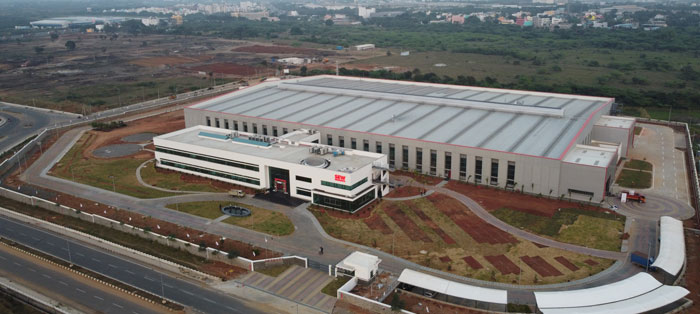
The new facility strengthens SEW-EURODRIVE India’s manufacturing, assembly and service capabilities
SEW-EURODRIVE India has inaugurated a new Drive Technology Centre (DTC) in Chennai, marking a significant expansion of its manufacturing and service infrastructure in South India. The facility is positioned to enhance the company’s responsiveness and long-term support capabilities for customers across southern and eastern regions of the country.
Built across 12.27 acres, the facility includes a 21,350-square-metre assembly and service setup designed to support future industrial growth, evolving application requirements and capacity expansion. The centre reflects the company’s long-term strategy in India, combining global engineering practices with local manufacturing and service capabilities.
The new facility has been developed in line with green building standards and incorporates sustainable features such as natural daylight utilisation, solar power generation and rainwater harvesting systems. The company has also implemented energy-efficient construction and advanced climate control systems that help reduce shopfloor temperatures by up to 3°C, improving production stability, product quality and working conditions.
A key highlight of the centre is the 15,000-square-metre assembly shop, which features digitisation-ready assembly cells based on a single-piece flow manufacturing concept. The facility also houses SEW-EURODRIVE India’s first semi-automated painting booth, aimed at ensuring uniform surface finish and improving production throughput.
With the commissioning of the Chennai Drive Technology Centre, SEW-EURODRIVE India continues to strengthen its manufacturing footprint and reinforces its long-term commitment to supporting industrial growth and automation development in India.
Economy & Market
RAHSTA Roundtable Sets Agenda for Smarter, Safer Highways
Published
4 weeks agoon
March 16, 2026By
admin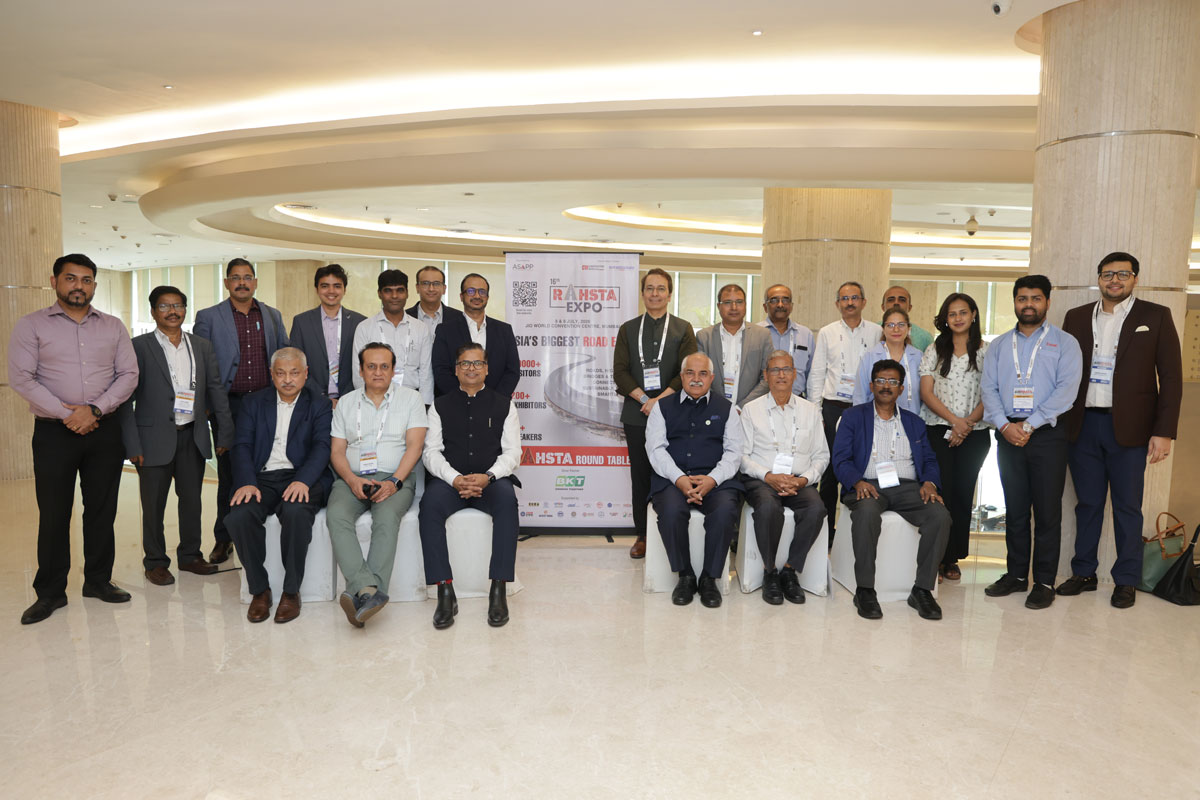
Roundtable discussions focus on innovation for safer highways.
Held on 12 March 2026 at Courtyard by Marriott, Mumbai, alongside the Infrastructure Today Airport Conclave, the RAHSTA Roundtable brought together stakeholders from across the highways and infrastructure ecosystem to shape the agenda for the 16th RAHSTA 2026, scheduled for 8–9 July 2026 at the Jio Convention Centre, Mumbai. The session focused on key industry themes including road construction, technology, safety and long-term sustainability.
Opening the discussion, Pratap Padode, Founder, FIRST Construction Council, said the roundtable marked the beginning of a broader consultative process leading up to the July event. The aim, he noted, is to bring together industry stakeholders to refine the agenda for discussions on the future of roads, bridges, tunnels and allied infrastructure.
Padode noted that while central road project awards have slowed in recent years, states are increasingly driving the next phase of infrastructure growth. Maharashtra, with its long-term road development plans and agencies such as MSRDC and MSIDC, is expected to play a significant role in this expansion.
RAHSTA Expo 2026 as a specialised platform dedicated to road infrastructure, covering highways, tunnels, bridges and flyovers along with construction technologies, safety systems and maintenance solutions. He also highlighted the growing importance of rural connectivity and said the organisers are engaging with government bodies to highlight rural road development initiatives.
Tanveer Padode, CIO, ASAPP Info Group, presented insights from IMPACCT, the group’s infrastructure intelligence platform. He pointed to a strong project pipeline despite slower highway awards earlier in the year, noting that states such as Maharashtra, Odisha and Arunachal Pradesh are emerging as key drivers of new projects. The data also revealed that only a small group of contractors participates in large-value infrastructure bids.
Lt Gen Rajeev Chaudhary, former Director General, Border Roads Organisation and Chairman of the RAHSTA Expo Committee, emphasised the need for stronger collaboration across the ecosystem, including policymakers, contractors, technology providers and financiers. He also called for addressing systemic issues within the sector and encouraged greater participation of women in infrastructure leadership.
The discussion also explored the evolving economics of road development. Phani Prasad Mandalaparthy, Associate Director, CRISIL Intelligence, noted that the slowdown in project awards reflects a shift towards higher-value logistics corridors rather than simple road widening projects. However, private participation through BOT and TOT models remains limited.
From the contractors’ perspective, Sudhir Hoshing, Whole-Time Director, Ceigall, said companies are becoming more selective in bidding, favouring projects with clearer payment mechanisms and efficient processes. While NHAI continues to offer greater operational clarity, states such as Uttar Pradesh and Bihar were cited as relatively supportive environments for project execution.
Durability and sustainability also emerged as key themes. Himanshu Agarwal, COO – Road & Infrastructure, Zydex Group India, highlighted the need to prioritise lifecycle performance and resilient pavements, while participants discussed the potential of alternative materials such as plastic waste, steel slag and industrial by-products in road construction.
Dr LR Manjunatha, Vice President, JSW Cement, emphasised that India has abundant fly ash, slag and other industrial materials that can improve durability and sustainability if integrated into specifications and policy frameworks.
Technology and equipment challenges were also discussed. Dr Lakshmana Rao Mantri, Dy General Manager, Afcons Infrastructure, highlighted the shortage of tunnel boring machines (TBMs), which is delaying several underground infrastructure projects. Participants agreed that developing domestic TBM manufacturing capabilities will be critical for future infrastructure expansion.
The future of concrete pavements was another area of discussion. Dr V Ramachandra, President, Indian Concrete Institute, stressed that the debate should focus on lifecycle performance rather than material choice alone, noting that evolving design standards are improving the feasibility of concrete roads.
Prof Dharamveer Singh of IIT Bombay added that while India has made significant progress in infrastructure development, stronger capacity building and better execution practices are essential to ensure consistent road quality.
The discussion also touched upon technology adoption in the sector. Rushabh Mamania, Partner & CBO, Roadvision, highlighted the growing role of AI in road infrastructure, noting that AI-driven monitoring systems are already being deployed across large stretches of national highways.
Overall, the roundtable underscored that the future of highway infrastructure will depend not only on the pace of construction but also on durability, safety, technology integration and sustainable materials. The discussions offered valuable insights that will help shape the agenda for RAHSTA 2026 and guide future collaboration within the industry.
Economy & Market
CTS Roundtable Charts Tech-Led Roadmap for Construction
Published
4 weeks agoon
March 16, 2026By
admin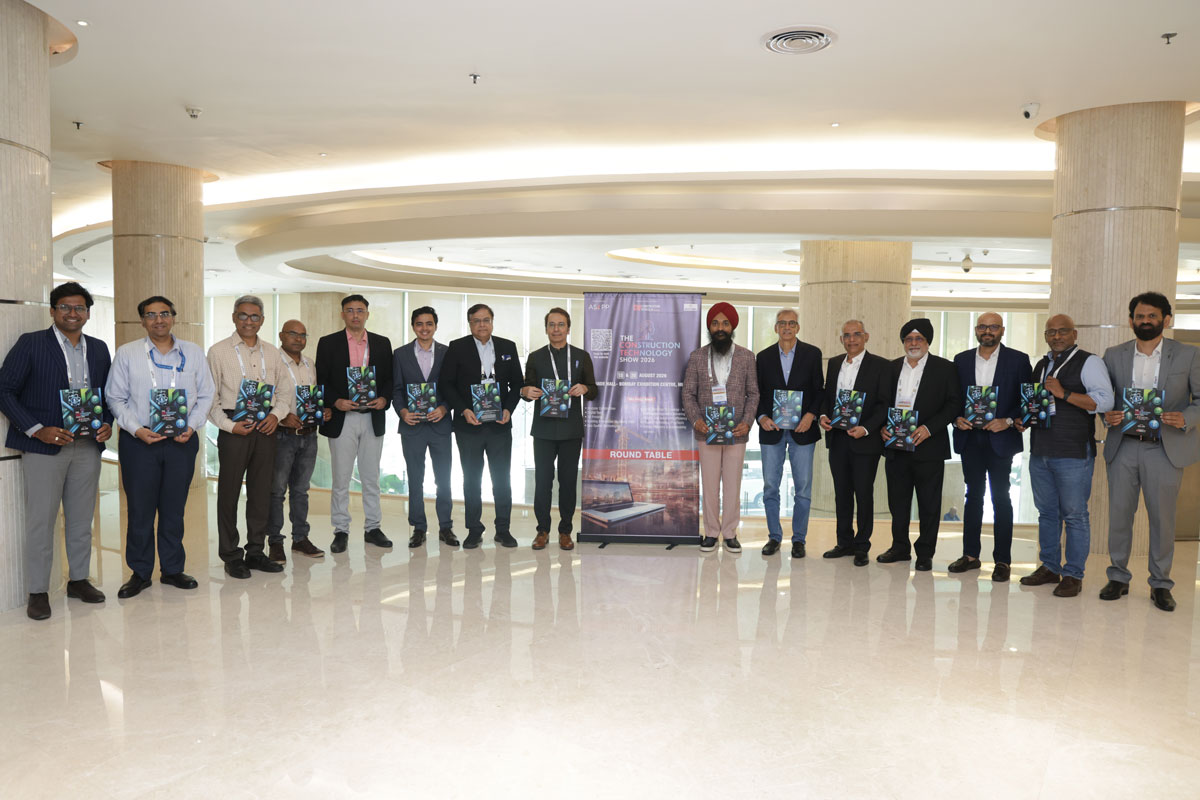
CTS Roundtable Maps Technology Roadmap for Construction
Ahead of the Construction Technology Show (Con Tech Show) 2026, industry leaders, technology innovators and academia came together in Mumbai to deliberate on how digitalisation, automation and industrialised construction can reshape the sector. The discussion made one thing clear: construction can no longer afford to treat technology as optional.
Held on 12 March 2026 at Courtyard by Marriott, Mumbai, alongside the Infrastructure Today Airport Conclave, the CTS Roundtable served as a precursor to the Construction Technology Show 2026, scheduled for 19–20 August 2026 at NESCO, Mumbai.
A platform to move from discussion to deployment
Opening the session, Pratap Padode, Founder and Editor-in-Chief, ASAPP Info Global Group, said construction technology has long remained close to his heart, especially given the sector’s traditionally slow pace of technology adoption. He noted that over the years, the Construction Technology Summit had steadily built interest, and the next step was now to expand it into a larger, more meaningful platform that could bring together technology providers, users, startups and innovators under one roof.
Padode said the vision for CTS is not limited to software alone. The platform aims to embrace all forms of technology that can improve construction efficiency, quality and execution—from digital tools and project management systems to lean construction, off-site fabrication and startup-led innovation. He also highlighted plans to deepen startup participation and create space for young companies to showcase emerging construction solutions.
Industry at a turning point
Moderating the roundtable, Naushad Panjwani, Chairman, Mandarus Partners, set the context by pointing out that the global construction industry, despite being a multi-trillion-dollar sector, continues to lag in productivity. He noted that while manufacturing has consistently improved efficiency, construction has remained slow to modernise.
Referring to both global and Indian trends, Panjwani underlined that the industry is now at a decisive moment. India, he said, is entering a major build cycle, and delivering the next phase of infrastructure and real estate growth through traditional methods alone is no longer viable. The goal of the roundtable, therefore, was not to debate technology in isolation, but to identify the most critical conversations that would bridge the gap between innovation and implementation.
His central message was clear: CTS 2026 must be shaped around themes that make CEOs, CIOs and CTOs feel they cannot afford to miss the event.
From BIM to AI, data to governance
A major theme that emerged through the discussion was the need for better data, better visibility and better decision-making. Dr Venkata Santosh Kumar of IIT Bombay echoed this, saying that the underlying data infrastructure itself needs attention. Construction projects, particularly remote ones, often face issues around connectivity, data collection and data use. Without this foundation, more advanced technologies cannot deliver their full value.
Chandra Vasireddy, CEO & Co-founder, Inncircles, expanded the discussion to governance, arguing that technology must help connect the many moving parts of a construction business. For him, the real value of digital transformation lies in creating better governance, clearer visibility and stronger business outcomes.
Tejas Vara of Inncircles stressed the importance of timely site data for leadership teams, especially in large and remote projects where decisions on materials, machinery and manpower often get delayed because information does not reach headquarters in time.
The role of AI also featured prominently. Rushabh Mamania, Partner and CBO, Roadvision said that while AI and machine learning are now common terms, vision intelligence and language intelligence have still not deeply penetrated the construction sector. He emphasised that startups in India are building relevant AI-led solutions and are already attracting international interest, showing that innovation need not be imported—it can be built locally and scaled globally.
Industrialised construction gains ground
The roundtable also placed strong emphasis on industrialised construction methods. Kalyan Vaidyanathan, CTO – Construction & R&D, Tvasta, called for greater focus on off-site fabrication and the broader industrialisation of construction. Bhargav Jog, General Manager, Dextra, highlighted precast technology and alternative sustainable materials as areas with immediate relevance.
Several participants agreed that modular, precast and pre-engineered approaches are no longer niche ideas. They are increasingly becoming practical responses to the sector’s challenges around labour shortage, timelines, quality control and predictability.
Anup Mathew, Sr VP & Business Head, Godrej, argued that the industry needs a fully integrated approach—from design and procurement to execution and asset management. Unless these are connected, technology adoption will remain fragmented and sub-optimal. He pointed to pre-engineered and modular systems as examples of how industrial thinking can compress timelines, improve quality and reduce dependence on difficult on-site conditions.
Adoption remains the biggest hurdle
While there was broad agreement on the promise of technology, the discussion repeatedly returned to one fundamental challenge: adoption.
Abhishek Kumar, COO, LivSYT, observed that the market is crowded with solutions, but many buyers still struggle to evaluate which technology suits which use case. According to him, the industry needs clearer frameworks to help users select, compare and adopt solutions, rather than expecting a single platform to solve every problem.
Dr Tenepalli JaiSai, Associate Professor, School of Construction(SoC), NICMAR University, noted that isolated technologies will not solve the productivity problem by themselves. What is required is an integrated Construction 4.0 approach, where digital, physical and cyber-physical systems work together rather than in silos.
That concern around silos was reinforced by Subodh Dixit, former Director, Shapoorji Pallonji, who said the issue is not just that technologies are disconnected, but that stakeholders are as well. Clients, consultants, contractors and partners often operate with different priorities. Unless these silos are broken, technology will struggle to percolate across the full project value chain.
Harleen Oberoi, Project Management, Tata Realty shared a practical perspective from the client side, saying that successful BIM implementation requires investment across the ecosystem, not just within one organisation. Trade partners, vendors and other stakeholders must also be trained and aligned if the technology is to deliver its intended results.
Beyond buzzwords
A notable takeaway from the session was that the industry is moving past the phase of treating technology as a buzzword. Participants repeatedly stressed that the real question is not whether technology should be used, but where it creates measurable value and how that value can be scaled.
The conversation also expanded beyond mainstream themes to include repairs and rehabilitation, construction and demolition waste, sustainability, circular economy, green sourcing, carbon measurement, design interoperability, generative design, robotics, and the role of horticulture and greener built environments.
Setting the agenda for CTS 2026
By the close of the session, the roundtable had surfaced a strong set of themes for the upcoming show: BIM and digital twins, AI and data platforms, industrialised construction, startup innovation, governance-led technology adoption, robotics, sustainable materials, and integrated project delivery.
More importantly, the session established CTS 2026 as more than an exhibition. It is shaping up to be a serious industry platform where users, technology providers, researchers and policymakers can collectively define the future of construction.
As Padode noted in his closing remarks, the conversation will continue through further consultations and possibly webinars in the run-up to the show. If the roundtable is any indication, CTS 2026 will aim not merely to showcase technology, but to push the industry towards meaningful adoption at scale.


Ultra Concrete Age

NCB Signs MoU With Cement Manufacturer To Boost Construction Skills

JSW Cement Commissions Nagaur Plant, Enters North India

Cement Prices Likely To Rise As Petcoke Costs Increase

IIT Guwahati Develops Radiation-Resistant Cement Mortar
Ultra Concrete Age
NCB Signs MoU With Cement Manufacturer To Boost Construction Skills
JSW Cement Commissions Nagaur Plant, Enters North India
Cement Prices Likely To Rise As Petcoke Costs Increase