Connect with us

Economy & Market

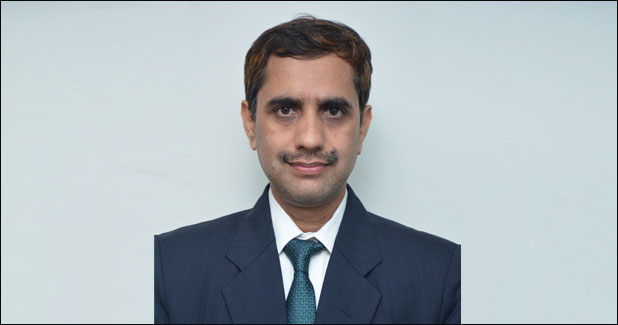
“RMC business will see a growth of 7-10% in the next 5 years”

Published

on

Shares

– Arun Shukla, Chief of RMX & Aggregates, Nuvoco Vistas Corporation
Nuvoco Corporation (formerly LaFarge India) was acquired by Nirma about 18 months back. Nuvoco has three business verticals – cement, ready mix concrete (RMC) and aggregates. In cement, the company has plants Chattisgarh, West Bengal and Chittorgarh. In RMC, the company has close to 70 plants across India. In aggregates, the company has two quarries – one near Mumbai in Badlapur and other one in Kotputli in Rajasthan. Considering the focus of government on infrastructure and housing, how do you view the business of concrete and aggregates in the next five years?
I am quite bullish about the market for concrete and aggregates. Cement consumption in India is close to 180 kg per person per year, which is very low. Out of that, 60 per cent is being used for concrete. If you compare this consumption with China, which is also a developing country, their growth rate is much faster than ours. China’s cement consumption is close to 2,000 kg per person per annum.
Given the push on infrastructure and housing for all, I see an immense potential of RMC going further. Our ambition is to partner with the vision of our country and do a lot of infrastructure development, and contribute towards giving housing to all people who are not having houses as of now. The next five years will be quite bullish for RMC business.
In typical construction sites, there are issues like scarcity of labours. In smaller towns, there are site mixes. But now, the pollution control agencies are so strict that they are not allowing you to have site mixes. So, RMC is bound to go to all those places where even site mix is practiced. I am quite sure that the RMC business, and I see a growth of 7-10 per cent in the next five years. Right now, RMC capacity is close to 45 million cum3, which is the relevant market size where we operate in.
It will double (to 100 million cm3) in the next 4-5 years. Traditionally RMC industry has been dominated by local and unorganised players. Do you see any change in the structure?
Factually this industry is quite fragmented. If you take the top five players, they are holding a market share of close to 35-40 per cent. And rest of the concrete requirement is being fulfilled by local players. That way this is quite fragmented. But there are a lot of regulations and structural changes (like RERA and GST) that have happened in the recent past. These changes will encourage the industry going forward. So there is going to be much more level-playing field. I think, GST will impact logistics. For supporting individual house builders, what sort of customer service offerings are available from Nuvoco concrete and what is its USP?
In this, we stand out from others. In our portfolio, we have a lot of value-added products that are going to address concerns that individual homebuilders have. We have a product called ‘Agile’, which is a self compacting concrete, a free flow concrete. So there you do not need much labour because I talked about the scarcity of labour at job site. We have other products like ‘Artiste’, wherein you can really have a different texture, different kind of patterns, and this is going to be a good alternative to tiles. Tiles have smaller life, but if you use Artiste, it will have a longer life.
We have a lot of other products as well. We have got light-weight concrete, which is called ‘X Light’. A typical concrete has a density of 2,400 kg per cm3, but our concrete has around 800 to 1,600 per kg.
We have solutions for hospitals too. In cancer hospitals there are radiations done. We have a solution wherein the radiation does not come out. This concrete is radiation proof. We have a solution wherein we can do concrete in running water as well. Then, we have a concrete solution for cold weather where the temperature is very low. We do produce from M35 to M95.
We have Insta-mix, which is a revolutionary product in the RMC industry, and we supply green concrete in bags. For eg: If any trucks cannot reach the construction site, then we have a solution of supplying wet concrete in bags. You just need to go and pour it on site, no need to add water. This has got retention of up to eight hours, while normal concrete has only retention period of four hours. This product is having very good acceptability in the market because this addresses the concerns of typically constricted bylanes of India where you have a small requirement of concrete. From LaFarge to Nuvoco – how did this brand transition take place?
We emphasised that we are going to retain all those key features for which Lafarge is known in the market. Our USP was to kind of differentiate ourselves in the market by way of providing different products and service to our customers. After this transition, we are much more focused in this area. Our endeavour is to exceed expectations of customers in terms of delivery of service and quality of product. All those products which we had before, are still being continued. That way our focus is on differentiating solution-centric organisation, getting ready for customers requirement, giving them the quality they want, fulfilling our commitment to the customer. We have demonstrated all these qualities with much more focus. That is how our customers do not feel any change. Our products are well accepted, our entire team is intact including me. I am there in this organisation since beginning. Where it really matters, nothing has changed. We have been in touch with our customers throughout the entire transitions. Wherever a change was taking place they were kept in the loop, right from the CEO down the line. They had access to everybody. The entire transition took place very smoothly.The market is shifting from natural sand to manufactured sand. How do you look at this picture.
We do have an opportunity to help in building this business. This is our vision and now we are going to be helpful in creating sustainable and smarter product. There is push on infrastructure and housing, and we will be part of the growth story. We are operating two crushers one near Mumbai and second close to the NCR region. But gradually now market is shifting from this natural sand to manufactured sand. But I think gradually things are going to change because this sand issue will be there to an extent going forward as well. So better to find some solution by which we come out with raw material which can replace sand. So like in Mumbai, there is no natural sand. Entire concrete is being made of crushed sand. But still in some of the markets, I think people have a mindset that natural sand and river sand is better than manufactured sand. Things are changing and I am sure things are going to change gradually. What is the role of cost in manufactured sand?
That depends because raw material cost is basically logistics intensive. If your logistics cost is high – be it natural sand or not – cost is going to be in that proportion. You can have a fixed rule that natural sand is costlier than crushed sand and vice versa. It all depends on the logistics.Can it be manufactured anywhere or it requires a special kind of raw material?
You need a rock for that. And manufacture sand is going to be sustainable solution for this scarcity of natural sand.What technological changes you foresee in construction strategies of infrastructure sector which may affect your sector?
Construction industry in India is still evolving. We have issues of skilled manpower. Updated technology and also the availability of routine product. I see a good scope of improvement in construction industry in India. We do have an expertise of supplying very high grade of concrete. Typically in India till now lower grades of concrete was being used. But now people have realised if they use this higher grade of concrete then they are going to get multiple benefit. I think the kind of knowhow which we are going to share with our customers with that they are going to reduce their overall cost and also fasten their construction, retaining the quality without compromising. This is what we are partnering with our customers. Also our strategy is to partner with our customer right at the beginning when they conceptualise their project, we suggest them that if they are going to use these products then that is going to bring down their overall cost and ease of execution. And we have got construction development and innovation centre to support our initiative. We keep on doing innovation in building material space as to what is the next step and what is the next package that is going to help all construction sites.Tell us about customer discovery.
We have a nice process of what we call customer discovery. We go and sit with customers and we understand them and what all issues they are facing and based on that, we try to go back to them with some solution. So there is a process like we go and discover customers requirement, then we work on various ideas to address those issues. These are steps of innovation that we follow. We have a very systematic approach of understanding customers requirements. Insta-mix was born out of one such need and that is why it was created in our laboratory in India.How do you manage smaller quantities?
If you ask ready mix plant to supply one third of cubic metre they are not going to supply because of cost factor. How will a 6-cm3 truck carry one-third of cubic metre. And if at all they are going to supply they are going to charge you heavily. We are the only company to supply wet concrete in bags. It is supplied in buckets but not bags. So we have a monopoly in that segment.What is your prime focus – retail or institutional business?
We are looking for opportunities in all segments. As there is a lot of push on infrastructure and housing, these businesses will offer us a lot of opportunity, which we do not want to miss. We are expanding ourselves to areas where we do not have any presence and we find a good opportunity. For instance, we have set up a plant in Lucknow very recently. We see a lot is happening in the northern part of India. We have plans to set up plants in other emerging markets as well. We want to grow in the retail segment too because the market is offering an opportunity and customers are looking for solutions. We have expertise and knowhow and we will go and reach out to them and supply them the solution they want.What is the market size for decorative concrete in India and how is it shaping up?
There is no structured data available as such. We are one of the biggest players of decorative concretes in India. This segment is growing, you only need to to make your customers aware of the solution and convert them from one solution to another. I will not limit this segment to a particular cubic metre as of now.That means you want to bring this from unorganised sector to organised sector?
Decorative concrete is a solution that his going to last for years to come. Our products are used in amusement parks, especially at entrance where you have a lot of footfalls. This can withstand that kind of pressure and wear and tear and still be there for decades to come.Have you associated with any infrastructure project that is approaching completion?
We are really proud to be associated with lot of good infrastructure projects. For instance, we were engaged in Delhi Metro. We have also partnered with some of the construction companies for Noida metro. We are executing Jaipur Metro job and we are one of the suppliers in concrete of Mumbai metro. Our contribution and presence is quite good. In fact, we are known to be an expert in metro projects. Our focus is going to be there on infrastructure jobs because this is the place where we can give a lot of additional value to the contractor and the agencies which are there. How do you handle safety and environment in RMC and what about conservation of concrete?
It very important and it is very close to our heart as well. health safety and environment is part of our value system. Our philosophy is that wherever we are operating, our environmental footprint should be the minimum. How we are going to conserve the scarce resources and how are you going to ensure that we do not disturb the ecology of the ambience? We shall offer a product which is kind of conserving some natural resources. For instance now you must have heard of green building concept. How we are going to reduce cement consumption in ready mix concrete? If you are going to reduce cement content in ready mix then you are going to help environment in many ways. One is to reduce carbon footprint. Second is also you are going to preserve limestone which is scarce and you do not have limestone reserve forever. If you are not going to conserve it today then how future generations are going to take benefit of that reserve. This is our philosophy. So we work on kind of designing a product wherein we can use alternative raw material to reduce limestone consumption without impacting quality product. Health and safety I think we have proper system wherein any person who is coming to our plant is properly trained, he is given safety induction, he has to go through a medical test and then he is deployed at job site. We do have a branch where each and every day our plant people are going through a checklist. Health and safety is a holistic approach for us. We are not only kind of trying to take responsibility of our people but all the stakeholders are involved in our business. All those truck drivers who are being deployed at our plant they mandatorily have to go through this training on defensive driving. We have got defensive driving training. They will go through that training. So suppose my plant is there and I fit it at one place and job site is 10 km is away. Then we prepare this with risk management and we communicate this to our rider. So all those hazards and all those risky areas or traffic areas, we tell them before that this is how they are going to negotiate on that track. We have got a very systematic approach. Any equipment where we do some preventive maintenance or breakdown maintenance we have got a system of permit so our people are going to take permit, we prepare this and we risk assessment of that job, we communicate that risk assessment to our team members, these are risk and this is how you are going to eliminate and these things you are going to deploy. Then only those guys go and work on it. So we have a very robust system of health and safety. Wherein we are not going to take even an iota of risk. For us doing business is alright but if you can save a person’s life and I think we have done it.
Also our customers have appreciated it and requested us to conduct workshops at their own sites. We do that also. For us it is important that it is not just we who are contentious but as many people we can inform and educate about this it is only everybody else who benefits out of it.

Continue Reading
Click to comment

Leave a Reply

Your email address will not be published. Required fields are marked *

Concrete

Budget 2026–27 infra thrust and CCUS outlay to lift cement sector outlook

Published

on

By

Shares

Higher capex, city-led growth and CCUS funding improve demand visibility and decarbonisation prospects for cement

Mumbai

Cement manufacturers have welcomed the Union Budget 2026–27’s strong infrastructure thrust, with public capital expenditure increased to Rs 12.2 trillion, saying it reinforces infrastructure as the central engine of economic growth and strengthens medium-term prospects for the cement sector. In a statement, the Cement Manufacturers’ Association (CMA) has welcomed the Union budget 2026-27 for reinforcing the ambitions for the nation’s growth balancing the aspirations of the people through inclusivity inspired by the vision of Narendra Modi, Prime Minister of India, for a Viksit Bharat by 2047 and Atmanirbharta.

The budget underscores India’s steady economic trajectory over the past 12 years, marked by fiscal discipline, sustained growth and moderate inflation, and offers strong demand visibility for infrastructure linked sectors such as cement.

The Budget’s strong infrastructure push, with public capital expenditure rising from Rs 11.2 trillion in fiscal year 2025–26 to Rs 12.2 trillion in fiscal year 2026–27, recognises infrastructure as the primary anchor for economic growth creating positive prospects for the Indian cement industry and improving long term visibility for the cement sector. The emphasis on Tier 2 and Tier 3 cities with populations above 5 lakh and the creation of City Economic Regions (CERs) with an allocation of Rs 50 billion per CER over five years, should accelerate construction activity across housing, transport and urban services, supporting broad based cement consumption.

Logistics and connectivity measures announced in the budget are particularly significant for the cement industry. The announcement of new dedicated freight corridors, the operationalisation of 20 additional National Waterways over the next five years, the launch of the Coastal Cargo Promotion Scheme to raise the modal share of waterways and coastal shipping from 6 per cent to 12 per cent by 2047, and the development of ship repair ecosystems should enhance multimodal freight efficiency, reduce logistics costs and improve the sector’s carbon footprint. The announcement of seven high speed rail corridors as growth corridors can be expected to further stimulate regional development and construction demand.

Commenting on the budget, Parth Jindal, President, Cement Manufacturers’ Association (CMA), said, “As India advances towards a Viksit Bharat, the three kartavya articulated in the Union Budget provide a clear context for the Nation’s growth and aspirations, combining economic momentum with capacity building and inclusive progress. The Cement Manufacturers’ Association (CMA) appreciates the Union Budget 2026-27 for the continued emphasis on manufacturing competitiveness, urban development and infrastructure modernisation, supported by over 350 reforms spanning GST simplification, labour codes, quality control rationalisation and coordinated deregulation with States. These reforms, alongside the Budget’s focus on Youth Power and domestic manufacturing capacity under Atmanirbharta, stand to strengthen the investment environment for capital intensive sectors such as Cement. The Union Budget 2026-27 reflects the Government’s focus on infrastructure led development emerging as a structural pillar of India’s growth strategy.”

He added, “The Rs 200 billion CCUS outlay for various sectors, including Cement, fundamentally alters the decarbonisation landscape for India’s emissions intensive industries. CCUS is a significant enabler for large scale decarbonisation of industries such as Cement and this intervention directly addresses the technology and cost requirements of the Cement sector in context. The Cement Industry, fully aligned with the Government of India’s Net Zero commitment by 2070, views this support as critical to enabling the adoption and scale up of CCUS technologies while continuing to meet the Country’s long term infrastructure needs.”

Dr Raghavpat Singhania, Vice President, CMA, said, “The government’s sustained infrastructure push supports employment, regional development and stronger local supply chains. Cement manufacturing clusters act as economic anchors across regions, generating livelihoods in construction, logistics and allied sectors. The budget’s focus on inclusive growth, execution and system level enablers creates a supportive environment for responsible and efficient expansion offering opportunities for economic growth and lending momentum to the cement sector. The increase in public capex to Rs 12.2 trillion, the focus on Tier 2 and Tier 3 cities, and the creation of City Economic Regions stand to strengthen the growth of the cement sector. We welcome the budget’s emphasis on tourism, cultural and social infrastructure, which should broaden construction activity across regions. Investments in tourism facilities, heritage and Buddhist circuits, regional connectivity in Purvodaya and North Eastern States, and the strengthening of emergency and trauma care infrastructure in district hospitals reinforce the cement sector’s role in enabling inclusive growth.”

CMA also noted the Government’s continued commitment to fiscal discipline, with the fiscal deficit estimated at 4.3 per cent of GDP in FY27, reinforcing macroeconomic stability and investor confidence.

Continue Reading

Concrete

JK Cement Crosses 31 MTPA Capacity with Commissioning of Buxar Plant in Bihar

Published

on

By

Shares

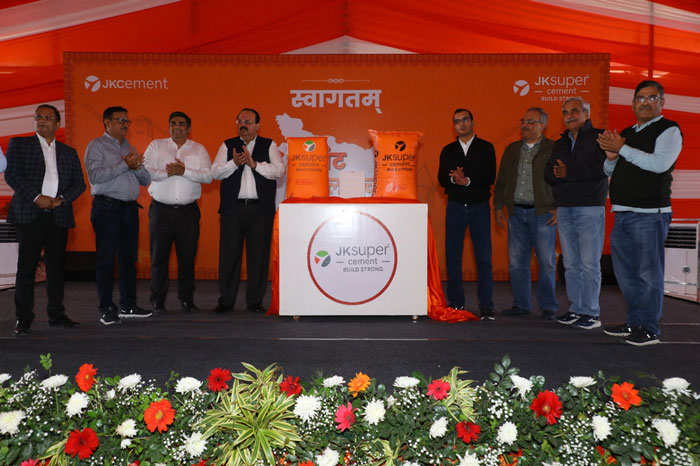
JK Cement has commissioned a 3 MTPA Grey Cement plant in Buxar, Bihar, taking its total capacity to 31.26 MTPA and placing it among India’s top five grey cement producers. The ₹500 crore investment strengthens the company’s national footprint while supporting Bihar’s infrastructure growth and local economic development.

JK Cement Ltd., one of India’s leading cement manufacturers, has announced the commissioning of its new state-of-the-art Grey Cement plant in Buxar, Bihar, marking a significant milestone in the company’s growth trajectory. With the commissioning of this facility, JK Cement’s total production capacity has increased to 31.26 million tonnes per annum (MTPA), enabling the company to cross the 30 MTPA threshold.

This expansion positions JK Cement among the top five Grey Cement manufacturers in India, strengthening its national footprint and reinforcing its long-term growth strategy.

Commenting on the strategic achievement, Dr Raghavpat Singhania, Managing Director, JK Cement, said, “Crossing 31 MTPA is a significant turning point in JK Cement’s expansion and demonstrates the scale, resilience, and aspirations of our company. In addition to making a significant contribution to Bihar’s development vision, the commissioning of our Buxar plant represents a strategic step towards expanding our national footprint. We are committed to developing top-notch manufacturing capabilities that boost India’s infrastructure development and generate long-term benefits for local communities.”

The Buxar plant has a capacity of 3 MTPA and is spread across 100 acres. Strategically located on the Patna–Buxar highway, the facility enables faster and more efficient distribution across Bihar and adjoining regions. While JK Cement entered the Bihar market last year through supplies from its Prayagraj plant, the Buxar facility will now allow the company to serve the state locally, with deliveries possible within 24 hours across Bihar.

Sharing his views on the expansion, Madhavkrishna Singhania, Joint Managing Director & CEO, JK Cement, said, “JK Cement is now among India’s top five producers of grey cement after the Buxar plant commissioning. Our capacity to serve Bihar locally, more effectively, and on a larger scale is strengthened by this facility. Although we had already entered the Bihar market last year using Prayagraj supplies, local manufacturing now enables us to be nearer to our clients and significantly raise service standards throughout the state. Buxar places us at the center of this chance to promote sustainable growth for both the company and the region in Bihar, a high-growth market with strong infrastructure momentum.”

The new facility represents a strategic step in supporting Bihar’s development vision by ensuring faster access to superior quality cement for infrastructure, housing, and commercial projects. JK Cement has invested approximately ₹500 crore in the project. Construction began in March 2025, and commercial production commenced on January 29, 2026.

In addition to strengthening JK Cement’s regional presence, the Buxar plant is expected to generate significant direct and indirect employment opportunities and attract ancillary industries, thereby contributing to the local economy and the broader industrial ecosystem.

Continue Reading

Economy & Market

From Vision to Action: Fornnax Global Growth Strategy for 2026

Published

on

By

Shares

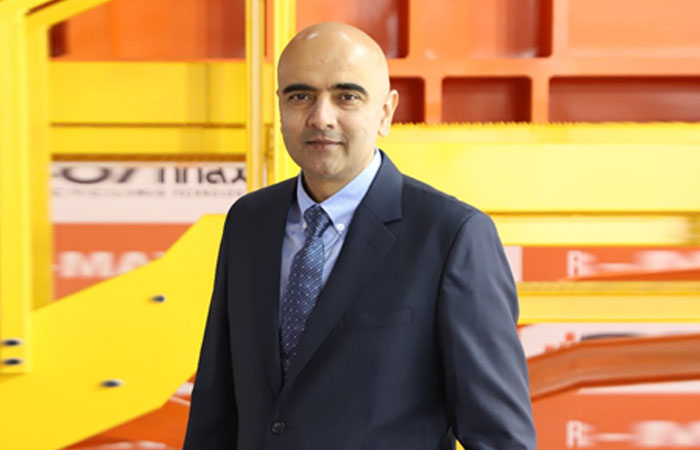
Jignesh Kundaria, Director & CEO, Fornnax Recycling Technology

As 2026 begins, Fornnax is accelerating its global growth through strategic expansion, large-scale export-led installations, and technology-driven innovation across multiple recycling streams. Backed by manufacturing scale-up and a strong people-first culture, the company aims to lead sustainable, high-capacity recycling solutions worldwide.

As 2026 begins, Fornnax stands at a pivotal stage in its growth journey. Over the past few years, the company has built a strong foundation rooted in engineering excellence, innovation, and a firm commitment to sustainable recycling. The focus ahead is clear: to grow faster, stronger, and on a truly global scale.

“Our 2026 strategy is driven by four key priorities,” explains Mr. Jignesh Kundaria, Director & CEO of Fornnax.

First, Global Expansion

We will strengthen our presence in major markets such as Europe, Australia, and the GCC, while continuing to grow across our existing regions. By aligning with local regulations and customer requirements, we aim to establish ourselves as a trusted global partner for advanced recycling solutions.

A major milestone in this journey will be export-led global installations. In 2026, we will commission Europe’s highest-capacity shredding line, reinforcing our leadership in high-capacity recycling solutions.

Second, Product Innovation and Technology Leadership

Innovation remains at the heart of our vision to become a global leader in recycling technology by 2030. Our focus is on developing solutions that are state-of-the-art, economical, efficient, reliable, and environmentally responsible.

Building on a decade-long legacy in tyre recycling, we have expanded our portfolio into new recycling applications, including municipal solid waste (MSW), e-waste, cable, and aluminium recycling. This diversification has already created strong momentum across the industry, marked by key milestones scheduled to become operational this year, such as:

  • Installation of India’s largest e-waste and cable recycling line.
  • Commissioning of a high-capacity MSW RDF recycling line.

“Sustainable growth must be scalable and profitable,” emphasizes Mr. Kundaria. In 2026, Fornnax will complete Phase One of our capacity expansion by establishing the world’s largest shredding equipment manufacturing facility. This 23-acre manufacturing unit, scheduled for completion in July 2026, will significantly enhance our production capability and global delivery capacity.

Alongside this, we will continue to improve efficiency across manufacturing, supply chain, and service operations, while strengthening our service network across India, Australia, and Europe to ensure faster and more reliable customer support.

Finally: People and Culture

“People remain the foundation of Fornnax’s success. We will continue to invest in talent, leadership development, and a culture built on ownership, collaboration, and continuous improvement,” states Mr. Kundaria.

With a strong commitment to sustainability in everything we do, our ambition is not only to grow our business, but also to actively support the circular economy and contribute to a cleaner, more sustainable future.

Guided by a shared vision and disciplined execution, 2026 is set to be a defining year for us, driven by innovation across diverse recycling applications, large-scale global installations, and manufacturing excellence.

Continue Reading

Trending News

SUBSCRIBE TO THE NEWSLETTER


Don't miss out on valuable insights and opportunities to connect with like minded professionals.


    This will close in 0 seconds