Connect with us

Economy & Market

Green Agenda

Published

on

Shares

The new environmental norms which the power sector has to adhere to come with their own set of technological challenges. For the first time ever, schools have been shut in the first week of November 2016 in New Delhi and citizens are rushing to buy air purifiers as sensors show alarming levels of air toxicity. Why has the situation come to such a pass?
The heavy concentration of particulate matter is greatly affected by meteorological conditions. In winters, cool air causes ‘inversions’ that make the air stagnant and trap pollution close to the ground. Air flow patterns from Afghanistan and Pakistan pick up emissions as they move over the densely urbanised regions of Punjab and Haryana where farmers burn straw in their fields and pull this pollution into Delhi.
Pre-monsoon dust storms also contribute to air pollution in the region. These are some of the opinions expressed by environmentalists. Ref. Figure 1
The role played by thermal power plants is significant in worsening air quality. The Ministry of Environment, Forest & Climate Change (MoEF & CC) announced the revised standards for controlling pollution in December 2015, considering the deterioration of ambient air quality. The proposed standards are strict, but can be achieved if the compliance plan is executed correctly. The revised standards, which are quite comparable with international standards, aim to cut emissions of particulate matter (PM), sulphur dioxide (SO2), oxides of nitrogen (NOx), and mercury. In addition, the new norms also require power plants to sharply curtail the use of water.
In December 2015, MoEF & CC announced standards for coal-based thermal power plants, which are given below. Ref. Table 1
There are commercial implications of executing the change. The most important one being of finance for the investment required and cost recovery through tariff. The time lines issued by the ministry are tight, but achievable.
In case any additional time is required for implementation of the change, this permission may be granted on a case-to-case basis. Plants under construction need to change the design and plans to meet the new norms from 1st January 2017, which would be a challenge. Technology options
Investments in plants/units that have exceeded their design life of 25 years must be made carefully, considering their efficiency and availability, post revamp. A majority of such plants will have to be shut down. Basic up-gradation targeting mainly PM control may, however, suffice in the interim. Plants with good operating performance, low cost of generation and recent repairs & maintenance that would have extended remaining life may be allowed to invest so that they can meet the new standards. Particulate matter (PM)
Units commissioned between 1990 and 2008 may need to upgrade the electrostatic precipitator (ESP) to meet the PM norms of 100 and 50 mg/Nm3.
In some cases, it may involve adding fields in series or parallel or increasing the height of the ESP. The units installed after 2008 are required to meet PM norms of 50 mg/Nm3. Therefore, a basic performance revamp may suffice for these units. However, some units are required to meet 100-150 mg/Nm3 and others are poorly performing – these units may require huge investment.
Power plants under construction should be able to meet the 30 mg/Nm3 PM standard with a combination of ESP and FGD (flue gas desulphurisation) In fact, an integrated design would mean that the ESP size can be made smaller than a standalone one for meeting the norm.Sulphur dioxide (SO2)
Units of size less than 500 MW installed between 1990 and 2016 need to meet the SOx norm of 600 mg/Nm3. These units may choose options such as partial FGD or sorbent injection.
Units of size 500 MW and more, installed between 1990 and 2016, have to install limestone-based wet FGD or lime-based dry FGD, depending on raw material and water availability. FGD is a mature technology for controlling SOx. It is used in many countries and has been shown to be effective for a wide range of coal qualities and operating conditions. China has installed FGD in over 91.4 per cent of its fleet in recent years. Upcoming units can meet the SOx standard by installing FGD.Oxides of nitrogen (NOx)
Minimal measures are needed to meet emissions of less than 600 mg/Nm3. Some units are already meeting these levels. The units installed after 2003 have to reduce emissions to 300 mg/Nm3. Manufacturers, including BHEL, have already been supplying boilers that meet these emissions. Those plants whose emissions exceed the norms will need to choose from several options including burner modification, over fire air supply (OFA) etc., depending on the base level of emissions and technical constraints.
Upcoming units need to meet the NOx emissions of 100 mg/Nm3 SCR (Selective Catalyst Reduction) and SNCR (Selective Non-Catalyst Reduction) technologies, which have been used globally to cut NOx to these levels. Some industry players, however, feel that the technology’s effectiveness needs to be established for Indian coal (high ash, chemical composition and physical characteristics). NTPC will run five pilot programmes to assess the technology. Suppliers are confident that the technology will work with possibly minor tweaks.
The coal-based power sector is in the midst of a major transition across the world. China, for instance, has decided not to build new coal-fired plants after 2030. India, on its part, has put in place tighter environmental standards and hiked its coal cess by eight times within two years. Says Chandra Bhushan, Deputy Director-General of Centre For Science and Environment (CSE), New Delhi, "The world is faced by relatively newer challenges, including that of a changing climate – this means countries need to have flexible, nimble energy policies."
In addition to the monitoring of individual parameters, the power plants will have CEMS(Continuous Emission Monitoring System). Developed countries such as the US, EU and Japan as well as a few emerging economies like Brazil and China have already adopted CEMS. The Central Pollution Control Board will be the authority that will drive the implementation.
Priyavrat Bhati of CSE adds, "Some basic requirements for successfully implementing CEMS – such as skilled laboratories and human power or comprehensive guidelines for device selection, etc., are still lacking in India." This creates multiple implementation challenges which must be urgently resolved. While CEMS has been initiated as pilots in three states, fundamental issues are yet to be resolved. For instance, manufacturers express their concern over the unavailability of standards in India for getting themselves certified as accredited device manufacturers. It goes without saying that the changes are equally applicable to captive power plants irrespective of their capacity to generate power.

Table 1: Standards (in mg/Nm3)


Continue Reading
Click to comment

Leave a Reply

Your email address will not be published. Required fields are marked *

Concrete

FORNNAX Appoints Dieter Jerschl as Sales Partner for Central Europe

Published

on

By

Shares

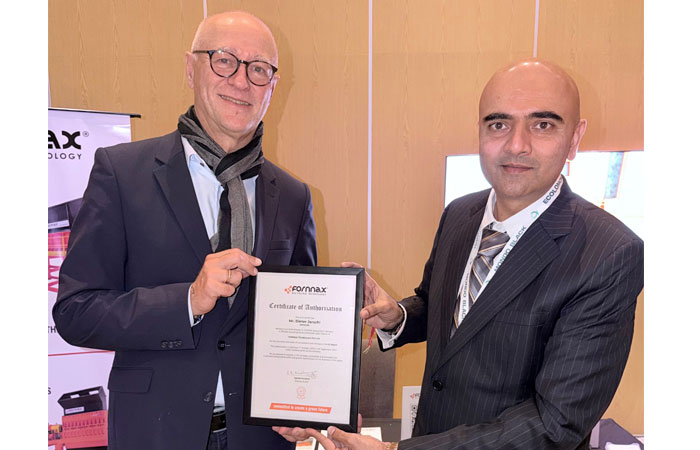
FORNNAX TECHNOLOGY has appointed industry veteran Dieter Jerschl as its new sales partner in Germany to strengthen its presence across Central Europe. The partnership aims to accelerate the adoption of FORNNAX’s high-capacity, sustainable recycling solutions while building long-term regional capabilities.

FORNNAX TECHNOLOGY, one of the leading advanced recycling equipment manufacturers, has announced the appointment of a new sales partner in Germany as part of its strategic expansion into Central Europe. The company has entered into a collaborative agreement with Mr. Dieter Jerschl, a seasoned industry professional with over 20 years of experience in the shredding and recycling sector, to represent and promote FORNNAX’s solutions across key European markets.

Mr. Jerschl brings extensive expertise from his work with renowned companies such as BHS, Eldan, Vecoplan, and others. Over the course of his career, he has successfully led the deployment of both single machines and complete turnkey installations for a wide range of applications, including tyre recycling, cable recycling, municipal solid waste, e-waste, and industrial waste processing.

Speaking about the partnership, Mr. Jerschl said,
“I’ve known FORNNAX for over a decade and have followed their growth closely. What attracted me to this collaboration is their state-of-the-art & high-capacity technology, it is powerful, sustainable, and economically viable. There is great potential to introduce FORNNAX’s innovative systems to more markets across Europe, and I am excited to be part of that journey.”

The partnership will primarily focus on Central Europe, including Germany, Austria, and neighbouring countries, with the flexibility to extend the geographical scope based on project requirements and mutual agreement. The collaboration is structured to evolve over time, with performance-driven expansion and ongoing strategic discussions with FORNNAX’s management. The immediate priority is to build a strong project pipeline and enhance FORNNAX’s brand presence across the region.

FORNNAX’s portfolio of high-performance shredding and pre-processing solutions is well aligned with Europe’s growing demand for sustainable and efficient waste treatment technologies. By partnering with Mr. Jerschl—who brings deep market insight and established industry relationships—FORNNAX aims to accelerate adoption of its solutions and participate in upcoming recycling projects across the region.

As part of the partnership, Mr. Jerschl will also deliver value-added services, including equipment installation, maintenance, and spare parts support through a dedicated technical team. This local service capability is expected to ensure faster project execution, minimise downtime, and enhance overall customer experience.

Commenting on the long-term vision, Mr. Jerschl added,
“We are committed to increasing market awareness and establishing new reference projects across the region. My goal is not only to generate business but to lay the foundation for long-term growth. Ideally, we aim to establish a dedicated FORNNAX legal entity or operational site in Germany over the next five to ten years.”

For FORNNAX, this partnership aligns closely with its global strategy of expanding into key markets through strong regional representation. The company believes that local partnerships are critical for navigating complex market dynamics and delivering solutions tailored to region-specific waste management challenges.

“We see tremendous potential in the Central European market,” said Mr. Jignesh Kundaria, Director and CEO of FORNNAX.
“Partnering with someone as experienced and well-established as Mr. Jerschl gives us a strong foothold and allows us to better serve our customers. This marks a major milestone in our efforts to promote reliable, efficient and future-ready recycling solutions globally,” he added.

This collaboration further strengthens FORNNAX’s commitment to environmental stewardship, innovation, and sustainable waste management, supporting the transition toward a greener and more circular future.


Continue Reading

Concrete

Budget 2026–27 infra thrust and CCUS outlay to lift cement sector outlook

Published

on

By

Shares

Higher capex, city-led growth and CCUS funding improve demand visibility and decarbonisation prospects for cement

Mumbai

Cement manufacturers have welcomed the Union Budget 2026–27’s strong infrastructure thrust, with public capital expenditure increased to Rs 12.2 trillion, saying it reinforces infrastructure as the central engine of economic growth and strengthens medium-term prospects for the cement sector. In a statement, the Cement Manufacturers’ Association (CMA) has welcomed the Union budget 2026-27 for reinforcing the ambitions for the nation’s growth balancing the aspirations of the people through inclusivity inspired by the vision of Narendra Modi, Prime Minister of India, for a Viksit Bharat by 2047 and Atmanirbharta.

The budget underscores India’s steady economic trajectory over the past 12 years, marked by fiscal discipline, sustained growth and moderate inflation, and offers strong demand visibility for infrastructure linked sectors such as cement.

The Budget’s strong infrastructure push, with public capital expenditure rising from Rs 11.2 trillion in fiscal year 2025–26 to Rs 12.2 trillion in fiscal year 2026–27, recognises infrastructure as the primary anchor for economic growth creating positive prospects for the Indian cement industry and improving long term visibility for the cement sector. The emphasis on Tier 2 and Tier 3 cities with populations above 5 lakh and the creation of City Economic Regions (CERs) with an allocation of Rs 50 billion per CER over five years, should accelerate construction activity across housing, transport and urban services, supporting broad based cement consumption.

Logistics and connectivity measures announced in the budget are particularly significant for the cement industry. The announcement of new dedicated freight corridors, the operationalisation of 20 additional National Waterways over the next five years, the launch of the Coastal Cargo Promotion Scheme to raise the modal share of waterways and coastal shipping from 6 per cent to 12 per cent by 2047, and the development of ship repair ecosystems should enhance multimodal freight efficiency, reduce logistics costs and improve the sector’s carbon footprint. The announcement of seven high speed rail corridors as growth corridors can be expected to further stimulate regional development and construction demand.

Commenting on the budget, Parth Jindal, President, Cement Manufacturers’ Association (CMA), said, “As India advances towards a Viksit Bharat, the three kartavya articulated in the Union Budget provide a clear context for the Nation’s growth and aspirations, combining economic momentum with capacity building and inclusive progress. The Cement Manufacturers’ Association (CMA) appreciates the Union Budget 2026-27 for the continued emphasis on manufacturing competitiveness, urban development and infrastructure modernisation, supported by over 350 reforms spanning GST simplification, labour codes, quality control rationalisation and coordinated deregulation with States. These reforms, alongside the Budget’s focus on Youth Power and domestic manufacturing capacity under Atmanirbharta, stand to strengthen the investment environment for capital intensive sectors such as Cement. The Union Budget 2026-27 reflects the Government’s focus on infrastructure led development emerging as a structural pillar of India’s growth strategy.”

He added, “The Rs 200 billion CCUS outlay for various sectors, including Cement, fundamentally alters the decarbonisation landscape for India’s emissions intensive industries. CCUS is a significant enabler for large scale decarbonisation of industries such as Cement and this intervention directly addresses the technology and cost requirements of the Cement sector in context. The Cement Industry, fully aligned with the Government of India’s Net Zero commitment by 2070, views this support as critical to enabling the adoption and scale up of CCUS technologies while continuing to meet the Country’s long term infrastructure needs.”

Dr Raghavpat Singhania, Vice President, CMA, said, “The government’s sustained infrastructure push supports employment, regional development and stronger local supply chains. Cement manufacturing clusters act as economic anchors across regions, generating livelihoods in construction, logistics and allied sectors. The budget’s focus on inclusive growth, execution and system level enablers creates a supportive environment for responsible and efficient expansion offering opportunities for economic growth and lending momentum to the cement sector. The increase in public capex to Rs 12.2 trillion, the focus on Tier 2 and Tier 3 cities, and the creation of City Economic Regions stand to strengthen the growth of the cement sector. We welcome the budget’s emphasis on tourism, cultural and social infrastructure, which should broaden construction activity across regions. Investments in tourism facilities, heritage and Buddhist circuits, regional connectivity in Purvodaya and North Eastern States, and the strengthening of emergency and trauma care infrastructure in district hospitals reinforce the cement sector’s role in enabling inclusive growth.”

CMA also noted the Government’s continued commitment to fiscal discipline, with the fiscal deficit estimated at 4.3 per cent of GDP in FY27, reinforcing macroeconomic stability and investor confidence.

Continue Reading

Concrete

JK Cement Crosses 31 MTPA Capacity with Commissioning of Buxar Plant in Bihar

Published

on

By

Shares

JK Cement has commissioned a 3 MTPA Grey Cement plant in Buxar, Bihar, taking its total capacity to 31.26 MTPA and placing it among India’s top five grey cement producers. The ₹500 crore investment strengthens the company’s national footprint while supporting Bihar’s infrastructure growth and local economic development.

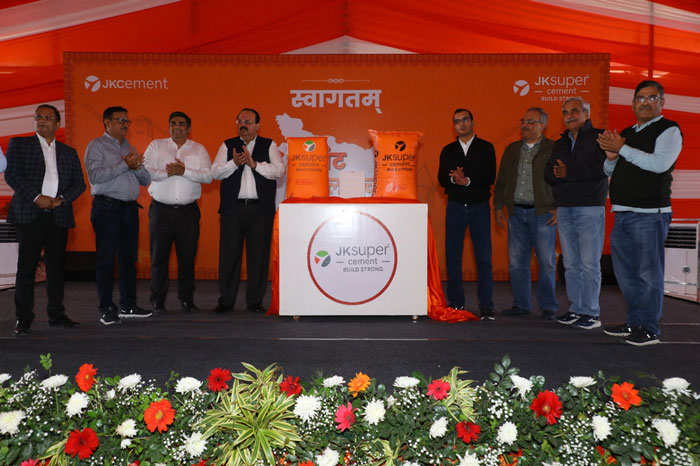
JK Cement Ltd., one of India’s leading cement manufacturers, has announced the commissioning of its new state-of-the-art Grey Cement plant in Buxar, Bihar, marking a significant milestone in the company’s growth trajectory. With the commissioning of this facility, JK Cement’s total production capacity has increased to 31.26 million tonnes per annum (MTPA), enabling the company to cross the 30 MTPA threshold.

This expansion positions JK Cement among the top five Grey Cement manufacturers in India, strengthening its national footprint and reinforcing its long-term growth strategy.

Commenting on the strategic achievement, Dr Raghavpat Singhania, Managing Director, JK Cement, said, “Crossing 31 MTPA is a significant turning point in JK Cement’s expansion and demonstrates the scale, resilience, and aspirations of our company. In addition to making a significant contribution to Bihar’s development vision, the commissioning of our Buxar plant represents a strategic step towards expanding our national footprint. We are committed to developing top-notch manufacturing capabilities that boost India’s infrastructure development and generate long-term benefits for local communities.”

The Buxar plant has a capacity of 3 MTPA and is spread across 100 acres. Strategically located on the Patna–Buxar highway, the facility enables faster and more efficient distribution across Bihar and adjoining regions. While JK Cement entered the Bihar market last year through supplies from its Prayagraj plant, the Buxar facility will now allow the company to serve the state locally, with deliveries possible within 24 hours across Bihar.

Sharing his views on the expansion, Madhavkrishna Singhania, Joint Managing Director & CEO, JK Cement, said, “JK Cement is now among India’s top five producers of grey cement after the Buxar plant commissioning. Our capacity to serve Bihar locally, more effectively, and on a larger scale is strengthened by this facility. Although we had already entered the Bihar market last year using Prayagraj supplies, local manufacturing now enables us to be nearer to our clients and significantly raise service standards throughout the state. Buxar places us at the center of this chance to promote sustainable growth for both the company and the region in Bihar, a high-growth market with strong infrastructure momentum.”

The new facility represents a strategic step in supporting Bihar’s development vision by ensuring faster access to superior quality cement for infrastructure, housing, and commercial projects. JK Cement has invested approximately ₹500 crore in the project. Construction began in March 2025, and commercial production commenced on January 29, 2026.

In addition to strengthening JK Cement’s regional presence, the Buxar plant is expected to generate significant direct and indirect employment opportunities and attract ancillary industries, thereby contributing to the local economy and the broader industrial ecosystem.

Continue Reading

Trending News

SUBSCRIBE TO THE NEWSLETTER


Don't miss out on valuable insights and opportunities to connect with like minded professionals.


    This will close in 0 seconds