Connect with us

Product Development

We expect another growth burst in cement demand in the coming years

Published

on

Shares

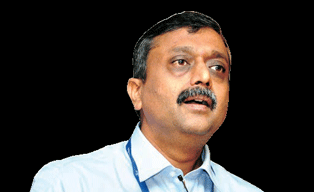
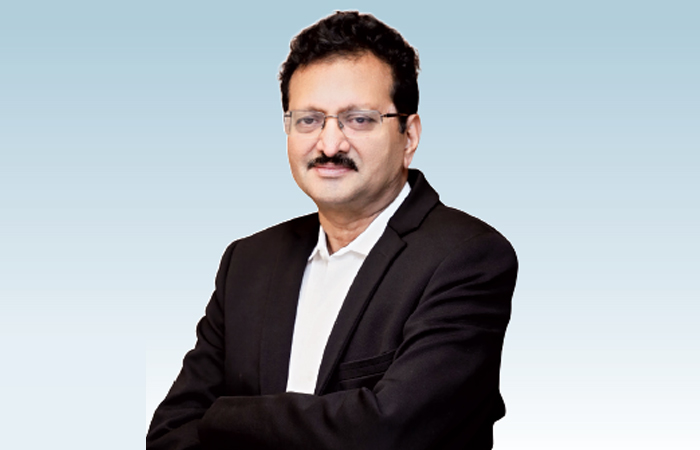
Amandeep, Group Executive Director and Joint CEO, OCL India

OCL India owns one of the most modern dry process cement plants in India. Presently, it has an installed capacity of 5.35 million tonnes per annum. Apart from its two cement plants, the Rajgangpur Cement Works and Kapilas Cement Works, OCL has a Refractory plant at Rajgangpur with a total installed capacity of 106.4 billion tonnes per annum. OCL was the first to initiate cement export from eastern region to countries like Bangladesh and Nepal. Amandeep, in an interaction with ICR, shares the success story of the company. Excerpts from the interview.

Please brief us about your company and the markets served?
OCL India is the flagship of the Dalmia Group of Companies, having set up plants operating in four states of India – Odisha, West Bengal, Bihar and Jharkhand. Our first cement plant was set up at Rajgangpur during 1950-51 at the request of the Government of Odisha to manufacture super grade cement for use in the construction of the prestigious Hirakud Dam. At that time it was known as Orissa Cement Ltd.

OCL commissioned its Refractory plant in the year 1954, which today has grown into one of the largest composite refractory plants in the country. It manufactures silica, basic burnt magnesia carbon, fireclay, high alumina bricks, continuous casting, slide gate refractories, castables and precast blocks, etc. OCLs Refractory division is the first Indian refractory manufacturer to have secured the coveted ISO 9001 certification for all its refractory products. Globally OCL is amongst the few select producers of coke oven silica bricks.

The company changed its name from Orissa Cement Ltd to OCL India in1996 to reflect its multifarious activities such as manufacture of iron and steel.

How has the company performed during the last five years in terms of growth and product launches?
The company had added a capacity of 1.35 million tonnes (MnT) in 2008 and has continued growing at an average rate of 19 per cent in subsequent three years. OCL maintained its volume in the 2012-2014 period. We expect another growth burst in cement demand the coming years and we have added another 1.35 MnT to our production capacity.

OCL sells its product under brand name Konark and has two variants of the product, PSC and PPC. Recently, OCL launched a premium product named DSP in the market.

How is the brand recognition of Konark in the market?
Konark is leading brand in the state of Odisha commanding highest premium and largest market share. In markets of West Bengal, Bihar and Jharkhand, Konark is seen as a reputed brand and is rated high on quality by all its consumers.

Konark brand has been extensively used in the construction of the prestigious Hirakud Dam in Odisha and in building some of Indias largest roads, bridges and industrial plants, including the Vidyasagar Setu in Kolkata, the Gandhi Sagar Bridge in Patna, as well as in the construction of port facilities at Haldia and Paradip. Konark was used in construction of 2.2 million tonnes integrated steel plant of Electro Steel Integrated in Bokaro, Jharkhand; in a 3 million tonnes integrated steel plant of Jindal Steel & Power at Angul, Odisha; and in construction of an all weather new private port at Dhamara near Bhadrak in Odisha.

Apart from strong brand recall what else attracts customers to Konark?
Quality, service and innovation in packaging are the three key areas that keep our customers coming back to us. Good service is equally important to meet the ever growing expectations of the channel. We also have to keep improving our supply chain for ensuring timely availability of cement to our customers.

We keep ourselves constantly updated about the needs of the market and try to meet them through new innovative products. This has led us to come up with DSP, a premium product for high strength applications such as foundation for multi-storey buildings, etc. Innovation in package design has helped in setting the product apart from traditional products, and project it as a modern contemporary brand that appeals to the young as well as to the older generation

Please share a percentage wise break up of revenue earned from different product lines?
OCL has two different products – cement and refractory. Cement accounts for the 82 per cent of our revenue while refractory brings in the remaining 18 per cent revenue.

What are your plans for further expansion?
We have recently set up a grinding unit in West Medinipur, West Bengal. OCL does not have any further expansion plans at least for the near foreseeable future.

Are you planning to launch any new product in the near future?
We have launched DSP a premium product in April 2014. This product will be launched in West Bengal very soon.

Tell us about your CSR activities?
OCL has undertaken various developmental activities in peripheral areas of its plant at Rajgangpur and the captive mines at Lanjiberna. Our CSR program is based on four pillars: Education, Skill Development, Health and Infrastructure development to support the other three.

Education:

We have started a Remedial Centre for the underprivileged students of 9th and 10th class studying in government schools. We have seen an improvement in the grades of last batch, which passed out. 34 per cent of the students scored 1st division in the board exams. We have also opened a centre for 4th and 5th class students for helping them study well in Navodaya Schools. We are also operating thirty "One Teacher Schools" called "Ekala Vidayalaya" in villages in collaboration with "Friends of Tribal Society."

Health:

Our aim is to provide free healthcare services to poor tribal people of this locality and create awareness among them about health and hygiene. We provide mobile medical units for local community and organising health camps with a special focus on mother and child healthcare.

Skill Development:

The company has been providing training for the unemployed youth at an ITI. OCL is operating a training centre "Swayamprabha" in Lanjiberna where poor and destitute tribal ladies are provided free training on tailoring, embroidery, dress designing, etc. After completion of training, each of them is given a sewing machine at 50 per cent of its cost. The centre has so far imparted training to 80 ladies. Most of them are earning their livelihood by stitching garments.

Infrastructure Development

Some of the initiatives taken by us include:

  • Hari Chatravaas, a hostel for underprivileged and meritorious students
  • An eye treatment hospital
  • An ITI centre for training youth
  • Construction of a 900-metre long concrete road in Rajgangpur
  • Construction of a three storied building, kitchen, Namasankirtan Mandap, toilet, etc., for the inmates of Kalpataru Ashram, Lamloi, where poor orphan children are residing
  • Renovation and maintenance of a Theme Park at Sundargarh. The park depicts rich cultural heritage of local tribals and is one of the best of its type in Odisha
  • Construction of thirteen Community Centres in villages. Also supplied furniture, utensils, etc., to these centres where villagers conduct community meetings and social/cultural functions, and
  • Providing electricity to villages.

First and Foremost
OCL has been a market leader in Odisha for more than 60 years. Its drive for modernisation, right from its inception, has allowed the company to pioneer in several areas. OCL installed the first auto kiln control system based on fuzzy logic in India, the worlds largest cement and slag grinding Vertical Roller Mill during 1997, the second such cement Vertical Roller Mill during 2001, the third cement Vertical Roller Mill again with 60 per cent additional capacity and first in the world market in 2005. The target centric investments in R&D and application specific product development have both enabled OCL to enlarge and include in its product range various grades of ordinary Portland cement (OPC) like 43 and 53 grades; 53-S grade cement for use in the manufacture of railway sleepers; Portland slag cement (PSC); fly ash based Portland pozzolana cement (PPC), sulphate resisting Portland cement (SRPC); masonry cement, etc. For a short time OCL also ventured into manufacture of a wide range of cement allied products including spun pipes, etc., in early sixties of the last millennium and became a prime source of high strength reinforced spun pipes and pre-stressed concrete poles. It was the first manufacturer of pre-stressed concrete railway sleepers. Decades later, the company is still a leading a supplier of railway sleeper grade cement in India. OCL was one of the first to develop and produce slag-blended cement, utilising steel plant waste for high strength cement and IRST-40 cement for railway sleepers. Its other innovative range includes sulphate resistant Portland cement, oil well cement and masonry cement.


Economy & Market

Power Build’s Core Gear Series

Published

on

By

Shares

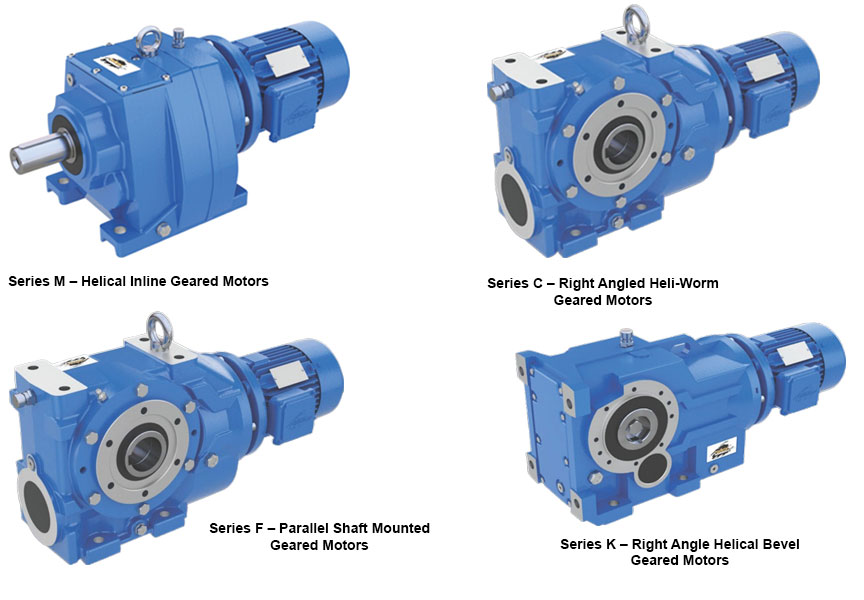
A deep dive into Core Gear Series of products M, C, F and K, by Power Build, and how they represent precision in motion.

At the heart of every high-performance industrial system lies the need for robust, reliable, and efficient power transmission. Power Build answers this need with its flagship geared motor series: M, C, F and K. Each series is meticulously engineered to serve specific operational demands while maintaining the universal promise of durability, efficiency, and performance.

Series M – Helical Inline Geared Motors
Compact and powerful, the Series M delivers exceptional drive solutions for a broad range of applications. With power handling up to 160kW and torque capacity reaching 20,000 Nm, it is the trusted solution for industries requiring quiet operation, high efficiency, and space-saving design. Series M is available with multiple mounting and motor options, making it a versatile choice for manufacturers and OEMs globally.

Series C – Right Angled Heli-Worm Geared Motors
Combining the benefits of helical and worm gearing, the Series C is designed for right-angled power transmission. With gear ratios of up to 16,000:1 and torque capacities of up to 10,000 Nm, this series is optimal for applications demanding precision in compact spaces. Industries looking for a smooth, low-noise operation with maximum torque efficiency rely on Series C for dependable performance.

Series F – Parallel Shaft Mounted Geared Motors
Built for endurance in the most demanding environments, Series F is widely adopted in steel plants, hoists, cranes and heavy-duty conveyors. Offering torque up to 10,000 Nm and high gear ratios up to 20,000:1, this product features an integral torque arm and diverse output configurations to meet industry-specific challenges head-on.

Series K – Right Angle Helical Bevel Geared Motors
For industries seeking high efficiency and torque-heavy performance, Series K is the answer. This right-angled geared motor series delivers torque up to 50,000 Nm, making it a preferred choice in core infrastructure sectors such as cement, power, mining and material handling. Its flexibility in mounting and broad motor options offer engineers the freedom in design and reliability in execution.
Together, these four series reflect Power Build’s commitment to excellence in mechanical power transmission. From compact inline designs to robust right-angle drives, each geared motor is a result of decades of engineering innovation, customer-focused design and field-tested reliability. Whether the requirement is speed control, torque multiplication or space efficiency, Radicon’s Series M, C, F and K stand as trusted powerhouses for global industries.

http://www.powerbuild.in
Call: +919727719344

Continue Reading

Economy & Market

Conveyor belts are a vital link in the supply chain

Published

on

By

Shares


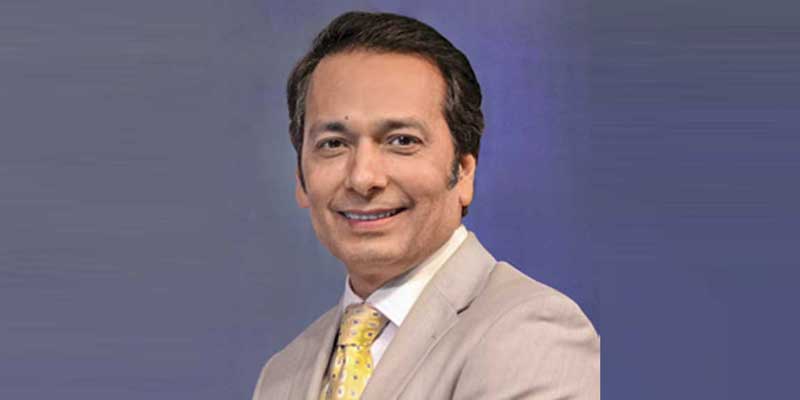
Kamlesh Jain, Managing Director, Elastocon, discusses how the brand delivers high-performance, customised conveyor belt solutions for demanding industries like cement, mining, and logistics, while embracing innovation, automation, and sustainability.

In today’s rapidly evolving industrial landscape, efficient material handling isn’t just a necessity—it’s a competitive advantage. As industries such as mining, cement, steel and logistics push for higher productivity, automation, and sustainability, the humble conveyor belt has taken on a mission-critical role. In this exclusive interview, Kamlesh Jain, Managing Director, Elastocon, discusses how the company is innovating for tougher terrains, smarter systems and a greener tomorrow.

Brief us about your company – in terms of its offerings, manufacturing facilities, and the key end-user industries it serves.
Elastocon, a flagship brand of the Royal Group, is a trusted name in the conveyor belt manufacturing industry. Under the brand name ELASTOCON, the company produces both open-end and endless belts, offering tailor-made solutions to some of the most demanding sectors such as cement, steel, power, mining, fertiliser, and logistics. Every belt is meticulously engineered—from fabric selection to material composition—to ensure optimal performance in tough working conditions. With advanced manufacturing facilities and strict quality protocols, Elastocon continues to deliver high-performance conveyor solutions designed for durability, safety, and efficiency.

How is the group addressing the needs for efficient material handling?
Efficient material handling is the backbone of any industrial operation. At Elastocon, our engineering philosophy revolves around creating belts that deliver consistent performance, long operational life, and minimal maintenance. We focus on key performance parameters such as tensile strength, abrasion resistance, tear strength, and low elongation at working tension. Our belts are designed to offer superior bonding between plies and covers, which directly impacts their life and reliability. We also support clients
with maintenance manuals and technical advice, helping them improve their system’s productivity and reduce downtime.

How critical are conveyor belts in ensuring seamless material handling?
Conveyor belts are a vital link in the supply chain across industries. In sectors like mining, cement, steel, and logistics, they facilitate the efficient movement of materials and help maintain uninterrupted production flows. At Elastocon, we recognise the crucial role of belts in minimising breakdowns and increasing plant uptime. Our belts are built to endure abrasive, high-temperature, or high-load environments. We also advocate proper system maintenance, including correct belt storage, jointing, roller alignment, and idler checks, to ensure smooth and centered belt movement, reducing operational interruptions.

What are the key market and demand drivers for the conveyor belt industry?
The growth of the conveyor belt industry is closely tied to infrastructure development, increased automation, and the push for higher operational efficiency. As industries strive to reduce labor dependency and improve productivity, there is a growing demand for advanced material handling systems. Customers today seek not just reliability, but also cost-effectiveness and technical superiority in the belts they choose. Enhanced product aesthetics and innovation in design are also becoming significant differentiators. These trends are pushing manufacturers to evolve continuously, and Elastocon is leading the way with customer-centric product development.

How does Elastocon address the diverse and evolving requirements of these sectors?
Our strength lies in offering a broad and technically advanced product portfolio that serves various industries. For general-purpose applications, our M24 and DINX/W grade belts offer excellent abrasion resistance, especially for RMHS and cement plants. For high-temperature operations, we provide HR and SHR T2 grade belts, as well as our flagship PYROCON and PYROKING belts, which can withstand extreme heat—up to 250°C continuous and even 400°C peak—thanks to advanced EPM polymers.
We also cater to sectors with specialised needs. For fire-prone environments like underground mining, we offer fire-resistant belts certified to IS 1891 Part V, ISO 340, and MSHA standards. Our OR-grade belts are designed for oil and chemical resistance, making them ideal for fertiliser and chemical industries. In high-moisture applications like food and agriculture, our MR-grade belts ensure optimal performance. This diverse range enables us to meet customer-specific challenges with precision and efficiency.

What core advantages does Elastocon offer that differentiate it from competitors?
Elastocon stands out due to its deep commitment to quality, innovation, and customer satisfaction. Every belt is customised to the client’s requirements, supported by a strong R&D foundation that keeps us aligned with global standards and trends. Our customer support doesn’t end at product delivery—we provide ongoing technical assistance and after-sales service that help clients maximise the value of their investments. Moreover, our focus on compliance and certifications ensures our belts meet stringent national and international safety and performance standards, giving customers added confidence.

How is Elastocon gearing up to meet its customers’ evolving needs?
We are conscious of the shift towards greener and smarter manufacturing practices. Elastocon is embracing sustainability by incorporating eco-friendly materials and energy-efficient manufacturing techniques. In parallel, we are developing belts that seamlessly integrate with automated systems and smart industrial platforms. Our vision is to make our products not just high-performing but also future-ready—aligned with global sustainability goals and compatible with emerging technologies in industrial automation and predictive maintenance.

What trends do you foresee shaping the future of the conveyor belt industry?
The conveyor belt industry is undergoing a significant transformation. As Industry 4.0 principles gain traction, we expect to see widespread adoption of smart belts equipped with sensors for real-time monitoring, diagnostics, and predictive maintenance. The demand for recyclable materials and sustainable designs will continue to grow. Furthermore, industry-specific customisation will increasingly replace standardisation, and belts will be expected to do more than just transport material—they will be integrated into intelligent production systems. Elastocon is already investing in these future-focused areas to stay ahead of the curve.

Continue Reading

Economy & Market

Impactful Branding

Published

on

By

Shares

Advertising or branding is never about driving sales. It’s about creating brand awareness and recall. It’s about conveying the core values of your brand to your consumers. In this context, why is branding important for cement companies? As far as the customers are concerned cement is simply cement. It is precisely for this reason that branding, marketing and advertising of cement becomes crucial. Since the customer is unable to differentiate between the shades of grey, the onus of creating this awareness is carried by the brands. That explains the heavy marketing budgets, celebrity-centric commercials, emotion-invoking taglines and campaigns enunciating the many benefits of their offerings.

Marketing strategies of cement companies have undergone gradual transformation owing to the change in consumer behaviour. While TV commercials are high on humour and emotions to establish a fast connect with the customer, social media campaigns are focussed more on capturing the consumer’s attention in an over-crowded virtual world. Branding for cement companies has become a holistic growth strategy with quantifiable results. This has made brands opt for a mix package of traditional and new-age tools, such as social media. However, the hero of every marketing communication is the message, which encapsulates the unique selling points of the product. That after all is crux of the matter here.
While cement companies are effectively using marketing tools to reach out to the consumers, they need to strengthen the four Cs of the branding process – Consumer, Cost, Communication and Convenience. Putting up the right message, at the right time and at the right place for the right kind of customer demographic is of utmost importance in the long run. It is precisely for this reason that regional players are likely to have an upper hand as they rely on local language and cultural references to drive home the point. But modern marketing and branding domain is exponentially growing and it would be an interesting exercise to tabulate and analyse its impact on branding for cement.

Continue Reading

Trending News

SUBSCRIBE TO THE NEWSLETTER


Don't miss out on valuable insights and opportunities to connect with like minded professionals.


    This will close in 0 seconds