Connect with us

Economy & Market

Aditya Birla emerges front-runner to buy JAL stake

Published

on

Shares

To acquire a stake in the cement business of Jaiprakash Associates (JAL) Aditya Birla Group has emerged as the front-runner. JAL’s cement business could potentially be valued at $1 billion (around Rs. 5,700 crore). French cement giant Lafarge and another cement giant are also said to be in the race. The exercise is aimed at reducing debt and may even result in a complete exit by JAL from the third largest cement business in India.the Mumbai-based conglomerate take up to 49 per cent stake in the entire firm, which also has a 4.8 mtpa cement making facility in Andhra Pradesh. Jaiprakash Associates, holds the majority of the cement business.

Continue Reading
Click to comment

Leave a Reply

Your email address will not be published. Required fields are marked *

Concrete

Fuller Technologies QCX® Lab Automation Systems

Published

on

By

Shares

Rizwan Sabjan, Head of Sales & Proposals, and Ramakrishna Nuti, Global Sales Manager -Automation Technologies, Fuller Technologies Cement India, discuss cement laboratory automation.

India’s cement industry is on a strong growth path, driven by infrastructure projects and urban housing demand, with the market expected to grow at over 10 per cent CAGR through 2030. Over the next five years, the sector will reshape the nation by powering mega-corridors, smart cities, and expanding urban centers, while adopting green cement and alternative fuels and waste-heat recovery systems to cut emissions.
The cement manufacturing sector faces mounting pressure from rising demand for high-quality cement products and increasingly stringent environmental regulations. To remain competitive, organisations must enhance productivity, ensure regulatory compliance, and reduce operational costs, all without compromising product quality. These challenges are further intensified by skills shortages, stricter safety requirements, and the need to manage more complex and demanding operating conditions.

The Challenges of Going Green
The cement manufacturing process has evolved significantly as the industry strives to improve cost efficiency and environmental performance. The growing use of alternative fuels and supplementary cementitious materials introduces variability that directly impacts product quality, requiring continuous monitoring and adjustment through precise, agile quality control systems. At the same time, increasing market demand for specialised products places greater emphasis on maintaining tight process control across all stages of production.
To fully capitalise on these opportunities, quality control systems must respond rapidly and effectively to changing conditions. Their ability to deliver timely, accurate insights is critical, often determining whether a plant can maintain competitiveness or risks losing market share.

Automated Laboratory Solutions
Fortunately, the capability of quality control systems has grown immensely in recent years. Where previously plants relied on the skills of their laboratory team, today automated laboratory solutions can achieve optimum consistency in representative sampling, better solid sample preparation and accurate analysis through fast, automated systems. As one can see below there has been tremendous growth in QCX/RoboLabs® in recent years.
Fuller has been a pioneer in this field. With our Lab Automation Solution, cement plants can say goodbye to inconsistencies in quality and excess operational costs, such as a daily variation in power and fuel consumption. They are no longer held back by the skills shortage, or unable to take on the challenge of greener production for fear of undermining quality.
QCX/RoboLab® is a quantum leap in quality control for the cement industry, delivering consistency throughout quality control operations.
The QCX/RoboLab® laboratory concept, which utilises an industrial robot for sample handling allows for very flexible laboratory layouts and a high sample throughput.
Lab Automation speeds up every aspect of quality control operations, from sampling / sample collection to accurate pellet preparation for analysis, and especially when it comes to taking control actions to achieve a desired target with QCX/BlendExpert™ (Raw Mix Control). Plus, by eliminating the potential for manual errors, precision is significantly increased. And the laboratory becomes a much safer environment, with fewer operators and a far reduced risk to health and safety. The advanced, user-friendly software can be tailored to your specific cement production needs, including special fuels, and supports continuous 24/7 operations.

Benefits of QCX® Lab Automation System
Enhance quality control

Achieve consistent, reliable results through automated sampling, preparation, and analysis—eliminating human errors and variability.
Reduce fuel and energy consumption Improve raw material consistency to optimise preheater and kiln performance, leading to lower fuel usage and energy costs.
Ensure a safe and healthy work environment
Minimise exposure to hazardous tasks by automating processes and maintaining clean, dust-free laboratory and sample preparation areas.
Strengthen competitive advantage
Deliver superior product quality by leveraging best-in-class technology and advanced process control systems.
Extend equipment lifespan
Stabilise operations to reduce mechanical stress and wear, increasing the durability and reliability of plant machinery.
Simplify compliance and management
Meet quality standards with ease while supporting continuous improvement through automated reporting and data-driven insights.

Productivity Quality Savings Safety
Fast and accurate results with consistency in operational behavior 24/7/365 Uniformity in quality control with sound chemistry that doesn’t compromise on safety Reduced number of unplanned stoppages with precise chemistry recipe  2 × 350 TPH

Continue Reading

Concrete

Beyond the Gearbox: How a Holistic Lubrication Strategy Reduces Total Cost of Ownership in Cement Plants

Published

on

By

Shares

Cement manufacturing runs on rotating equipment, and every one of those assets is connected to the same bottom line. The plants seeing the biggest gains today are the ones that stopped treating lubrication as a line-item cost and started treating it as a plant-wide reliability strategy.

For India’s cement plants, the economics of operations come down to two variables: energy consumption and equipment uptime. Both are directly influenced by lubrication – not just at a single point in the plant, but across multiple critical systems running simultaneously, every day. Most lubrication conversations in cement manufacturing begin and end with the gearbox. That focus is understandable – gearboxes are among the most demanding and most expensive assets to maintain. But limiting the lubrication conversation to one asset type means leaving real savings on the table. The plants that are reducing total cost of ownership most effectively are those looking at lubrication strategy across the whole plant, not just the most visible application.

The Gearbox
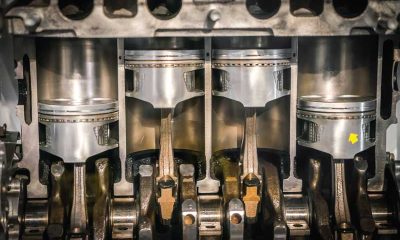
Conventional mineral-based gear oils under high-load, high-temperature conditions can shear, lose viscosity, and force early change-outs – with oil changes at every 2,000 hours adding up in labour, downtime, and lost production over the life of the asset. Mobil SHC™ 600 Series synthetic lubricants are engineered for exactly these conditions. They can reduce energy consumption in gearboxes and circulating systems by up to 3.6 per cent*, extend oil life by up to six times versus conventional oil, and are approved by Siemens AG for use in Flender gearboxes. In one documented instance at a cement plant in Tamil Nadu, switching to Mobil SHC™ 632 delivered a 1 per cent increase in energy efficiency, a 3°C reduction in gearbox temperature, an oil drain interval extended by four times, and annual savings of INR 4,76,772**.
That result alone makes the case for better fluid selection. But it is only part of the story.

The Compressor: Where the Bigger Opportunity Often Sits
Compressors are as operationally critical as gearboxes in a cement plant – and typically receive far less lubrication attention. Running continuously under high load cycles, with lubricant exposed to sustained heat and oxidation, compressors on conventional oils often degrade faster than their scheduled drain intervals suggest. The result is increased maintenance frequency, elevated running temperatures, and higher total lubricant consumption than necessary.
Mobil Rarus SHC™ 1020 Series is formulated for exactly this environment. Recognised by more than 20 global compressor builders, it delivers up to 8,000 hours of oil life – significantly reducing change-out frequency and the associated downtime, labour, and disposal costs that conventional compressor oils generate.
The results from Indian cement plant operations are documented. In one instance, a cement sector facility operating 23 screw compressors reduced lubricant consumption from 10-12 litres per compressor to 5-7 litres, achieving annual savings of approximately INR 4,96,000**. In another, a cement manufacturer extended oil drain intervals by two times, lowered running temperature by approximately 10°C, and achieved annual savings of INR 4,86,747**.
The pattern across both operations is consistent: extended drain intervals, lower consumption, and measurable cost reduction – driven by a single product decision.

One Strategy Across the Plant
Gearboxes and compressors are only two examples. The same principle extends across a cement plant’s rotating equipment, mixer roll bearings, roll neck bearings, plastic calenders, and centrifuge applications all place similar demands on lubrication. Mobil SHC™ 600 Series spans seven viscosity grades, from ISO VG 32 to ISO VG 1000, giving plants the flexibility to match the right grade to the right application across this range of equipment, rather than defaulting to a single product for every use case.

The Bigger Picture
Energy and downtime are two of the largest controllable costs in cement plant operations, and lubrication is one of the few decisions that influences both directly. As demonstrated across the gearbox and compressor examples above, the right lubricant, matched to the right application and supported by field engineering services, can measurably reduce energy consumption, extend oil drain intervals, and lower maintenance costs.
For cement plants evaluating lubrication as part of a broader efficiency strategy, these results offer a starting point rather than an endpoint. Mobil SHC™ 600 Series and Mobil Rarus SHC™ 1020 Series are both engineered for the demanding conditions cement plants operate under daily, and the field results documented here reflect what that engineering can deliver in practice.
Fill with Mobil™. Fill with Confidence.

For more information, visit www.mobil.in/business

*Energy efficiency relates solely to the performance of Mobil SHC 600 when compared to conventional (mineral) reference oils of the same viscosity grade in circulating and gear applications. The technology used allows up to 3.6 per cent efficiency compared to the reference when tested in a worm gearbox under controlled conditions. Efficiency improvements will vary based on operating conditions and application.
**This Proof of Performance is based on the experience of individual customers. Actual results may vary depending on the type of equipment used, its maintenance, operating conditions, environmental factors, and the lubricants previously used, among other variables. Exxon Mobil Corporation has numerous affiliates, many with names that include ExxonMobil, Exxon, Esso, and Mobil. For convenience and simplicity, those terms, and references to “corporation,” “company,” “ExxonMobil,” “EM,” and other similar terms are used for convenience and may refer to one or more specific affiliates or affiliate groups.
For more information, visit www.mobil.in/business

Continue Reading

Economy & Market

The Road Ahead Begins Here

Published

on

By

Shares

The future of India’s roads took centrestage at RAHSTA Expo 2026, where policymakers, contractors and industry leaders came together under one roof. The event blended thought leadership, technology showcase and industry recognition into a single powerful platform.

India’s roads and highways community gathered in full strength at the Jio World Convention Centre, Mumbai, for the 16th edition of the RAHSTA Expo (Roads and Highways Sustainable Technologies & Advancement). Over two action-packed days, the event brought together policymakers, contractors, consultants, developers, equipment manufacturers, material suppliers, technology providers and investors to deliberate on the future of India’s ,infrastructure while showcasing the latest innovations driving the sector.

The event culminated in the prestigious RAHSTA Awards, where Shri. Ajay Tamta, Union Minister of State for Road Transport & Highways, felicitated organisations and professionals for their outstanding contributions to road construction, engineering, safety, sustainability and technology. With leading contractors, senior government officials, industry veterans and technology providers under one roof, the event reaffirmed RAHSTA’s position as one of India’s most influential platforms for the roads, highways, bridges and tunnels ecosystem.

Organised by FIRST Construction Council in association with ASAPP Info Global Group, RAHSTA has steadily evolved beyond an exhibition into a platform where policy, technology, engineering and business converge to address the opportunities and challenges shaping India’s next generation of transport infrastructure.

Beyond expansion, towards value

The conference opened with a thought-provoking address by Pratap Padode, Founder and Editor-in-Chief, Construction World, who observed that India’s highways sector has reached an important inflection point. Introducing this year’s theme – ‘From Expansion to Value: The Next Phase of India’s Highways’ – he noted that while the country has successfully expanded its road network over the past two decades, the industry’s priorities are now shifting towards building infrastructure that delivers greater lifecycle value, durability, safety and operational efficiency. With funding pressures, asset monetisation and evolving project models changing the sector’s dynamics, he said the focus must now move beyond kilometres constructed to the quality and long-term performance of every asset.

Dr Brijesh Dixit, Managing Director, Maharashtra State Infrastructure Development Corporation (MSIDC), reminded delegates that successful infrastructure delivery is ultimately a collective effort. Emphasising on collaboration between government, industry and engineering professionals, he remarked, “There is no loser in a winning team, and there is no winner in a losing team,” urging stakeholders to work together to deliver projects with quality, financial sustainability and technological excellence.

Delivering the keynote address, Bidur Kant Jha, Director, New Technologies for Highway Development, Ministry of Road Transport & Highways (MoRTH), outlined the Government’s long-term vision for India’s highway network. Highlighting the country’s 6.26 million km roads network, he spoke about the growing adoption of digital planning tools such as BIM and GIS, bridge health monitoring systems and Integrated Smart Transport Corridors under the Vision 2047 roadmap. He emphasised that while India remains open to global innovations, every new technology must be adapted to Indian conditions before large-scale deployment.

Addressing the gathering during the awards ceremony, Tamta underlined the increasing role of specialised equipment and modern construction technologies in executing complex infrastructure projects across diverse terrains. Referring to challenging tunnel projects in Uttarakhand, he noted how advanced machinery has transformed execution capabilities, while also acknowledging the rapid evolution of Indian contractors into globally competitive infrastructure companies. Recognising excellence through industry awards, he said, motivates organisations to continually raise performance standards and embrace innovation.

Meanwhile, Dr Sanjay Mukherjee, IAS, Metropolitan Commissioner, MMRDA, highlighted that infrastructure development must increasingly focus on integrated urban mobility. Reflecting on Mumbai’s engineering journey – from its historic underground utility network to the Coastal Road and other transformative projects – he underlined that future infrastructure planning must seamlessly integrate roads, metro systems and public transport to create efficient, multimodal cities.

Uttar Pradesh takes centrestage

One of the highlights of the second day was Uttar Pradesh’s comprehensive presentation on its infrastructure-led industrial transformation.

Srihari Pratap Shahi, IAS, Additional CEO, Uttar Pradesh Expressways Industrial Development Authority (UPEIDA), demonstrated how the state’s expanding expressway network is evolving into a catalyst for industrial development through integrated manufacturing and logistics clusters. Expressways, he noted, are no longer merely transport corridors but engines of economic competitiveness.

Building on this narrative, Deeksha Jain, IAS, Additional Chief Executive Officer, Uttar Pradesh State Industrial Development Authority (UPSIDA), showcased the state’s rapidly expanding industrial ecosystem supported by extensive expressway connectivity, dedicated freight corridors, airports, industrial townships and investor-friendly policies. She highlighted Uttar Pradesh’s strong manufacturing growth, expanding industrial land bank, plug-and-play infrastructure and increasing use of digital governance to facilitate investments.

Further underlining the significance of the platform, Deepak Kumar, IAS, Infrastructure & Industrial Development Commissioner, Government of Uttar Pradesh, remarked, “RAHSTA provides an excellent platform for states to showcase our infrastructure progress and investment ecosystem. Uttar Pradesh has transformed significantly over the past decade, backed by more than 34 investor-friendly industrial policies, and platforms like RAHSTA help communicate these developments to industry stakeholders from across the country.”

Ideas that shaped the industry conversation

The two-day conference featured seven panel discussions, each examining a critical dimension of India’s evolving roads and highways sector.

The opening discussion on ‘Financing Roads & Highways in a Capital-Constrained Era’ brought together experts from Cube Highways, NIIF, SBI Capital Markets, Centrum Capital and Bandhan Infra Fund, who examined how the financing landscape is changing. Discussions revolved around asset monetisation, InvITs, institutional investments and new funding structures, with panellists agreeing that better project preparation, transparent governance and predictable returns will be crucial for attracting long-term capital into infrastructure.

Attention then shifted to execution realities during the panel on ‘Contractors’ Perspective: Execution Realities, Risks & the Quality Imperative.’ Representatives from GHV Infra Projects, PNC Infratech, NCC and Maccaferri candidly discussed the challenges of delivering projects amid contractual complexities, land acquisition delays, rising costs and tight timelines. While execution pressures remain significant, the discussion reinforced that better collaboration across the project value chain is essential for achieving both speed and quality.

Day 2 opened with a technically rich discussion on ‘Designing Roads for Sustainability, Durability & Climate Resilience’. Experts from CSIR-CRRI, IIT Bombay, IIT Madras, Zydex Group and SRMB Steel explored advanced pavement technologies, recycled materials, climate-resilient designs and scientific construction practices that can significantly improve durability while lowering lifecycle costs. Sustainability, they agreed, must become an integral part of road design rather than an afterthought.

The subsequent session on ‘Bridges & Tunnels: Complex Engineering, Safety & Future Readiness’ highlighted the growing complexity of India’s infrastructure projects. Panellists discussed advances in structural engineering, digital monitoring, risk management and safety practices that are enabling the successful delivery of increasingly ambitious bridge and tunnel projects across the country.

Technology remained a recurring theme during the discussion on ‘Technology as a Risk-Mitigation Tool for Developers & Investors’. Experts explained how AI, BIM, drones, predictive analytics, digital twins and intelligent monitoring systems are helping improve project planning, minimise execution risks, strengthen quality assurance and enhance asset management throughout the infrastructure lifecycle.

The construction equipment panel brought together leading industry experts to examine how technology, sustainability and digitalisation are redefining construction equipment in an era of rising cost pressures. Discussions centred on enhancing productivity, reducing lifecycle costs and preparing the industry for India’s infrastructure ambitions leading up to 2047.

The conference concluded with an engaging CXO Forum on ‘Rebuilding Confidence in India’s Roads & Highways Sector’, where senior industry leaders emphasised that stronger governance, better project preparation, digitalisation, transparent contracting and closer public-private collaboration will be essential to sustain India’s infrastructure growth over the coming decades.

Technology and recognition under one roof

Beyond the conference halls, RAHSTA Expo reflected the technological transformation underway across India’s road infrastructure ecosystem. Leading equipment manufacturers, technology companies and material suppliers showcased advanced construction equipment, intelligent digital platforms, pavement technologies, structural materials and productivity-enhancing solutions designed to improve project efficiency and asset performance. The exhibition created valuable opportunities for contractors, consultants, government agencies and project developers to evaluate new technologies while interacting directly with solution providers.

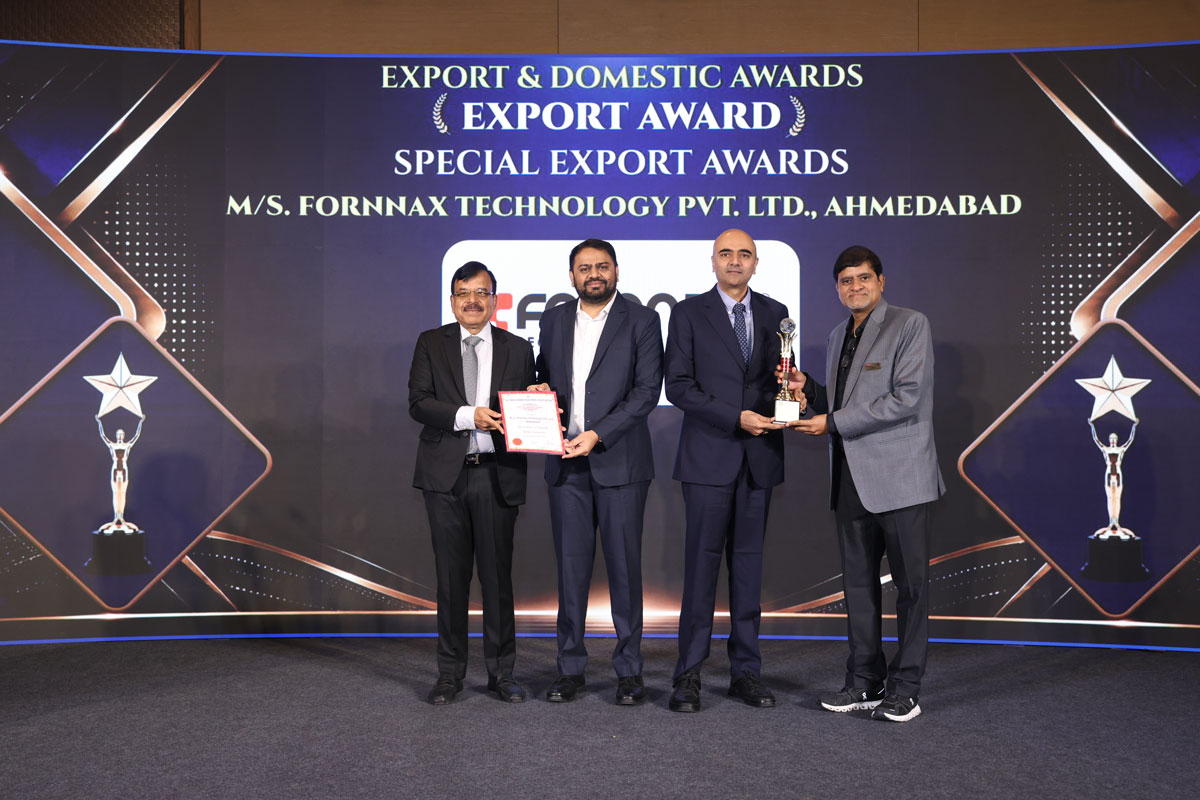
The event also served as a celebration of excellence through the RAHSTA Awards 2026, which recognised outstanding achievements across road construction, contracting, materials, equipment, technology, safety, sustainability and infrastructure development. Presented by Minister Tamta, the awards honoured organisations that are setting new benchmarks for quality, innovation and execution across India’s roads sector.

RAHSTA Expo 2026 also received extensive support from across the infrastructure ecosystem. Alongside leading corporate sponsors, the event was backed by industry bodies including the Builders Association of India (BAI), Construction Equipment Rental Association (CERA), Consulting Engineers Association of India (CEAI), International Road Federation (IRF), CSIR-CRRI, CILT India, All India Transporters Welfare Association, Hydraulic Trailer Owners Association (HTOA), Gujarat Contractors Association, Bitumen Forum, Fluid Power Society of India, Indian Institute of Material Management, Ministry of Ports, Shipping and Waterways, Gati Shakti Vishwavidyalaya and Mumbai First, reflecting the industry’s collective commitment to advancing India’s road infrastructure.

As the curtains came down on the two-day event, one message resonated throughout the conference: India’s highways story is entering a new chapter. While expansion will continue, the future will increasingly be defined by smarter planning, stronger partnerships, digital transformation, sustainable engineering and long-term value creation. By bringing together the entire infrastructure value chain on a single platform, RAHSTA Expo 2026 once again demonstrated why it has become one of the country’s most influential forums for shaping the future of roads, highways, bridges and tunnels.

Continue Reading

Video Thumbnail

    SIGN-UP FOR OUR GENERAL NEWSLETTER


    Trending News

    SUBSCRIBE TO THE NEWSLETTER


    Don't miss out on valuable insights and opportunities to connect with like minded professionals.


      This will close in 0 seconds