Connect with us

Economy & Market

Changing hues of brands

Published

on

Shares

Though brand pundits are brushing aside cement terming it as a ‘commodity’, Indian cement companies are focusing on brand building for hogging the consumer’s mind space, even among bulk users.

At the inception of brand creation, it is done mostly in the name of the corporate. But as the business matures, the brand gets a distinct name and identity. A brand represents the entire organisation’s commitment, and efforts to get the all-important competitive advantage. It is a promise that the entire organisation has to fulfil in all its functions.

Take the example of one of the young brands in the industry – Bharathi Cement. Launched in 2009 with the tagline "Three Times Better", it sought to highlight the superiority of its product on three counts – Quality, Consistency and Technology. For ensuring superiority in all these areas they had to survey the standards followed by various manufacturers for ensuring the ultimate product quality available in the market and quality of inputs that could ensure that their product could stand one step above others on these three parameters. As if to highlight its technical superiority it has also introduced SAP-software based e-billing system across the supply chain.

"Consistency plays a very important role in cement. It was ensured that each and every bag was of consistent quality since inception. We were the pioneer in certain aspects of the cement industry. To maintain the consistency of cement, we introduced robotic quality control, which checks quality at all the three stages,"said Suresh Kumar, Assistant Vice President – Marketing, Bharathi Cement.

Not strength alone
On the other hand, JK Grey Cement brand is 40-years old. It had to keep repositioning itself from time to time along with the changing consumer trends and preferences. Instead of just jostling for space highlight the strength of its products, JK Cement focused on ‘Trust’, leveraging on its legacy and strong heritage it has built over the years.

Though mass media campaigns are one of the main focus areas of many cement companies, JK Cement has adopted humour to take its message across. "In the Cement industry, most brands hung on to the claim of ‘strength’ which was visually represented through ‘obvious’ treatment routes. We took the route of humour and also got a celebrity cricketer, Virender Sehwag to endorse the brand promise of trust,"says Raghavpat Singhania – Special Executive, JK Cement.

More recently, based on an extensive brand study and research that gave us a very important insight on the basic human need for safety, JK Cement repositioned itself with a brand mantra "Build Safe."

Thus, brand-driven companies are strongly consumer-knowledge and understanding driven. Who will the brand serve most, what will the brand promise be, how will it back that promise up in each and every act, where will it spend most of its R&D efforts – these are some of the tough questions brand-building corporate will have to answer. The marketing team will work as an interface with the customers to understand the needs of the customer.

JK Cement has adopted national wall painting competitions for its wall putty branding, where ‘prevention of flaking/ pappdi’ had been the core single-minded message. This campaign saw the birth of a brand evangelist – Chhutkau Painter, the national wall painting champion who touts victory over substitute products like POP and inexpensive chalk mitti by using JK Wall Putty. "The campaign was then extended to a prosperous Chhutkauji, with his own wall painting academy training a new breed of wall painting experts. With the third campaign, Chhutkauji grew in both fame and recognition, and is invited to judge the World Wall Painting Championship. Over the years, the Chhutkau series has very successfully strengthened our positioning statement for JK Wall Putty – ‘Deewarein Bol Uthengi’,"says Singhania.

Premium brands
Lot of cement companies have launched premium brands under their umbrella to tap premium clientele imparting better pricing power for the companies. To sustain its brand, Bharathi has also launched new products aligning to its brand identity. "We had added value in product with Bharathi Ultrafast in the blended cement category. That will also help keep the brand fresh in the minds of people, sustaining the brand,"says Kumar of Bharathi.

Technically, blended cements are far superior because of low heat of hydration. We can produce a dense concrete by using blended cements. It gives you the strength of OPC, and durability of blended cement, with a fast setting ability.

JK Cement has recently added a premium grey cement product to our portfolio – JK Super Strong, that has been specially designed for concrete applications and caters to Karnataka, Maharashtra, Goa and Kerala. "After extensive R & D, it has been manufactured with MPET – a new breakthrough technology in cement production that improves the performance of cement,"says Singhania.

Focus to remain
Though cement is considered to be a commodity for there is no much differentiation that is possible, if the cement company wants to cater to the rural markets that account for over one-third of the overall market might have to promote their brands which impart some trust and brings in loyalty for the branded products.

Bulk cement is picking up pace, lowering the share of bag cement in urban areas and in infrastructure projects. Due to economies of scale in usage and transportation that the bulk cement brings in, many big projects are opting for it.

"Unless we show value in the products or services, it will be continued to be looked upon as a commodity, and it will not enjoy any premium or preference. In fact, purchase itself is a premium. From this perspective also, it is even more important that the brand equity is sustained,"says Kumar.

"Considering that at present, the rural markets in India are still in the developing phase, cement has no direct substitute and the small quantity of cement used in building a home doesn’t require bulkers. This would act as a major factor for the cement brands to survive even 20 years from now,"says Singhania.

– B.S. SRINIVASALU REDDY

Continue Reading
Click to comment

Leave a Reply

Your email address will not be published. Required fields are marked *

Concrete

Our strategy is to establish reliable local partnerships

Published

on

By

Shares

Jean-Jacques Bois, President, Nanolike, discusses how real-time data is reshaping cement delivery planning and fleet performance.

As cement producers look to extract efficiency gains beyond the plant gate, real-time visibility and data-driven logistics are becoming critical levers of competitiveness. In this interview with Jean-Jacques Bois, President, Nanolike, we discover how the company is helping cement brands optimise delivery planning by digitally connecting RMC silos, improving fleet utilisation and reducing overall logistics costs.

How does SiloConnect enable cement plants to optimise delivery planning and logistics in real time?
In simple terms, SiloConnect is a solution developed to help cement suppliers optimise their logistics by connecting RMC silos in real time, ensuring that the right cement is delivered at the right time and to the right location. The core objective is to provide real-time visibility of silo levels at RMC plants, allowing cement producers to better plan deliveries.
SiloConnect connects all the silos of RMC plants in real time and transmits this data remotely to the logistics teams of cement suppliers. With this information, they can decide when to dispatch trucks, how to prioritise customers, and how to optimise fleet utilisation. The biggest savings we see today are in logistics efficiency. Our customers are able to sell and ship more cement using the same fleet. This is achieved by increasing truck rotation, optimising delivery routes, and ultimately delivering the same volumes at a lower overall logistics cost.
Additionally, SiloConnect is designed as an open platform. It offers multiple connectors that allow data to be transmitted directly to third-party ERP systems. For example, it can integrate seamlessly with SAP or other major ERP platforms, enabling automatic order creation whenever replenishment is required.

How does your non-exclusive sensor design perform in the dusty, high-temperature, and harsh operating conditions typical of cement plants?
Harsh operating conditions such as high temperatures, heavy dust, extreme cold in some regions, and even heavy rainfall are all factored into the product design. These environmental challenges are considered from the very beginning of the development process.
Today, we have thousands of sensors operating reliably across a wide range of geographies, from northern Canada to Latin America, as well as in regions with heavy rainfall and extremely high temperatures, such as southern Europe. This extensive field experience demonstrates that, by design, the SiloConnect solution is highly robust and well-suited for demanding cement plant environments.

Have you initiated any pilot projects in India, and what outcomes do you expect from them?
We are at the very early stages of introducing SiloConnect in India. Recently, we installed our
first sensor at an RMC plant in collaboration with FDC Concrete, marking our initial entry into the Indian market.
In parallel, we are in discussions with a leading cement producer in India to potentially launch a pilot project within the next three months. The goal of these pilots is to demonstrate real-time visibility, logistics optimisation and measurable efficiency gains, paving the way for broader adoption across the industry.

What are your long-term plans and strategic approach for working with Indian cement manufacturers?
For India, our strategy is to establish strong and reliable local partnerships, which will allow us to scale the technology effectively. We believe that on-site service, local presence, and customer support are critical to delivering long-term value to cement producers.
Ideally, our plan is to establish an Indian entity within the next 24 months. This will enable us to serve customers more closely, provide faster support and contribute meaningfully to the digital transformation of logistics and supply chain management in the Indian cement industry.

Continue Reading

Economy & Market

Power Build’s Core Gear Series

Published

on

By

Shares

A deep dive into Core Gear Series of products M, C, F and K, by Power Build, and how they represent precision in motion.

At the heart of every high-performance industrial system lies the need for robust, reliable, and efficient power transmission. Power Build answers this need with its flagship geared motor series: M, C, F and K. Each series is meticulously engineered to serve specific operational demands while maintaining the universal promise of durability, efficiency, and performance.

Series M – Helical Inline Geared Motors
Compact and powerful, the Series M delivers exceptional drive solutions for a broad range of applications. With power handling up to 160kW and torque capacity reaching 20,000 Nm, it is the trusted solution for industries requiring quiet operation, high efficiency, and space-saving design. Series M is available with multiple mounting and motor options, making it a versatile choice for manufacturers and OEMs globally.

Series C – Right Angled Heli-Worm Geared Motors
Combining the benefits of helical and worm gearing, the Series C is designed for right-angled power transmission. With gear ratios of up to 16,000:1 and torque capacities of up to 10,000 Nm, this series is optimal for applications demanding precision in compact spaces. Industries looking for a smooth, low-noise operation with maximum torque efficiency rely on Series C for dependable performance.

Series F – Parallel Shaft Mounted Geared Motors
Built for endurance in the most demanding environments, Series F is widely adopted in steel plants, hoists, cranes and heavy-duty conveyors. Offering torque up to 10,000 Nm and high gear ratios up to 20,000:1, this product features an integral torque arm and diverse output configurations to meet industry-specific challenges head-on.

Series K – Right Angle Helical Bevel Geared Motors
For industries seeking high efficiency and torque-heavy performance, Series K is the answer. This right-angled geared motor series delivers torque up to 50,000 Nm, making it a preferred choice in core infrastructure sectors such as cement, power, mining and material handling. Its flexibility in mounting and broad motor options offer engineers the freedom in design and reliability in execution.
Together, these four series reflect Power Build’s commitment to excellence in mechanical power transmission. From compact inline designs to robust right-angle drives, each geared motor is a result of decades of engineering innovation, customer-focused design and field-tested reliability. Whether the requirement is speed control, torque multiplication or space efficiency, Radicon’s Series M, C, F and K stand as trusted powerhouses for global industries.

http://www.powerbuild.in
Call: +919727719344

Continue Reading

Concrete

Compliance and growth go hand in h and

Published

on

By

Shares

Pankaj Kejriwal, Whole Time Director and COO, Star Cement, on driving efficiency today and designing sustainability for tomorrow.

In an era where the cement industry is under growing pressure to decarbonise while scaling capacity, Star Cement is charting a pragmatic yet forward-looking path. In this conversation, Pankaj Kejriwal, Whole Time Director and COO, Star Cement, shares how the company is leveraging waste heat recovery, alternative fuels, low-carbon products and clean energy innovations to balance operational efficiency with long-term sustainability.

How has your Lumshnong plant implemented the 24.8 MW Waste Heat Recovery System (WHRS), and what impact has it had on thermal substitution and energy costs?
Earlier, the cost of coal in the Northeast was quite reasonable, but over the past few years, global price increases have also impacted the region. We implemented the WHRS project about five years ago, and it has resulted in significant savings by reducing our overall power costs.
That is why we first installed WHRS in our older kilns, and now it has also been incorporated into our new projects. Going forward, WHRS will be essential for any cement plant. We are also working on utilising the waste gases exiting the WHRS, which are still at around 100 degrees Celsius. To harness this residual heat, we are exploring systems based on the Organic Rankine Cycle, which will allow us to extract additional power from the same process.

With the launch of Star Smart Building Solutions and AAC blocks, how are you positioning yourself in the low-carbon construction materials segment?
We are actively working on low-carbon cement products and are currently evaluating LC3 cement. The introduction of autoclaved aerated concrete (AAC) blocks provided us with an effective entry into the consumer-facing segment of the industry. Since we already share a strong dealer network across products, this segment fits well into our overall strategy.
This move is clearly supporting our transition towards products with lower carbon intensity and aligns with our broader sustainability roadmap.

With a diverse product portfolio, what are the key USPs that enable you to support India’s ongoing infrastructure projects across sectors?
Cement requirements vary depending on application. There is OPC, PPC and PSC cement, and each serves different infrastructure needs. We manufacture blended cements as well, which allows us to supply products according to specific project requirements.
For instance, hydroelectric projects, including those with NHPC, have their own technical norms, which we are able to meet. From individual home builders to road infrastructure, dam projects, and regions with heavy monsoon exposure, where weather-shield cement is required, we are equipped to serve all segments. Our ability to tailor cement solutions across diverse climatic and infrastructure conditions is a key strength.

How are you managing biomass usage, circularity, and waste reduction across
your operations?

The Northeast has been fortunate in terms of biomass availability, particularly bamboo. Earlier, much of this bamboo was supplied to paper plants, but many of those facilities have since shut down. As a result, large quantities of bamboo biomass are now available, which we utilise in our thermal power plants, achieving a Thermal Substitution Rate (TSR) of nearly 60 per cent.
We have also started using bamboo as a fuel in our cement kilns, where the TSR is currently around 10 per cent to 12 per cent and is expected to increase further. From a circularity perspective, we extensively use fly ash, which allows us to reuse a major industrial waste product. Additionally, waste generated from HDPE bags is now being processed through our alternative fuel and raw material (AFR) systems. These initiatives collectively support our circular economy objectives.

As Star Cement expands, what are the key logistical and raw material challenges you face in scaling operations?
Fly ash availability in the Northeast is a constraint, as there are no major thermal power plants in the region. We currently source fly ash from Bihar and West Bengal, which adds significant logistics costs. However, supportive railway policies have helped us manage this challenge effectively.
Beyond the Northeast, we are also expanding into other regions, including the western region, to cater to northern markets. We have secured limestone mines through auctions and are now in the process of identifying and securing other critical raw material resources to support this expansion.

With increasing carbon regulations alongside capacity expansion, how do you balance compliance while sustaining growth?
Compliance and growth go hand in hand for us. On the product side, we are working on LC3 cement and other low-carbon formulations. Within our existing product portfolio, we are optimising operations by increasing the use of green fuels and improving energy efficiency to reduce our carbon footprint.
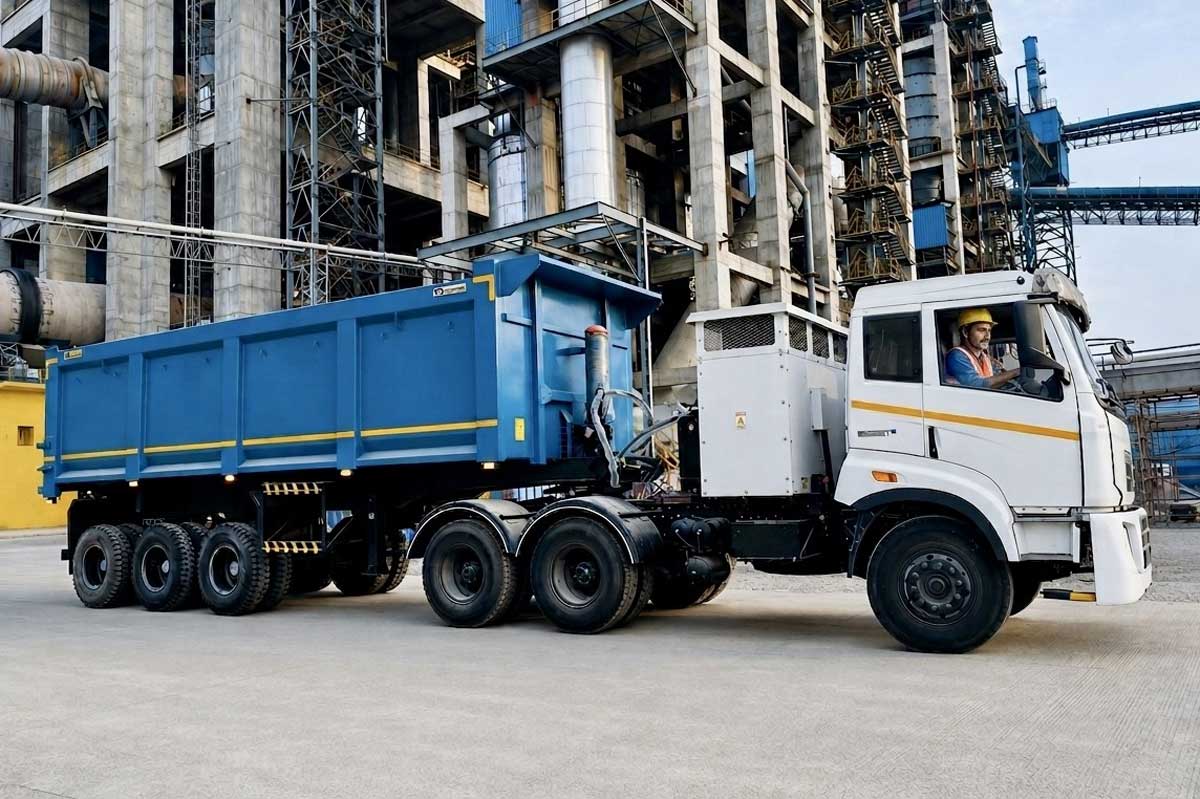
We are also optimising thermal energy consumption and reducing electrical power usage. Notably, we are the first cement company in the Northeast to deploy EV tippers at scale for limestone transportation from mines to plants. Additionally, we have installed belt conveyors for limestone transfer, which further reduces emissions. All these initiatives together help us achieve regulatory compliance while supporting expansion.

Looking ahead to 2030 and 2050, what are the key innovation and sustainability priorities for Star Cement?
Across the cement industry, carbon capture is emerging as a major focus area, and we are also planning to work actively in this space. In parallel, we see strong potential in green hydrogen and are investing in solar power plants to support this transition.
With the rapid adoption of solar energy, power costs have reduced dramatically – from 10–12 per unit to around2.5 per unit. This reduction will enable the production of green hydrogen at scale. Once available, green hydrogen can be used for electricity generation, to power EV fleets, and even as a fuel in cement kilns.
Burning green hydrogen produces only water and oxygen, eliminating carbon emissions from that part of the process. While process-related CO2 emissions from limestone calcination remain a challenge, carbon capture technologies will help address this. Ultimately, while becoming a carbon-negative industry is challenging, it is a goal we must continue to work towards.

Continue Reading

Trending News