Connect with us

Concrete

Measurement, Monitoring and Supply-Chain Transparency

Published

on

Shares

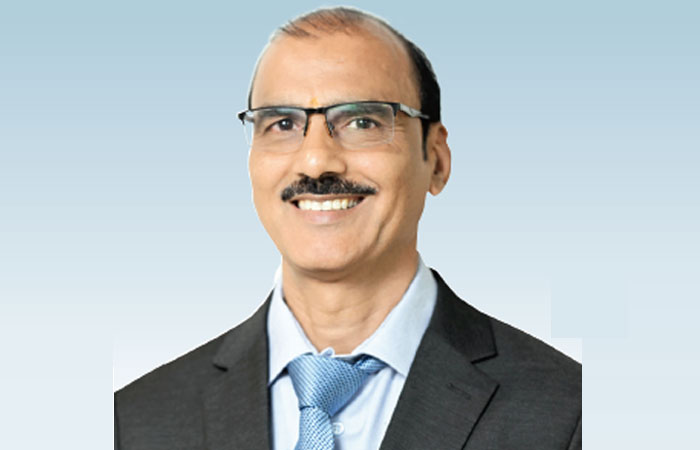
Smitha Shetty, Regional Director, APAC, Achilles Information, explains why accurate measurement, real-time monitoring, and transparent supply chains are essential for India’s cement sector to achieve credible, data-driven decarbonisation and global competitiveness on the road to Net Zero.

Cement is an indispensable building material of modern times and is the second most consumed commodity after water. Even though cement is an important element across the globe, the environmental impact of it is huge. Precisely, cement production contributes 4 per cent to India’s greenhouse gas (GHG) emissions. As a result of rapid urbanisation and higher infrastructure spending, the demand for cement and allied materials is increasing, which is resulting in a substantial jump in carbon emissions.
China is the largest cement manufacturer in the world, which produced 1858.9 million metric tonnes in 2024. Notably, it is more than half of the global output. India comes second, though with a much lower output of 440.5 million metric tonnes. Notably, India is not the biggest emitter but the domestic cement companies are at par with their global counterparts in adopting measures to cut carbon emissions.
Limestone (calcium carbonate) is the main raw material for making cement and its conversion into clinker (calcium oxide) produces a significant share of CO2 emissions. In fact, CO2 is the major component of the total greenhouse gases (GHG) emitted during the manufacturing process. Another notable source emission is the combustion of fossil fuels such as coal and pet coke. It is estimated that one third of the emissions from the cement industries is due to the burning of fossil fuels for converting limestone into lime. In addition, power generation from the captive power plants using coal or diesel is also creating a considerable amount of emissions.
As India charts its journey toward Net Zero by 2070, decarbonising cement is no longer optional, it is mandatory and is a top priority for the country. India urgently needs a capability stack built on accurate measurement, continuous monitoring, and supply-chain transparency that turns data into decisions.

Getting the baseline right: Key to measurement
It is important to have an accurate greenhouse-gas baseline for cement companies. An accurate baseline can be achieved through plant-level accounting of fuel consumption, kiln efficiencies, clinker factor and processing of CO2 from calcination. Standardised emissions calculators and national guidance tailored for Indian operations already exist — they reduce inconsistencies in how Scope 1 and Scope 2 emissions are reported and make comparisons meaningful across plants. Reliable baselines allow firms to prioritise the biggest levers — fuel switching, clinker substitution, energy efficiency and, in time, carbon capture, utilisation and storage (CCUS). Cement companies should adopt globally recognised algorithms, ensuring accurate emissions tracking and compliance with international standards like the Greenhouse
Gas Protocol. This strengthens accountability and credibility across stakeholders.

Monitoring: From regular audits to real-time signal
Over the years, many cement plants have depended on periodic audits and utility bills to decide upon the emission numbers. However, that may result in critical emissions remaining unnoticed and thereby increasing the chances of pollution. Today technology has advanced and cement plants can use Internet of Things (IoT) sensors, advance metering and process instrumentation which can help in getting hold of the energy use, fuel mix, temperatures and kiln performance in real-time and can send quick signals to the plants. Coupled with AI-driven analytics, this data is enabled to detect anomalies, prescriptive maintenance and load optimisation that can quickly help in material emissions reduction. It also enables benchmark comparisons and continuous improvement opportunities.

Scope 1 and Scope 3: Dual priorities for India’s cement sector
For cement producers in India, Scope 1 emissions are by far the largest share of their carbon footprint. These arise primarily from calcination of limestone and the direct use of fossil fuels in kilns, and addressing them remains the foremost priority. However, cement companies also have a role to play in influencing Scope 3 emissions across their value chains. While Scope 3 accounts for a smaller portion of total
sector emissions compared to Scope 1, it represents a critical opportunity to align with India’s wider decarbonisation efforts.
Companies can begin by optimising inbound and outbound logistics. Transitioning to low-carbon transport fleets in collaboration with logistics partners, shifting to rail and waterborne transport where feasible, and adopting digital platforms for route optimisation can significantly reduce transport-related emissions.
Sourcing alternative materials is another lever. By working with suppliers to increase the use of fly ash, slag, construction and demolition waste, and other industrial by-products, cement companies can reduce dependence on clinker while promoting a circular economy. This opens avenues for local resource optimisation and waste valorisation, while cutting emissions embedded in raw material extraction and processing.

Equally important is supplier engagement.
Large cement firms can enable smaller and medium-sized suppliers through technical assistance, joint capacity-building programmes, and digital platforms that support emissions reporting and data transparency. Many suppliers lack the resources to independently invest in low-carbon solutions, but partnerships with larger cement companies can help bridge this gap. Incentives, technology upgrades, and sustainability-linked procurement terms can create ripple effects that lift environmental performance across the value chain.
In this way, even as cement companies continue to address their significant Scope 1 emissions, they can simultaneously strengthen their contribution to India’s decarbonisation journey by reducing Scope 3 impacts. The combination of direct emissions reduction within plants and indirect improvements across supply chains represents a holistic approach, one that can position India’s cement industry as both resilient and globally competitive in a low-carbon future.

CCUS: India needs to move fast
Cement industry’s decarbonisation efforts must further address technological challenges such as Carbon Capture Utilisation and Storage (CCUS). India has to fast-track legislation, funding and
action plan in this regard to adopt carbon capture technologies, while the US, Japan and the EU have made significant progress on the front. CCUS is the process of capturing CO2 directly from large industries that use fossil fuels.
The captured CO2 is then stored in another location to be used in some industrial applications or injected into deep geological formations where the gas can be stored safely. It can effectively cut emissions from hard-to-abate industries – where emission is unavoidable – such as cement and steel, and remove CO2 from air to balance industrial emissions. India must also come out with a robust policy framework to develop a carbon market and carbon credit scheme, and provide market support for mitigation methods. Public-private partnerships and incentives are vital to scale CCUS deployment.

Conclusion
India’s cement sector stands at the crossroads now. While the booming demand of infrastructure in the country forces them to increase capacity, it also needs to cut emissions effectively for a greener world, for which the entire globe is clamouring for. Measurement, monitoring and supply chain transparency are not optional things for the cement industry. They are the critical pillars of decarbonisation. When plants are pedalled properly, when suppliers are traceable and when independent verifications are carried out to complement corporate reporting, India’s cement sector gains the credibility and the know-how to scale up low carbon emission drive. The transition will however not be cheap and nor easy too but by putting data at the centre, all the stakeholders – the cement companies, the suppliers and the government – can prioritise the high impact actions and attract funding for a greener India. It will also send a message to the world that India’s effort to decarbonise its cement sector is concrete, verifiable and accurately data-driven.

ABOUT THE AUTHOR:
Smitha Shetty, Regional Director, APAC, Achilles Information, holds over 18 years of experience driving sustainable growth, operational excellence, and net zero focused supply chain solutions.

Concrete

Niraj Cement JV Wins Railway and Metro Contracts

Two orders worth over Rs 1.64 billion boost infrastructure portfolio

Published

on

By

Shares

Niraj Cement Structurals (JV) has secured two major contracts from the Northeast Frontier Railway (NF Railway) and the Mumbai Metropolitan Region Development Authority (MMRDA), strengthening its position in large-scale infrastructure development.

The first contract, valued at Rs 815.2 million, has been awarded by NF Railway. It involves the construction of multiple-span 12.20-metre PSC slab underpasses, a major bridge (No. 727), retaining and guide walls, embankments and one minor bridge along the proposed UP and Down line near Deepor Beel. The project covers Km 163/00 to 164/200 between Azara and Kamakhya stations and forms part of the New Bongaigaon–Goalpara Town–Kamakhya (NBQ–GLPT–KYQ) railway doubling programme.

The second contract, worth Rs 826.6 million, has been awarded by MMRDA for constructing a foot overbridge (FOB) equipped with a travellator to improve connectivity between the SGMC monorail station and the Mahalaxmi metro and suburban railway stations.

The two projects underscore the company’s technical capabilities in both transportation infrastructure and environmentally sensitive construction, further strengthening its portfolio in key railway and urban mobility developments.

Continue Reading

Concrete

Peddapalli MP Seeks Clear Timelines for Rs 42.10 Bn Projects

Peddapalli MP Gaddam Vamshi Krishna has urged the Union Government to specify execution timelines for major infrastructure projects worth Rs 42.10 billion in his constituency.

Published

on

By

Shares

Peddapalli MP Gaddam Vamshi Krishna has called on the Centre to provide definitive timelines for a series of sanctioned infrastructure works that he said are essential for the region’s economic progress. Speaking in the Lok Sabha, he stressed that many approved projects remain stalled without clear implementation schedules, limiting their potential impact on connectivity and employment.

A key pending work is the Peddapalli–Manuguru Railway Line, a 137 km stretch linking Peddapalli with Manuguru in Bhadradri Kothagudem district. Although the line has received required approvals and special project status, the execution schedule has not yet been announced. The project is expected to support freight efficiency, improve coal logistics, and strengthen local job creation.

Extending his appeal beyond physical infrastructure, the MP urged the Centre to consider including Peddapalli in the India Semiconductor Mission, citing the district’s industrial ecosystem, skilled workforce, and readiness to support advanced manufacturing.

By pressing for structured timelines, Krishna emphasised the need for coordinated planning and timely execution to advance the constituency’s long-term development goals.

Continue Reading

Concrete

IndiaAI, Gujarat Govt Host Regional Conclave Ahead of 2026 AI Summit

A regional pre-summit event in Gandhinagar recently gathered leaders to advance AI for good governance.

Published

on

By

Shares

The IndiaAI Mission under the Ministry of Electronics and Information Technology, along with the Government of Gujarat and IIT Gandhinagar, convened a Regional Pre-Summit Event at Mahatma Mandir, Gandhinagar. The initiative is part of the build-up to the India–AI Impact Summit 2026, scheduled for 15–20 February 2026 at Bharat Mandapam, New Delhi.

The conclave brought together senior policymakers, technology leaders, researchers and industry practitioners to examine how AI can accelerate economic, digital and social transformation across sectors. The programme focused on the overarching theme of ‘AI for Good Governance: Empowering India’s Digital Future’.

The inaugural session featured key dignitaries including Bhupendrabhai Rajnikant Patel, Chief Minister of Gujarat; Harsh Rameshbhai Sanghavi, Deputy Chief Minister of Gujarat; Arjunbhai Devabhai Modhwadia, Minister for Science & Technology, Government of Gujarat; Manoj Kumar Das, Chief Secretary, Government of Gujarat; Abhishek Singh, Additional Secretary, MeitY and Director General, NIC; and Ponugumatla Bharathi, Secretary, Department of Science & Technology, Government of Gujarat.

High-impact keynote sessions led by national and global experts from MeitY, Bhashini, Google Cloud, Microsoft, IBM Research, NVIDIA, Oracle and AWS examined themes including AI in governance, public service delivery, urban development, rural transformation, healthcare, agriculture, fintech and multilingual accessibility enabled through Bhashini.
Delegates also visited an Experience Zone curated by IndiaAI and DST Gujarat, which showcased AI solutions across governance, agriculture, health and industry.

By convening government, industry and academic stakeholders, the conclave aimed to strengthen India’s AI ecosystem through frameworks that prioritise trust, scalability and public interest. Insights generated from the event will contribute directly to the agenda and outcomes of the India–AI Impact Summit 2026. 

Continue Reading

Trending News

SUBSCRIBE TO THE NEWSLETTER


Don't miss out on valuable insights and opportunities to connect with like minded professionals.


    This will close in 0 seconds